


Disc Air Filter
In industrial environments where air and gas purity are critical to operational integrity, the selection of filtration components is a fundamental engineering decision. A disc air filter, specifically one constructed from stainless steel wire mesh, serves as a high-precision barrier against particulate contamination in demanding applications. Unlike standard polymer or paper-based filters, metal disc filters offer the mechanical strength and thermal stability required for high-pressure pneumatic systems, gas processing, and specialized air intake modules.
For engineers and procurement professionals, understanding the technical nuances of Filter Discs & Packs is essential for optimizing system performance and minimizing downtime. This guide examines the construction, material science, and performance metrics that define high-quality industrial disc air filters.
The Role of Metal Wire Mesh in Disc Air Filtration
The efficiency of a disc air filter is primarily determined by the characteristics of the woven wire mesh used in its construction. At Kaifil, manufacturing these components involves a precise weaving process where stainless steel wires are interlaced to create uniform openings. The geometry of these openings determines the micron rating and the filter’s ability to capture particles while maintaining a manageable pressure drop.
There are several common weave types utilized in industrial air filtration:
* Plain Weave: The most straightforward construction where each warp wire crosses over and under each weft wire. This is ideal for high-flow applications where low resistance to air is a priority.
* Dutch Weave: This utilizes a heavier warp wire and a finer weft wire, resulting in a dense, strong mesh with very small triangular openings. This is often preferred for fine air filtration and gas purification where high pressure is present.
* Twill Weave: Each weft wire passes over and under two warp wires, allowing for a heavier wire diameter in a given mesh count. This provides enhanced durability for disc air filters subjected to mechanical vibration or high-velocity air streams.
By selecting the appropriate weave, engineers can balance the filtration accuracy (ranging from 2 microns to several hundred microns) with the structural requirements of the specific air handling system.
Material Specifications and Environmental Compatibility
Industrial air filtration often occurs in environments that would degrade conventional filter media. A stainless steel disc air filter is chosen specifically for its resistance to corrosion, high temperatures, and chemical exposure.
Stainless Steel Grades
Most industrial filter discs are manufactured from 304 or 316L stainless steel. While 304 provides excellent general-purpose resistance, 316L is the preferred choice for applications involving corrosive gases or marine environments due to its higher molybdenum content. In high-temperature air exhaust systems, these materials can withstand continuous operation at temperatures exceeding 400°C (752°F), far beyond the limits of synthetic fibers.
Chemical Resistance
In chemical processing or pharmaceutical air venting, the filter may come into contact with aggressive vapors. Stainless steel’s inert nature ensures that the filter does not react with the process gas or leach contaminants into the air stream, maintaining the purity of the filtered medium.
Structural Configurations: Single Layer vs. Multi-Layer Packs
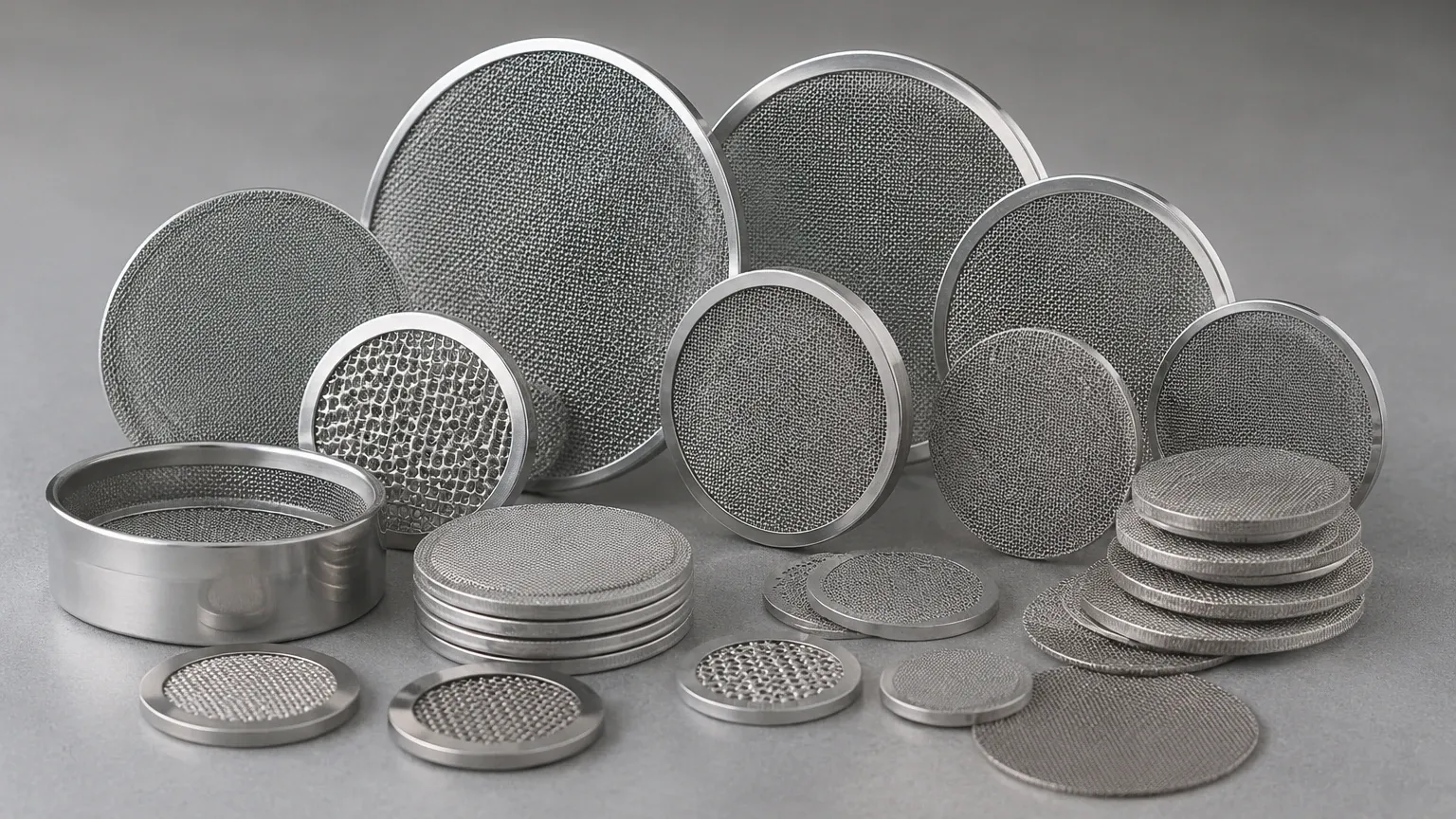
A disc air filter can be configured as a single-layer component or as part of complex Filter Discs & Packs depending on the required filtration depth and mechanical load.
Single-Layer Discs
These are typically used in low-pressure applications or as secondary strainers. They are cost-effective and easy to clean, making them suitable for simple air intake vents or breather filters on hydraulic reservoirs.
Multi-Layer Sintered Packs
For high-pressure air systems or fine gas filtration, multiple layers of wire mesh are combined. These layers often include a fine filtration mesh sandwiched between coarser support layers. The layers can be spot-welded or sintered together. Sintering—a process of diffusion bonding the wires at their contact points—creates a rigid, porous structure that cannot migrate or deform under high differential pressure. This configuration is critical for maintaining a consistent micron rating throughout the filter's service life.
Edge Treatment
To ensure a proper seal within the filter housing and to prevent fraying, disc air filters often feature specialized edge treatments. These include aluminum, stainless steel, or copper rims (frames) that provide a compression surface for gaskets, ensuring zero-bypass filtration.
Evaluating Filtration Efficiency and Airflow Dynamics
When specifying a disc air filter, engineers must evaluate the relationship between filtration efficiency and airflow dynamics. The goal is to achieve the required particulate capture rate without creating an excessive pressure drop (ΔP).
1. Micron Rating: This defines the size of the smallest particle the filter is designed to trap. In air filtration, it is important to distinguish between "nominal" and "absolute" ratings. Absolute ratings are generally required for critical gas processing to ensure no particles above a certain size pass through the mesh.
2. Pressure Drop: As air passes through the mesh, resistance is created. A high initial pressure drop reduces system efficiency and increases energy consumption. High-quality wire mesh filters are designed with a high percentage of open area to maximize flow while maintaining filtration integrity.
3. Dirt Holding Capacity: This refers to the amount of contaminant the filter can collect before the pressure drop reaches a critical limit. Multi-layer packs generally offer higher dirt holding capacity than single-layer discs because they provide a deeper filtration path.
Industrial Applications for Stainless Steel Disc Air Filters
The versatility of the disc air filter makes it a staple in various heavy industries. Some of the most common applications include:
* Pneumatic Systems: Protecting sensitive valves and actuators from airborne dust and pipe scale that can cause mechanical failure.
* Gas Turbines and Compressors: Providing high-velocity air intake filtration to prevent erosion of internal components.
* Pharmaceutical and Food Processing: Used in sterile air venting and gas sparging where the filter must be capable of withstanding sterilization cycles (SIP/CIP).
* Hydraulic Breather Filters: Preventing atmospheric dust from entering hydraulic reservoirs as fluid levels fluctuate.
* Polymer and Fiber Production: Filtering air used in the cooling and transport of synthetic fibers to prevent contamination of the final product.
Maintenance, Cleaning, and Lifecycle Management
One of the primary B2B advantages of stainless steel Filter Discs & Packs is their reusability. Unlike disposable filters, metal discs can be cleaned and returned to service, significantly reducing the total cost of ownership (TCO) and environmental impact.
Cleaning Methods
* Ultrasonic Cleaning: Using high-frequency sound waves in a cleaning solution to dislodge fine particles trapped deep within the mesh pores.
* Backwashing: Reversing the flow of air or gas to push contaminants out of the filter media.
* Chemical Cleaning: Using mild acids or solvents to dissolve organic or mineral deposits, provided the chemicals are compatible with the stainless steel grade.
Replacement Cycles
While metal filters are durable, they are not permanent. Engineers should monitor the "terminal pressure drop"—the point at which the filter is too clogged for efficient operation even after cleaning. Additionally, repeated cleaning cycles or exposure to extreme pressure surges can eventually lead to wire fatigue. Regular inspection for mesh deformation or broken wires is essential for maintaining system safety.
Technical Considerations Before Procurement
Before finalizing a purchase order for a disc air filter, technical teams should confirm the following parameters with the manufacturer:
* Operating Environment: What is the maximum operating temperature and the chemical composition of the air or gas?
* Flow Requirements: What is the maximum flow rate (CFM or m³/h) and the allowable initial pressure drop?
* Mechanical Constraints: What are the exact dimensions (diameter and thickness) and what type of edge sealing is required to fit the existing housing?
* Compliance Standards: Does the application require specific certifications, such as FDA compliance for food contact or ISO standards for cleanroom air?
By addressing these factors during the design and procurement phase, companies can ensure they receive a filtration solution that is perfectly matched to their operational needs.
Conclusion
The disc air filter is a critical component in the industrial landscape, providing a robust and reliable solution for air and gas purification. By leveraging the strengths of stainless steel wire mesh—durability, precision, and cleanability—manufacturers like Kaifil enable industries to maintain high standards of equipment protection and process purity. Whether used as a single-layer screen or a complex multi-layer pack, the right metal filter disc is an investment in the longevity and efficiency of industrial systems.
