


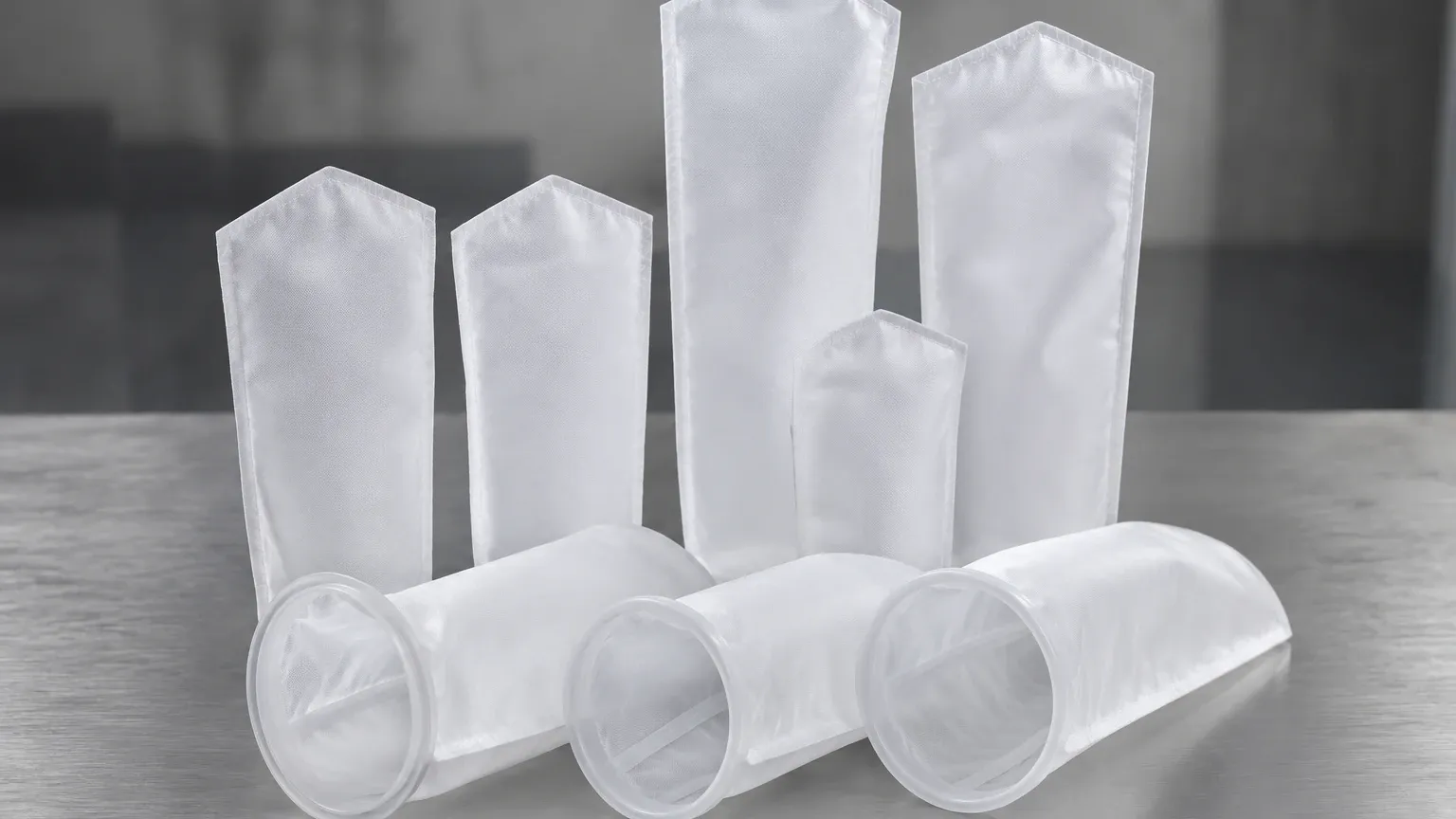
7 Filter Socks
In industrial liquid filtration, the 7-inch diameter format represents one of the most widely adopted standards for bag filtration systems. Often referred to as "Size 1" or "Size 2" depending on their length, 7 filter socks are essential components in chemical processing, water treatment, and food and beverage production. For engineers and procurement specialists, selecting the right filtration media—whether it is a disposable synthetic felt or a cleanable stainless steel mesh—requires a deep understanding of flow dynamics, chemical compatibility, and structural integrity under pressure.
While the term "sock" often implies a flexible fabric, the evolution of industrial requirements has led to the development of high-performance metal alternatives and supporting components. Understanding how these 7-inch elements interface with Filter Discs & Packs and larger filtration housings is critical for optimizing system uptime and filtration efficiency.
The Technical Standard of 7-Inch Filtration
The 7-inch designation refers to the nominal diameter of the filter ring or flange that secures the element within a pressure vessel. In the global filtration market, this size is standardized to ensure interchangeability across different housing manufacturers.
Size #1 vs. Size #2 Configurations
There are two primary lengths associated with the 7-inch diameter standard:
1. Size #1: Typically 7 inches in diameter by 16 to 17 inches in length. These are used for moderate flow rates and smaller batch processes.
2. Size #2: Typically 7 inches in diameter by 32 inches in length. This is the industry workhorse, providing double the surface area of a Size #1 element, which results in lower pressure drops and longer service intervals.
For engineers, the choice between these sizes is dictated by the allowable footprint of the housing and the required solids-loading capacity. A 7-inch diameter provides a significant cross-sectional area that balances flow velocity with the mechanical strength of the filter media.
Material Engineering: Beyond Synthetic Felts
Traditional 7 filter socks are often manufactured from needle-punched polypropylene or polyester felt. While cost-effective for one-time use, these materials have limitations regarding temperature, chemical degradation, and fiber migration. In demanding B2B environments, such as pharmaceutical manufacturing or high-temperature oil filtration, stainless steel wire mesh becomes the preferred material.
Stainless Steel Wire Mesh Advantages
Stainless steel 7-inch filter elements offer several engineering advantages over synthetic alternatives:
* Thermal Stability: Capable of operating in environments exceeding 250°C, where synthetic fibers would melt or lose structural integrity.
* Chemical Resistance: SS316L provides superior resistance to organic solvents, acids, and alkalis, preventing the leaching of contaminants into the filtrate.
* Permanent Media: Unlike disposable socks, stainless steel mesh elements can be cleaned via backwashing or ultrasonic baths, reducing the total cost of ownership (TCO) and environmental waste.
* Precision Apertures: Wire mesh allows for absolute micron ratings, whereas felt media typically provides nominal filtration where efficiency varies with pressure fluctuations.
The Role of Filter Discs & Packs in Support Systems
In many high-pressure applications, a 7-inch filter sock or bag cannot operate in isolation. It requires internal or external support to prevent collapse or bypass. This is where Filter Discs & Packs play a vital role.
Multi-layer mesh packs are often integrated into the base of filtration housings or used as secondary polishing stages. For instance, in polymer filtration or heavy-duty hydraulic systems, a 7-inch circular pack may be positioned downstream of a filter sock to catch any bypass or to provide a final stage of precision filtration. These packs are engineered with multiple layers of varying mesh counts—ranging from coarse support layers to ultra-fine filtration layers—ensuring that the system can handle high differential pressures without deforming the primary filter element.
Selection Criteria for Industrial Engineers
When specifying 7 filter socks for a new or existing system, technical professionals must evaluate several variables to ensure performance expectations are met.
1. Micron Rating and Efficiency
It is crucial to distinguish between nominal and absolute micron ratings. A nominal 10-micron felt sock may only capture 60-80% of particles at that size, whereas a precision-woven stainless steel mesh can achieve absolute ratings with 99% efficiency. Engineers must define the "allowable particle size" in the downstream fluid to determine which media density is required.
2. Flow Rate and Pressure Drop (ΔP)
The relationship between flow rate and pressure drop is non-linear. As the filter accumulates debris, the ΔP increases. For a standard 7-inch Size #2 element, engineers typically target an initial clean pressure drop of less than 2 PSI. If the initial ΔP is higher, it suggests the media is too restrictive for the flow velocity, which will lead to premature clogging and frequent maintenance cycles.
3. Sealing Mechanisms
The seal at the top of the 7-inch element is the most common point of failure. Common sealing options include:
* Steel Rings: Sewn into the top of the sock; relies on the weight of the housing lid to compress the ring against the basket.
* Plastic Flanges (V-Rings): Engineered to provide a bypass-free seal through mechanical compression. These are often preferred in high-purity applications.
* Custom Machined Hubs: For stainless steel permanent elements, a machined flange with O-ring grooves ensures a gas-tight seal, which is critical for hazardous chemical filtration.
Common Risks and Mitigation in Filtration
Implementing 7 filter socks without proper engineering oversight can lead to several operational risks:
* Bypass: Occurs when the filter element is not seated correctly or the seal fails under pressure. This allows unfiltered fluid to reach the downstream process, potentially damaging sensitive equipment like pumps or spray nozzles.
* Media Migration: In low-quality synthetic socks, fibers can break loose and contaminate the filtrate. This is mitigated by using "singed" or "glazed" felt finishes, or by switching to stainless steel mesh which has zero fiber migration.
* Structural Collapse: If the differential pressure exceeds the burst strength of the media (often caused by a sudden surge in flow), the sock can rupture. Using a heavy-duty stainless steel support basket is mandatory for all 7-inch filter elements.
Customization and OEM Requirements
Every industrial process has unique constraints. While the 7-inch diameter is standard, the internal configuration often requires customization. Manufacturers like Kaifil provide OEM solutions where the mesh weave, layer count, and reinforcement structures are tailored to specific viscosities and temperatures.
For example, in the production of resins or adhesives, a standard filter sock may clog too quickly. A customized 7-inch pleated stainless steel element provides significantly more surface area within the same housing footprint, extending the time between cleaning cycles by up to 400%. Engineers should confirm the compatibility of their housing's internal basket dimensions before ordering custom elements to ensure a precise fit.
Total Cost of Ownership (TCO) Analysis
When evaluating 7 filter socks, purchasing teams often focus on the unit price. However, a technical TCO analysis reveals that the cheapest option is rarely the most cost-effective.
* Disposable Costs: Includes the purchase price, shipping, storage space, and disposal fees for contaminated waste.
* Labor Costs: The time required for maintenance personnel to open the housing, replace the sock, and restart the system.
* Production Downtime: The lost revenue during filter change-outs.
* Permanent Alternatives: While a stainless steel 7-inch element has a higher upfront cost, its ability to be cleaned and reused for several years often results in a lower TCO within the first 12 to 18 months of operation, especially in high-volume processes.
Conclusion: Selecting the Right Solution
Whether your application requires the simplicity of synthetic 7 filter socks or the durability of precision-engineered Filter Discs & Packs, the decision should be rooted in technical data. Engineers must balance the need for filtration accuracy with the realities of flow rates, chemical environments, and maintenance budgets.
By confirming the specific micron requirements, sealing types, and pressure limits of your system, you can select a filtration component that not only protects your equipment but also optimizes your entire production line. For those operating in demanding industrial sectors, transitioning to high-quality stainless steel filtration components offers a path toward greater reliability and long-term operational efficiency.
