


8 Filter Cassette
In the landscape of industrial filtration, the 8 filter cassette—typically referring to an 8-inch diameter multi-layer filtration assembly—represents a critical component for precision separation in high-pressure and high-flow environments. These assemblies are engineered to provide a specific balance between surface area, structural integrity, and filtration fineness. For technical professionals and purchasing teams, understanding the nuances of Filter Discs & Packs is essential for optimizing process efficiency and ensuring the longevity of downstream equipment.
Industrial filtration demands more than just a simple mesh screen. It requires a sophisticated understanding of fluid dynamics, material science, and mechanical engineering. The 8 filter cassette is often the preferred choice for modular filtration systems where rapid replacement and high dirt-holding capacity are paramount. This guide explores the technical specifications, application logic, and selection criteria necessary for implementing these components effectively.
Understanding the Construction of 8-Inch Filter Cassettes
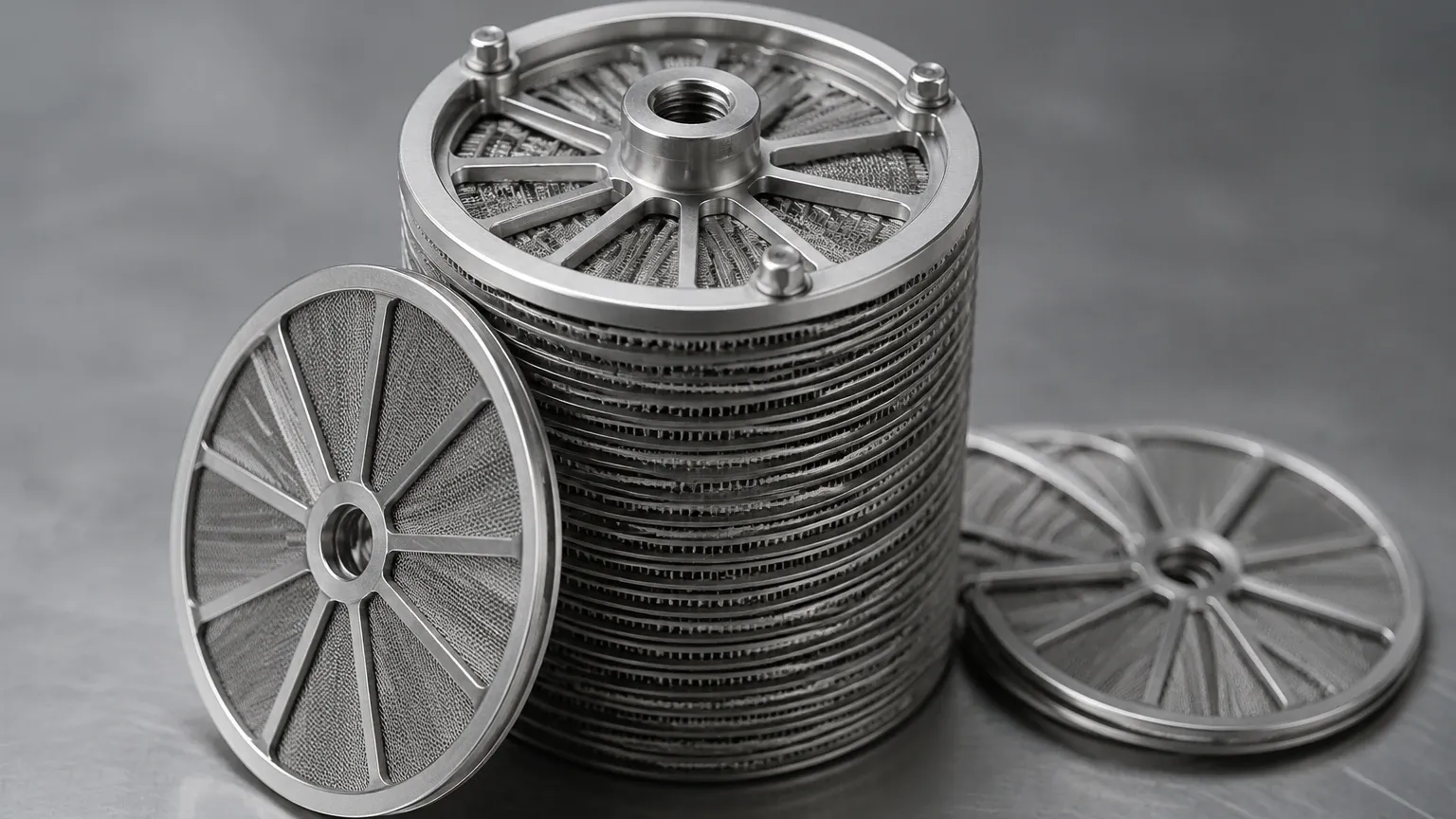
The term "cassette" in industrial filtration usually implies a self-contained, multi-layered unit designed to fit into a specific housing or plate-and-frame system. An 8-inch configuration is a standard size that offers a significant surface area while remaining manageable for manual installation and maintenance.
Multi-Layer Composition
Most high-performance cassettes are not composed of a single layer of wire mesh. Instead, they utilize a composite structure:
1. Filtration Layer: The core layer, often made of fine stainless steel wire mesh, determines the micron rating. This layer is selected based on the specific particle size that must be retained.
2. Support Layers: Coarser mesh layers are placed on either side of the filtration layer. These provide mechanical strength, preventing the fine mesh from deforming under high differential pressure.
3. Drainage Layers: In complex stacks, drainage layers facilitate the flow of filtrate away from the filtration zone, reducing the overall pressure drop across the cassette.
Edge Binding and Sealing
To prevent bypass—where unfiltered fluid escapes around the edges of the disc—the 8 filter cassette requires robust edge sealing. Common methods include:
* Metallic Rims: Aluminum, stainless steel, or copper rims are crimped around the circumference. This provides a rigid seal and protects the mesh edges from fraying.
* Spot Welding: For applications where a rim is not feasible, multiple layers may be spot-welded at the perimeter to maintain alignment.
* Sintered Edges: In high-purity applications, the layers may be diffusion-bonded (sintered) together, creating a monolithic structure that eliminates the risk of media migration or bypass.
Technical Specifications and Engineering Considerations
When specifying an 8-inch filter cassette, engineers must look beyond the diameter. Several technical variables dictate the performance of Filter Discs & Packs in a B2B industrial context.
Micron Rating and Pore Distribution
Filtration accuracy is measured in microns (µm). It is important to distinguish between "absolute" and "nominal" ratings. An absolute rating implies that 99.9% of particles above the specified size will be captured, whereas a nominal rating indicates a lower efficiency (often 60-90%). For critical applications like pharmaceutical processing or fine chemical production, absolute-rated cassettes are mandatory to ensure product purity.
Material Selection and Chemical Compatibility
Stainless steel is the primary material for industrial cassettes due to its durability and resistance to extreme temperatures. However, the specific grade must be matched to the fluid chemistry:
* Grade 304: Suitable for general industrial use, water treatment, and food-grade applications where corrosion risk is moderate.
* Grade 316L: The industry standard for chemical processing and pharmaceuticals. The addition of molybdenum provides superior resistance to chlorides and pitting corrosion.
* Specialty Alloys: For highly aggressive environments involving acids or high-salinity fluids, alloys like 904L, Monel, or Inconel may be required.
Pressure Drop and Flow Rates
The "clean pressure drop" is the initial resistance the filter offers to the fluid flow. An optimized 8 filter cassette design maximizes the open area of the mesh to ensure high flow rates while maintaining the required filtration fineness. Engineers must calculate the expected pressure drop at the start of the cycle to ensure the system pump can handle the resistance as the filter becomes loaded with contaminants.
Applications in Demanding Industries
The 8-inch filter cassette is a versatile tool used across various sectors where reliability is non-negotiable.
Chemical and Petrochemical Processing
In the chemical industry, these cassettes are used to remove catalysts from process streams or to protect sensitive instrumentation from particulate matter. The ability of stainless steel Filter Discs & Packs to withstand high temperatures makes them ideal for hot gas filtration and polymer melt processing.
Pharmaceutical and Biotechnology
Sterile filtration and the recovery of active pharmaceutical ingredients (APIs) require filters with high biological inertness. 8-inch cassettes used here are often electropolished to ensure a smooth surface that resists bacterial growth and facilitates thorough cleaning (CIP/SIP processes).
Food and Beverage Production
From clarifying fruit juices to filtering cooking oils, the 8 filter cassette provides a hygienic solution. The use of food-grade stainless steel ensures that no contaminants are leached into the product, and the robust construction allows for repeated cleaning and reuse, reducing the total cost of ownership compared to disposable plastic filters.
Hydraulic and Lubrication Systems
High-pressure hydraulic systems rely on precision filtration to prevent wear on valves and pumps. The 8-inch disc format is frequently used in bypass filtration units or as a final safety screen before fluid enters critical components.
Selection Criteria for Filter Discs & Packs
Choosing the right 8 filter cassette involves more than matching dimensions. Purchasing teams and engineers should evaluate the following factors:
1. Mesh Weave Type:
* Plain Weave: Simple and cost-effective for general purpose.
* Dutch Weave: Offers higher strength and finer filtration by using thicker warp wires and thinner weft wires.
* Twill Weave: Allows for thicker wires in a given mesh count, increasing durability.
2. Structural Integrity: Will the cassette be subjected to back-pulsing or high-pressure surges? If so, a reinforced multi-layer sintered pack is preferable to a single-layer disc.
3. Permeability: Ensure the mesh density does not unnecessarily restrict flow, which would lead to increased energy consumption by the pumping system.
4. Customization Requirements: Many industrial housings have unique internal geometries. Working with a manufacturer that provides customized rim thicknesses, center holes, or specialized shapes (beyond the standard circle) is often necessary for a perfect fit.
Performance Optimization and Maintenance
To maximize the lifespan of an 8 filter cassette, a proactive maintenance strategy is required. Unlike disposable filters, stainless steel Filter Discs & Packs are often cleanable and reusable.
Cleaning Cycles
When the differential pressure (ΔP) reaches a predetermined limit, the cassette must be cleaned. Methods include:
* Ultrasonic Cleaning: High-frequency sound waves create cavitation bubbles that dislodge fine particles from deep within the mesh pores.
* Backwashing: Reversing the flow of fluid through the cassette can flush out accumulated debris.
* Chemical Cleaning: Soaking in specific solvents or acids can dissolve organic or mineral scaling without damaging the stainless steel substrate.
Replacement Indicators
While durable, metal filters eventually fatigue. Signs that a cassette needs replacement include:
* Permanent Deformation: If the mesh has "bellied" or stretched due to excessive pressure.
* Media Migration: If wires have broken or the weave has shifted, allowing larger particles to pass through.
* Irreversible Blinding: When cleaning no longer restores the pressure drop to acceptable levels.
The Value of Custom OEM Solutions
For many B2B applications, off-the-shelf components may not meet the specific demands of a proprietary process. Custom manufacturing of 8 filter cassettes allows for precise control over the filtration media, layer sequence, and mechanical interface.
By collaborating with a specialist manufacturer like Kaifil, engineers can develop filtration components that are tailored to their specific operating temperatures, chemical environments, and flow requirements. This collaborative approach ensures that the final product not only meets the technical specifications but also contributes to the overall efficiency and reliability of the industrial system.
Conclusion
The 8 filter cassette is a cornerstone of industrial separation technology. By selecting the appropriate materials, weave types, and structural configurations, organizations can achieve superior filtration performance while minimizing downtime. Whether used in the chemical, pharmaceutical, or food sectors, high-quality Filter Discs & Packs provide the durability and precision required to protect equipment and ensure product quality. When evaluating these components, focusing on technical boundaries and application-specific needs will lead to the most cost-effective and high-performing filtration outcomes.
