


8 Filter Paper
In the landscape of industrial filtration, selecting the correct media is a critical decision that influences product purity, equipment longevity, and operational efficiency. Among the various specifications encountered by procurement teams and process engineers, "8 filter paper"—often referring to Grade 8 technical paper or 8-inch diameter filtration discs—represents a specific niche in both laboratory and industrial processing. While traditional cellulose-based 8 filter paper serves essential functions in low-pressure, single-use applications, many modern industrial processes are transitioning toward more robust solutions, such as stainless steel Filter Discs & Packs, to meet the demands of high-temperature and chemically aggressive environments.
Understanding the technical nuances of 8 filter paper, its performance limits, and the engineering advantages of upgrading to metal-based filtration components is essential for optimizing any fluid or gas processing system. This guide examines the characteristics of this filtration media and provides a framework for evaluating when a transition to permanent, high-precision metal components is required.
Technical Specifications and Performance of 8 Filter Paper
When engineers specify 8 filter paper, they are typically looking for a media characterized by specific porosity and flow rates. In the context of technical paper grades, "Grade 8" is traditionally recognized for its high-speed filtration capabilities. It is a relatively coarse media designed for the rapid removal of large particles or gelatinous precipitates.
Pore Size and Particle Retention
Grade 8 filter paper generally features a pore size range that allows for high permeability. This makes it suitable for applications where the primary goal is high throughput rather than absolute precision at the sub-micron level. However, the lack of mechanical rigidity in cellulose fibers means that under increasing differential pressure, the pore structure can distort, leading to "particle breakthrough" or media migration.
Flow Rate and Permeability
The primary advantage of 8 filter paper is its low resistance to flow. In gravity-fed or low-vacuum systems, it allows for the rapid processing of large volumes of liquid. However, in B2B industrial settings, such as chemical manufacturing or hydraulic oil recycling, the flow rate must be balanced against the media’s ability to withstand the system's operating pressure.
Chemical and Thermal Limitations
Standard cellulose 8 filter paper is limited by its organic nature. It is susceptible to degradation when exposed to strong acids, bases, or temperatures exceeding 100°C. For industrial processes involving steam sterilization or aggressive solvents, the structural integrity of paper becomes a liability, necessitating a move toward inorganic materials like stainless steel.
The Transition from Paper to Stainless Steel Filter Discs & Packs
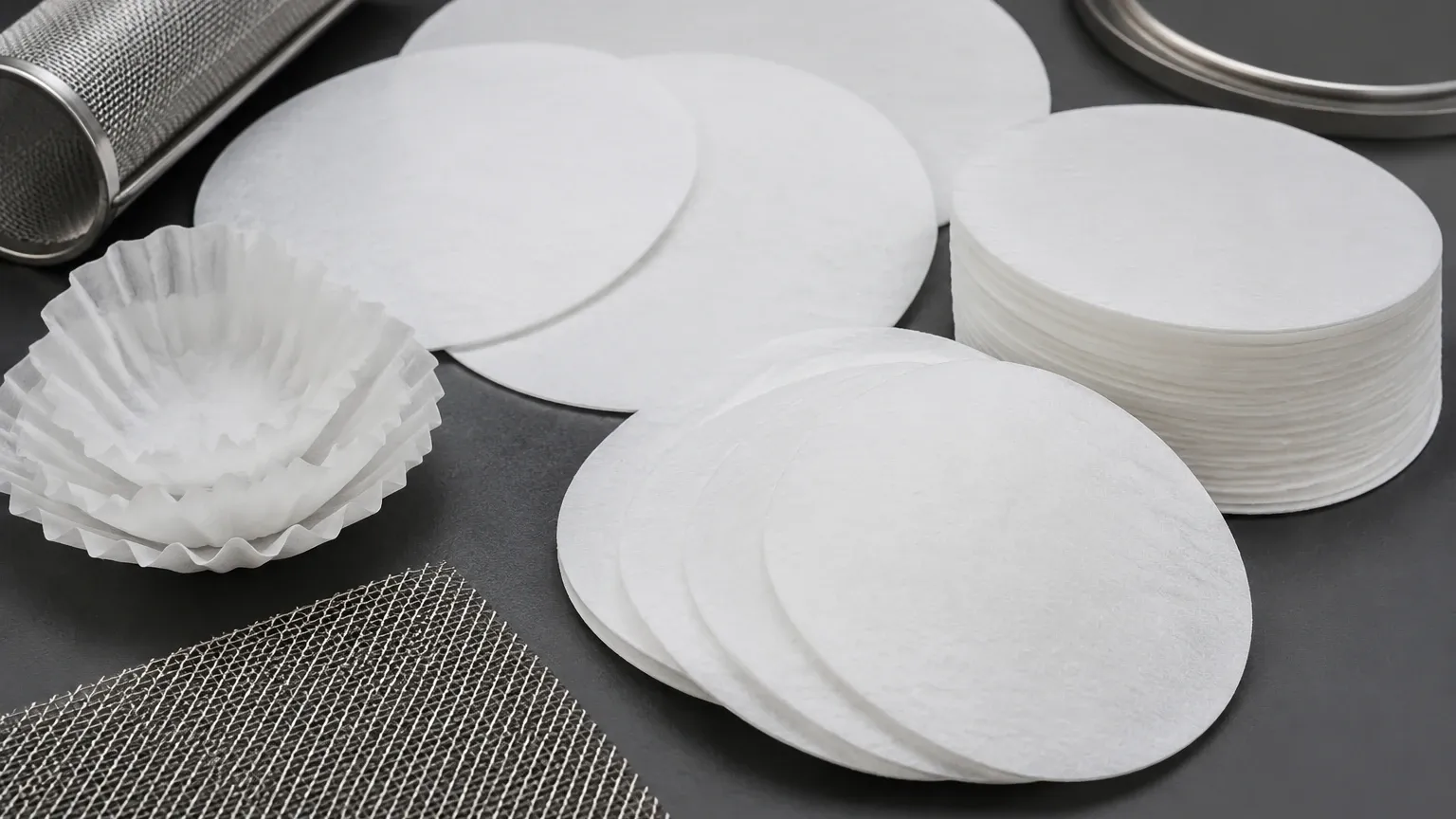
In many industrial sectors, the term "8 filter paper" is used as a legacy specification for 8-inch diameter discs used in plate-and-frame filters. While paper was once the standard, modern engineering often favors Filter Discs & Packs manufactured from stainless steel wire mesh or sintered metal. The transition is driven by several key factors related to total cost of ownership (TCO) and process reliability.
Durability and Reusability
Unlike paper, which is a consumable that must be replaced after every batch or when the pressure drop reaches a certain threshold, stainless steel filter discs are designed for long-term use. They can be cleaned through backwashing, ultrasonic cleaning, or chemical baths, allowing them to be returned to service multiple times. This reduces the waste stream and the frequency of system downtime for media replacement.
Precision Engineering
Metal filter packs can be engineered with multiple layers of wire mesh to provide graduated filtration. For example, a pack might include a fine filtration layer protected by coarser support layers on both sides. This construction provides a level of precision and mechanical strength that 8 filter paper cannot achieve. The mesh counts can be strictly controlled to ensure a consistent micron rating across the entire surface area.
Mechanical Integrity under Pressure
In hydraulic systems or high-viscosity polymer filtration, the media is subjected to significant mechanical stress. Cellulose-based 8 filter paper is prone to tearing or collapsing under these conditions. In contrast, stainless steel Filter Discs & Packs maintain their geometric stability even under high differential pressures, ensuring that the filtration efficiency remains constant throughout the production cycle.
Engineering Considerations for Selecting Filter Media
When evaluating whether to continue using 8 filter paper or to implement a custom metal filtration solution, engineers must consider the specific parameters of their application. The following criteria serve as a technical checklist for the selection process.
1. Fluid Compatibility
The chemical composition of the filtrate is the first hurdle. If the process involves fluids that cause cellulose fibers to swell or dissolve, a stainless steel alternative is mandatory. Kaifil specializes in utilizing alloys like SS304, SS316L, and even exotic alloys for environments where corrosion resistance is paramount.
2. Operating Temperature
Standard 8 filter paper begins to lose its carbon-to-carbon bond strength at elevated temperatures. If your process operates at temperatures above 120°C, metal mesh or sintered discs are the only viable options. These components can operate reliably at temperatures up to 400°C or higher, depending on the alloy and the housing design.
3. Micron Rating and Efficiency
Is the goal to remove "visible" debris, or is it to protect a downstream high-precision valve? 8 filter paper is excellent for coarse filtration, but if your specification requires an absolute micron rating (e.g., 5μm or 10μm), the consistency of stainless steel wire mesh provides a much higher degree of confidence. Metal mesh allows for exact calculations of the "open area," which directly correlates to flow capacity and particle retention.
4. Pressure Drop ($ΔP$)
The relationship between flow rate and pressure drop is critical. A filter that clogs too quickly increases energy costs as pumps work harder to maintain flow. Because stainless steel Filter Discs & Packs can be engineered with specific pleating or layering, they often offer a larger effective filtration area (EFA) than a flat sheet of 8 filter paper in the same footprint, leading to a more favorable $ΔP$ profile.
Common Applications for Industrial Filter Discs
The move toward high-performance metal filtration is evident across several key industries where 8 filter paper was once the norm.
* Chemical Processing: In the filtration of resins, catalysts, and solvents, the durability of stainless steel prevents media migration from contaminating the final product.
* Food and Beverage: Stainless steel discs are preferred for their ease of sterilization (CIP/SIP processes) and compliance with food safety standards, where paper fibers might be considered a contaminant.
* Pharmaceuticals: Precision is non-negotiable. Multilayered filter packs ensure that active pharmaceutical ingredients (APIs) are processed without the risk of media-induced impurities.
* Hydraulic and Lubrication Systems: High-pressure environments require the structural rigidity of metal mesh to protect sensitive components from particulate wear.
Customization and OEM Solutions
One of the primary limitations of standard 8 filter paper is its lack of adaptability. It is typically sold in standard sizes and grades. In contrast, industrial manufacturers like Kaifil provide extensive customization options for Filter Discs & Packs.
Customization options include:
* Layer Configuration: Combining different mesh sizes to create a depth-filtration effect.
* Edge Treatment: Welding, binding, or framing the edges of the discs to prevent fraying and ensure a bypass-free seal within the filter housing.
* Material Selection: Choosing the specific grade of stainless steel or other metals to match the corrosive profile of the fluid.
* Geometric Variety: While "8" may refer to an 8-inch diameter, custom discs can be manufactured in any shape or size required by the specific machinery.
Total Cost of Ownership: Paper vs. Metal
While the initial purchase price of 8 filter paper is significantly lower than that of a stainless steel filter pack, the total cost of ownership (TCO) often favors the metal solution in B2B industrial environments.
Consider the following cost factors:
1. Consumable Costs: The recurring expense of purchasing, shipping, and storing large quantities of paper.
2. Labor Costs: The time required for maintenance staff to change out filters frequently.
3. Disposal Costs: In many regions, used filter media contaminated with industrial chemicals must be treated as hazardous waste, carrying high disposal fees.
4. Production Uptime: Every time a system is shut down to replace a paper filter, production stops. The longevity of metal discs significantly extends the intervals between maintenance cycles.
Conclusion: Making an Informed Selection
Whether your application currently utilizes 8 filter paper for laboratory analysis or as a primary filtration stage in a production line, understanding its limitations is the first step toward process optimization. For low-pressure, aqueous, and non-critical applications, paper remains a cost-effective choice. However, as the demands for purity, pressure resistance, and thermal stability increase, the engineering advantages of stainless steel Filter Discs & Packs become undeniable.
When specifying filtration components, engineers should consult with manufacturers who understand the interplay between material science and fluid dynamics. By focusing on the micron rating, chemical compatibility, and mechanical requirements of the system, purchasing teams can move beyond generic specifications and implement solutions that provide long-term reliability and superior filtration performance. Kaifil remains committed to providing these high-performance, customized metal filtration solutions to meet the most demanding industrial challenges.
