


8 Inch Diameter Filter
In industrial filtration, the 8 inch diameter filter serves as a critical component for high-capacity systems requiring precise particle retention and robust mechanical integrity. Often utilized in polymer extrusion, chemical processing, and hydraulic systems, this specific dimension provides a significant surface area—approximately 50.27 square inches—allowing for high flow rates while maintaining manageable pressure drops. Engineering an effective filtration solution at this scale requires a deep understanding of wire mesh metallurgy, weave patterns, and structural reinforcement to ensure the component survives the rigors of industrial environments.
Selecting the right Filter Discs & Packs involves evaluating more than just the outer diameter. Engineers must consider the fluid chemistry, operating temperatures, differential pressure limits, and the specific nature of the contaminants being removed. As a professional manufacturer, Kaifil provides precision-engineered stainless steel filtration components designed to meet these exact technical requirements.
Technical Specifications and Material Selection
The performance of an 8 inch diameter filter is primarily dictated by its material composition. In most industrial applications, stainless steel is the material of choice due to its balance of cost, durability, and resistance to environmental stressors.
Stainless Steel Alloys
* Grade 304: The standard choice for general industrial applications. It offers excellent strength and basic corrosion resistance, making it suitable for food and beverage processing or standard hydraulic filtration.
* Grade 316/316L: Preferred for more aggressive environments. The addition of molybdenum enhances resistance to pitting and crevice corrosion, particularly in chloride-rich environments or chemical processing lines. The "L" (low carbon) variant is essential if the filter pack requires extensive welding, as it prevents carbide precipitation.
* Specialty Alloys: For extreme conditions involving high-temperature oxidation or highly acidic media, alloys such as Inconel, Monel, or Hastelloy may be utilized in the disc construction.
Weave Types and Micron Ratings
The filtration efficiency of an 8 inch diameter filter depends on the wire mesh weave.
* Plain Weave: Provides a simple over-under pattern, offering high flow and easy cleaning. It is typically used for coarser filtration (above 100 microns).
* Twill Weave: Allows for heavier wires in a given mesh count, increasing the strength of the disc for high-pressure applications.
* Dutch Weave (Plain or Twill): This weave produces a dense, tortuous path for the fluid, allowing for fine filtration down to 5-10 microns while maintaining high mechanical stability. This is often the preferred choice for precision polymer melt filtration.
Structural Configurations: Single Layer vs. Multi-Layer Packs
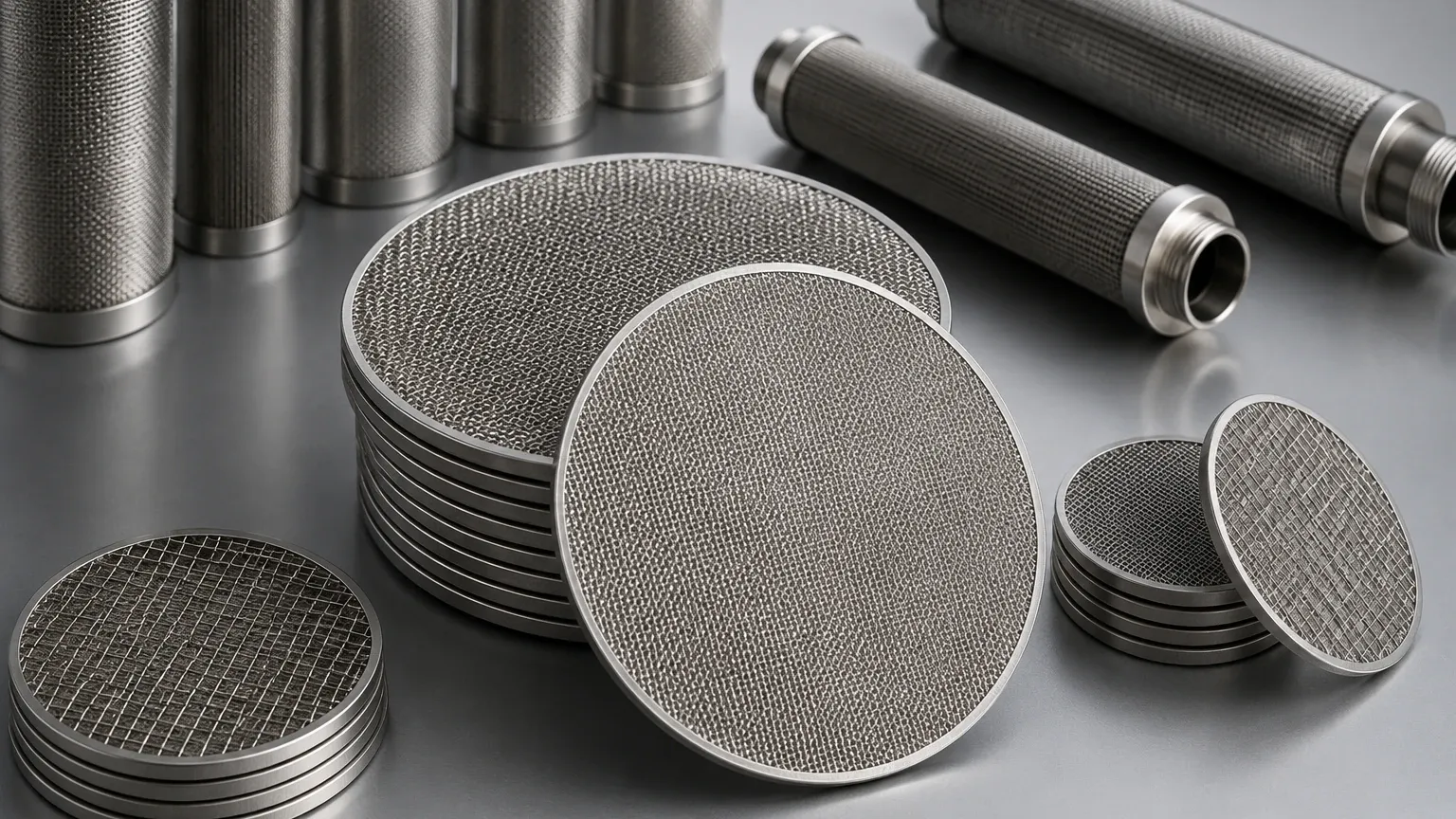
An 8 inch diameter filter is rarely used as a single thin sheet of mesh in high-pressure environments. To achieve both fine filtration and structural rigidity, manufacturers often design multi-layer filter packs.
Multi-Layer Construction
In a multi-layer configuration, the "filtration layer" is sandwiched between "support layers" and "drainage layers."
1. Support Layers: Coarse mesh layers that provide the mechanical backbone, preventing the fine filtration mesh from deforming or migrating under high differential pressure.
2. Filtration Layer: The specific mesh layer responsible for the target micron rating.
3. Drainage Layers: Ensure that the fluid can flow across the entire surface area of the disc, even if the housing geometry is restrictive.
Bonding and Edging
To prevent bypass—where fluid travels around the edges of the filter rather than through it—8 inch diameter filters are often finished with specific edge treatments:
* Spot Welding: Multiple layers are welded at specific intervals to maintain the integrity of the pack during installation and operation.
* Rimmed Edges: The perimeter of the disc is encased in a metal rim (usually aluminum or stainless steel). This provides a clean, compression-ready surface that ensures a tight seal within the filter housing or breaker plate.
* Unrimmed/Raw Edges: Used in applications where the filter is held in place by heavy mechanical clamping and the risk of edge fraying is minimal.
Engineering Considerations for Flow and Pressure
When specifying an 8 inch diameter filter, engineers must calculate the expected pressure drop ($ΔP$) across the media. As the surface area is fixed by the 8-inch dimension, the variables affecting pressure include fluid viscosity, flow velocity, and the open area of the mesh.
Surface Area and Throughput
The 8-inch diameter provides a substantial area, but in high-viscosity applications like plastic extrusion, the "effective filtration area" may be reduced if the support structure (such as a breaker plate) blocks a significant portion of the mesh. It is vital to ensure that the mesh count and wire diameter are optimized to maximize the percentage of open area without sacrificing the strength needed to resist the "push" of the viscous material.
Mechanical Strength and Burst Pressure
In hydraulic and high-pressure gas systems, the filter must withstand sudden surges. An unsupported 8-inch disc is prone to "ballooning" or bursting. Engineers must determine if the filter requires a pleated design to increase surface area or if a flat multi-layer pack with a heavy-duty backup plate is sufficient for the anticipated $ΔP$.
Common Applications for 8 Inch Filters
Due to its standardized size, the 8 inch diameter filter is found across a diverse range of industrial sectors:
* Polymer and Plastic Extrusion: Used in screen changers to remove gels, un-melted resin, and contaminants from the melt stream. The 8-inch size is common in mid-to-large scale production lines for film, sheet, and profile extrusion.
* Chemical Processing: Employed in the filtration of catalysts, resins, and intermediate chemical products where corrosion resistance is paramount.
* Food and Beverage: Utilized in large-scale straining operations, such as juice processing or edible oil refining, where high-volume throughput is required.
* Oil and Gas: Serving as primary or secondary filters in lubrication systems and fuel lines for large industrial turbines and engines.
* Water Treatment: Used in specialized industrial water systems to protect sensitive downstream components like RO membranes or high-pressure nozzles.
Maintenance, Cleaning, and Replacement Cycles
The total cost of ownership for an 8 inch diameter filter is heavily influenced by whether the component is treated as a consumable or a cleanable asset.
Cleanability
Stainless steel filters are inherently cleanable. Depending on the contaminant, cleaning methods include:
* Ultrasonic Cleaning: Effective for removing fine particulates from deep within the mesh pores.
* Chemical Cleaning/Solvent Bath: Used when the contaminant is a soluble resin or chemical deposit.
* Burn-off (Pyrolysis): Common in the plastics industry to remove polymer residue, though this must be done carefully to avoid altering the temper of the stainless steel.
Determining Replacement
Even with regular cleaning, metal filters eventually succumb to mechanical fatigue or "pore blinding" (permanent blockage). Signs that an 8 inch diameter filter requires replacement include:
1. Shortened Cycle Times: The time between required cleanings decreases significantly.
2. Permanent Pressure Drop: The "clean" pressure drop after maintenance is higher than the original specification.
3. Physical Deformation: Any signs of warping, fraying at the edges, or broken wires in the mesh layers.
Selection Checklist for Purchasing Teams
Before finalizing an order for 8 inch diameter filters, technical and purchasing teams should confirm the following parameters with the manufacturer:
* Exact Diameter and Tolerance: Is the requirement exactly 8.000 inches, or is there a specific tolerance (e.g., +0.00/-0.02 inches) required for the housing fit?
* Micron Rating (Absolute vs. Nominal): Ensure the mesh provides the necessary level of protection for downstream equipment.
* Layer Sequence: For multi-layer packs, specify the exact mesh count and wire diameter for each layer.
* Operating Temperature and Pressure: Confirm that the chosen alloy and bonding method (welding or rimming) can withstand the operational environment.
* Compliance Requirements: Does the filter need to meet FDA, 3A, or other industry-specific sanitary standards?
By focusing on these technical details, engineers can ensure that their filtration systems operate at peak efficiency with minimal downtime. For those seeking specialized configurations or OEM support, exploring the range of Filter Discs & Packs is the first step toward a customized filtration solution that meets the rigorous demands of modern industrial processing.
