


90mm Filter Disc
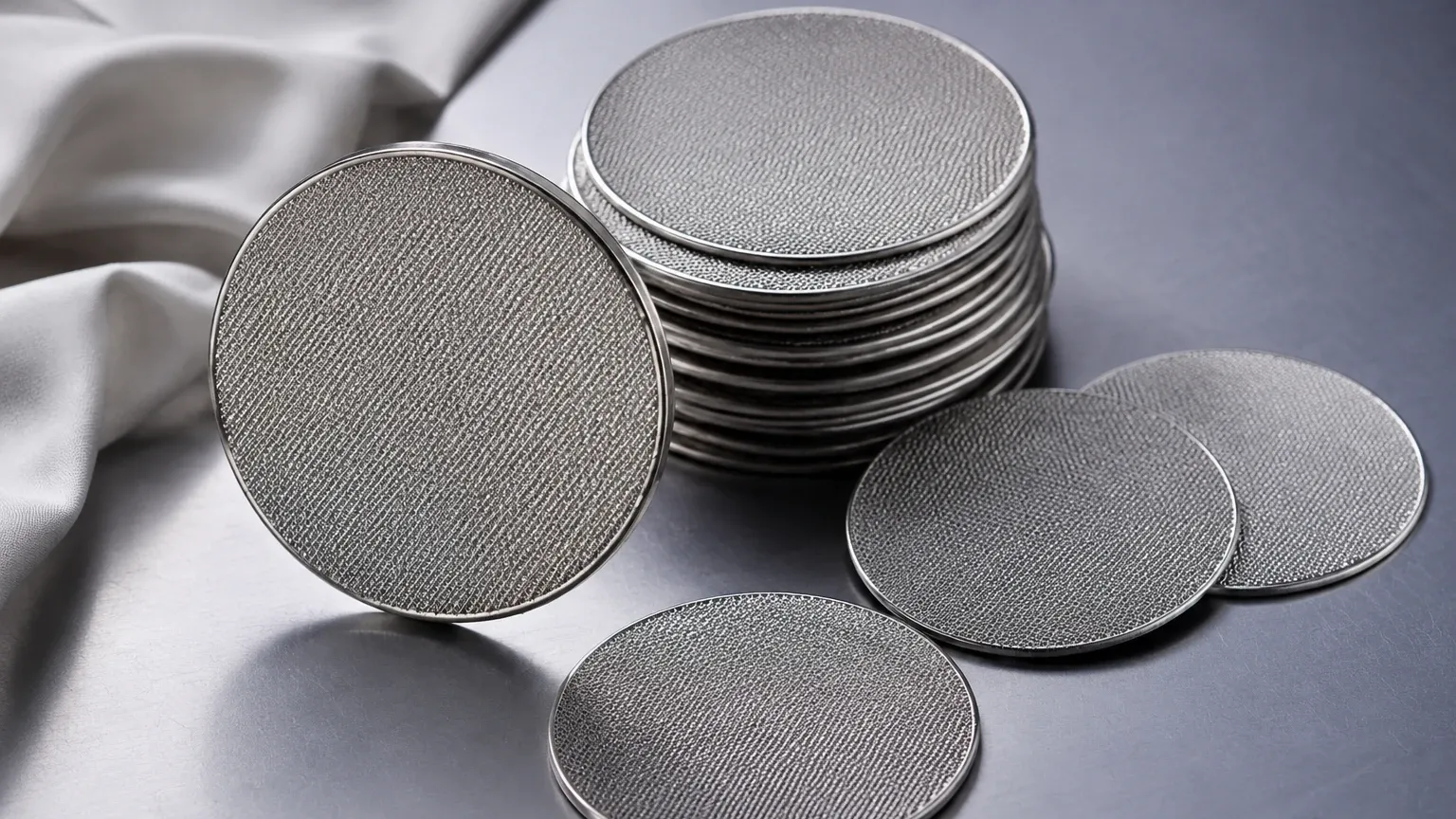
In the realm of industrial filtration, precision and material integrity are the cornerstones of process efficiency. The 90mm filter disc represents a standardized yet highly customizable component used across a spectrum of demanding sectors, including polymer extrusion, chemical processing, and pharmaceutical manufacturing. As a critical element within the broader category of Filter Discs & Packs, these components are engineered to withstand high pressures, corrosive environments, and extreme temperatures while maintaining precise filtration accuracy.
Selecting the correct 90mm filter disc requires a deep understanding of wire mesh metallurgy, weave structures, and the mechanical stresses of the specific application. This guide examines the technical specifications, engineering considerations, and performance benchmarks that procurement teams and engineers must evaluate when sourcing these essential filtration components.
Technical Specifications of the 90mm Filter Disc
The 90mm diameter is a common specification for medium-scale industrial equipment, often found in pilot plants, laboratory-scale filtration units, and specific plastic extrusion dies. While the diameter is fixed, the performance characteristics of the disc vary significantly based on its construction.
Dimensional Accuracy and Tolerances
In industrial applications, a 90mm filter disc must adhere to strict dimensional tolerances to ensure a proper seal within the filter housing or extruder head. A variance of even a few tenths of a millimeter can lead to "bypass," where unfiltered media escapes around the edges of the disc, compromising the purity of the final product. High-quality manufacturing processes, such as precision die-cutting or laser cutting, ensure that the edges are clean and the diameter is consistent across large production batches.
Material Composition
Stainless steel is the primary material for industrial filter discs due to its mechanical strength and resistance to oxidation. The most common grades include:
* AISI 304: Suitable for general industrial use where basic corrosion resistance is required. It is cost-effective and provides excellent structural integrity.
* AISI 316L: The "L" denotes low carbon, which improves weldability and resistance to sensitization. This grade is preferred in pharmaceutical and food-grade applications where resistance to pitting and acetic acids is mandatory.
* Specialty Alloys: For highly aggressive chemical environments, materials like Hastelloy, Monel, or Inconel may be utilized, though stainless steel remains the industry standard for the majority of 90mm filter disc applications.
Mesh Weave Patterns and Filtration Efficiency
The filtration performance of a 90mm filter disc is determined by the weave of the wire mesh. Each weave type offers a different balance between filtration fineness, mechanical strength, and flow resistance.
Plain Weave
This is the most common weave where each warp wire crosses over and under each weft wire. It provides a consistent pore size and is easy to clean. Plain weave discs are typically used for coarser filtration tasks or as support layers in multi-layer packs.
Twilled Weave
In a twilled weave, each warp wire passes over and under two weft wires. This allows for the use of heavier wires for a given mesh count, resulting in a more robust disc that can handle higher mechanical loads without deforming. It is often used for finer filtration requirements where the disc must maintain its shape under pressure.
Dutch Weave (Plain and Twilled)
Dutch weaves utilize different diameters for warp and weft wires. This results in a much denser mesh with smaller, triangular-shaped openings. A 90mm filter disc featuring a Dutch weave is capable of high-precision filtration, often down to the low micron range (e.g., 5μm to 20μm), while maintaining high mechanical stability. These are frequently used in high-pressure hydraulic systems and polymer melt filtration.
Structural Design: Single Layer vs. Multi-Layer Filter Discs & Packs
Depending on the complexity of the filtration task, a 90mm filter disc may be used as a standalone component or as part of a more complex assembly. Engineers must decide between single-layer and multi-layer configurations based on the expected contaminant load and the required lifespan of the filter.
Single-Layer Discs
Single-layer discs are primarily used in low-pressure applications or as a final safety screen. They are cost-effective and easy to replace. However, they lack the "depth" required for high-capacity contaminant loading and may be prone to rapid blinding (clogging) if the particulate size is uniform.
Multi-Layer Filter Packs
To optimize filtration performance, multiple layers of mesh are often combined to create Filter Discs & Packs. A typical 90mm multi-layer pack might consist of:
1. A Fine Filtration Layer: The middle layer that defines the micron rating.
2. Support Layers: Coarser mesh layers on either side of the filtration layer to provide mechanical rigidity.
3. Drainage Layers: Very coarse layers that help distribute the flow evenly across the disc surface.
These layers can be spot-welded together to ensure they remain aligned during installation and operation. In more demanding environments, the layers may be bound by an aluminum or stainless steel rim (edging), which provides a superior peripheral seal and prevents the mesh wires from fraying.
Performance Factors: Pressure Drop and Flow Rate
One of the most critical engineering considerations when implementing a 90mm filter disc is the relationship between the filtration rating and the pressure drop (ΔP). As the pore size decreases to capture smaller particles, the resistance to flow increases.
Calculating Flow Resistance
Engineers must ensure that the initial pressure drop across a clean 90mm filter disc does not exceed the system's operational limits. Factors influencing this include:
* Open Area Percentage: The ratio of the area of the holes to the total area of the mesh. A higher open area reduces the initial pressure drop but may compromise the disc's strength.
* Viscosity of the Media: High-viscosity fluids, such as molten polymers or heavy oils, require discs with larger open areas or reinforced structures to prevent the mesh from collapsing.
* Contaminant Loading: As particles accumulate on the surface of the 90mm filter disc, the effective open area decreases, leading to a rise in pressure. The system must be designed to handle this increase until the disc reaches its terminal pressure drop and requires replacement or cleaning.
Application-Specific Considerations
The 90mm filter disc is utilized in various industrial contexts, each with unique challenges that dictate the disc's design.
Polymer and Fiber Extrusion
In the plastics industry, filter discs are used to remove "gels" and un-melted particles from the polymer melt. These discs must operate at temperatures exceeding 300°C and pressures up to 350 bar. Multi-layer packs with reinforced edging are standard here to prevent the mesh from distorting under the immense force of the extruder screw.
Pharmaceutical and Biotechnology
For these sectors, the 90mm filter disc must be manufactured to high sanitary standards. The use of 316L stainless steel is non-negotiable to prevent metallic contamination. Furthermore, the discs must be compatible with Clean-in-Place (CIP) and Sterilization-in-Place (SIP) protocols, involving exposure to caustic cleaning agents and high-pressure steam.
Chemical Processing
Chemical filtration often involves aggressive solvents or acidic solutions. The selection of the 90mm filter disc must account for the chemical compatibility of both the mesh and the binding material (if any). Engineers often refer to corrosion resistance tables to ensure that the chosen stainless steel grade will not degrade over time, which could lead to downstream contamination.
Quality Control and Manufacturing Tolerances
When sourcing 90mm filter discs, the reliability of the manufacturer's quality control (QC) system is as important as the material specifications. Inconsistent manufacturing can lead to "thin spots" in the mesh or irregular pore sizes, both of which result in premature failure.
Key QC Metrics
* Bubble Point Test: Used to verify the pore size of the mesh. By submerging the disc in a liquid and measuring the pressure required for air to break through, manufacturers can confirm the absolute micron rating.
* Mesh Count Verification: Ensuring that the number of wires per inch matches the specification, which directly impacts the filtration accuracy and flow rate.
* Flatness and Deburring: A 90mm filter disc must be perfectly flat to ensure it sits flush against the sealing surface. Any burrs left from the cutting process can damage the filter housing or create bypass channels.
Sourcing and Procurement Best Practices
For purchasing teams, providing comprehensive data to the manufacturer is essential for receiving a product that meets operational needs. When requesting a quote for a 90mm filter disc, the following information should be confirmed:
1. Micron Rating: Specify whether the rating is nominal (approximate) or absolute (guaranteed).
2. Layer Configuration: Indicate if a single disc or a multi-layer pack is required, and specify the sequence of layers if known.
3. Operating Environment: Provide details on the maximum operating temperature, pressure, and the chemical nature of the fluid.
4. Quantity and Packaging: For high-purity applications, specify if the discs need to be ultrasonically cleaned and individually bagged to prevent contamination during transit.
By focusing on these technical details, engineers can optimize their filtration processes, reduce downtime caused by filter failure, and ensure the long-term integrity of their industrial systems. Whether used in a simple strainer or a complex high-pressure extruder, the 90mm filter disc remains a fundamental component in achieving precise separation and protection in modern manufacturing.
For those seeking to evaluate specific mesh types or custom configurations for their unique industrial requirements, it is advisable to Review product options and application support to ensure the selected components align with both performance goals and budgetary constraints.
