


Air Filter Packs
In industrial filtration, the term "air filter packs" refers to precision-engineered assemblies of metal wire mesh designed to remove particulate matter from gas streams, compressed air systems, and high-temperature exhaust. Unlike standard residential or commercial HVAC filters that utilize fiberglass or synthetic polymers, industrial air filter packs are typically constructed from stainless steel or specialized alloys. These components are essential in environments where pressure, temperature, and chemical exposure would cause conventional filter media to fail.
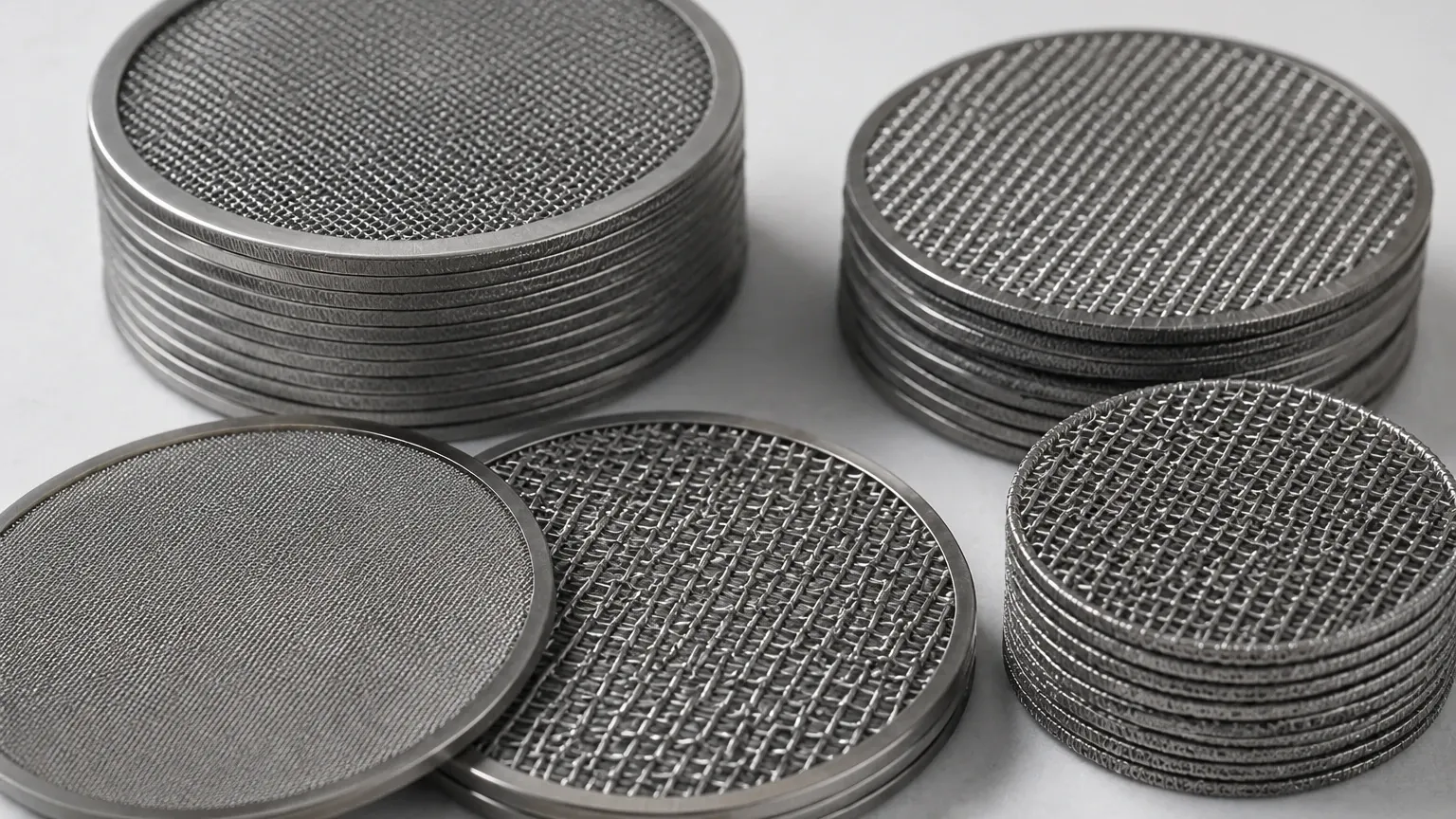
For engineers and procurement specialists, selecting the correct Filter Discs & Packs involves a deep understanding of mesh geometry, material science, and fluid dynamics. These packs are not merely screens; they are multi-layered systems designed to balance filtration efficiency with structural integrity and low resistance to airflow.
Technical Composition of Metal Air Filter Packs
The performance of an air filter pack is primarily dictated by its construction. Most industrial applications require a multi-layer configuration to achieve specific performance benchmarks. A typical pack consists of three distinct functional layers:
1. The Filtration Layer: This is the core of the pack, usually featuring a fine weave such as Twill Dutch Weave or Plain Dutch Weave. This layer determines the micron rating of the pack, capturing particles of a specific size while allowing air to pass through.
2. The Support Layer: Fine filtration mesh is often delicate. To prevent the mesh from deforming under high-pressure airflows, coarser mesh layers are placed on one or both sides of the filtration layer. These provide the necessary mechanical strength to maintain the pack’s shape.
3. The Drainage or Protection Layer: In some complex air filter packs, an outer layer of heavy-duty square mesh is used to protect the assembly during installation and to ensure even distribution of the air across the filtration surface.
By combining different mesh counts and wire diameters, manufacturers can customize the pack to meet the exact requirements of a specific industrial process. This layering technique allows for "depth filtration" characteristics within a relatively thin metal assembly.
Material Selection for Harsh Environments
Material choice is the first critical decision in the engineering process. In industrial air filtration, the chemical composition of the gas stream and the operating temperature are the primary drivers for material selection.
Stainless Steel 304
This is the standard material for most general industrial air filter packs. It offers excellent strength and good corrosion resistance for applications involving ambient air or non-corrosive gases. It is cost-effective and widely available in various mesh specifications.
Stainless Steel 316L
For applications involving high humidity, salt-laden air (marine environments), or acidic gas streams, SS316L is the preferred choice. The addition of molybdenum provides superior resistance to pitting and crevice corrosion. The "L" denotes low carbon content, which is vital if the filter packs require extensive welding during the rimming or assembly process, as it prevents carbide precipitation.
Specialty Alloys
In extreme cases, such as aerospace engine filtration or high-heat chemical reactors, materials like Inconel, Monel, or Hastelloy may be used. These alloys maintain their mechanical properties at temperatures exceeding 800°C, where stainless steel would begin to oxidize or lose structural rigidity.
Engineering Considerations: Micron Rating and Pressure Drop
When specifying air filter packs, engineers must navigate the trade-off between filtration precision and the energy cost of moving air through the system.
Absolute vs. Nominal Micron Rating
The micron rating defines the size of particles the filter will capture. A "nominal" rating refers to the ability of the filter to retain a majority of particles (usually 60-90%) of a certain size. An "absolute" rating indicates that 99.9% or more of particles above that size will be captured. For critical air intake systems in pharmaceutical or semiconductor manufacturing, absolute ratings are mandatory to prevent downstream contamination.
Pressure Drop ($ΔP$)
Pressure drop is the difference in air pressure between the upstream and downstream sides of the filter. A high initial pressure drop indicates that the filter is too restrictive, forcing fans or compressors to work harder and increasing energy consumption. Factors influencing $ΔP$ include the wire diameter, the density of the weave, and the total surface area of the pack. Engineers aim to maximize the open area of the mesh without compromising the required filtration efficiency.
Edge Treatments and Assembly Methods
How an air filter pack is finished is just as important as the mesh itself. In air filtration, bypass—where air leaks around the edges of the filter rather than passing through it—must be eliminated. There are several common methods for securing the layers of a pack:
* Spot Welding: The multiple layers of mesh are fused together at strategic points. This is an economical method for ensuring the layers stay aligned during handling, though it does not provide a sealed edge.
* Aluminum or Stainless Steel Rimming: The edges of the mesh pack are encased in a metal U-channel (the rim). This provides a smooth, rigid edge that can be easily seated into a housing or gasket. Rimming is essential for air filter packs used in high-vibration environments to prevent the mesh from fraying.
* Sintering: In high-performance applications, the layers are bonded together using heat and pressure in a vacuum furnace. Sintered packs offer the highest structural integrity and are virtually impossible to delaminate, making them ideal for high-pressure compressed air systems.
Applications of Industrial Air Filter Packs
Air filter packs are utilized across a broad spectrum of industries where air purity is a safety or quality requirement.
Plastic and Polymer Extrusion
In the production of synthetic fibers and plastic films, air filter packs are used to clean the air used for cooling the extruded material. Any particulate in the air could embed itself in the hot plastic, leading to structural defects or aesthetic flaws in the final product.
Chemical and Petrochemical Processing
Many chemical reactions require the injection of air or nitrogen. These gases must be free of contaminants that could poison catalysts or cause side reactions. Stainless steel filter packs are used here because they can be cleaned and reused, reducing the total cost of ownership compared to disposable filters.
Pharmaceutical and Food Production
In these sectors, air filter packs are often found in pneumatic conveying systems, where air is used to move powders or granules through the plant. The filters must be made of food-grade materials and be capable of withstanding rigorous cleaning protocols.
Hydraulic and Pneumatic Power Systems
Air breathers on hydraulic reservoirs use filter packs to prevent atmospheric dust from entering the system as fluid levels fluctuate. This protects sensitive valves and pumps from abrasive wear.
Maintenance, Cleaning, and Replacement Cycles
One of the primary advantages of metal air filter packs is their cleanability. Unlike paper or synthetic media, stainless steel mesh can be restored to near-original performance levels through various cleaning methods:
* Ultrasonic Cleaning: High-frequency sound waves create cavitation bubbles that dislodge fine particles trapped deep within the mesh layers.
* Chemical Cleaning: Solvent or acid baths can dissolve organic or mineral buildup that cannot be removed mechanically.
* Backwashing: In some systems, a reverse flow of air or liquid is used to blow trapped particles off the surface of the filter.
However, cleaning is not infinite. Over time, the wire mesh may undergo work hardening or localized erosion. Engineers should monitor the "dirty" pressure drop—the $ΔP$ across the filter after a cleaning cycle. If the pressure drop remains significantly higher than the original "clean" $ΔP$, it indicates that particles are permanently lodged in the mesh or that the mesh structure has been compromised, signaling the need for replacement.
Selecting a Manufacturer for Custom Solutions
When sourcing air filter packs, a generic off-the-shelf solution rarely suffices for specialized industrial equipment. Partnering with a manufacturer like Kaifil allows for the development of custom filtration components tailored to specific operational parameters.
Key information to confirm with a manufacturer includes:
* Dimensional Tolerances: Ensuring the pack fits perfectly in the existing housing to prevent bypass.
* Mesh Count and Weave Type: Balancing the need for fine filtration with the requirement for high flow rates.
* Material Certification: Verifying that the stainless steel grade meets the necessary industrial standards (e.g., ASTM or ISO).
* Production Capabilities: Whether the manufacturer can handle both small-scale prototyping and high-volume OEM production.
By focusing on these technical details, purchasing teams can ensure they receive air filter packs that provide reliable performance, minimize downtime, and offer a lower total cost of ownership through durability and cleanability.
