


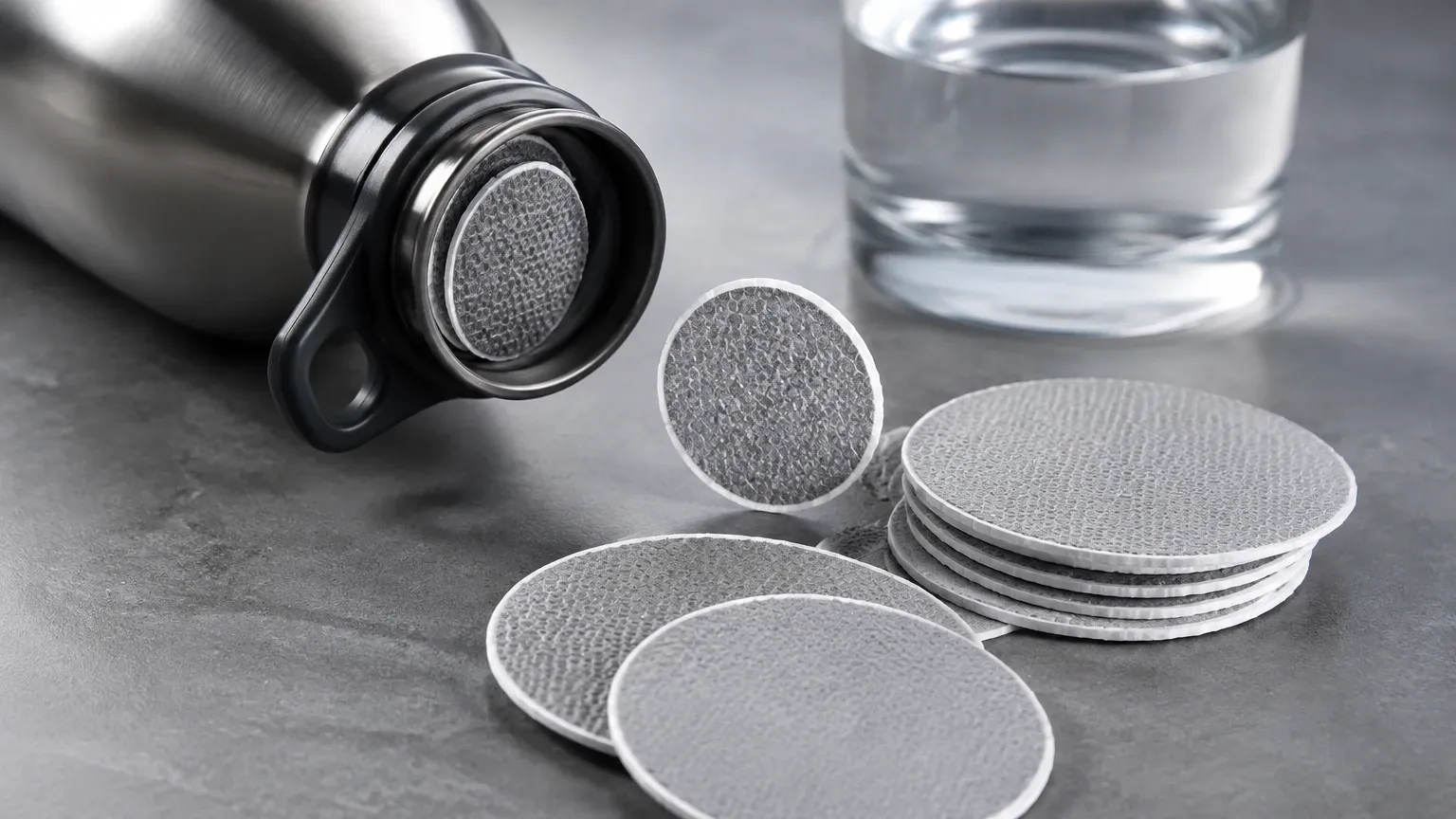
Brita Water Bottle Filter Discs
In the realm of portable hydration, Brita water bottle filter discs have become a standard for removing chlorine and particulates from municipal tap water. These small, replaceable components represent a specific application of disc filtration technology designed for low-pressure, consumer-grade use. However, for engineers and procurement specialists in industrial sectors, the concept of disc filtration extends far beyond the consumer market. Industrial Filter Discs & Packs are critical components in high-pressure, high-temperature, and chemically aggressive environments where standard consumer materials would fail.
Understanding the transition from a consumer-level filter to an industrial-grade metal filter disc requires an analysis of material science, filtration mechanics, and structural integrity. While a Brita water bottle filter disc relies primarily on activated carbon for taste and odor improvement, industrial filter discs utilize precision-woven stainless steel wire mesh or sintered metal fibers to achieve specific micron ratings and mechanical durability.
Understanding the Mechanics of Disc Filtration
Disc filtration, whether in a water bottle or a chemical processing plant, operates on the principle of surface or depth filtration. In consumer applications like the Brita system, the disc is often a composite of carbon and binders. As water passes through the disc, contaminants are trapped within the porous structure of the carbon (adsorption) or physically blocked by the binder material.
In contrast, industrial filter discs are engineered for mechanical straining. These components are often constructed from multiple layers of stainless steel wire mesh. The performance of these discs is defined by several technical parameters:
* Filtration Accuracy: Measured in microns, this determines the smallest particle size the disc can reliably capture.
* Permeability: The ability of the disc to allow fluid to pass through at a specific flow rate with minimal resistance.
* Dirt Holding Capacity: The volume of contaminants the disc can retain before the pressure drop becomes excessive.
For industrial applications, the choice between a single-layer disc and a multi-layer pack depends on the required structural strength and the nature of the fluid being processed.
Comparing Consumer-Grade and Industrial-Grade Filter Discs
While the term "filter disc" is used in both contexts, the engineering requirements differ significantly between consumer products and industrial components. A Brita water bottle filter disc is designed for a specific flow rate—typically gravity-fed or driven by the suction of a user—and is intended for a limited lifespan of approximately 40 gallons or two months.
Industrial Filter Discs & Packs are built for longevity and extreme conditions. The following table highlights the primary differences:
| Feature | Consumer Filter Discs (e.g., Brita) | Industrial Metal Filter Discs |
| :— | :— | :— |
| Primary Material | Activated Carbon / Plastic Binders | Stainless Steel (304, 316L), Inconel, Monel |
| Pressure Resistance | Low (Ambient/Suction) | High (Up to several hundred bar) |
| Temperature Range | 0°C to 40°C | -200°C to 600°C+ |
| Chemical Resistance | Limited to potable water | High resistance to acids, alkalis, and solvents |
| Cleaning | Disposable | Cleanable and Reusable (Ultrasonic/Backwash) |
| Construction | Molded / Bonded | Woven Mesh, Sintered, Spot Welded, Framed |
For technical professionals, the shift from disposable carbon-based discs to reusable stainless steel discs is often driven by the need for process consistency and the reduction of long-term waste and operational costs.
Engineering Specifications for Industrial Filter Discs & Packs
When specifying Filter Discs & Packs for industrial machinery, such as plastic extrusion, oil filtration, or pharmaceutical processing, several construction methods are employed to ensure performance.
Wire Mesh Weave Types
The weave of the stainless steel mesh determines the filtration characteristics. Common weaves include:
* Plain Weave: The most common and economical, offering high flow rates and standard filtration accuracy.
* Dutch Weave: Provides a denser structure with higher filtration precision and greater mechanical strength, ideal for high-pressure applications.
* Twilled Weave: Used for finer filtration requirements where a thicker mesh is needed to maintain integrity under load.
Multi-Layer Sintered Discs
In demanding environments, multiple layers of mesh are sintered together. Sintering involves heating the layers under pressure to bond the wires at their contact points without melting them. This creates a rigid, integrated structure that will not migrate or deform under high pressure. These packs often include a fine filtration layer protected by coarser support and drainage layers.
Edge Treatment and Framing
To prevent bypass and ensure a secure fit within the filter housing, industrial discs often feature specific edge treatments. This may include spot welding the layers together or enclosing the circumference in an aluminum, copper, or stainless steel rim (rimmed discs). This framing provides a sealing surface that prevents fluid from leaking around the edges of the filter media.
Material Selection and Chemical Compatibility
The material of construction is the most critical factor in ensuring the filter disc survives the operating environment. While a Brita water bottle filter disc uses food-grade plastics and carbon, industrial filters must withstand corrosive fluids and high temperatures.
1. Stainless Steel 304: The standard material for general industrial use, offering good corrosion resistance and durability in water treatment and food processing.
2. Stainless Steel 316L: Contains molybdenum, which provides superior resistance to chlorides and acids. This is the preferred choice for marine environments, pharmaceutical manufacturing, and chemical processing.
3. High-Nickel Alloys: For extreme temperatures or highly aggressive chemical environments, materials like Hastelloy or Inconel may be used to manufacture custom filter packs.
Engineers must confirm the chemical composition of the process fluid and the operating temperature range before selecting a material. Failure to do so can lead to premature corrosion, media migration, and downstream contamination.
Performance Evaluation: Flow Rate and Pressure Drop
In any filtration system, there is an inherent trade-off between filtration fineness and pressure drop. A Brita water bottle filter disc is designed so that the user does not have to exert significant effort to drink. In an industrial setting, the pressure drop (Delta P) across the filter disc must be carefully managed to optimize pump efficiency and prevent system failure.
As particles accumulate on the surface of the Filter Discs & Packs, the effective open area decreases, leading to an increase in pressure drop. Industrial systems often include pressure sensors to monitor this change. When the pressure drop reaches a predetermined threshold, the filter must be cleaned or replaced.
Factors affecting pressure drop include:
* Mesh Count: Higher mesh counts (finer holes) result in higher initial pressure drops.
* Fluid Viscosity: Thicker fluids require more pressure to pass through the same micron-rated disc.
* Flow Velocity: Increasing the flow rate exponentially increases the pressure drop.
By selecting the appropriate layer configuration and mesh type, Kaifil helps engineers balance these factors to achieve the longest possible service life between maintenance cycles.
Customization and OEM Solutions for Precision Filtration
One of the primary advantages of working with a professional manufacturer like Kaifil is the ability to customize Filter Discs & Packs to meet exact equipment specifications. Unlike the standardized dimensions of a Brita water bottle filter disc, industrial filters are often required in unique shapes, sizes, and configurations.
Custom Geometry
Industrial filters are not limited to circular discs. They can be manufactured as oval, rectangular, or ring-shaped components. Precision laser cutting and die-stamping ensure that even complex geometries maintain tight tolerances for a perfect fit in the filter housing.
Layer Sequencing
Custom filter packs can be engineered with specific layer sequences. For example, a five-layer pack might consist of a coarse protection mesh, a medium support mesh, a fine filtration layer, another support mesh, and a final coarse drainage layer. This configuration maximizes both filtration efficiency and mechanical rigidity.
OEM Integration
For manufacturers of hydraulic systems, extrusion machinery, or laboratory equipment, sourcing OEM filtration components is essential for maintaining the performance standards of their machines. Kaifil provides technical support during the design phase to ensure that the filtration component is optimized for the specific flow dynamics and contaminant profiles of the application.
Total Cost of Ownership and Sustainability
When evaluating filtration solutions, it is important to consider the total cost of ownership (TCO) rather than just the initial purchase price. While disposable discs have a lower upfront cost, the recurring expense of replacements and the environmental impact of waste can be significant.
Industrial stainless steel Filter Discs & Packs offer a sustainable and cost-effective alternative for B2B applications. Because they are constructed from high-quality metals, they can be cleaned using ultrasonic baths, chemical solvents, or high-pressure backwashing. This reusability reduces downtime, lowers the cost per gallon of filtered fluid, and aligns with corporate sustainability goals by minimizing landfill waste.
Conclusion: Selecting the Right Filtration Partner
Whether you are exploring the basic principles of disc filtration through consumer products like Brita water bottle filter discs or are tasked with specifying high-performance components for a complex industrial process, the importance of material quality and engineering precision cannot be overstated.
For industrial professionals, the transition to stainless steel Filter Discs & Packs represents an investment in process reliability and product quality. By understanding the technical nuances of wire mesh weaves, sintering, and material compatibility, purchasing teams can make informed decisions that optimize their filtration performance and reduce operational risks. Kaifil remains committed to providing the technical expertise and manufacturing capabilities required to meet these demanding industrial standards.
