


Commercial Coffee Filter Packs
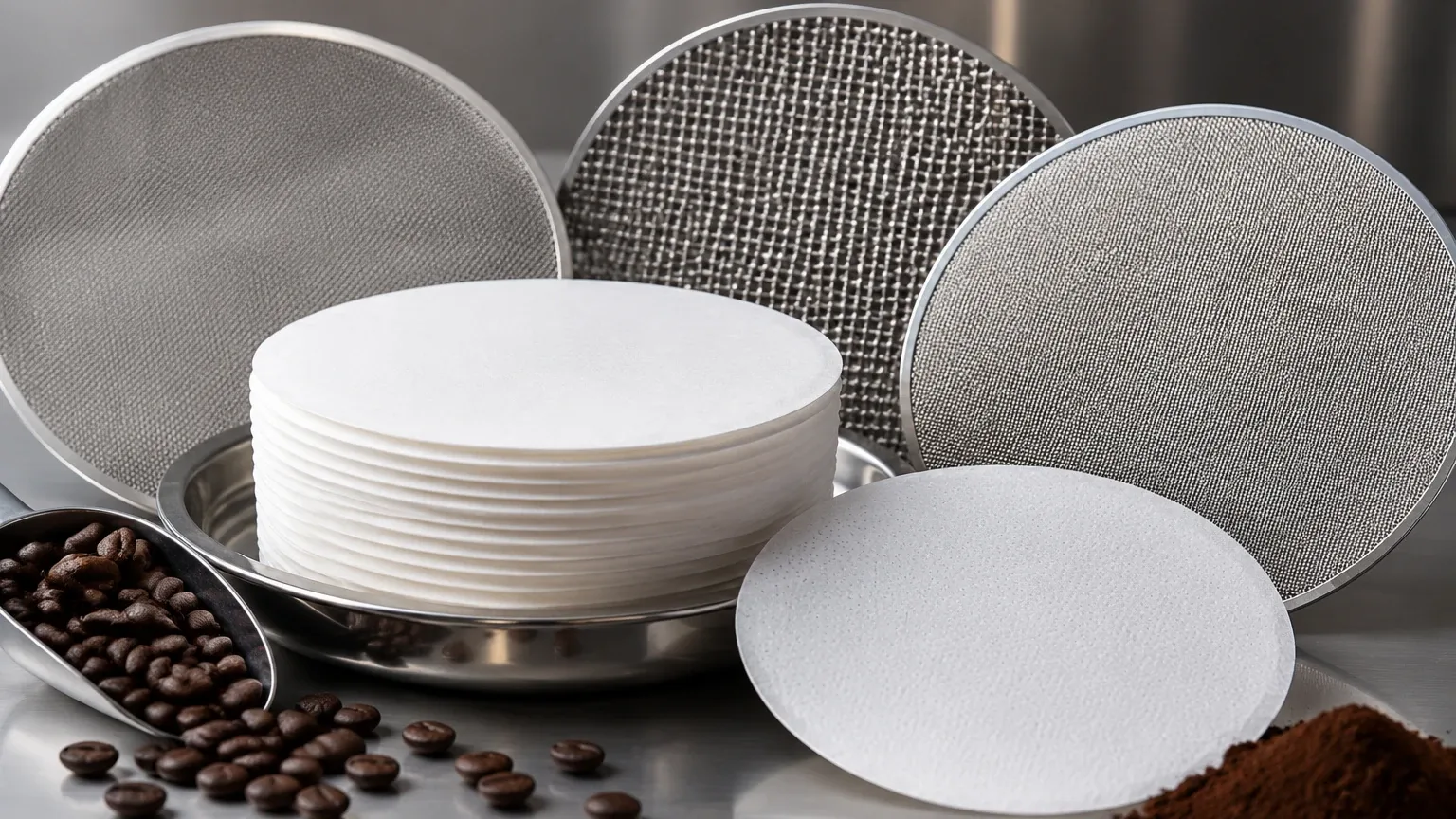
In the industrial food and beverage sector, the efficiency of extraction processes directly impacts product consistency, yield, and operational overhead. For large-scale brewing operations, industrial extractors, and OEM coffee equipment manufacturers, the choice of filtration media is a critical engineering decision. While disposable options exist, the industry has increasingly shifted toward high-precision, reusable stainless steel Filter Discs & Packs to meet the rigorous demands of continuous production environments.
Commercial coffee filter packs designed from metal mesh offer distinct advantages in terms of mechanical strength, thermal stability, and pore size uniformity. This guide examines the technical specifications, engineering considerations, and economic factors that professionals must evaluate when selecting filtration components for commercial coffee applications.
The Role of Stainless Steel in Commercial Coffee Filtration
Commercial coffee production involves high temperatures, varying pressures, and exposure to organic acids and oils. Traditional paper or fabric filters often fail to provide the structural integrity required for high-volume extraction, leading to bypass, tearing, or inconsistent flow rates.
Stainless steel commercial coffee filter packs are engineered to withstand these conditions. Typically manufactured from Grade 304 or 316L stainless steel, these components provide excellent corrosion resistance and are compliant with food safety standards. The use of 316L is particularly prevalent in industrial settings where the filter is exposed to aggressive cleaning cycles or high-salinity water profiles, as the molybdenum content in 316L enhances resistance to pitting and crevice corrosion.
Beyond material durability, metal filter packs allow for precise control over the "fines" (micro-particles) that pass into the final extract. By selecting specific wire mesh weaves, engineers can calibrate the turbidity and mouthfeel of the coffee, ensuring that the end product meets strict quality control parameters across every batch.
Technical Design of Filter Discs & Packs
The construction of a filter pack determines its performance under load. In commercial coffee applications, these packs are rarely single sheets of mesh. Instead, they are often complex, multi-layered assemblies designed to balance filtration fineness with mechanical rigidity.
Multi-Layer Sintered Structures
Sintered Filter Discs & Packs are created by bonding multiple layers of stainless steel wire mesh through a high-temperature vacuum sintering process. This creates a molecular bond between the wires at every contact point, resulting in a porous plate that is significantly stronger than a single layer of mesh. A typical configuration might include:
* A Filtration Layer: A fine Dutch weave or square mesh that defines the micron rating.
* Support Layers: Coarser mesh layers that provide structural support to prevent the fine mesh from deforming under high pressure.
* Protection Layers: Outer layers that protect the delicate filtration media from mechanical damage during installation or cleaning.
Edge Processing and Sealing
To prevent bypass—where the fluid travels around the edges of the filter rather than through it—commercial coffee filter packs must feature precision-engineered edges. Common methods include:
* Spot Welding: Joining multiple layers at the perimeter to maintain alignment.
* Rim Binding: Enclosing the edges in a stainless steel or aluminum U-shaped channel. This not only prevents fraying but also provides a compression surface for gaskets in brewing chambers.
* Sintered Edges: In high-end applications, the edges are fully sintered to create a solid metal border, ensuring zero bypass and maximum hygiene.
Engineering Parameters: Micron Rating and Permeability
When specifying commercial coffee filter packs, engineers must calculate the optimal balance between filtration efficiency and flow rate. This is governed by two primary metrics: micron rating and permeability.
Nominal vs. Absolute Micron Ratings
In coffee extraction, the micron rating determines which sediment sizes are retained.
* Nominal Rating: Indicates the filter's ability to retain the majority of particles of a specific size (e.g., 90% of 50-micron particles).
* Absolute Rating: Refers to the diameter of the largest hard spherical particle that will pass through the filter under specified test conditions. For industrial extractors requiring high clarity, absolute-rated mesh is preferred to ensure consistency.
Pressure Drop and Flow Capacity
A common challenge in commercial brewing is the "pressure drop" (ΔP). As the filter retains coffee grounds and oils, the resistance to flow increases. If the initial permeability of the filter pack is too low, the system will require excessive pump pressure, leading to increased energy consumption and potential equipment wear. Engineers must select a wire diameter and weave pattern that provides the necessary interstitial space to maintain a high flow rate while achieving the target filtration level.
Performance Metrics in Industrial Extraction
Commercial coffee filter packs are subjected to unique stresses that differ from standard liquid filtration. The presence of coffee oils (lipids) can lead to "blinding" or clogging of the mesh pores.
Resistance to Blinding
Unlike depth filtration media (like sand or thick fiber), stainless steel mesh provides surface filtration. This makes it easier to clean, as the particles are trapped on the surface rather than embedded within the media. However, the weave pattern must be chosen carefully. Plain weaves are easier to clean, while Dutch weaves offer finer filtration but may require more intensive backwashing or ultrasonic cleaning to remove trapped oils.
Thermal Stability
Industrial coffee brewing often occurs at temperatures near the boiling point. Stainless steel filter packs maintain their dimensional stability at these temperatures, unlike polymer-based filters which may soften or leach chemicals. This stability ensures that the pore size remains constant throughout the brewing cycle, preventing "breakthrough" where particles pass through the filter as it expands.
Economic Benefits and Total Cost of Ownership (TCO)
While the initial capital expenditure for stainless steel Filter Discs & Packs is higher than for disposable paper or plastic alternatives, the Total Cost of Ownership (TCO) is significantly lower in B2B and industrial contexts.
1. Reduced Waste Streams: Large-scale facilities can generate tons of spent paper filter waste annually. Switching to permanent metal filters eliminates this waste stream and the associated disposal costs.
2. Operational Uptime: High-quality metal packs are designed for thousands of cycles. This reduces the frequency of line stoppages for filter replacement, directly increasing production capacity.
3. Consistency: Paper filters can vary in thickness and density between batches. Precision-manufactured metal mesh provides a constant variable in the brewing equation, reducing the need for constant recalibration of extraction parameters.
Customization for OEM Coffee Equipment
Kaifil specializes in providing customized filtration solutions that integrate seamlessly into proprietary equipment designs. For engineers developing new commercial brewing systems, customization options for commercial coffee filter packs include:
* Custom Geometries: Beyond standard circular discs, packs can be manufactured in oval, rectangular, or complex multi-segment shapes to fit specific extraction chambers.
* Variable Layering: Adjusting the number and type of mesh layers to handle specific grind sizes, from coarse cold brew to fine espresso-style extractions.
* Integrated Gaskets: Some designs incorporate food-grade silicone or PTFE gaskets directly onto the filter pack to simplify assembly and ensure a leak-proof seal.
When partnering with a manufacturer like Kaifil, engineers can specify the exact mechanical properties required, such as tensile strength and fatigue resistance, ensuring the filter pack survives the mechanical stresses of automated spent-ground ejection systems.
Cleaning and Maintenance in Food-Grade Environments
To maintain the performance of commercial coffee filter packs, a robust maintenance protocol is essential. Because coffee oils can polymerize and harden over time, regular cleaning is required to prevent permanent blinding.
Clean-in-Place (CIP) Compatibility
Stainless steel filter packs are fully compatible with standard CIP procedures. They can withstand caustic soda (NaOH) and acidic descaling agents used to remove organic buildup and mineral scale. It is vital to ensure that the cleaning agents used are compatible with the specific grade of stainless steel (e.g., avoiding high concentrations of chlorine with 304 stainless steel to prevent stress corrosion cracking).
Ultrasonic Cleaning
For deep cleaning, especially for multi-layer sintered packs, ultrasonic baths are highly effective. The high-frequency sound waves create cavitation bubbles that reach deep into the mesh interstices, dislodging microscopic coffee fines and oils that manual scrubbing or backwashing might miss.
Selection Checklist for Purchasing Teams
Before finalizing a purchase order for commercial coffee filter packs, procurement and engineering teams should confirm the following technical details with their supplier:
* Material Grade: Is SS304 sufficient, or does the application require the superior corrosion resistance of SS316L?
* Micron Rating: Is the requirement for nominal or absolute filtration?
* Operating Pressure: What is the maximum differential pressure the pack will encounter before cleaning?
* Dimensions and Tolerances: Are the outer diameter and thickness tolerances compatible with the equipment’s sealing mechanism?
* Compliance: Does the product meet FDA or equivalent food-contact safety standards?
* Quantity and Lead Time: For OEM applications, can the manufacturer scale production to meet annual demand forecasts?
Conclusion
The transition to high-performance stainless steel Filter Discs & Packs represents a strategic investment for commercial coffee operations. By prioritizing material quality, precision engineering, and structural integrity, facilities can achieve higher extraction efficiency, better product consistency, and a more sustainable production model. Whether for a new equipment build or an upgrade to an existing industrial brewing line, selecting the right commercial coffee filter packs is foundational to long-term operational success.
