


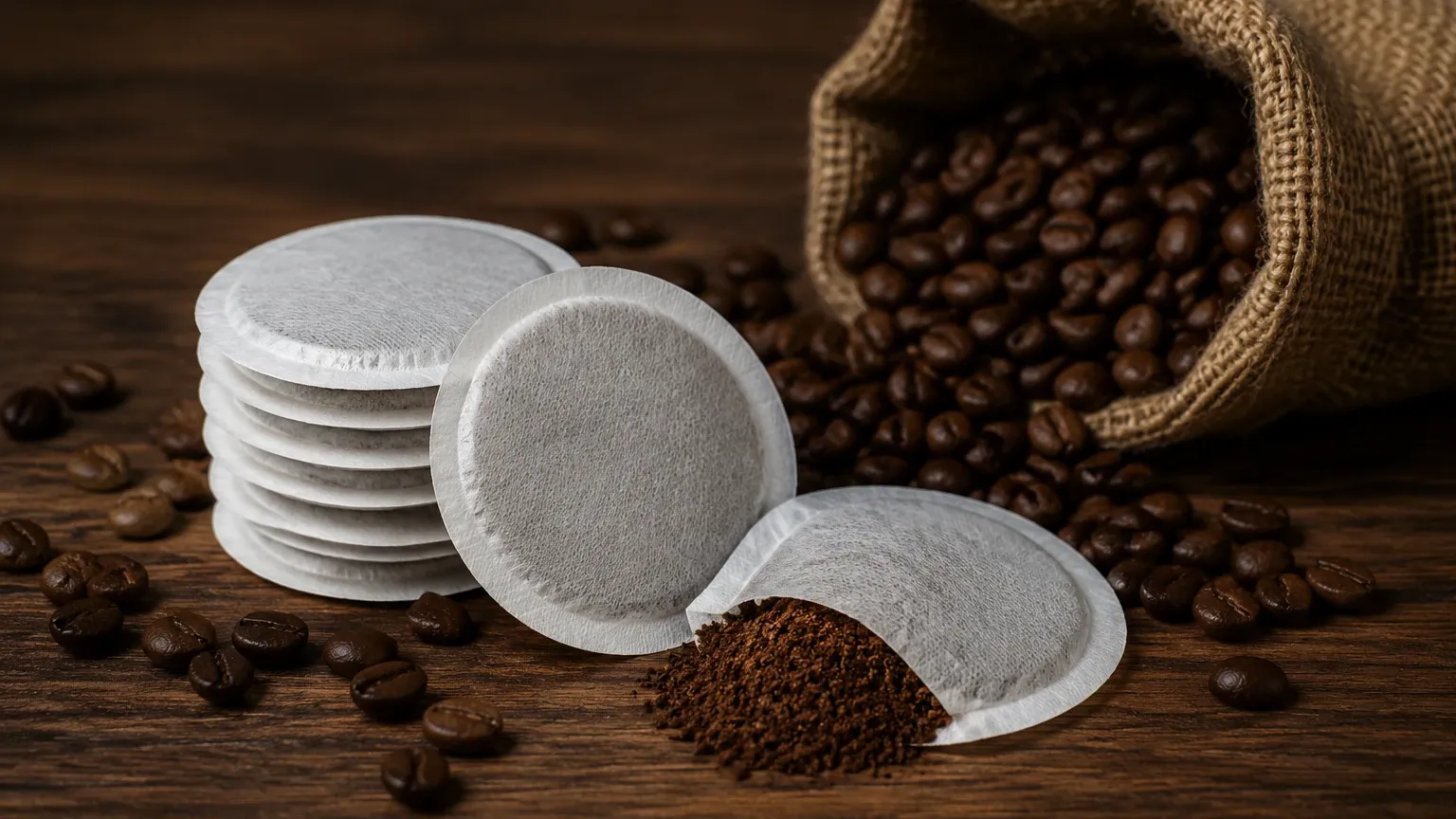
Dark Roast Coffee Filter Packs
In the industrial coffee processing and commercial brewing sectors, the selection of filtration media is a critical factor in determining the final product's clarity, mouthfeel, and chemical profile. While paper filters are common in consumer applications, industrial-scale extraction—particularly for dark roast profiles—requires robust, reusable, and high-precision components. Stainless steel Filter Discs & Packs have become the standard for manufacturers seeking to balance high flow rates with the specific demands of dark roast coffee solids and oils.
Dark roast coffee presents unique challenges for filtration systems. The extended roasting process alters the physical structure of the bean, making it more brittle and increasing the concentration of surface oils. When these beans are ground and subjected to high-pressure or high-volume extraction, the resulting slurry contains a high volume of "fines" (microscopic particles) and lipids that can quickly blind inferior filter media. Engineering a filtration solution requires a deep understanding of mesh geometry, material integrity, and fluid dynamics.
The Technical Requirements of Dark Roast Filtration
Dark roast coffee beans are roasted until the second "crack," typically reaching temperatures between 430°F and 450°F. This process causes the cellulose structure to become highly porous and fragile. During grinding, this results in a higher distribution of fine particles compared to light or medium roasts.
For industrial brewing equipment, such as commercial cold brew extractors or high-capacity espresso systems, the filter must manage these fines without becoming clogged. Stainless steel filter packs are engineered to provide deep filtration or surface filtration depending on the weave type. Unlike paper, which absorbs the volatile oils that characterize the smoky and chocolatey notes of a dark roast, stainless steel mesh allows these oils to pass through while retaining insoluble solids. This results in a full-bodied cup that meets the sensory expectations of the dark roast market.
Engineering Specifications for Filter Discs & Packs
When specifying Filter Discs & Packs for coffee applications, engineers must evaluate several structural variables. These components are rarely single-layer; instead, they are often multi-layered composites designed to withstand mechanical stress and maintain filtration accuracy over thousands of cycles.
Mesh Weave and Micron Ratings
For dark roast coffee filter packs, the choice of weave is paramount.
* Plain Weave: Offers a straightforward aperture and high open area, suitable for primary filtration where high flow rates are required.
* Dutch Weave: Provides a much denser structure, allowing for finer micron ratings (down to 1–5 microns) which are essential for removing the smallest silt-like fines produced by dark roast grinds.
* Twilled Weave: Used when a thicker wire is required for durability without sacrificing the fineness of the mesh.
Layer Configuration
Industrial filter packs typically consist of three to five layers. A common configuration includes a fine filtration layer protected by coarser support meshes on both sides. This "sandwich" construction prevents the fine mesh from deforming under the pressure of the pump or the weight of the coffee grounds. In many B2B applications, these layers are sintered—bonded together through heat and pressure—to create a monolithic plate that eliminates the risk of bypass or layer separation.
Material Selection: SS304 vs. SS316L
Material selection in the food and beverage industry is governed by both performance requirements and regulatory compliance. For coffee filtration, stainless steel is the preferred medium due to its corrosion resistance and ease of sterilization.
1. Stainless Steel 304: This is the standard grade for most food-grade applications. It offers excellent resistance to the organic acids found in coffee and is durable enough for standard cleaning cycles.
2. Stainless Steel 316L: For high-salinity environments or systems that use aggressive CIP (Clean-in-Place) chemicals, 316L is recommended. The addition of molybdenum provides superior resistance to pitting and crevice corrosion, ensuring a longer service life in demanding industrial environments.
Both materials are non-reactive, ensuring that the filter does not impart any metallic taste to the coffee, which is a vital consideration for maintaining the integrity of dark roast flavor profiles.
Managing Pressure Drop and Flow Rates
In industrial extraction, the pressure drop ($ΔP$) across the filter media is a key metric for system efficiency. As dark roast coffee fines accumulate on the surface of the filter, the resistance to flow increases. If the filter pack is not correctly specified, this can lead to "channeling," where the extraction fluid finds the path of least resistance, resulting in uneven extraction and a poor-quality final product.
Engineers must calculate the optimal surface area and micron rating to ensure that the flow rate remains consistent throughout the brewing cycle. By using multi-layer Filter Discs & Packs, manufacturers can achieve a high dirt-holding capacity. This allows for longer production runs between cleaning cycles, directly impacting the total cost of operation and equipment uptime.
Customization and OEM Integration
Every commercial brewing system has unique geometric requirements. Customization of filter discs involves more than just selecting a diameter. It includes the design of the rim or border, which ensures a leak-proof seal within the machine housing.
* Rim Options: Filter packs can be finished with aluminum, stainless steel, or copper rims. Alternatively, they can be spot-welded or left with raw edges for integration into specialized gaskets.
* Geometry: While circular discs are most common, advanced manufacturing allows for rectangular, oval, or custom-contoured packs to fit proprietary extraction chambers.
* Sintering and Welding: Advanced welding techniques ensure that the edges of the mesh are secure, preventing any loose wires from entering the product stream—a critical safety requirement in food processing.
Maintenance and Cleaning Protocols
One of the primary B2B advantages of stainless steel filter packs over disposable media is reusability. However, the oils inherent in dark roast coffee can oxidize and become rancid if not properly removed.
Industrial cleaning protocols typically involve:
* Backwashing: Reversing the flow of water to dislodge particles trapped in the mesh apertures.
* Ultrasonic Cleaning: Using high-frequency sound waves in a detergent bath to break down oil residues and microscopic fines within the multi-layer structure.
* Chemical Cleaning: Utilizing food-safe caustic or acidic solutions to dissolve stubborn organic buildup.
Proper maintenance extends the life of the filter pack, often allowing it to remain in service for several years, which significantly reduces the waste and recurring costs associated with paper or synthetic filters.
Evaluation Criteria for Purchasing Teams
Before finalizing a specification for coffee filtration components, engineering and purchasing teams should confirm the following technical details with their manufacturer:
* Filtration Accuracy: What is the specific micron rating required to achieve the desired clarity for the dark roast profile?
* Operating Pressure: What is the maximum pressure the filter pack will encounter during the extraction and cleaning cycles?
* Compatibility: Is the mesh weave compatible with the specific grind size used in the production process?
* Certification: Does the material meet FDA or other relevant food-contact safety standards?
* Durability: What is the expected lifecycle of the filter pack under standard operating conditions?
By addressing these factors, manufacturers can ensure they select a filtration solution that optimizes extraction efficiency, maintains flavor consistency, and provides a sustainable return on investment. For high-performance industrial coffee brewing, the precision of stainless steel Filter Discs & Packs remains an indispensable component of the production line.
