


Disc Filter 0.2 Micron
In high-precision industrial filtration, the 0.2-micron threshold represents a critical benchmark for purity and protection. A disc filter 0.2 micron rating is frequently the standard for sterile filtration in pharmaceutical environments, fine chemical processing, and advanced hydraulic systems. Achieving this level of precision with stainless steel media requires a sophisticated understanding of material science and mechanical engineering to ensure that the filter can withstand demanding operating conditions while maintaining its structural integrity.
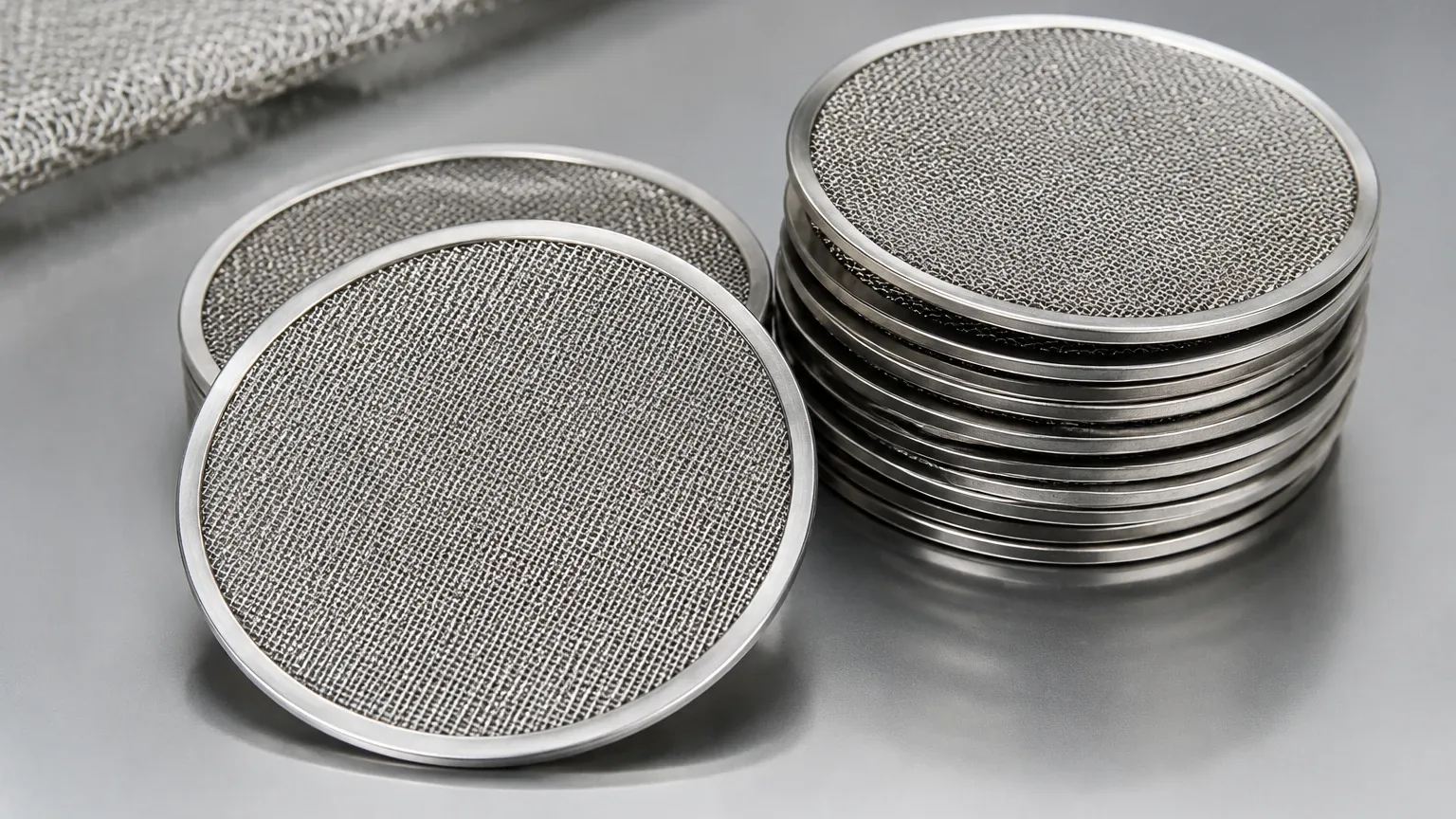
For engineers and procurement specialists, selecting the right filtration component involves balancing filtration efficiency with flow rates and mechanical durability. Stainless steel Filter Discs & Packs are often the preferred solution when polymer-based filters fail due to temperature, chemical incompatibility, or high differential pressures.
Understanding the Role of 0.2 Micron Filtration in Industrial Systems
The 0.2-micron rating is significant because it is generally considered the size required to remove the majority of bacteria and fine particulates from a fluid stream. In many liquid applications, a 0.2-micron absolute rating is the industry standard for achieving sterilization. However, when dealing with metal filters, achieving a true 0.2-micron pore size involves complex manufacturing techniques.
Unlike nominal filters, which might allow a percentage of particles larger than the rated size to pass through, an absolute-rated disc filter 0.2 micron is designed to provide a consistent barrier. This is particularly vital in the production of parenteral drugs, high-purity chemicals, and semiconductor manufacturing, where even trace amounts of particulate matter can lead to batch failure or equipment damage. The use of stainless steel for these applications provides an added layer of security, as the material does not shed fibers or leach chemicals into the filtrate, a common concern with synthetic depth filters.
Material Engineering for High-Precision Filter Discs
The performance of a 0.2-micron filter is fundamentally tied to its material composition. For industrial applications, Stainless Steel 316L is the standard choice due to its superior corrosion resistance and ability to withstand high temperatures.
Sintered Metal Fiber Felt
To achieve a 0.2-micron rating in a metal disc, manufacturers often utilize sintered metal fiber felt. This media is composed of extremely fine stainless steel fibers that are randomly laid and then sintered (bonded by heat and pressure) to create a porous, three-dimensional depth filtration medium. This structure provides high porosity (up to 80%), which translates to lower pressure drops and higher dirt-holding capacity compared to traditional woven wire mesh at the same micron rating.
Multi-Layer Sintered Wire Mesh
In applications where mechanical strength is the priority, multi-layer sintered wire mesh is employed. This involves bonding several layers of woven wire mesh together. While a single layer of mesh might struggle to maintain a 0.2-micron aperture under pressure, the sintering of multiple layers—including a fine filtration layer, a support layer, and a drainage layer—creates a rigid, stable structure. This ensures that the pore sizes do not shift or enlarge during high-pressure pulses or backwashing cycles.
Structural Design of Filter Discs & Packs
Filter discs are rarely used as standalone thin sheets in high-pressure environments. Instead, they are engineered as complex assemblies to maximize efficiency and lifespan.
Single-Layer vs. Multi-Layer Packs
A single-layer disc filter 0.2 micron may be sufficient for laboratory-scale applications or low-pressure gas filtration. However, industrial "packs" often consist of multiple discs stacked together or a single disc composed of several sintered layers. These packs are designed to provide a graduated filtration effect, where larger particles are trapped by outer layers, preventing the 0.2-micron fine layer from blinding prematurely.
Edge Bonding and Rimming
One of the most critical engineering considerations for a filter disc is the edge treatment. Without proper sealing, fluid can bypass the filtration media at the edges. Professional-grade filter discs utilize precision welding (such as TIG or laser welding) or are encased in metal rims (aluminum or stainless steel). These rims provide a solid sealing surface for housing gaskets and prevent the mesh from fraying or delaminating under mechanical stress.
Critical Performance Metrics for 0.2 Micron Discs
When evaluating a disc filter 0.2 micron, technical professionals must look beyond the micron rating and consider the physical laws governing fluid dynamics within the filter media.
Absolute vs. Nominal Ratings
In the context of 0.2-micron filtration, the distinction between absolute and nominal is paramount. A nominal rating is an average pore size, whereas an absolute rating indicates the diameter of the largest hard spherical particle that will pass through the filter under specified test conditions. For critical applications, only absolute-rated discs should be considered to ensure process consistency.
Bubble Point and Integrity Testing
To verify that a filter disc actually meets the 0.2-micron requirement, manufacturers perform bubble point tests. This involves submerging the filter in a liquid and gradually increasing air pressure until the first bubble appears. The pressure at which this occurs is inversely proportional to the maximum pore size. This non-destructive test is essential for quality assurance in pharmaceutical and aerospace applications.
Differential Pressure (ΔP)
As a filter traps contaminants, the pressure drop across the disc increases. A high-quality 0.2-micron disc must offer a low initial differential pressure to minimize energy consumption and pump wear. Furthermore, the disc must be engineered to withstand a high maximum differential pressure before deformation occurs, which is a common failure point in poorly designed filter packs.
Industry-Specific Applications for Fine Micron Filtration
The versatility of stainless steel 0.2-micron discs allows them to be used in environments where other materials would fail.
* Pharmaceutical and Biotech: Used for the sterile venting of tanks and the filtration of aggressive solvents or steam (SIP – Sterilization in Place). The 0.2-micron rating ensures the removal of bacteria such as *Brevundimonas diminuta*.
* Chemical Processing: In the production of specialty chemicals, 0.2-micron discs protect downstream catalysts and high-precision nozzles from fine particulate contamination. Their resistance to acids and bases makes them ideal for continuous processing.
* Aerospace and Defense: High-pressure hydraulic systems require extreme cleanliness to prevent valve sticking. Metal filter discs provide the necessary 0.2-micron precision while handling the immense pressures and vibrations of flight systems.
* Food and Beverage: Used for the clarification of premium spirits and the filtration of CO2 or air used in carbonation and packaging, ensuring that no microbial contaminants enter the final product.
Selection and Procurement Considerations for Engineers
Selecting a disc filter 0.2 micron is not a "one size fits all" process. Engineers must confirm several variables before finalizing a specification:
1. Fluid Compatibility: While 316L stainless steel is highly resistant, certain halogenated compounds or high-temperature salts may require exotic alloys like Hastelloy or Monel.
2. Operating Temperature: Metal filters excel in extreme heat, but the expansion coefficients of the filter housing and the disc rim must be matched to prevent bypass at high temperatures.
3. Flow Velocity: High-velocity fluid can cause erosion of the filtration media over time. Sintered fiber felt is generally more resistant to this than thin, single-layer mesh.
4. Cleaning and Reusability: One of the primary advantages of stainless steel Filter Discs & Packs is that they are cleanable. Methods such as ultrasonic cleaning, backflushing, or chemical cleaning can restore the filter's performance, significantly reducing the total cost of ownership compared to disposable polymer cartridges.
Customization and OEM Capabilities
In many industrial setups, off-the-shelf filter discs do not meet the specific spatial or performance requirements of a custom-built machine. This is where OEM manufacturing becomes essential. Customization options for a disc filter 0.2 micron include:
* Bespoke Geometry: Discs can be produced in non-standard diameters, or even in oval or rectangular shapes to fit specific manifold designs.
* Variable Layering: Engineers can specify the exact number of support and drainage layers to optimize the disc for a specific viscosity or particulate load.
* Integrated Fittings: Discs can be manufactured with integrated threaded fittings or specialized gaskets to simplify installation and maintenance for the end-user.
By working closely with a manufacturer like Kaifil, engineering teams can develop filtration components that are tailored to the exact nuances of their application, ensuring both high performance and long-term reliability.
Maintenance and Lifespan Optimization
The lifespan of a 0.2-micron metal disc is largely determined by the cleaning protocol and the nature of the contaminants. In applications with "hard" particulates (like metal shavings or scale), the filter can often be cleaned and reused dozens of times. In contrast, "soft" or gelatinous contaminants may require specialized chemical cleaning to dissolve the material trapped within the depth of the sintered fiber felt.
It is recommended to monitor the differential pressure across the filter pack constantly. A scheduled cleaning cycle, initiated before the pressure reaches a critical limit, prevents the compaction of contaminants, which can make cleaning more difficult and potentially damage the fine 0.2-micron structure. When properly maintained, stainless steel filter discs offer a sustainable and cost-effective alternative to frequent filter replacements in demanding industrial environments.
