


Disc Filter 1
In the landscape of industrial filtration, precision and reliability are the primary benchmarks for operational success. The term "disc filter 1" often refers to the primary stage of filtration or a specific standardized single-layer configuration used within complex fluid and gas processing systems. These components, broadly categorized under Filter Discs & Packs, serve as the critical barrier against contaminants in environments ranging from high-pressure hydraulic lines to sensitive pharmaceutical manufacturing. Understanding the technical nuances of these components is essential for engineers and procurement teams tasked with optimizing system performance and longevity.
Understanding the Role of Filter Discs & Packs in Industrial Systems
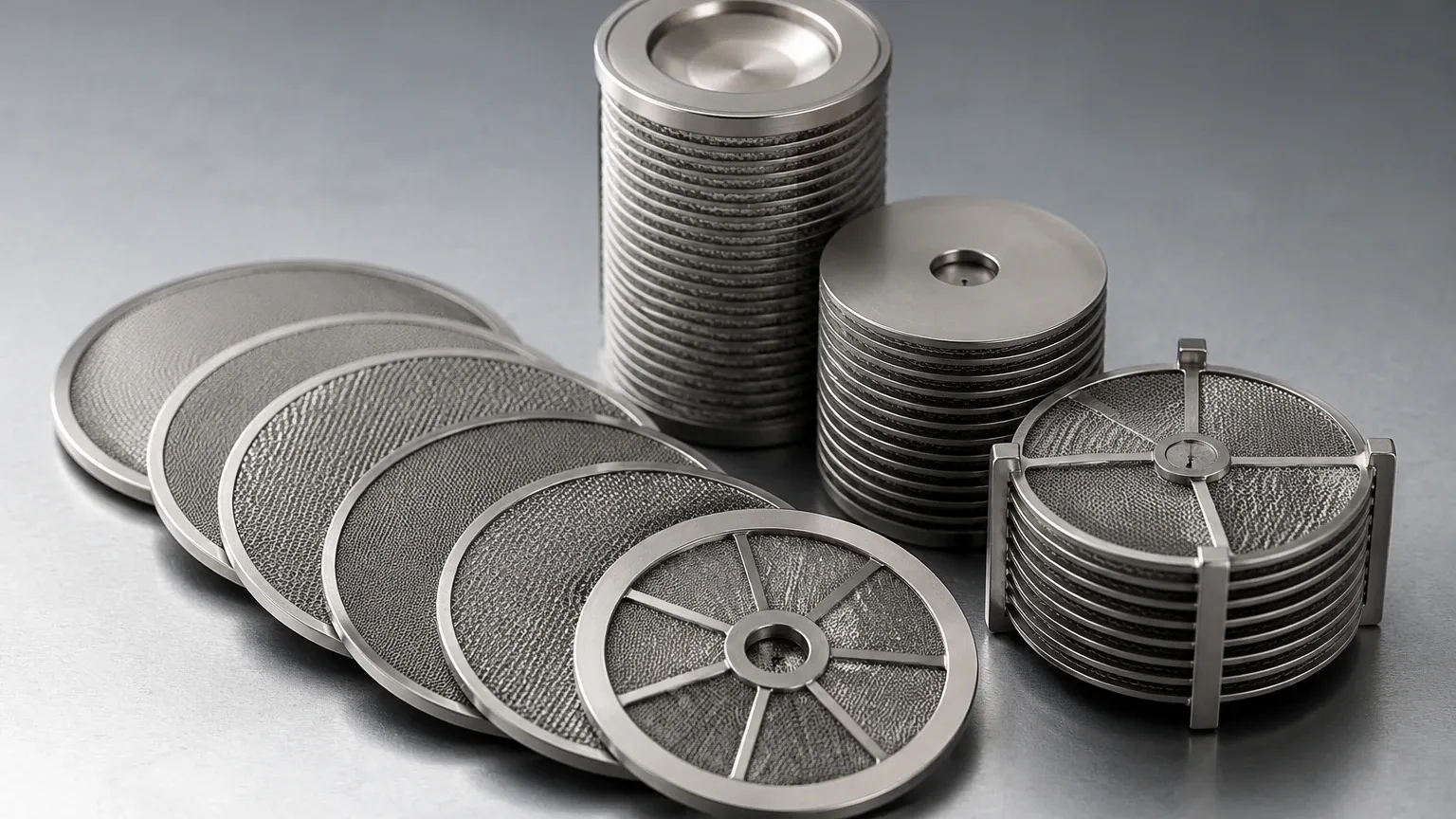
Filter discs are circular filtration components manufactured from high-quality metal wire mesh or sintered metal fibers. Their primary function is to remove solid particles from liquids or gases. Unlike larger filter cartridges, discs are typically used in applications where space is limited or where a specific surface area-to-volume ratio is required.
In many industrial setups, the "disc filter 1" serves as the first line of defense. This primary stage is responsible for capturing the largest volume of particulate matter, thereby protecting downstream components such as pumps, valves, and finer secondary filters. The efficiency of this initial stage directly impacts the total cost of ownership (TCO) of the filtration system. If the primary disc fails or bypasses, it leads to premature clogging of expensive secondary stages or, worse, catastrophic failure of mechanical equipment.
Technical Specifications and Material Selection
The performance of a disc filter is dictated largely by its material composition. Industrial environments often involve corrosive chemicals, extreme temperatures, and high mechanical stress. Consequently, stainless steel is the industry standard for these components.
Stainless Steel Grades
1. AISI 304: The most common grade, offering excellent durability and reasonable corrosion resistance for general industrial applications, such as water treatment and food processing.
2. AISI 316: Contains molybdenum, which significantly enhances resistance to chlorides and acetic acids. This is the preferred choice for marine environments and mild chemical processing.
3. AISI 316L: The low-carbon version of 316, essential for applications involving welding. It prevents carbide precipitation, ensuring the structural integrity of the filter disc at the weld points.
4. Specialty Alloys: For extreme conditions, materials like Monel, Inconel, or Hastelloy may be utilized to withstand highly acidic or high-temperature environments where standard stainless steel would succumb to pitting or oxidation.
Weave Types and Filtration Characteristics
The method by which the wire mesh is woven determines the filtration accuracy (micron rating) and the flow capacity of the disc. Common weaves include:
* Plain Weave: A simple over-and-under pattern providing square openings. It offers high flow rates but lower mechanical strength compared to denser weaves.
* Dutch Weave: Uses a larger diameter wire for the warp and a smaller diameter for the weft. This creates a denser, more robust mesh with smaller, triangular openings, ideal for high-pressure filtration.
* Twill Weave: Allows for thicker wires and higher mesh counts, providing a higher degree of filtration for fine particles.
Structural Integrity: Single-Layer vs. Multi-Layer Disc Filter 1 Configurations
When specifying a disc filter 1, engineers must decide between single-layer and multi-layer constructions. This decision is based on the required filtration fineness and the pressure levels within the system.
Single-Layer Discs
These are cost-effective and easy to clean. They are typically used in low-pressure applications or as coarse strainers. While they offer high flow rates, they lack the structural rigidity required for high-differential pressure scenarios.
Multi-Layer Packs (Spot-Welded or Rimmed)
Multi-layer Filter Discs & Packs consist of several layers of wire mesh stacked together. The layers are often arranged in a specific sequence: a fine filtration layer sandwiched between coarser support layers. This configuration provides several advantages:
* Increased Mechanical Strength: The support layers prevent the fine mesh from deforming under pressure.
* Graduated Filtration: Larger particles are caught by the outer layers, while finer particles are trapped by the internal layer, increasing the dirt-holding capacity.
* Edge Treatments: To prevent media migration (the shedding of wires), these packs are either spot-welded at the perimeter or encased in a metal rim (usually aluminum or stainless steel). Rimmed edges provide a better seal within the filter housing, preventing bypass.
Performance Metrics: Flow Dynamics and Filtration Accuracy
To select the correct disc filter 1, one must evaluate the relationship between micron rating, pressure drop, and flow rate.
Micron Rating
The micron rating indicates the size of the smallest particle the filter can reliably capture. It is categorized into two types:
* Nominal Micron Rating: An approximate value indicating the filter's ability to retain the majority of particles of a certain size.
* Absolute Micron Rating: The diameter of the largest hard spherical particle that will pass through the filter under specified test conditions. In critical B2B applications, absolute ratings are often required to ensure process consistency.
Pressure Drop (ΔP)
Every filter introduces resistance to the flow. As the disc captures contaminants, the pressure drop across the disc increases. If the initial pressure drop is too high, it indicates that the mesh is too fine for the flow rate or that the surface area is insufficient. Engineers must balance the need for fine filtration with the energy costs associated with maintaining flow against high resistance.
Dirt-Holding Capacity
This refers to the amount of contaminant a disc can retain before the pressure drop reaches a critical threshold (terminal pressure). Multi-layer packs significantly outperform single-layer discs in this metric, leading to longer service intervals and reduced downtime.
Industrial Applications and Environmental Compatibility
The versatility of Filter Discs & Packs allows them to be integrated into diverse industrial sectors.
1. Chemical and Petrochemical: Used for filtering polymers, resins, and aggressive chemical solutions. The high-temperature resistance of stainless steel allows these discs to operate in refining processes where synthetic materials would melt.
2. Food and Beverage: In this sector, hygiene is paramount. Stainless steel discs are non-toxic, easy to sterilize, and resistant to the caustic cleaning agents used in CIP (Clean-In-Place) cycles.
3. Hydraulic Systems: Disc filters protect sensitive servo-valves from metallic wear particles. A "disc filter 1" in a hydraulic circuit is often a high-strength multi-layer pack designed to withstand rapid pressure spikes.
4. Pharmaceuticals: Precision is the key here. Discs are used to ensure the purity of active pharmaceutical ingredients (APIs), requiring strict adherence to material certifications and micron accuracy.
Maintenance, Cleaning, and Replacement Cycles
One of the primary advantages of stainless steel disc filters is their cleanability. Unlike disposable polymer filters, metal discs can often be reused, provided the cleaning process does not damage the mesh structure.
Cleaning Methods
* Ultrasonic Cleaning: The most effective method for removing fine particles trapped within the mesh layers. High-frequency sound waves create cavitation bubbles that dislodge contaminants.
* Backwashing: Reversing the flow of the fluid to push particles out of the mesh. This is common in automated systems.
* Chemical Cleaning: Using solvents or acids to dissolve organic or mineral deposits. It is crucial to ensure the cleaning agent is compatible with the stainless steel grade.
When to Replace
Despite their durability, disc filters have a finite lifespan. Replacement should occur if:
* The mesh shows signs of mechanical fatigue or "blindness" (permanent clogging that cannot be cleaned).
* The pressure drop remains high even after a thorough cleaning cycle.
* There is visible damage to the rim or spot welds, which could allow unfiltered fluid to bypass the disc.
Custom Engineering for Specialized Filtration Requirements
No two industrial processes are identical, which is why customization is a critical factor in procuring filtration components. When sourcing a disc filter 1, technical teams should confirm several parameters with the manufacturer:
* Dimensional Tolerances: Precise outer and inner diameters are required to ensure a leak-proof fit in the housing.
* Layer Configuration: The specific sequence of mesh counts in a pack can be tailored to the viscosity and particle distribution of the process fluid.
* Material Certification: For regulated industries, providing MTRs (Material Test Reports) ensures that the stainless steel meets the required chemical and physical properties.
By focusing on these technical boundaries—material grade, weave type, structural design, and flow dynamics—engineers can ensure that their selection of Filter Discs & Packs provides the necessary protection and efficiency for their specific industrial application. Choosing the right disc filter 1 is not merely a procurement task; it is an engineering decision that safeguards the entire production chain.
