


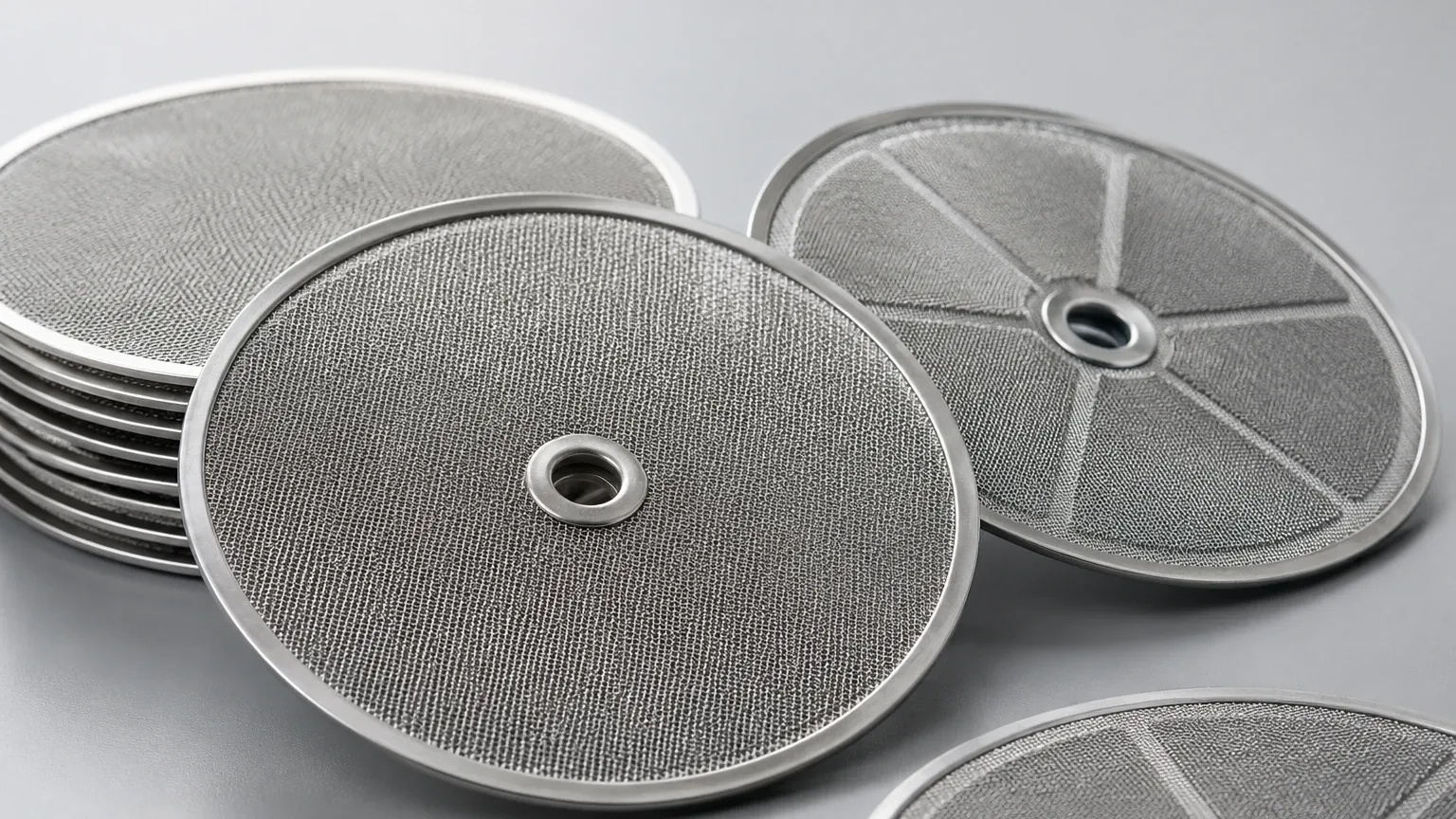
Disc Filter 40 Micron
In industrial filtration, achieving a precise balance between flow efficiency and particle retention is critical for protecting downstream equipment and ensuring product purity. The disc filter 40 micron represents a specific technical threshold often utilized in hydraulic systems, polymer extrusion, and chemical processing. As a precision-engineered component, these filters rely on high-quality stainless steel wire mesh to provide consistent performance under varying pressures and temperatures.
Selecting the correct filtration media requires an understanding of the mechanical properties of the mesh, the structural configuration of the disc, and the specific demands of the industrial environment. This guide examines the technical specifications, engineering considerations, and application-specific factors that professionals must evaluate when integrating 40-micron filtration solutions into their processes.
Understanding the 40-Micron Filtration Threshold
A micron, or micrometer, is one-millionth of a meter. In the context of Filter Discs & Packs, a 40-micron rating indicates the size of the particles the mesh is designed to intercept. However, for engineers, it is essential to distinguish between nominal and absolute filtration ratings.
Nominal vs. Absolute Ratings
Nominal filtration refers to an approximate micron rating where the mesh retains a high percentage (typically 60% to 90%) of particles at the specified size. Absolute filtration, often achieved through multi-layered sintered mesh or high-density Dutch weaves, ensures that 99.9% of particles larger than 40 microns are captured. For critical applications like pharmaceutical manufacturing or high-pressure hydraulic systems, absolute ratings are usually required to prevent component wear.
Wire Mesh Geometry
To achieve a 40-micron aperture, manufacturers typically use stainless steel wire mesh with specific weave patterns. A plain weave is common for coarser filtration, but for a 40-micron requirement, a Twill Weave or a Plain Dutch Weave is often employed. These patterns allow for a higher density of wires, which increases the mechanical strength of the disc while maintaining the necessary pore size. The wire diameter must be carefully selected to ensure the mesh does not deform under the differential pressure of the fluid flow.
Material Selection and Structural Integrity
The performance of a disc filter 40 micron is heavily dependent on the alloy used in its construction. Stainless steel is the industry standard due to its corrosion resistance and thermal stability.
* Stainless Steel 304: Suitable for general industrial use where high-level corrosion resistance is not the primary concern. It offers excellent durability and cost-effectiveness for water treatment and basic oil filtration.
* Stainless Steel 316/316L: The preferred choice for chemical processing, marine environments, and food production. The addition of molybdenum enhances resistance to pitting and crevice corrosion, particularly in chloride-rich environments. The "L" (low carbon) variant is essential if the filter components require extensive welding, as it prevents carbide precipitation.
* Specialty Alloys: In extreme cases involving highly acidic or alkaline fluids, alloys like Hastelloy or Monel may be used, though these are typically reserved for specialized OEM requirements.
Single-Layer vs. Multi-Layer Packs
While a single layer of 40-micron mesh may suffice for low-pressure applications, many industrial processes require Filter Discs & Packs that consist of multiple layers.
1. Filtration Layer: The core 40-micron mesh that performs the actual separation.
2. Support Layers: Coarser mesh layers (e.g., 20 mesh or 40 mesh) placed on either side of the filtration layer to provide structural rigidity and prevent the fine mesh from collapsing under pressure.
3. Drainage Layers: In complex packs, additional layers assist in the even distribution of fluid across the entire surface area, optimizing the filtration process.
Performance Metrics: Flow Rate and Pressure Drop
For any engineer, the primary concern when introducing a disc filter 40 micron into a system is the impact on hydraulics. Every filter introduces a degree of resistance, known as pressure drop (ΔP).
Calculating Effective Filtration Area (EFA)
The EFA is the total area of the mesh available for fluid to pass through. In a disc filter, this is not just the physical diameter of the disc, but the open area of the specific weave. A 40-micron mesh with a high open-area percentage will allow for higher flow rates but may have lower mechanical strength. Engineers must calculate the EFA to ensure that the fluid velocity through the mesh does not exceed the limits that would cause particle "breakthrough" or premature clogging.
Pressure Drop Considerations
As particles accumulate on the surface of the disc, the pressure drop increases. A well-designed 40-micron filter should operate within a specific "clean" pressure drop range. If the initial ΔP is too high, it indicates that the filter is undersized for the flow rate, which will lead to frequent maintenance cycles and potential system downtime. Conversely, a very low ΔP might suggest that the mesh is too coarse or that fluid is bypassing the filter media due to poor sealing at the edges.
Industrial Applications of 40-Micron Disc Filters
The versatility of the 40-micron rating makes it a staple in several high-demand sectors. Each application places unique stresses on the filter disc.
Polymer and Plastic Extrusion
In the plastics industry, melt filters are used to remove impurities from molten polymer before it passes through the die. A disc filter 40 micron is often used as a final stage of filtration to ensure the surface finish of the extruded product is flawless. These discs must withstand extremely high temperatures and pressures, often requiring reinforced rims made of aluminum or stainless steel to maintain their shape.
Hydraulic and Lubrication Systems
Hydraulic fluids must remain free of particulate matter to prevent damage to sensitive valves and pumps. A 40-micron disc is frequently used in suction line filters or as a secondary safety filter. Because hydraulic systems often experience pressure surges, the structural integrity of the filter pack is paramount.
Food and Beverage Processing
In the production of juices, syrups, and oils, 40-micron filtration is used to remove fine pulp or sediment. In these applications, the filter must be made of food-grade SS316L and be designed for easy cleaning to meet stringent hygiene standards. The ability to withstand Clean-in-Place (CIP) procedures is a critical requirement for these filters.
Maintenance, Cleaning, and Replacement Cycles
One of the primary advantages of using stainless steel Filter Discs & Packs over disposable media is their reusability. However, effective maintenance is required to ensure long-term performance.
Cleaning Methods
* Ultrasonic Cleaning: This is the most effective method for 40-micron meshes. High-frequency sound waves create cavitation bubbles that dislodge deeply embedded particles without damaging the delicate wire structure.
* Backwashing: In some automated systems, fluid flow is reversed to flush out accumulated debris. This is effective for surface-loading contaminants but may not remove particles wedged within the weave.
* Chemical Cleaning: For organic contaminants or scale, compatible chemical solvents can be used. It is vital to ensure that the cleaning agent does not react with the stainless steel alloy.
Determining Replacement Cycles
While stainless steel discs are durable, they are not infinite. Factors that necessitate replacement include:
* Work Hardening: Repeated pressure cycles can cause the wires to become brittle and eventually fracture.
* Blinding: If particles cannot be removed through cleaning, the permanent increase in pressure drop will eventually make the filter inefficient.
* Mechanical Damage: Any warping, tearing, or separation of the layers in a multi-layer pack requires immediate replacement to prevent unfiltered fluid from passing through.
Procurement and Customization Considerations
When sourcing a disc filter 40 micron, providing vague specifications can lead to performance failures. Engineers and purchasing teams should confirm several technical details with the manufacturer to ensure the product is fit for purpose.
Technical Specifications to Confirm
* Outer Diameter (OD) and Inner Diameter (ID): Precise tolerances are necessary for a proper fit within the filter housing. Even a millimeter of deviation can cause bypass.
* Layer Configuration: Specify the mesh count and wire diameter for each layer in a pack. For example, a 5-layer pack might include a 40-micron filtration layer sandwiched between 100-mesh and 20-mesh support layers.
* Edge Treatment: Options include spot-welded edges, aluminum rims, or stainless steel binding. The choice depends on whether the disc needs to be compressed within a seal or if it needs to remain rigid under high flow velocity.
* Quantity and Total Cost of Ownership: While custom stainless steel filters have a higher initial cost than synthetic alternatives, their reusability and durability often result in a lower total cost of ownership over the life of the equipment.
By focusing on these technical parameters, engineering teams can secure filtration components that optimize process efficiency and protect capital-intensive machinery. For specialized requirements, working with a manufacturer that offers OEM customization ensures that the disc filter 40 micron is tailored to the exact thermal, chemical, and mechanical demands of the application.
