


Disc Filter Amiad
In the landscape of industrial water treatment and fluid processing, the term "disc filter amiad" has become synonymous with a specific style of depth filtration that utilizes stacked plastic discs to capture particulates. While these systems are widely recognized for irrigation and general water filtration, industrial engineers often find themselves at a crossroads when transitioning from standard water treatment to more demanding environments involving high temperatures, aggressive chemicals, or precise mechanical requirements. For these applications, understanding the underlying principles of Filter Discs & Packs is essential for optimizing system performance and ensuring long-term reliability.
This article examines the technical architecture of disc filtration, compares the performance of polymeric versus metallic filter media, and provides engineering guidance for selecting filtration components that meet the rigorous standards of the chemical, pharmaceutical, and hydraulic industries.
Understanding Disc Filtration Technology in Industrial Contexts
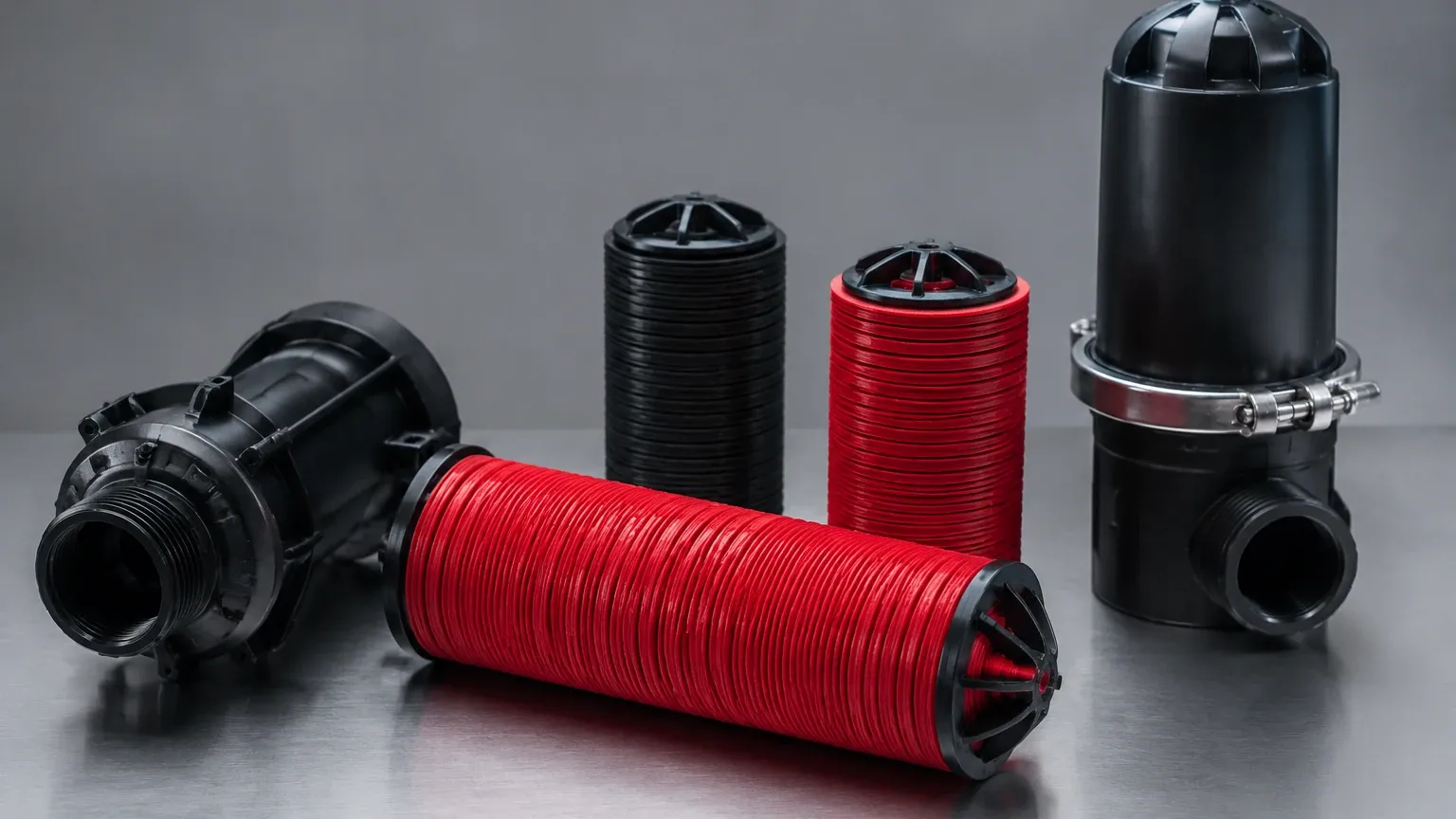
Disc filtration operates on a principle that combines surface filtration with depth filtration. In a typical disc filter amiad system, a series of thin, grooved plastic discs are stacked together on a central spine. The grooves on the surface of these discs are oriented in opposite directions, creating a matrix of intersecting channels when compressed. As fluid passes from the outer diameter to the inner core, particles are trapped within these intersections.
While this design is highly effective for organic matter and flexible contaminants found in source water, industrial processes often involve rigid particles, high-viscosity fluids, or extreme thermal conditions that can compromise plastic components. In these scenarios, engineers look toward stainless steel filter discs and packs. These metal components utilize precision-woven wire mesh or sintered metal fibers to achieve similar or superior filtration accuracy while maintaining the structural integrity required for industrial-scale pressure differentials.
Depth vs. Surface Filtration
The primary advantage of the disc-style architecture is its ability to hold a significant volume of solids before requiring a cleaning cycle. In a standard surface filter, such as a single-layer screen, the filter blinds once the surface area is covered. In a disc-based system, the three-dimensional nature of the grooved paths (or the multilayered structure of a metal filter pack) allows for a higher "dirt-holding capacity." This is a critical metric for engineers calculating the Total Cost of Ownership (TCO), as it directly impacts the frequency of backwashing and the associated downtime.
Comparing Polymeric and Stainless Steel Filter Discs & Packs
When evaluating a disc filter amiad system against custom stainless steel solutions, material compatibility is the first engineering boundary to consider. Polymeric discs, typically made of polypropylene or reinforced nylon, are excellent for corrosion resistance in saline environments but have clear limitations in industrial processing.
Thermal and Chemical Resistance
Stainless steel Filter Discs & Packs are manufactured from alloys such as 304, 316L, or even specialized materials like Hastelloy. This allows them to operate in temperatures exceeding 300°C, where plastic discs would soften or melt. Furthermore, in chemical processing—such as the filtration of solvents, polymers, or acidic catalysts—stainless steel provides the necessary inertness to prevent media degradation or fluid contamination.
Structural Integrity under Pressure
In high-pressure hydraulic systems or polymer extrusion, the filter media must withstand significant differential pressure ($ΔP$). Plastic discs can deform under high loads, potentially widening the filtration paths and allowing "bypass" or "breakthrough" of contaminants. Metal filter packs, particularly those that are sintered or framed with heavy-duty support rings, maintain their pore geometry even under extreme mechanical stress. This ensures that the micron rating remains consistent throughout the entire production cycle.
Engineering Specifications: Micron Ratings and Flow Dynamics
Selecting the correct filtration grade requires a detailed analysis of the particle size distribution (PSD) within the process fluid. In a disc filter amiad setup, the micron rating is determined by the depth and width of the grooves on the discs. In contrast, metal filter discs rely on the weave pattern of the wire mesh.
Weave Patterns and Filtration Accuracy
For industrial applications requiring high precision, several weave types are utilized:
1. Plain Weave: The simplest form, where wires cross over and under each other. It offers high flow rates but is generally limited to coarser filtration.
2. Dutch Weave: This pattern uses heavier warp wires and finer shute wires, creating a dense, strong mesh with very fine openings. It is ideal for high-pressure applications where fine particle retention is required.
3. Sintered Mesh: Multiple layers of mesh are bonded together using heat and pressure without the use of adhesives. This creates a monolithic structure that combines the filtration accuracy of fine mesh with the mechanical strength of coarse support layers.
Calculating Flow Velocity and Pressure Drop
Engineers must balance filtration efficiency with the allowable pressure drop. A disc filter amiad system is often rated for a specific flow rate based on water at ambient temperature. However, when dealing with oils or chemical resins, the viscosity significantly impacts the $ΔP$. Using the Darcy-Weisbach equation or specialized filtration modeling, engineers can determine the required surface area of the filter pack to keep the velocity within a range that prevents particle shearing or premature clogging.
Application Suitability for High-Pressure and Corrosive Environments
The choice between a standard disc filter amiad and a custom metal solution often comes down to the specific application environment.
Food and Beverage Processing
In the food and beverage industry, clean-in-place (CIP) protocols are mandatory. While plastic disc filters are used in some stages of water treatment, the final filtration of syrups, oils, or juices often requires stainless steel. Metal filter discs are non-leaching and can withstand the caustic chemicals and high-temperature steam used during sterilization cycles.
Pharmaceutical and Biotech
Precision is paramount in pharmaceutical manufacturing. Custom Filter Discs & Packs provide the absolute micron ratings necessary to ensure product purity. The ability to manufacture these components in cleanroom environments and provide full material traceability (MTRs) makes them the preferred choice for high-value batch processing.
Hydraulic and Lubrication Systems
In heavy machinery, hydraulic fluids must be kept free of metallic shavings and silt. Metal disc filters are often integrated into these systems because they can handle the high-viscosity nature of lubricants and the rapid pressure spikes common in hydraulic circuits. Unlike plastic discs, which may crack under fatigue, stainless steel packs offer long-term durability in vibrating environments.
Customization and OEM Integration for Industrial Systems
One of the primary challenges for engineers is integrating filtration components into existing machinery. While a disc filter amiad unit is typically sold as a complete housing assembly, many industrial applications require custom-sized discs or packs that fit into proprietary housings or manifold systems.
Tailored Geometry and Framing
Custom manufacturing allows for the production of filter discs in a wide range of diameters, from a few millimeters for miniature valves to over a meter for large-scale chemical reactors. Furthermore, the edges of the discs can be finished in various ways to suit the sealing requirements of the housing:
* Spot Welded: For multi-layer packs that need to stay together during handling.
* Aluminum or Stainless Steel Rims: To provide a rigid sealing surface and prevent edge-leakage.
* Pleated Designs: To increase the available surface area within a fixed diameter, thereby extending the service life between cleanings.
OEM Collaboration
For original equipment manufacturers (OEMs), partnering with a specialist like Kaifil allows for the development of filtration components that are optimized for a specific machine's flow characteristics. This collaboration often involves prototyping different mesh combinations to find the ideal balance between filtration fineness and mechanical strength.
Maintenance and Operational Longevity of Metal Filter Components
The sustainability of a filtration system is largely determined by its cleanability. A disc filter amiad system is designed for backwashing, where the stack of discs is loosened and sprayed with high-pressure water. While effective for water-borne debris, this method may not suffice for industrial contaminants like polymers, resins, or carbonized oils.
Cleaning Methods for Stainless Steel Discs
Stainless steel filter discs offer a broader range of cleaning options, which can significantly extend their service life compared to disposable or plastic alternatives:
1. Ultrasonic Cleaning: Uses high-frequency sound waves to create cavitation bubbles that dislodge particles from deep within the mesh.
2. Chemical Cleaning: The use of solvents or acids to dissolve organic or inorganic buildup without damaging the metal media.
3. Burn-off / Pyrolysis: For applications like polymer filtration, the filters can be placed in a controlled oven to burn off plastic residue, leaving the stainless steel mesh clean and ready for reuse.
4. Back-pulsing: Similar to backwashing, but using high-pressure gas or fluid pulses to clear the filter surface during operation.
Total Cost of Ownership (TCO)
While the initial capital expenditure for stainless steel Filter Discs & Packs may be higher than for plastic disc filter amiad components, the TCO is often lower in industrial settings. The durability of metal means fewer replacements, the cleanability reduces waste disposal costs, and the structural integrity prevents costly downstream damage to pumps and precision nozzles.
Conclusion: Selecting the Right Filtration Partner
Navigating the complexities of industrial filtration requires more than just selecting a micron rating. It involves a comprehensive understanding of fluid dynamics, material science, and mechanical engineering. Whether you are looking to optimize an existing disc filter amiad system or designing a new high-pressure chemical process, the choice of filter media is a critical determinant of success.
By focusing on precision-engineered stainless steel solutions, companies can achieve higher levels of filtration accuracy and operational reliability. For engineers and purchasing teams, the key is to identify a manufacturer that offers the technical expertise to support custom designs and the manufacturing capability to deliver consistent quality across every batch. Investing in high-performance filtration components is not merely a maintenance task; it is a strategic decision that protects equipment, ensures product quality, and optimizes industrial output.
