


Disc Filter Azud
In the landscape of industrial water treatment and process filtration, the term "disc filter" often brings to mind the specialized technology developed by companies like Azud. A disc filter azud system typically utilizes a stack of grooved plastic discs to achieve depth filtration, a method highly effective for removing organic matter and suspended solids from water sources. However, for engineers and procurement teams operating in high-pressure, high-temperature, or chemically aggressive environments, understanding the relationship between these plastic disc systems and precision-engineered metal Filter Discs & Packs is essential for optimizing system performance and longevity.
Selecting the right filtration media requires a deep dive into the mechanical requirements of the application. While polymer-based disc filters excel in irrigation and municipal water pre-treatment, industrial applications—such as chemical processing, polymer extrusion, and hydraulic systems—often demand the structural integrity of stainless steel. This article examines the technical nuances of disc filtration, comparing the operational boundaries of various disc technologies and providing a framework for selecting the most appropriate filtration components.
The Principles of Disc Filtration Technology
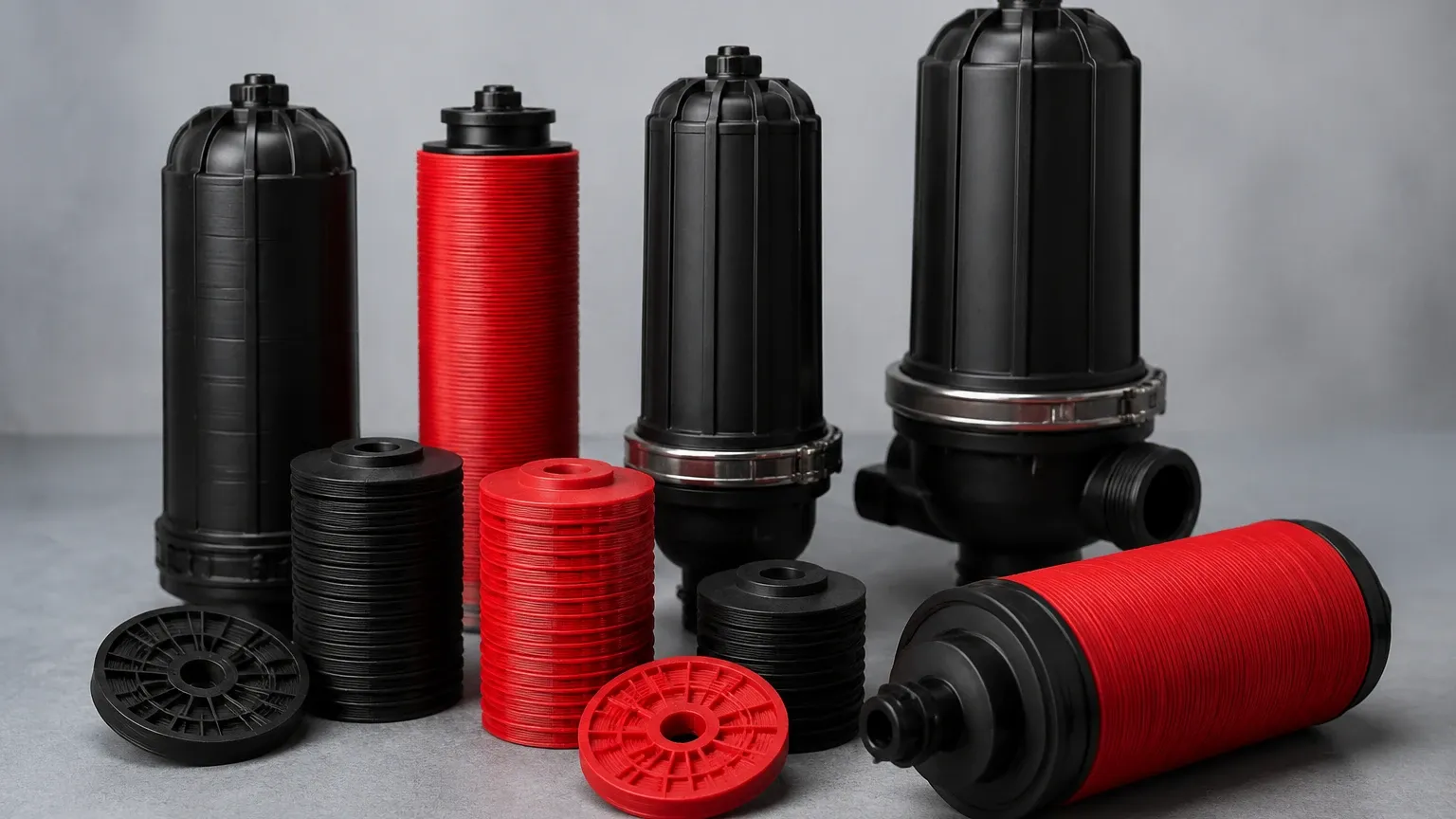
Disc filtration operates on the principle of depth filtration or surface filtration depending on the media construction. In a standard disc filter azud configuration, the filter element consists of a series of plastic discs with grooves of a specific micron size etched on both sides. When these discs are stacked and compressed, the grooves intersect, creating a complex network of channels that trap particles as fluid passes from the outside of the stack to the center.
In contrast, metal filter discs often focus on high-precision surface filtration or multi-layered depth filtration using sintered wire mesh or fiber felt. The primary engineering advantage of a disc-based geometry is the significant increase in surface area relative to the footprint of the filter housing. This design allows for higher flow rates and longer intervals between cleaning cycles compared to simple screen filters.
Key Differences in Filtration Mechanisms
1. Depth Filtration (Grooved Discs): Effective for capturing deformable particles and organic contaminants. The "tortuous path" created by the grooves ensures that particles are trapped throughout the thickness of the disc stack.
2. Surface Filtration (Wire Mesh Discs): Utilized in precision metal Filter Discs & Packs, this mechanism provides a definitive absolute rating. It is ideal for applications where exact particle size exclusion is critical, such as in the protection of high-pressure nozzles or sensitive downstream instrumentation.
Material Science: Polymer vs. Stainless Steel
When evaluating a disc filter azud system against stainless steel alternatives, material compatibility is the most significant limiting factor. Most plastic disc filters are constructed from polypropylene or reinforced polyamides. While these materials are resistant to many common chemicals and are cost-effective for water-based applications, they have clear physical boundaries.
Temperature and Pressure Thresholds
Plastic discs typically have a maximum operating temperature of approximately 60°C (140°F). Beyond this point, the structural integrity of the grooves may degrade, leading to "bypass" where contaminants pass through the filter. Furthermore, the pressure rating of plastic housings and elements is generally limited to 8–10 bar.
For industrial processes involving steam, hot oils, or high-pressure hydraulics, stainless steel (typically Grade 304, 316, or 316L) is the standard. Stainless steel filter discs can withstand temperatures exceeding 400°C and differential pressures that would collapse a plastic disc stack. In the context of a disc filter azud setup, if the process fluid involves solvents or extreme temperatures, transitioning to a metal-based disc pack is often a technical necessity.
Chemical Compatibility
While polypropylene is highly resistant to acids and bases, it is susceptible to degradation by hydrocarbons and certain organic solvents. Stainless steel provides a broader range of compatibility, particularly in the pharmaceutical and food and beverage industries where Clean-in-Place (CIP) procedures involve caustic chemicals and high-temperature sterilization.
Engineering Specifications of Filter Discs & Packs
For engineers designing or maintaining filtration systems, the specifications of the disc media determine the efficiency of the entire process. Metal Filter Discs & Packs are engineered with specific parameters to match the requirements of industrial machinery.
Layer Configuration and Sintering
Industrial filter packs are rarely composed of a single layer of mesh. Instead, they are often multi-layered structures:
* Filtration Layer: The primary mesh layer that determines the micron rating.
* Support Layers: Coarser mesh layers that provide mechanical strength to prevent the filtration layer from deforming under pressure.
* Drainage Layers: Ensure uniform flow across the entire surface of the disc.
Sintering—a process where multiple layers of mesh are fused together under heat and pressure—creates a monolithic structure that eliminates the risk of wire migration. This is a critical consideration in industries like pharmaceutical manufacturing, where any media migration could contaminate the final product.
Micron Ratings and Precision
While a disc filter azud system might offer ratings from 5 to 400 microns, metal discs can achieve much finer precision, often down to 1 micron or less in sintered fiber felt configurations. The choice between nominal and absolute ratings is vital. A nominal rating refers to the ability of the filter to retain a majority of particles at that size, whereas an absolute rating (common in high-quality metal mesh) guarantees that no particle larger than the specified size will pass through.
Application Analysis: Where Each Technology Excels
Understanding the application environment is the first step in selecting between a plastic disc filter azud system and a custom metal filtration solution.
Water Treatment and Irrigation
The disc filter azud is a market leader in agricultural irrigation and municipal water pre-filtration. Its ability to handle high loads of organic matter (algae, sand, silt) and its automated backwashing capabilities make it highly efficient for these large-scale, lower-pressure environments.
Polymer and Fiber Production
In the production of synthetic fibers and plastic films, the filtration of molten polymers requires discs that can withstand extreme viscosity and pressure. Here, multi-layered stainless steel Filter Discs & Packs are used. These packs are often spot-welded or bound with an aluminum or stainless steel rim to ensure they remain intact within the spin pack assembly.
Chemical and Petrochemical Processing
Corrosive fluids and high-temperature catalysts require the durability of metal. Stainless steel discs are used to recover expensive catalysts or to protect downstream reactors from particulate contamination. The cleanability of metal discs—via ultrasonic cleaning or chemical burnout—allows them to be reused, which is a significant advantage in high-value chemical streams.
Maintenance, Cleaning, and Total Cost of Ownership
A common question for maintenance engineers is the frequency and method of cleaning. A disc filter azud system is often designed for automatic backwashing. When the pressure differential reaches a set point, the discs are decompressed and spun, allowing the trapped debris to be flushed out.
Metal filter discs also support backwashing in certain configurations, but they are more frequently used in "batch" processes where the discs are removed and cleaned offline.
Evaluation Criteria for Replacement Cycles
1. Pressure Drop ($ΔP$): The most reliable indicator of a blinded filter. If the $ΔP$ rises rapidly after cleaning, the media may be permanently fouled.
2. Structural Integrity: For plastic discs, check for groove wear or warping. For metal discs, inspect for mesh blinding or mechanical damage to the edges.
3. Cleaning Costs: While metal discs have a higher initial purchase price, their ability to be cleaned and reused dozens of times often results in a lower total cost of ownership (TCO) compared to disposable or short-lived plastic elements in demanding environments.
Key Considerations Before Purchasing
Before finalizing a specification for a disc filter azud system or ordering custom Filter Discs & Packs, procurement teams and engineers should confirm the following data points:
* Fluid Properties: What is the viscosity, temperature, and chemical composition of the process fluid?
* Contaminant Characteristics: Are the particles hard and abrasive, or soft and deformable? What is the expected particle loading (ppm)?
* Flow Rate Requirements: What is the maximum and minimum flow rate the system must handle without excessive pressure drop?
* Housing Compatibility: Does the disc require a specific rim, center hole diameter, or thickness to fit into existing hardware?
* Regulatory Compliance: Does the application require FDA-approved materials or specific ISO certifications for filtration efficiency?
Conclusion
Whether utilizing the depth filtration capabilities of a disc filter azud for water treatment or the precision and durability of stainless steel Filter Discs & Packs for industrial processing, the goal remains the same: protecting downstream equipment and ensuring product quality. By understanding the technical boundaries of each material and design, engineers can implement filtration solutions that minimize downtime and maximize operational efficiency. For specialized industrial applications, the transition from standard plastic discs to custom-engineered metal components is often the key to achieving reliable, long-term performance in the most demanding environments.
