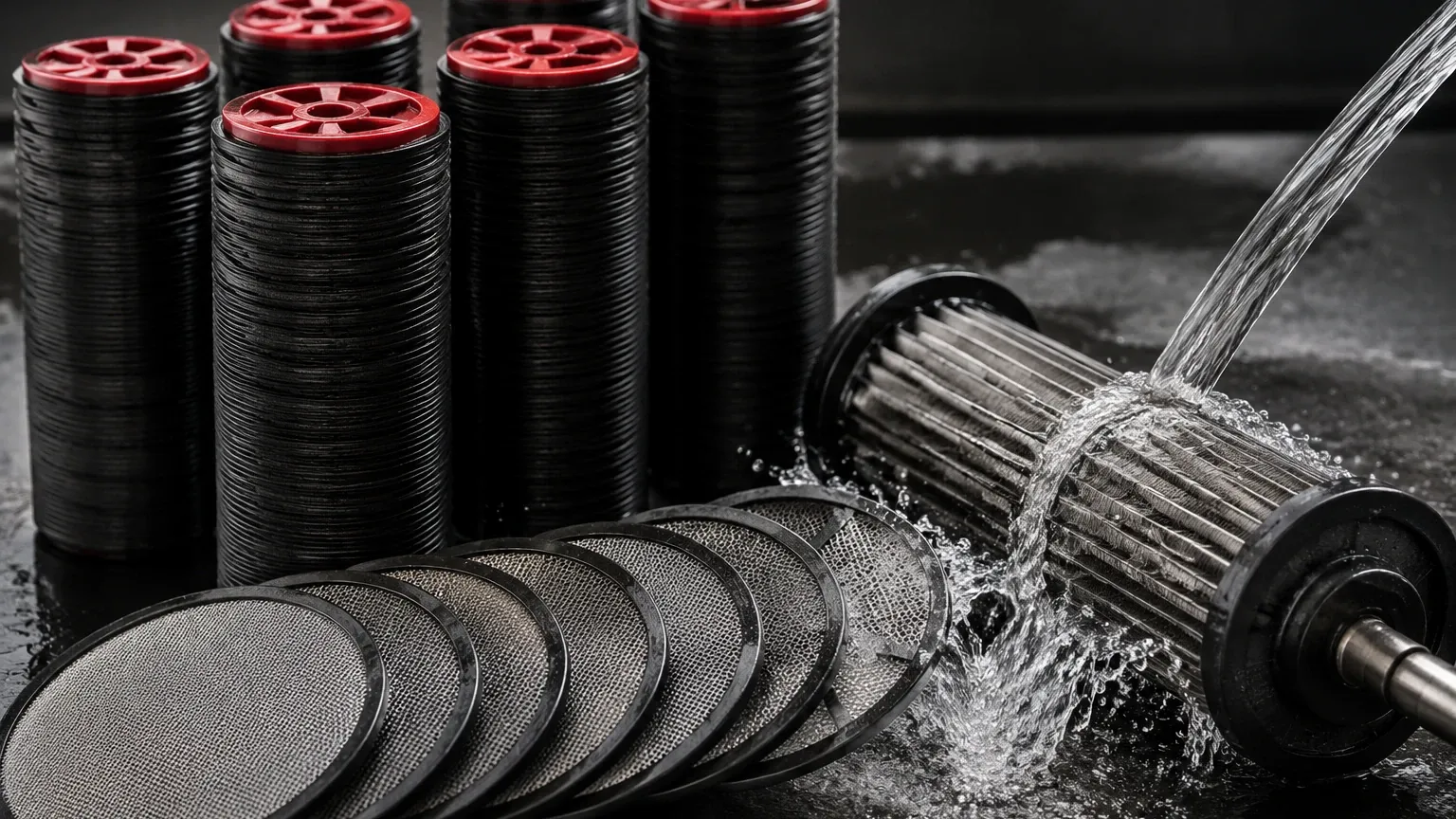
Disc Filter Backwash
In industrial filtration, the efficiency of a system is often measured not just by its ability to capture contaminants, but by its ability to maintain performance over time. For systems utilizing high-precision media, the process of disc filter backwash is a critical operational cycle that ensures longevity and consistent flow rates. Whether in chemical processing, hydraulic systems, or water treatment, understanding the mechanics and engineering requirements of backwashing is essential for technical professionals responsible for system maintenance and component procurement.
The Engineering Principles of Disc Filter Backwash
Disc filter backwash is a hydraulic process designed to remove accumulated solids from the surface or depth of a filter medium by reversing the flow of the filtrate. In a standard filtration cycle, fluid passes through the filter media, leaving behind particles that gradually build up a "filter cake." As this cake thickens, the differential pressure (DP) across the filter increases. Once a predetermined DP threshold is reached, or a specific time interval has elapsed, the backwash cycle is initiated.
During the backwash phase, the direction of fluid flow is reversed. This reversal, often combined with high-pressure jets or mechanical agitation, dislodges the trapped particles and flushes them out through a dedicated drain or discharge port. The effectiveness of a disc filter backwash depends heavily on the structural integrity of the Filter Discs & Packs used within the housing. If the media cannot withstand the reverse pressure or the mechanical stresses of the cleaning cycle, the system risks catastrophic failure or bypass leakage.
Material Selection: Why Stainless Steel Filter Discs & Packs Matter
In demanding industrial environments, the choice of material for filter components is a primary engineering consideration. While polymer-based discs are common in low-pressure irrigation applications, industrial sectors such as pharmaceutical manufacturing and chemical processing require more robust solutions. Stainless steel, specifically grades 304 and 316L, is the industry standard for backwashable filter media for several reasons:
1. Mechanical Strength: A disc filter backwash involves sudden shifts in pressure. Stainless steel mesh and sintered components possess the tensile strength to resist deformation during these high-velocity flow reversals.
2. Thermal Stability: Many industrial processes operate at elevated temperatures where plastics would lose structural rigidity. Stainless steel maintains its micron rating and shape even in extreme heat.
3. Chemical Compatibility: Corrosive fluids can degrade standard filter media, leading to pore enlargement and loss of filtration accuracy. Stainless steel offers superior resistance to a wide range of solvents, acids, and bases.
4. Cleanability: The smooth surface of metallic wires in a wire mesh filter allows for more efficient particle release during the backwash cycle compared to fibrous or porous plastic media.
Optimizing the Backwash Cycle for Industrial Efficiency
To achieve an optimized disc filter backwash, engineers must balance the thoroughness of the cleaning with the consumption of backwash fluid and the resulting system downtime. Several factors influence this balance:
Flow Velocity and Pressure
The velocity of the backwash fluid must be sufficient to overcome the adhesive forces between the contaminants and the filter media. However, excessive pressure can lead to "media migration" or damage to the delicate mesh layers. Precision-engineered filter packs often incorporate a heavy-duty support layer to provide the necessary rigidity during these high-pressure events.
Backwash Duration
A cycle that is too short will leave residual contaminants, leading to a rapid return to high differential pressure. Conversely, an excessively long cycle wastes processed fluid and increases the volume of waste generated. Monitoring the DP post-backwash is a reliable method for determining the optimal duration.
Automation and Control
Modern industrial systems utilize automated valves and PLC (Programmable Logic Controller) systems to manage the disc filter backwash. By integrating pressure sensors and flow meters, the system can trigger a cleaning cycle only when necessary, reducing wear on the filter components and optimizing energy consumption.
The Role of Filter Discs & Packs in System Longevity
The configuration of the filter media itself plays a significant role in how well a system responds to backwashing. Filter Discs & Packs are often designed as multi-layer structures. A typical high-performance pack might include:
* The Filtration Layer: A fine stainless steel wire mesh or sintered metal fiber felt that determines the micron rating.
* The Support Layer: A coarser mesh that provides structural backing to prevent the filtration layer from collapsing under pressure.
* The Drainage Layer: Ensures that fluid is distributed evenly across the entire surface of the disc, preventing localized clogging and ensuring a more uniform backwash.
By using customized designs, manufacturers like Kaifil can tailor the thickness, mesh count, and layering of these discs to match the specific particle size distribution and fluid viscosity of a given application. This customization ensures that the disc filter backwash is as effective as possible, extending the service life of the components and reducing the total cost of ownership.
Common Challenges in Disc Filter Backwash Systems
Even with well-designed components, certain challenges can arise during the backwash process. Identifying these early is key to maintaining system uptime.
1. Irreversible Fouling: Some contaminants, particularly sticky or biological materials, may adhere so strongly to the media that a standard backwash cannot remove them. In these cases, ultrasonic cleaning or chemical soaking may be required periodically to restore the filter's original permeability.
2. Short-Cycling: If the backwash cycle is triggered too frequently, it often indicates that the filter media is either undersized for the flow rate or that the micron rating is too fine for the level of contamination in the influent. This leads to increased energy costs and accelerated wear on valves and seals.
3. Mechanical Fatigue: Repeated pressure pulses during the disc filter backwash can eventually lead to metal fatigue in the wire mesh. Engineers should specify filter discs that are rated for the expected number of cycles and perform regular inspections for signs of mesh fraying or delamination.
Selection Criteria for Engineers and Purchasing Teams
When specifying or purchasing components for a backwashable filtration system, technical teams should confirm several key parameters to ensure compatibility and performance:
* Micron Rating and Efficiency: Determine whether the application requires absolute or nominal filtration. For backwashable systems, the media must be able to release particles of the specified size without them becoming permanently embedded.
* Differential Pressure Limits: What is the maximum allowable DP before the filter must be cleaned? What is the maximum pressure the disc can withstand during the backwash itself?
* Housing Compatibility: Ensure the outer diameter (OD), inner diameter (ID), and thickness of the filter discs or packs match the existing housing dimensions and sealing mechanisms.
* Operating Environment: Consider the temperature, chemical composition, and potential for pressure spikes. This will dictate the grade of stainless steel or alternative alloys required.
* Customization Requirements: Does the application require a specific edge treatment (such as spot welding or aluminum/stainless steel framing) to prevent bypass and ensure structural integrity?
Conclusion
The disc filter backwash is a fundamental process in maintaining the efficiency of industrial filtration systems. By selecting high-quality, precision-engineered stainless steel Filter Discs & Packs, facilities can ensure that their backwash cycles are effective, reliable, and non-destructive to the filter media. For engineers and procurement specialists, focusing on material durability, structural design, and the specific requirements of the application will lead to optimized filtration performance and significantly reduced maintenance overhead. As industrial requirements become more stringent, the role of robust, cleanable metal filtration components continues to be a cornerstone of sustainable and efficient process engineering.