


Disc Filter Building
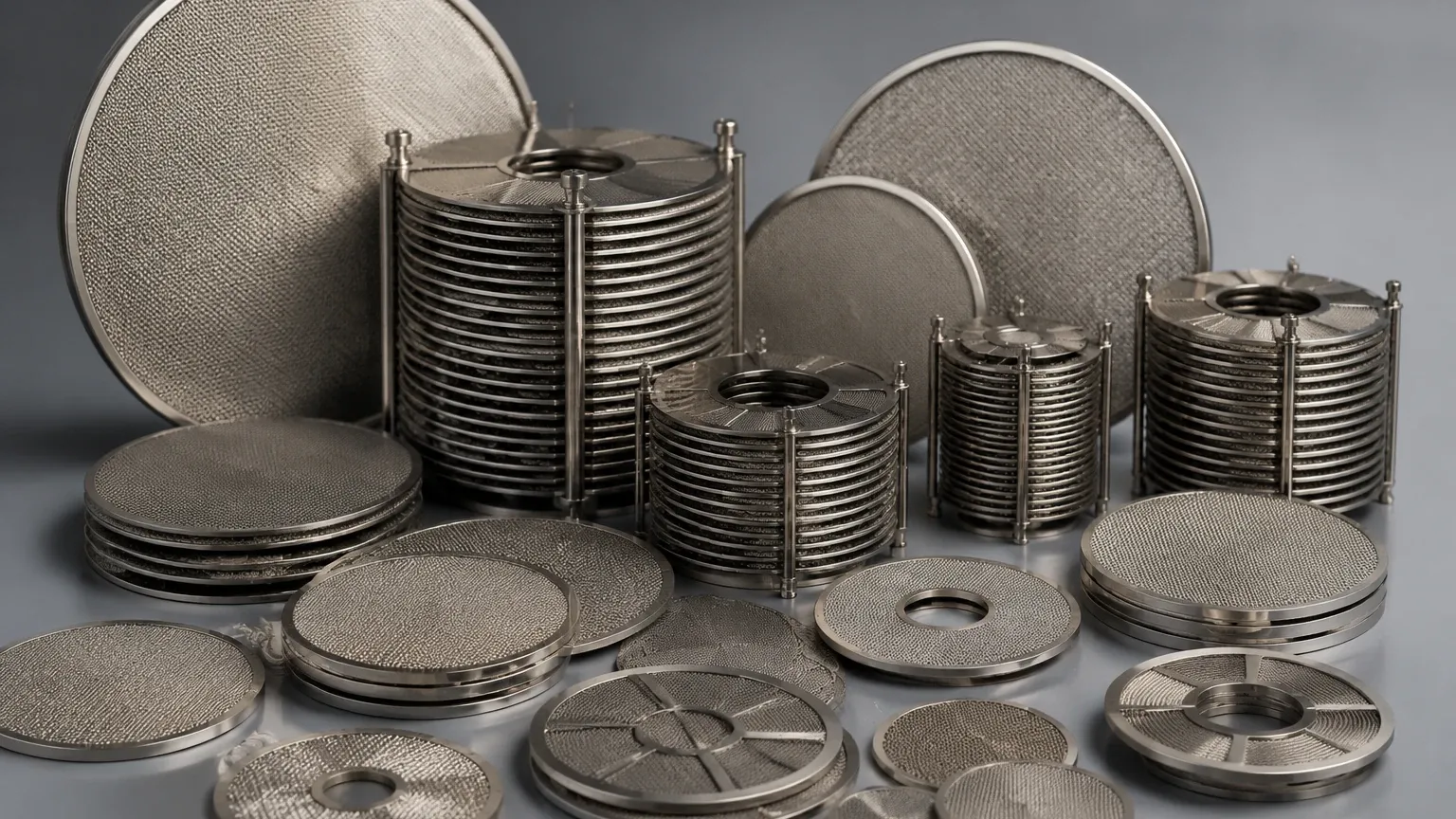
In industrial filtration, the term disc filter building refers to the precise engineering and assembly of circular filtration components designed to remove contaminants from liquid or gaseous streams. These components, often referred to as filter discs or screen packs, are foundational to the efficiency of polymer extrusion, chemical processing, and hydraulic systems. For engineers and procurement specialists, understanding the nuances of disc filter building—from material selection to layering techniques—is essential for ensuring system longevity and product purity.
Disc filter building is not merely a matter of cutting mesh into circles; it involves a sophisticated understanding of fluid dynamics, metallurgy, and mechanical stress. Whether a single-layer disc or a complex multi-layer pack, each unit must be constructed to withstand specific pressure differentials, temperatures, and chemical environments while maintaining a consistent micron rating.
Engineering Foundations of Disc Filter Building
The building process begins with the selection of the primary filtration medium. In most industrial settings, stainless steel wire mesh is the preferred material due to its mechanical strength and resistance to corrosion. The two most common alloys used in Filter Discs & Packs are Stainless Steel 304 and 316L.
* SS 304: Suitable for standard industrial applications where basic corrosion resistance is required.
* SS 316L: Preferred for pharmaceutical, food and beverage, and highly acidic chemical environments due to its superior resistance to pitting and chloride-induced stress corrosion cracking.
Beyond the alloy, the weave type determines the performance characteristics of the disc. Plain weave mesh offers a high open area for high-flow applications, while Dutch weave or Twilled Dutch weave provides much finer filtration ratings and higher structural density. During the disc filter building phase, engineers must match the weave type to the viscosity of the medium and the desired particle retention size.
Structural Configurations: Single-Layer vs. Multi-Layer Packs
One of the most critical decisions in disc filter building is determining the number of layers required for the application. A single-layer disc is often used in low-pressure environments or as a pre-filter. However, many demanding industrial processes require multi-layer packs to achieve the necessary balance of filtration accuracy and structural support.
The Role of Support Layers
In a multi-layer configuration, the "building" process involves stacking different mesh counts. Typically, a fine filtration layer is sandwiched between coarser support layers. The support layers prevent the fine mesh from deforming or migrating under high pressure, which is common in polymer melt filtration. This layering strategy also assists in distributing the flow evenly across the entire surface of the disc, preventing localized clogging.
Bonding Techniques
To ensure the layers act as a single unit, several bonding methods are employed during disc filter building:
1. Spot Welding: Individual layers are welded at specific points to maintain alignment without significantly reducing the effective filtration area.
2. Rimmed Edges: The layers are encased in a metal rim (often aluminum, copper, or stainless steel). This provides a mechanical seal, prevents edge leakage (bypass), and makes the disc easier to handle during installation.
3. Sintering: For the most extreme environments, the layers are diffusion-bonded in a vacuum furnace. This creates a monolithic structure that cannot delaminate, even under extreme pressure or backwashing cycles.
Key Evaluation Criteria for Industrial Performance
When evaluating a disc filter building project, technical professionals must look beyond the initial price and focus on performance metrics that impact the total cost of ownership. High-quality construction is defined by several key factors:
Micron Rating and Pore Distribution
The primary function of the disc is to capture particles of a specific size. Inconsistent disc filter building can lead to "pore migration," where the openings in the mesh shift during the manufacturing process. Engineers should confirm that the manufacturer uses precision-calibrated mesh and maintains strict quality control to ensure the nominal or absolute micron rating is consistent across every batch.
Mechanical Integrity and Pressure Drop
A well-built filter disc must possess a high collapse pressure. If the disc deforms under the weight of the contaminant cake or the force of the pump, it can lead to bypass or system failure. Furthermore, the initial pressure drop (clean pressure drop) must be calculated to ensure the filtration system does not overwork the pumps, which would lead to increased energy consumption.
Common Risks in Disc Filter Building and How to Mitigate Them
Substandard manufacturing processes can introduce risks that are not immediately visible but can cause significant downtime. During the disc filter building phase, manufacturers must address the following issues:
* Burrs and Loose Wires: Improper cutting techniques can leave metal shards at the edges of the disc. In industries like food processing or pharmaceuticals, these loose wires represent a severe contamination risk. Precision die-cutting or laser cutting, followed by ultrasonic cleaning, is necessary to mitigate this risk.
* Delamination: In multi-layer packs that are poorly welded or rimmed, the layers can separate. This leads to "dead zones" within the filter where stagnant fluid can degrade or where particles can bypass the filtration layer entirely.
* Material Fatigue: If the mesh is stretched too tightly during the building process, it may develop micro-cracks that expand under thermal cycling. Proper tensioning and stress-relief during assembly are vital for filters used in high-temperature applications.
Customization and OEM Integration
Every industrial filtration housing has unique dimensions and tolerances. Successful disc filter building requires close collaboration between the OEM and the filter manufacturer. Customization options often include:
* Non-Standard Shapes: While circular discs are the norm, certain applications require oval, rectangular, or ring-shaped filters.
* Variable Thickness: By adjusting the number and gauge of support layers, the total thickness of the disc can be tailored to fit specific recessed plates or housings.
* Specific Rim Materials: Depending on the galvanic compatibility with the filter housing, rims may need to be made from specialized alloys to prevent corrosion at the contact points.
Engineers should provide detailed drawings or samples during the design phase to ensure the built discs integrate seamlessly with existing equipment without the need for additional gaskets or modifications.
Maintenance, Replacement, and Total Cost Considerations
The longevity of a filter disc is heavily dependent on the quality of its initial construction. While a lower-cost disc may seem attractive, it often leads to shorter replacement cycles and higher labor costs. In disc filter building, durability is achieved through robust edge sealing and high-grade materials that allow for multiple cleaning cycles.
Cleaning Protocols
Many stainless steel filter discs can be cleaned and reused. Methods such as ultrasonic cleaning, chemical baths, or burnout ovens (for polymer applications) are common. A disc that is built with high-quality spot welds or sintering can withstand these aggressive cleaning processes without losing its structural integrity, whereas a cheaply built disc may fall apart after a single cleaning cycle.
Replacement Indicators
Engineers should monitor the pressure differential across the filter. A sudden drop in pressure may indicate a breach in the mesh, while a rapid increase that cannot be resolved by cleaning indicates that particles have become permanently embedded in the depth of the mesh. High-quality disc filter building ensures that the transition from a clean state to a fully loaded state is predictable, allowing for scheduled maintenance rather than emergency shutdowns.
Conclusion: Selecting a Partner for Disc Filter Building
Choosing the right partner for disc filter building requires an assessment of their technical expertise and manufacturing capabilities. A reliable manufacturer should be able to provide detailed material certifications, explain their layering logic, and offer guidance on the best weave types for specific industrial challenges. By focusing on precision assembly, material quality, and application-specific design, companies can ensure their filtration systems operate at peak efficiency, protecting both downstream equipment and the quality of the final product.
