


Disc Filter Bunnings
For maintenance engineers, procurement specialists, and facility managers, the search for "disc filter bunnings" often represents an initial step in identifying filtration solutions for water systems, irrigation, or light industrial applications. While retail hardware chains like Bunnings provide accessible, off-the-shelf solutions for domestic and light commercial use, industrial-scale operations—such as chemical processing, pharmaceutical manufacturing, and high-pressure hydraulic systems—require a more robust engineering approach.
Understanding the distinction between consumer-grade plastic disc filters and precision-engineered Filter Discs & Packs is critical for ensuring system longevity, filtration accuracy, and operational safety. This guide examines the technical parameters that differentiate retail-level filtration from industrial-grade solutions, helping professionals determine the right specification for their specific application.
Understanding the Search Intent Behind Disc Filter Bunnings
When professionals search for disc filters at a general hardware retailer, they are typically looking for quick-access components for low-pressure water filtration. Retail disc filters are generally constructed from polypropylene or similar polymers, featuring a stack of grooved plastic discs. These are highly effective for removing organic matter and sediment from irrigation water or cooling towers where pressures are moderate and chemical exposure is minimal.
However, in a B2B context, the term "disc filter" often refers to a much broader range of precision components. Industrial applications demand materials that can withstand extreme temperatures, corrosive chemicals, and high differential pressures. For these environments, stainless steel wire mesh discs and multi-layer sintered packs are the industry standard. While a retail outlet might satisfy a temporary fix for a non-critical water line, specialized manufacturing processes require custom-fabricated metal filtration media designed to specific micron ratings and flow rates.
Material Engineering: Polymer vs. Stainless Steel
The most significant difference between the products found via a "disc filter bunnings" search and industrial-grade alternatives lies in material science.
Consumer-Grade Polymers
Standard retail disc filters are usually made of plastic. While cost-effective and resistant to rust, they have distinct limitations:
* Temperature Sensitivity: Most plastic filters lose structural integrity above 60°C (140°F).
* Chemical Vulnerability: Polymers can degrade or leach when exposed to solvents, strong acids, or petroleum-based fluids.
* Pressure Limits: Plastic housings and discs are prone to deformation or cracking under high-pressure surges.
Industrial Stainless Steel
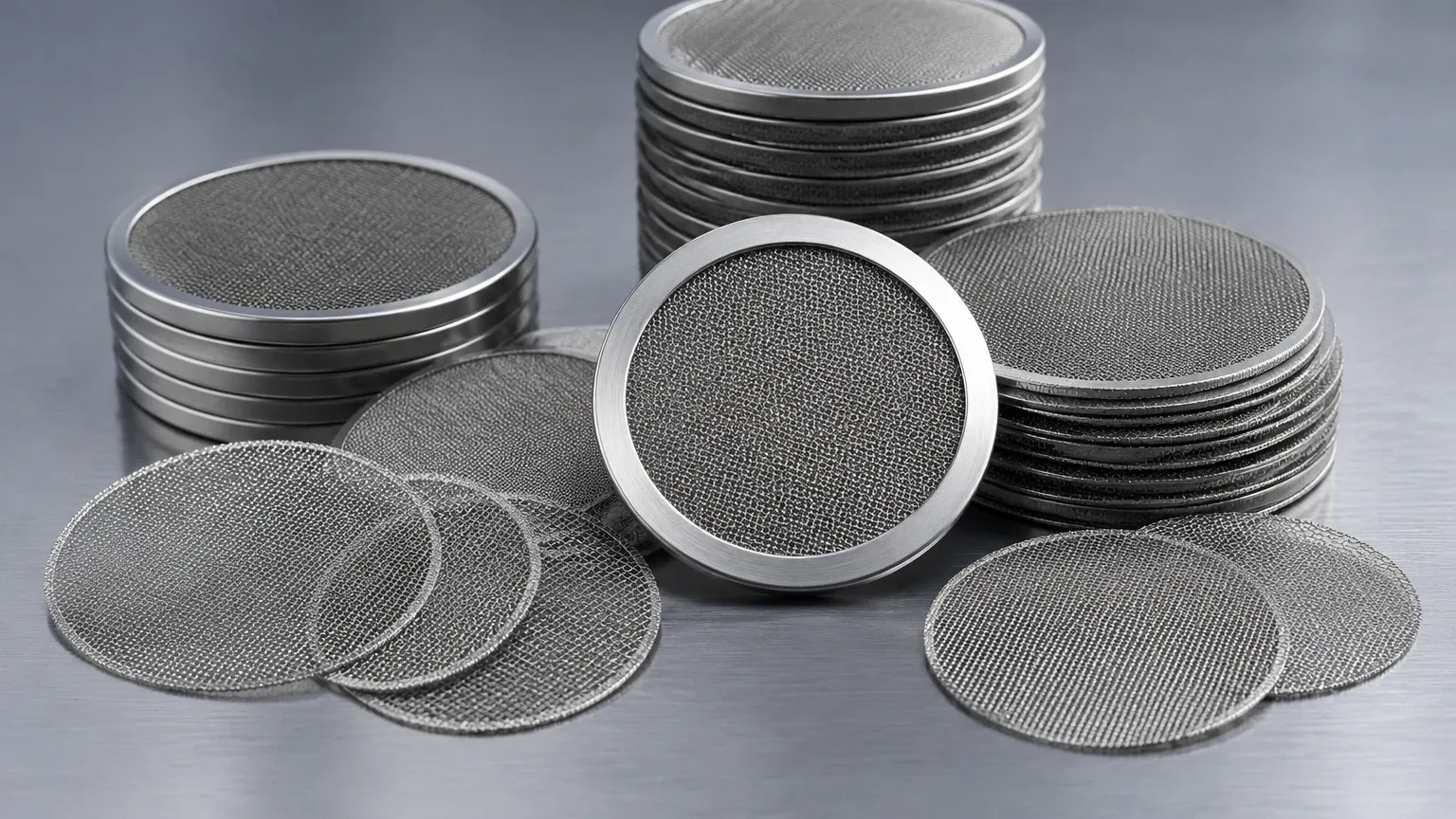
In contrast, industrial Filter Discs & Packs are typically manufactured from 304, 316, or 316L stainless steel. These materials offer:
* Thermal Stability: Capability to operate in environments exceeding 400°C.
* Corrosion Resistance: Essential for chemical processing and marine environments.
* Mechanical Strength: Stainless steel mesh can withstand high differential pressures without the risk of media migration or collapse.
Filtration Precision and Micron Ratings
Filtration efficiency is measured by the ability of the media to capture particles of a specific size, known as the micron rating. Retail disc filters often provide "nominal" filtration, meaning they capture a high percentage of particles at a certain size but may allow some to pass through due to the flexible nature of the plastic grooves.
In precision engineering, "absolute" filtration is often required. This is achieved through high-density stainless steel wire mesh. Industrial filter discs can be manufactured with specific weave patterns to achieve precise results:
* Plain Weave: Suitable for high-flow, low-pressure applications.
* Dutch Weave: Provides a denser structure for finer filtration and higher pressure resistance.
* Sintered Mesh: Multiple layers of mesh are bonded through a heat-treatment process (sintering) to create a rigid, non-deformable filter pack that maintains its micron rating even under extreme stress.
For engineers transitioning from basic water filtration to complex industrial fluid management, specifying the exact micron requirement and the nature of the particulate (deformable vs. rigid) is a prerequisite for selecting the correct filter pack.
Structural Integrity and High-Pressure Performance
In hydraulic systems or polymer melt filtration, the pressure exerted on the filter media can be immense. A standard disc filter from a hardware store is designed for static or low-flow water pressure. If subjected to the high-viscosity fluids or rapid pressure cycles common in industrial machinery, these units would likely fail, leading to downstream contamination and potential equipment damage.
Industrial Filter Discs & Packs are engineered with reinforced borders (often aluminum or stainless steel rims) to prevent bypass. Multi-layer packs often include a support layer of coarse mesh to provide structural rigidity to the finer filtration layers. This "sandwich" construction ensures that the filter remains flat and functional even when the differential pressure increases as the filter becomes loaded with contaminants.
Customization and OEM Requirements
A primary limitation of retail-sourced filters is the lack of customization. Retailers stock standard sizes that fit specific, mass-produced housings. In the B2B sector, filtration components must often be integrated into proprietary machinery or legacy systems with unique dimensions.
Custom manufacturing capabilities allow for:
* Variable Geometry: Producing discs in non-standard diameters, or even rectangular and oval shapes for specific manifold designs.
* Layer Configuration: Combining different mesh counts to create a graduated filtration effect, which extends the life of the filter by capturing larger particles on the outer layers.
* Spot Welding and Edging: Ensuring that the edges of the mesh are securely bound to prevent fraying and ensure a leak-proof seal within the filter housing.
When an engineer cannot find a direct replacement via "disc filter bunnings" or similar searches, it is usually because the application requires a bespoke solution tailored to the specific flow dynamics of their equipment.
Total Cost of Ownership and Maintenance
While the initial purchase price of a plastic disc filter is lower than that of a stainless steel filter pack, the total cost of ownership (TCO) often tells a different story.
Cleanability and Reusability
Stainless steel filter discs are designed to be cleaned and reused. Depending on the contaminant, they can be backwashed, ultrasonically cleaned, or chemically treated to restore their original flow characteristics. This reduces the frequency of replacement and minimizes waste. In contrast, many plastic disc filters are treated as semi-disposable; once the grooves become embedded with fine silt or scaled with minerals, they are difficult to restore to 100% efficiency.
Downtime Considerations
In a manufacturing environment, the cost of downtime far exceeds the cost of the filter itself. Using a sub-optimal filter sourced from a non-specialist retailer can lead to more frequent maintenance intervals or, worse, catastrophic failure. Investing in high-quality Filter Discs & Packs ensures longer service life and more predictable maintenance schedules, which are essential for lean manufacturing and high-output operations.
Key Technical Questions for Purchasing Teams
Before finalizing a procurement decision based on a search for "disc filter bunnings," technical buyers should confirm several key factors with their engineering team:
1. What is the operating temperature? If it exceeds 60°C, polymer-based filters are likely unsuitable.
2. What is the chemical composition of the fluid? Ensure the filter media and the housing seals are compatible with the process fluid to prevent swelling or degradation.
3. What is the maximum allowable pressure drop? Industrial mesh allows for precise calculations of flow resistance, whereas plastic disc stacks may have more variable performance as they clog.
4. Is the filtration absolute or nominal? For protecting sensitive downstream components like spray nozzles or precision valves, absolute filtration is often mandatory.
5. Are there space constraints? Custom-sized metal discs can often provide more filtration surface area in a smaller footprint than standard plastic housings.
Conclusion
While "disc filter bunnings" may be a valid starting point for simple, low-stakes water filtration projects, it rarely satisfies the rigorous demands of the B2B industrial sector. For applications involving high temperatures, aggressive chemicals, or the need for precise micron control, stainless steel Filter Discs & Packs are the necessary standard. By focusing on material durability, structural integrity, and custom engineering, manufacturers can achieve more reliable filtration, lower long-term costs, and better protection for their critical industrial assets.
