


Disc Filter Cloth
In industrial filtration, the term "disc filter cloth" refers to high-precision wire mesh media used to separate solids from liquids or gases. While the word "cloth" often implies textile materials, in heavy-duty industrial contexts—particularly within the chemical, pharmaceutical, and polymer industries—it predominantly refers to fine stainless steel wire mesh. These components are critical for ensuring product purity, protecting downstream equipment, and maintaining process efficiency.
Selecting the appropriate disc filter cloth requires a deep understanding of material science, fluid dynamics, and mechanical engineering. This guide examines the technical specifications, construction methods, and application-specific considerations essential for engineers and procurement professionals when evaluating filtration solutions.
Understanding Disc Filter Cloth in Industrial Applications
Disc filter cloth serves as the primary barrier in a filtration system. Its performance is defined by its ability to retain specific particle sizes while allowing the filtrate to pass through with minimal resistance. Unlike disposable filter media, stainless steel disc filter cloth is designed for durability, high-temperature resistance, and the ability to withstand significant pressure differentials.
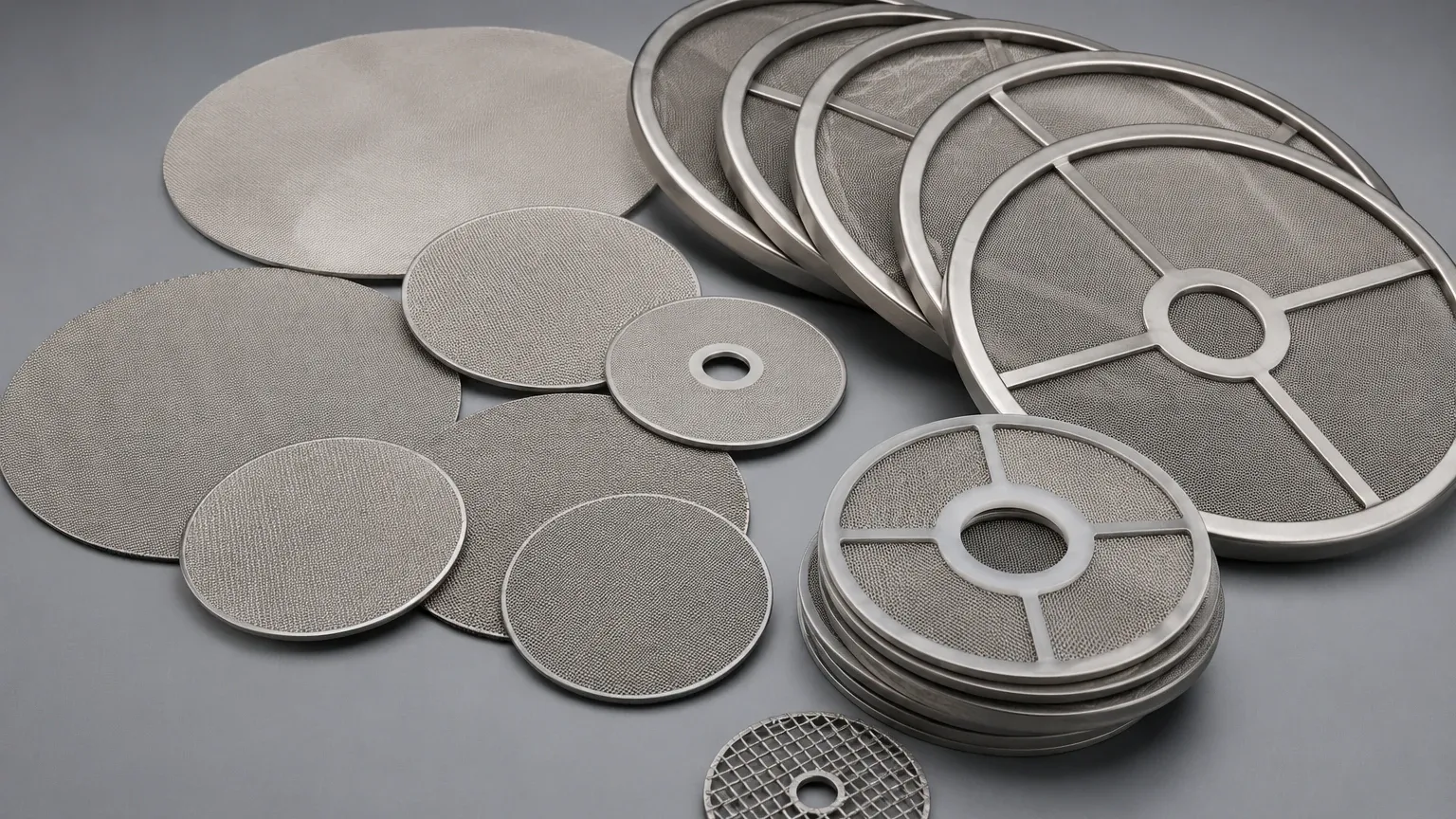
In most B2B industrial environments, these discs are rarely used as standalone single-layer components. Instead, they are often engineered into complex Filter Discs & Packs where multiple layers of different mesh counts are combined to achieve a balance between filtration fineness and structural integrity. The choice of the "cloth" or mesh layer determines the absolute micron rating of the entire assembly.
Material Selection and Metallurgical Properties
The environment in which the filter operates dictates the material requirements. Stainless steel is the industry standard due to its mechanical strength and resistance to oxidation and corrosion.
Stainless Steel 304
This is the most common grade used for general industrial applications. It offers good corrosion resistance and is cost-effective for environments that are not excessively acidic or saline. It is frequently used in food processing and standard hydraulic systems.
Stainless Steel 316 and 316L
For more demanding environments, such as chemical processing or marine applications, SS 316 is preferred. The addition of molybdenum enhances resistance to pitting and crevice corrosion, particularly in chloride-rich environments. SS 316L (low carbon) is often specified for components that require welding, as it minimizes carbide precipitation that can lead to intergranular corrosion.
Specialized Alloys
In extreme cases involving highly corrosive acids or ultra-high temperatures, alloys like Hastelloy, Inconel, or Monel may be used. These materials ensure that the disc filter cloth does not degrade or contaminate the process stream through metallic leaching.
Weave Structures and Filtration Characteristics
The performance of disc filter cloth is fundamentally tied to its weave pattern. The weave determines the pore shape, the stability of the mesh, and the flow resistance.
Plain Weave
This is the simplest and most common weave, where each warp wire crosses over and under each shute wire. It provides a consistent pore size and is easy to clean. However, it is generally limited to coarser filtration tasks because the wire diameter must be relatively large to maintain stability.
Twill Weave
In a twill weave, each shute wire passes over and under two warp wires. This allows for a heavier wire diameter in a given mesh count, providing greater strength and the ability to produce finer mesh than plain weave. It is ideal for applications involving higher mechanical loads.
Dutch Weave (Plain and Twill)
Dutch weaves utilize different diameters for warp and shute wires. The shute wires are driven closely together, creating a dense, "zero-aperture" mesh. The filtration occurs at the intersections of the wires rather than through simple square openings.
- Plain Dutch Weave: Offers high flow rates and excellent mechanical strength.
- Twill Dutch Weave: Provides the finest filtration levels (down to 1–5 microns) and a very smooth surface, which is beneficial for cake release in pressurized filtration.
Engineering Multi-Layer Filter Discs & Packs
Single layers of fine disc filter cloth are often fragile. To survive high-pressure environments, such as polymer extrusion or high-viscosity chemical filtration, they must be integrated into multi-layer packs. A typical construction includes:
1. Filtration Layer: The specific disc filter cloth that determines the micron rating.
2. Support Layers: Coarser mesh layers placed on either side of the filtration layer to prevent it from deforming under pressure.
3. Drainage Layers: Very coarse mesh that facilitates the even distribution of fluid across the entire surface of the filter.
These layers are often bound together using various methods. Spot welding is common for keeping layers aligned during installation. For more critical applications, rimming or framing is used. A metal rim (made of aluminum, copper, or stainless steel) is compressed around the edges of the mesh stack. This not only prevents bypass but also protects the edges of the cloth from fraying and ensures a tight seal within the filter housing.
Critical Performance Factors: Pressure, Flow, and Retention
When specifying disc filter cloth, engineers must balance three competing factors:
Micron Rating (Retention)
This refers to the size of the particles the mesh is designed to trap. It is important to distinguish between nominal (the average pore size) and absolute (the size of the largest particle that can pass through). For high-precision industries like pharmaceuticals, absolute ratings are mandatory.
Pressure Drop (ΔP)
As the pore size decreases, the resistance to flow increases. A high initial pressure drop reduces the operational lifespan of the filter before it requires cleaning or replacement. Engineers must calculate the effective open area of the disc filter cloth to ensure it meets the required flow rates at operating pressures.
Dirt Holding Capacity
This is the volume of contaminants the filter can retain before the pressure drop reaches a critical limit. Multi-layer Filter Discs & Packs are often designed with graded density—coarser layers upstream to catch large debris and finer layers downstream for final polishing—to maximize this capacity.
Application-Specific Selection Criteria
The choice of disc filter cloth varies significantly across different industrial sectors:
Polymer and Plastic Extrusion
In these applications, the filter must withstand extremely high temperatures (up to 300°C+) and pressures. The primary goal is to remove "gels" and un-melted particles from the polymer melt. Stainless steel mesh packs with robust rimming are essential to prevent the mesh from blowing out under the high viscosity of the plastic.
Chemical and Petrochemical Processing
Corrosion resistance is the priority here. The disc filter cloth must be compatible with the chemical composition of the filtrate. Engineers often use 316L stainless steel or exotic alloys to ensure the longevity of the filter in acidic or alkaline environments.
Food and Beverage
Filtration media in this sector must be FDA-compliant and easy to sanitize. Stainless steel disc filter cloth is preferred because it does not shed fibers (unlike fabric or paper) and can withstand Clean-in-Place (CIP) procedures using caustic chemicals or high-pressure steam.
Hydraulic and Lubrication Systems
In hydraulic systems, the filter protects sensitive valves and pumps from wear particles. The disc filter cloth must have high fatigue resistance to handle the pressure pulsations inherent in hydraulic circuits.
Maintenance, Cleaning, and Replacement Cycles
One of the primary advantages of metal disc filter cloth over synthetic alternatives is its reusability. However, improper cleaning can damage the delicate mesh structure.
Cleaning Methods
- Ultrasonic Cleaning: High-frequency sound waves create cavitation bubbles that dislodge particles from deep within the weave. This is the most effective method for fine Dutch weaves.
- Chemical Cleaning: Using solvents or acids to dissolve accumulated contaminants. This requires careful selection of chemicals to ensure they do not attack the filter material itself.
- Burn-off/Pyrolysis: Used primarily in the polymer industry to remove hardened plastic. The filters are heated in a vacuum oven to carbonize the polymer, which is then removed via ultrasonic cleaning.
Identifying the Need for Replacement
Despite being reusable, disc filter cloth eventually reaches the end of its service life. Indicators include:
- Permanent Blinding: When particles become so deeply embedded that cleaning no longer restores the original pressure drop.
- Mechanical Deformation: "Cupping" or stretching of the mesh due to excessive pressure differentials.
- Wire Breakage: Often caused by fatigue or corrosion, leading to a loss of filtration integrity.
Technical Confirmation for Procurement
Before finalizing a purchase of disc filter cloth or integrated packs, technical teams should confirm the following data points with the manufacturer:
1. Mesh Count and Wire Diameter: Ensure these match the required micron rating and structural needs.
2. Layer Configuration: For multi-layer packs, specify the exact sequence of mesh layers.
3. Edge Treatment: Determine if the application requires spot welding, aluminum rimming, or stainless steel binding for sealing and safety.
4. Tolerances: Define the allowable variance in disc diameter to ensure a proper fit in the filter housing.
5. Certification: Request material mill certificates (MTRs) to verify the grade of stainless steel provided.
By focusing on these technical parameters, engineers can ensure that the selected disc filter cloth provides the necessary precision and durability for their specific industrial process. Whether used in simple water treatment or complex chemical synthesis, the quality of the filtration medium is a fundamental driver of overall system performance.
