


Disc Filter Drip Irrigation
In the realm of modern agricultural and industrial water management, the efficiency of a drip irrigation system is directly proportional to the quality of its filtration. Drip irrigation, characterized by the slow and precise delivery of water to plant roots, relies on emitters with extremely small orifices. These orifices are highly susceptible to clogging from organic matter, sand, and chemical precipitates. To mitigate this risk, engineers and system designers frequently turn to disc filter drip irrigation as a robust solution for protecting sensitive infrastructure.
Disc filters represent a hybrid technology that combines the surface filtration characteristics of screen filters with the depth filtration capabilities of media filters. For industrial-scale operations and high-demand agricultural environments, understanding the technical nuances of Filter Discs & Packs is essential for ensuring long-term system reliability and optimizing the total cost of ownership.
Understanding the Role of Disc Filtration in Drip Irrigation Systems
Filtration is the primary defense mechanism in a drip irrigation setup. Without it, the microscopic particles found in surface water, well water, or reclaimed process water would quickly accumulate within the narrow channels of the emitters, leading to non-uniform water distribution and eventual system failure.
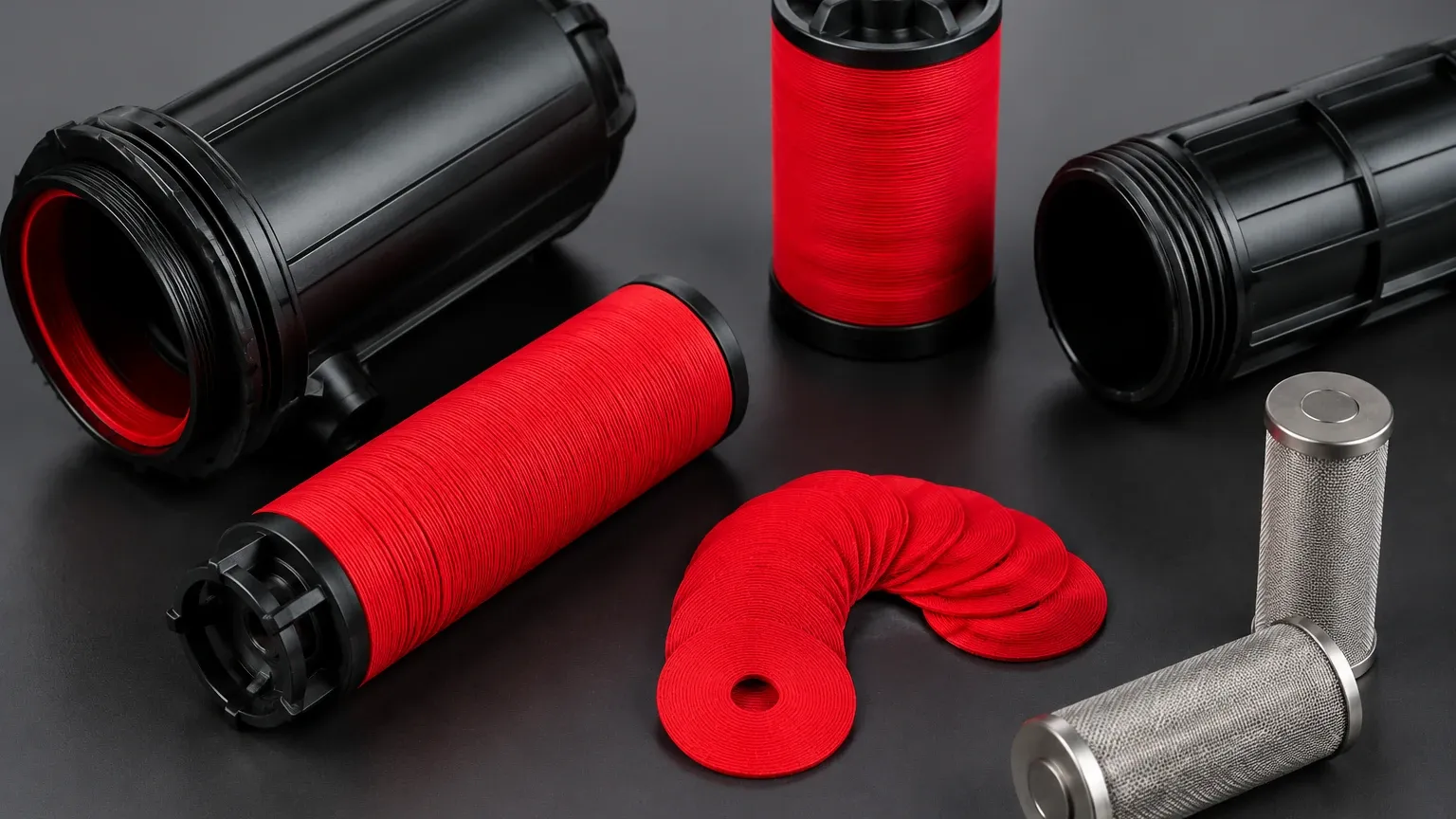
Disc filter drip irrigation utilizes a series of grooved discs stacked tightly together. These discs create a three-dimensional filtration matrix. Unlike a simple screen, which only stops particles larger than its openings on a single plane, a disc filter forces water through a series of intersecting grooves. This tortuous path traps particles of varying sizes throughout the depth of the stack. This mechanism is particularly effective at handling organic contaminants, such as algae and soft biological debris, which can often "squish" through the holes of a standard screen filter under pressure.
For engineers, the selection of a disc filter is not merely about choosing a size; it is about matching the filtration surface area and the micron rating to the specific water quality and the flow requirements of the irrigation block. In industrial contexts, where water may contain corrosive elements or require high-pressure delivery, the material integrity of these discs becomes a critical engineering consideration.
Technical Mechanics: How Disc Filters Facilitate Depth Filtration
The core of a disc filter system lies in the geometry of the individual discs. Each disc is manufactured with grooves of a specific depth and angle. When stacked and compressed on a central spine, the grooves on the top of one disc intersect with the grooves on the bottom of the adjacent disc.
The Filtration Process
1. Inlet Phase: Raw water enters the filter housing and is directed to the outside of the disc stack.
2. Depth Trapping: As water is forced from the outer diameter toward the inner core, particles are trapped at different depths within the intersecting grooves. Larger particles are caught on the outer edges, while finer silts and organic materials are lodged deeper within the stack.
3. Clean Water Outlet: The filtered water reaches the hollow center of the spine and exits the system, now free of particles that could jeopardize the drip emitters.
This depth filtration capability allows disc filters to hold a significantly higher volume of solids before requiring a cleaning cycle compared to screen filters. For disc filter drip irrigation, this translates to longer run times between backwashes and more consistent downstream pressure, which is vital for the hydraulic balance of the irrigation network.
Material Selection: The Advantages of Stainless Steel Filter Discs & Packs
While many standard agricultural disc filters utilize plastic components, industrial and high-performance applications often necessitate the use of stainless steel. Kaifil specializes in the manufacture of precision metal filtration components, where the durability of the material is as important as the filtration accuracy.
Corrosion and Chemical Resistance
In many drip irrigation scenarios, especially in "fertigation" (the application of fertilizers through irrigation water), the fluid being filtered is not just water. It may contain acidic or alkaline fertilizers and chemicals that can degrade plastic components over time. Stainless steel (typically Grade 304 or 316L) provides superior resistance to chemical erosion, ensuring that the grooves of the filter discs maintain their precise dimensions over years of service.
High-Pressure Stability
Industrial irrigation systems often operate at higher pressures than residential or small-scale farm setups. Plastic discs can deform under extreme pressure differentials, leading to "bypass"—where unfiltered water leaks through the gaps. Stainless steel filter discs and packs maintain their structural integrity even under high-pressure drops, providing a reliable barrier against contaminants.
Thermal Resistance
In certain industrial water recycling loops used for irrigation, water temperatures may fluctuate. Metal filter packs are immune to the thermal expansion and contraction issues that can plague polymer-based systems, ensuring consistent filtration performance regardless of environmental conditions.
Engineering Criteria for Disc Filter Selection
When specifying components for disc filter drip irrigation, engineers must evaluate several key performance indicators (KPIs) to ensure the system meets the operational requirements of the project.
Micron Rating and Filtration Grade
The micron rating defines the size of the smallest particle the filter is designed to trap. In drip irrigation, the general rule is to filter to at least 1/10th the size of the emitter orifice. Common ratings range from 40 microns to 200 microns. Choosing a micron rating that is too fine will lead to frequent clogging and excessive backwashing, while a rating that is too coarse will fail to protect the emitters.
Flow Rate and Pressure Drop
Every filter introduces a degree of resistance to the flow. The "clean pressure drop" is the difference in pressure between the inlet and outlet when the filter is new or just cleaned. As the filter accumulates debris, this pressure drop increases. Engineers must calculate the maximum allowable pressure drop before the system's hydraulic performance is compromised. This calculation dictates the required surface area of the disc stack.
Effective Filtration Area
The total surface area available for filtration determines how much dirt the system can hold. By utilizing multi-layered or pleated stainless steel mesh within a pack configuration, manufacturers can significantly increase the effective filtration area without increasing the physical footprint of the filter housing.
Managing Operational Risks: Clogging and Backwashing Efficiency
The most significant risk in any irrigation system is the unexpected failure of the filtration unit, leading to downstream clogging. In disc filter drip irrigation, the primary cause of failure is often improper maintenance or an undersized filtration area for the biological load of the water source.
Automatic vs. Manual Backwashing
For large-scale industrial applications, automatic backwashing is the standard. When the pressure differential across the disc stack reaches a pre-set limit, the system triggers a backwash cycle. In many advanced designs, the compression on the disc stack is released, allowing the discs to spin freely while a high-pressure spray of clean water flushes the trapped debris from the grooves.
Biological Fouling
Surface water sources are prone to biofilm growth. If bacteria and algae are allowed to colonize the filter discs, they can create a sticky matrix that is difficult to remove through standard backwashing. In these cases, the use of stainless steel components is advantageous, as they can withstand more aggressive chemical cleaning agents (such as chlorine shocks or acid washes) that would damage plastic discs.
Total Cost of Ownership and Long-Term Value
When evaluating the cost of disc filter drip irrigation, purchasing teams must look beyond the initial capital expenditure. The total cost of ownership (TCO) includes maintenance labor, replacement parts, water loss during backwashing, and the potential cost of crop loss or system downtime if emitters become clogged.
1. Durability: Stainless steel filter packs have a significantly longer service life than plastic alternatives, reducing the frequency of component replacement.
2. Energy Efficiency: A well-designed filter with a low pressure drop requires less pumping energy, which can result in substantial utility savings over the life of the system.
3. Reliability: Precision-engineered metal filters provide a higher degree of certainty. In industrial B2B environments, the cost of a single system failure often far outweighs the premium paid for high-quality filtration components.
Customization and OEM Solutions for Industrial Irrigation
No two irrigation projects are identical. Factors such as water salinity, specific particle geometry, and flow variability require a tailored approach to filtration. As a professional manufacturer, Kaifil provides customized stainless steel filtration solutions that go beyond off-the-shelf products.
For OEM partners and system integrators, the ability to customize the diameter, height, and micron rating of Filter Discs & Packs is essential. Whether the application requires a sintered mesh disc for extreme precision or a robust wire mesh pack for heavy-duty pre-filtration, engineering the component to fit the specific housing and flow dynamics is the key to optimized performance.
Confirming Specifications for Procurement
Before finalizing a purchase or design specification, technical teams should confirm the following data points with their filtration partner:
* Particle Characterization: What is the nature of the solids (sand, organic, chemical)?
* Flow Dynamics: What are the peak and average flow rates?
* Housing Compatibility: Does the disc stack integrate seamlessly with existing or planned filter housings?
* Cleaning Protocol: Is the system designed for manual cleaning or high-pressure automated backwash?
By addressing these technical requirements at the design stage, engineers can ensure that their disc filter drip irrigation system provides reliable, maintenance-free operation for years to come. High-performance metal filtration components offer the precision and durability necessary to protect the sophisticated infrastructure of modern industrial and agricultural water delivery networks.
