


Disc Filter for Sewage Treatment Plant
In the landscape of modern wastewater management, the efficiency of solids removal determines the overall success of the treatment process. As environmental regulations tighten and the demand for water reuse grows, engineers are increasingly turning to specialized filtration components to achieve higher effluent quality. A disc filter for sewage treatment plant applications serves as a critical barrier, particularly in tertiary treatment phases where the removal of fine suspended solids is paramount.
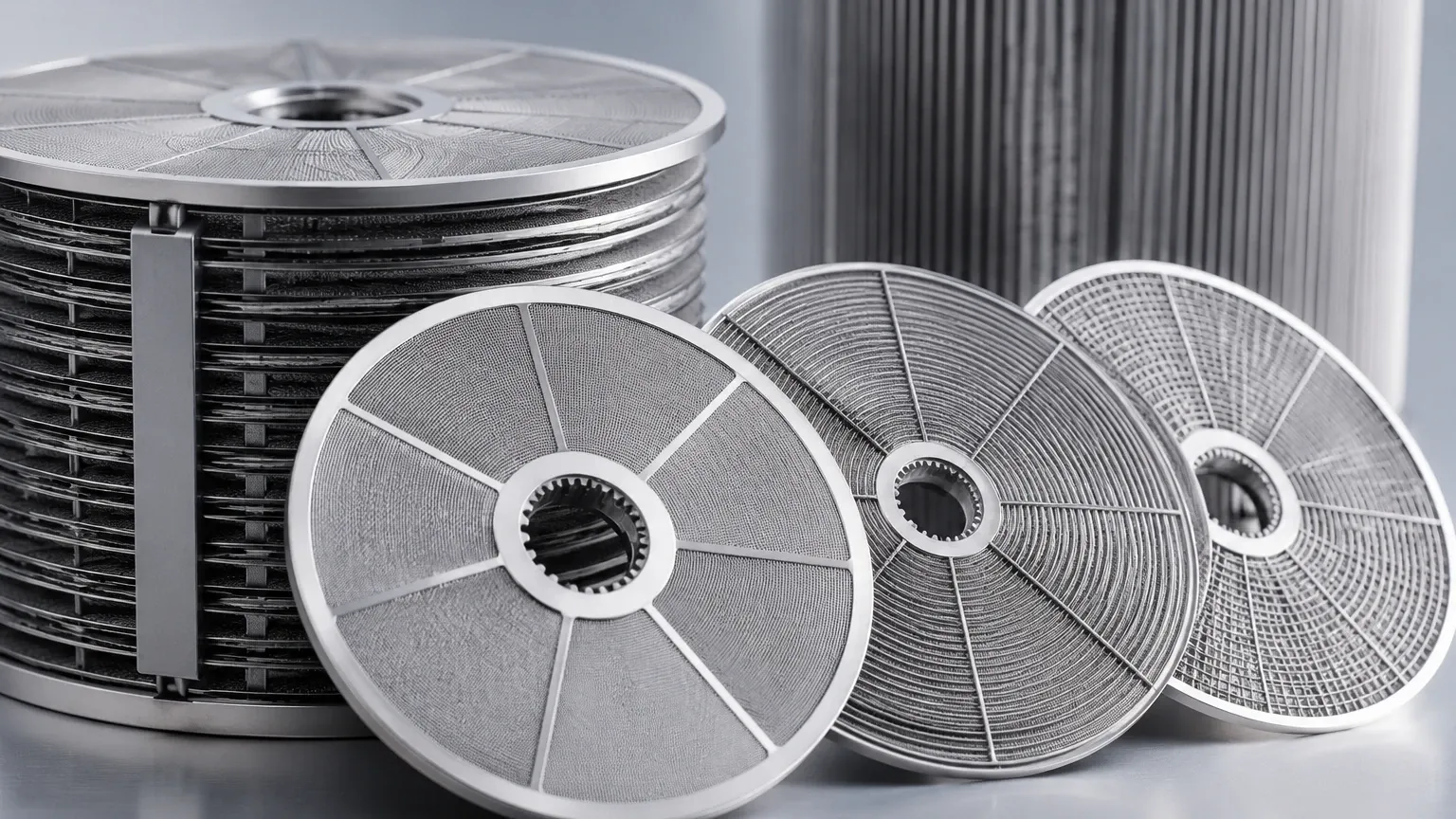
For industrial facilities and municipal plants, selecting the right Filter Discs & Packs involves a deep understanding of material science, mechanical design, and the specific hydraulic loads of the system. Unlike traditional sand filters, disc-based systems offer a compact footprint and a modular approach to filtration that can be precisely tuned to the particle size distribution of the influent.
The Role of Advanced Filtration in Modern Sewage Treatment
Sewage treatment is a multi-stage process designed to remove physical, chemical, and biological contaminants. While primary and secondary treatments handle the bulk of organic matter and large debris, the final polishing stage—tertiary treatment—is where the disc filter for sewage treatment plant operations provides the most value.
At this stage, the goal is typically to reduce Total Suspended Solids (TSS) to levels below 5-10 mg/L. Achieving this consistently requires a filtration medium that can withstand continuous operation while maintaining a low pressure drop. Stainless steel filter discs are often the preferred choice for industrial sewage streams because they offer superior mechanical strength and chemical resistance compared to polymer-based fabrics. They are specifically designed to capture fine particulates that escaped secondary clarification, protecting downstream processes such as UV disinfection or membrane-based desalination.
Technical Principles of the Disc Filter for Sewage Treatment Plant
The operational logic of a disc filter is based on surface filtration across a series of parallel, rotating discs. Each disc is comprised of multiple segments covered in a fine wire mesh. As the wastewater passes through the mesh from the inside out (or vice versa, depending on the equipment design), solids are trapped on the surface of the Filter Discs & Packs.
Filtration Mechanism
As the solids accumulate, a "filter cake" begins to form. While this cake initially improves filtration efficiency by capturing even smaller particles, it also increases the head loss (pressure drop) across the system. Once a predetermined pressure threshold is reached, an automated backwash cycle is triggered. In a sewage treatment plant, this usually involves high-pressure water jets that dislodge the accumulated solids while the discs continue to rotate. The ability of the mesh to withstand these frequent high-pressure cleaning cycles without deforming is a hallmark of high-quality stainless steel components.
Hydraulic Efficiency
Engineers must calculate the "effective filtration area" to ensure the plant can handle peak flow events. Because disc filters utilize a vertical arrangement, they provide a significantly larger surface area relative to their floor space than traditional gravity filters. This makes the disc filter for sewage treatment plant upgrades an ideal solution for facilities with limited space for expansion.
Material Engineering: Why Stainless Steel Filter Discs & Packs Excel
Material selection is perhaps the most critical decision in the procurement of filtration components. In the corrosive and abrasive environment of a sewage treatment plant, the longevity of the filter media directly impacts the Total Cost of Ownership (TCO).
Corrosion Resistance
Sewage often contains high concentrations of chlorides, hydrogen sulfide (H2S), and various industrial chemicals. Standard 304 stainless steel may suffice for some municipal applications, but 316L stainless steel is the industry standard for industrial sewage treatment. The addition of molybdenum in 316L provides enhanced resistance to pitting and crevice corrosion, which is essential for components that remain submerged for extended periods.
Mechanical Durability
Unlike synthetic cloths, stainless steel wire mesh does not stretch or tear easily. In a disc filter for sewage treatment plant use, the mesh is often subjected to varying pressures and the abrasive action of grit. Stainless steel Filter Discs & Packs maintain their pore geometry under stress, ensuring that the filtration rating remains consistent throughout the life of the component. This structural integrity is vital for maintaining compliance with discharge permits.
Temperature Stability
Industrial wastewater can reach temperatures that would compromise the integrity of plastic filter media. Metal filter discs operate reliably across a wide temperature spectrum, ensuring that the sewage treatment plant remains operational regardless of seasonal shifts or process fluctuations.
Key Design Parameters for Industrial Sewage Filtration
When specifying a disc filter for sewage treatment plant integration, engineers must look beyond the basic dimensions. Several technical factors influence the performance and maintenance requirements of the system.
1. Micron Rating and Mesh Type: The choice of weave—such as plain weave, twill weave, or Dutch weave—determines the filtration accuracy and the flow resistance. For sewage treatment, a range of 10 to 100 microns is common. A plain weave offers high flow rates and easy cleaning, while Dutch weaves provide higher strength and finer filtration.
2. Layer Configuration: Filter Discs & Packs can be constructed from a single layer of mesh or multiple layers sintered together. Sintered mesh discs offer the highest level of durability, as the layers are molecularly bonded to provide a rigid structure that prevents wire migration and ensures uniform pore size.
3. Edge Binding and Support: The edges of the filter discs must be securely sealed to prevent bypass—where unfiltered water leaks around the media. Options include spot welding, aluminum or stainless steel frames, or specialized polymer gaskets. In high-pressure sewage systems, a robust stainless steel frame is recommended to prevent mechanical failure at the attachment points.
Operational Considerations: Maintenance and Backwashing
The efficiency of a disc filter for sewage treatment plant operation is heavily dependent on the effectiveness of its cleaning cycle. Because sewage contains organic biofilms and greasy residues, the filter media can become "blinded" over time if not properly maintained.
Backwash Optimization
Backwashing typically consumes a small percentage of the treated effluent. High-quality Filter Discs & Packs are designed to release particles quickly during the backwash phase. If the mesh is too rough or the weave is too complex, particles can become wedged in the structure, leading to permanent fouling. Engineers should prioritize smooth-surface stainless steel mesh to facilitate efficient particle release.
Chemical Cleaning (CIP)
In some industrial sewage environments, water-only backwashing is insufficient to remove biological growth or mineral scaling. In these cases, Clean-In-Place (CIP) procedures using mild acids or caustic solutions are employed. Stainless steel components are compatible with a wide range of cleaning agents, allowing for aggressive restoration of the filtration surface without damaging the media.
Sourcing Considerations: Customization and OEM Capabilities
Every sewage treatment plant has unique requirements based on its influent characteristics and flow dynamics. Off-the-shelf solutions rarely provide the optimal balance of performance and longevity. Working with a manufacturer that specializes in custom stainless steel filtration solutions allows for the tailoring of Filter Discs & Packs to specific operational needs.
Engineering Confirmations Before Purchase
Before finalizing a purchase for a disc filter for sewage treatment plant use, technical teams should confirm the following with their supplier:
* Material Certification: Ensure the stainless steel grade (304, 316L, or 904L) is verified by mill test reports to prevent premature corrosion.
* Custom Geometry: Confirm the manufacturer can produce discs that fit existing equipment frames, including specific center-hole diameters and outer diameters.
* Filtration Accuracy Testing: Validate that the micron rating is absolute or nominal based on the plant's specific effluent requirements.
* Pressure Ratings: Verify the maximum allowable differential pressure (ΔP) the disc can withstand before deformation occurs.
Conclusion
The implementation of a high-performance disc filter for sewage treatment plant applications is an investment in process reliability and environmental compliance. By selecting robust, custom-engineered Filter Discs & Packs, facilities can achieve superior solids removal, reduce maintenance downtime, and extend the lifespan of their entire filtration system. In an era where water scarcity and regulatory oversight are increasing, the precision of stainless steel filtration provides the technical foundation necessary for sustainable wastewater management. Whether upgrading an existing facility or designing a new industrial treatment line, focusing on material quality and engineering specifications ensures that the filtration process remains efficient, durable, and cost-effective over the long term.
