


Disc Filter Huber
In the landscape of industrial and municipal wastewater treatment, the efficiency of solids removal is a primary metric for operational success. Systems such as the disc filter Huber represent a significant advancement in tertiary treatment and fine screening. These systems rely on a series of rotating filter discs to remove suspended solids from large volumes of water with a relatively small footprint. However, the core of any such system is not merely the mechanical housing, but the precision-engineered filtration media—specifically the filter discs and packs—that dictate the final effluent quality and the system's overall hydraulic capacity.
For engineers and procurement professionals, understanding the intersection of mechanical design and material science is essential when selecting replacement components or specifying new filtration units. This guide explores the technical considerations of disc filter technology, the role of high-performance Filter Discs & Packs, and the engineering criteria that ensure long-term reliability in demanding industrial environments.
The Engineering Principles of Disc Filtration Systems
Disc filters operate on a straightforward but highly effective principle: influent water enters a central drum and flows outward through filter segments mounted on the drum's periphery. As the water passes through the fine wire mesh, solids are captured on the inner surface. As the mesh becomes blinded, the water level inside the drum rises, triggering a rotation cycle and a high-pressure backwash that clears the debris into a collection trough.
In the context of a disc filter Huber or similar high-capacity systems, the engineering challenges are centered on flow dynamics and mechanical stress. The filter discs must withstand constant immersion, frequent backwashing cycles, and the abrasive nature of suspended solids. The structural integrity of the disc frame, combined with the tension and weave of the stainless steel mesh, determines whether the system maintains its micron rating over thousands of operational hours.
From a technical perspective, the choice of filtration media is the most critical variable. While the machine provides the motion, the mesh provides the separation. Engineers must evaluate whether a single-layer mesh or a multi-layer sintered pack is appropriate for their specific Total Suspended Solids (TSS) loading and particle size distribution.
Material Selection: Durability in Corrosive Environments
Industrial filtration often involves exposure to harsh chemicals, varying pH levels, and high chloride concentrations, particularly in municipal wastewater or chemical processing applications. Consequently, the material used for filter discs and packs is non-negotiable. Stainless steel is the industry standard due to its mechanical strength and corrosion resistance.
1. Grade 304 Stainless Steel: Suitable for general industrial applications where corrosion risk is moderate. It provides excellent structural rigidity and is cost-effective for standard water filtration.
2. Grade 316L Stainless Steel: The preferred choice for disc filter Huber systems operating in more aggressive environments. The addition of molybdenum and a lower carbon content provides superior resistance to pitting and crevice corrosion, especially in the presence of chlorides or acidic cleaning agents.
3. Specialty Alloys: In extreme cases involving high temperatures or highly oxidative chemicals, alloys like Duplex stainless steel or Hastelloy may be required to prevent premature fatigue and failure of the filter segments.
When specifying materials, it is vital to consider the "total cost of ownership." While 316L may have a higher initial procurement cost than 304, its extended service life and reduced frequency of replacement in corrosive environments often result in lower long-term expenditures.
Technical Specifications: Weave Types and Micron Ratings
The performance of a disc filter is defined by its filtration accuracy, which is a function of the wire mesh weave. For industrial disc filters, several weave types are commonly employed, each offering different balances of flow rate and particle retention.
Plain Square Weave
This is the most common weave for coarser filtration. It offers high open area and excellent flow characteristics. However, for the fine filtration required in tertiary wastewater treatment (often between 10 and 100 microns), square weave mesh may lack the mechanical stability required for large-diameter discs unless supported by a coarser backing mesh.
Dutch Weave (Plain and Twilled)
Dutch weaves utilize a combination of different wire diameters in the warp and weft directions. This creates a more complex, tortuous path for particles, allowing for much finer filtration ratings while maintaining high physical strength. This is often the preferred choice for high-precision filter discs and packs where high pressure-differential resistance is required.
Sintered Multi-Layer Mesh
For the most demanding applications, multiple layers of wire mesh are sintered together—bonded by heat and pressure without the use of adhesives. This process creates a monolithic filtration plate that is incredibly rigid and maintains its precise pore size even under heavy hydraulic loading. Sintered packs are ideal for systems that encounter high-pressure backwash cycles or abrasive solids that would otherwise deform a single-layer mesh.
Performance Evaluation: Hydraulic Loading and Pressure Drop
Engineers must calculate the hydraulic loading rate (HLR) to ensure the disc filter Huber system does not become a bottleneck in the process flow. The HLR is influenced by the effective filtration area and the clean pressure drop of the filter discs.
* Effective Filtration Area: This is the total surface area of the mesh minus the area covered by the support frames and gaskets. Maximizing this area is key to handling high flow rates.
* Pressure Drop (ΔP): As solids accumulate, the pressure drop across the mesh increases. A high-quality filter disc is designed to have a low initial ΔP, providing a longer window of operation between backwash cycles. This reduces the energy consumption of the drive motors and the volume of backwash water required.
When evaluating replacement filter discs and packs, it is essential to verify that the mesh geometry matches the original equipment manufacturer (OEM) specifications to avoid unintended changes in the system's hydraulic profile.
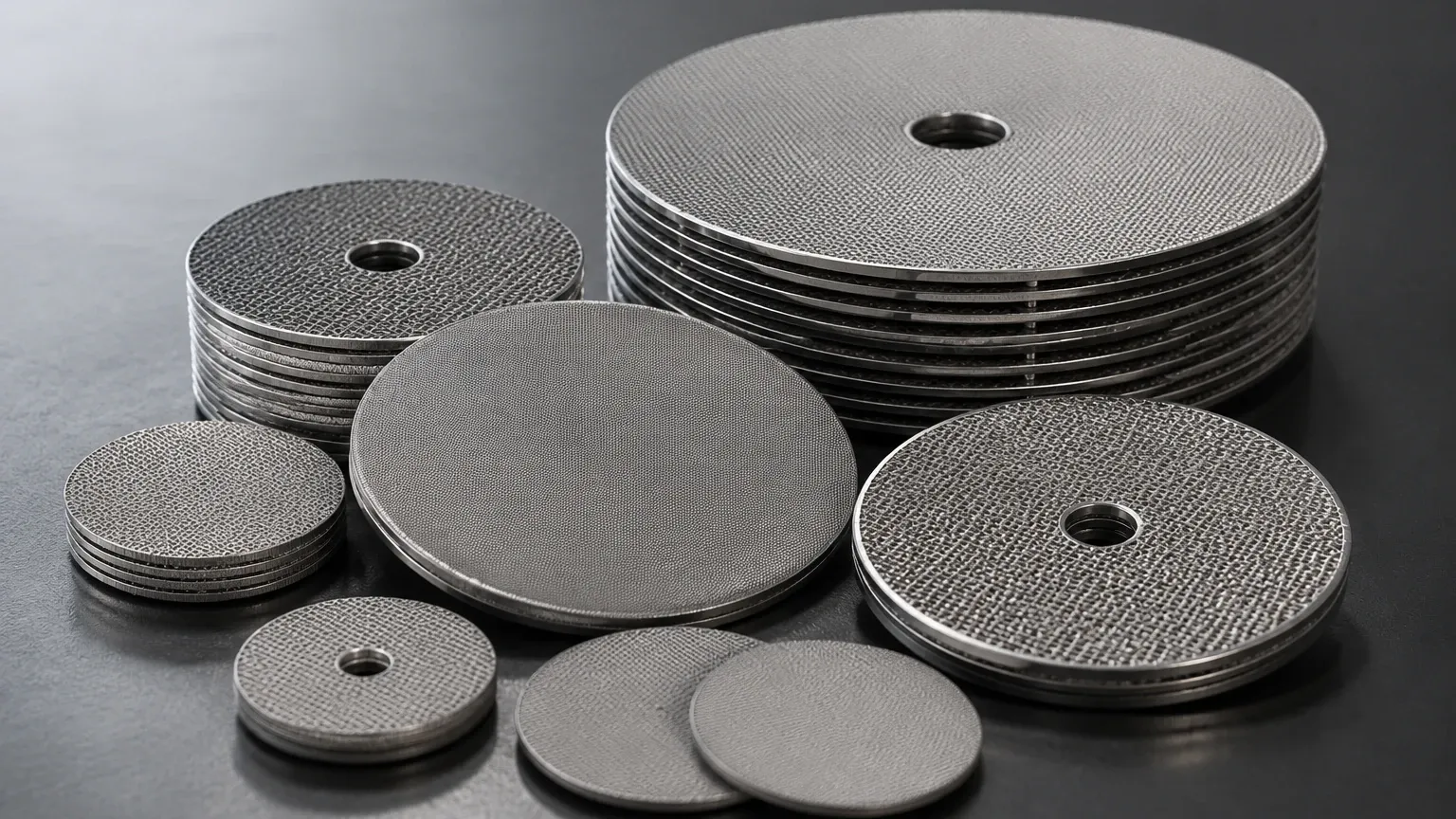
Customization and OEM Compatibility
One of the primary challenges for maintenance teams is sourcing high-quality replacement parts for specialized equipment like the disc filter Huber. While OEM parts are a standard route, custom-manufactured filter discs and packs often provide an opportunity to optimize performance for specific site conditions.
Customization options include:
* Reinforced Edging: Using specialized welding or mechanical crimping to ensure the mesh remains taut and does not fray at the edges of the segment.
* Layer Configuration: Adjusting the number of support and drainage layers in a filter pack to improve backwash efficiency.
* Gasket Integration: Ensuring a perfect seal between the filter segment and the drum to prevent bypass, which is a common cause of effluent quality excursions.
By working with a manufacturer that understands the technical nuances of stainless steel filtration, facilities can obtain components that meet or exceed the performance of original parts while potentially reducing lead times and costs.
Maintenance and Replacement Cycles
Even the most robust stainless steel filter discs eventually require maintenance. In a disc filter Huber system, the primary wear factors are mechanical abrasion from grit and chemical scaling from mineral deposits (such as calcium carbonate).
Cleaning Protocols
Regular backwashing is the first line of defense. However, over time, deep-seated fouling may require chemical CIP (Clean-In-Place) procedures. It is critical that the chemicals used are compatible with the stainless steel grade to avoid stress corrosion cracking.
Inspection Points
* Mesh Integrity: Check for pinholes or localized thinning caused by abrasion.
* Tension: Ensure the mesh has not sagged, as this can lead to uneven solids distribution and mechanical interference with the backwash spray bars.
* Seal Condition: Inspect the gaskets for hardening or cracking, which can lead to "leakage" of unfiltered water into the effluent stream.
Establishing a proactive replacement cycle for filter discs and packs ensures that the system operates at peak efficiency and prevents the catastrophic failure of a disc segment, which could contaminate the downstream process.
Conclusion: Optimizing the Filtration Process
The disc filter Huber is a sophisticated piece of engineering designed to meet stringent environmental standards. However, its success is entirely dependent on the quality of the filtration media it houses. By focusing on material grade, weave precision, and structural durability, engineers can ensure their filtration systems deliver consistent results.
Selecting the right Filter Discs & Packs involves a deep dive into the specific requirements of the application—from the micron rating and flow rate to the chemical environment and mechanical stresses. Whether for municipal wastewater, industrial process water, or specialized separation tasks, high-performance stainless steel filtration components are the foundation of a reliable and cost-effective operation. For professionals tasked with maintaining these systems, partnering with a manufacturer that offers technical expertise and customization capabilities is the most effective way to optimize filtration performance and extend equipment life.
