


Disc Filter in Stp
In the landscape of modern wastewater management, the efficiency of a Sewage Treatment Plant (STP) is often measured by its ability to meet increasingly stringent discharge standards. As environmental regulations tighten globally, the transition from secondary treatment to advanced tertiary polishing has become a necessity rather than an option. Central to this evolution is the implementation of the disc filter in stp operations. This technology has largely superseded traditional sand filtration in many industrial and municipal settings due to its compact footprint, lower backwash water consumption, and superior solids removal capabilities.
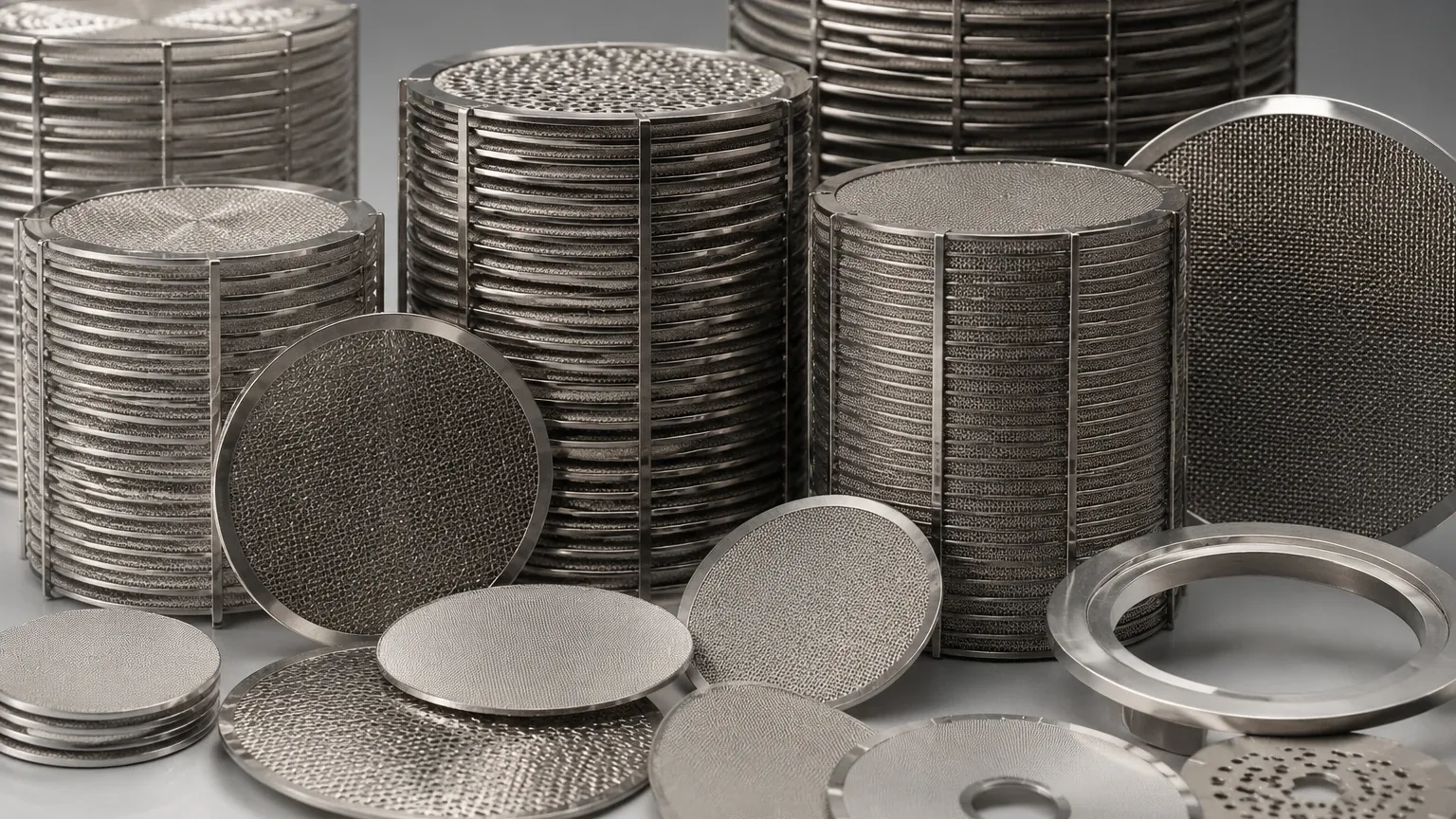
For engineers and procurement professionals, selecting the right filtration media is the most critical factor in ensuring the longevity and reliability of these systems. High-quality Filter Discs & Packs serve as the functional core of these units, determining the precision of the filtration process and the frequency of maintenance cycles. Understanding the technical nuances of these components—from material metallurgy to mesh weave patterns—is essential for optimizing the performance of any wastewater treatment facility.
Understanding the Function of a Disc Filter in STP Operations
The primary role of a disc filter in stp configurations is tertiary treatment, also known as effluent polishing. After the biological treatment stage (such as activated sludge or membrane bioreactors), the effluent still contains residual Total Suspended Solids (TSS), particulate phosphorus, and organic matter. If left untreated, these solids can interfere with disinfection processes like UV irradiation or chlorination, and lead to non-compliance with environmental permits.
A disc filter operates on a simple yet effective mechanical principle. The system consists of a series of vertical discs mounted on a central horizontal drum. Each disc is covered with a fine filtration medium, typically a stainless steel wire mesh or a specialized synthetic fabric. As the wastewater flows through the filter media into the center of the drum, solids are trapped on the outer surface.
Unlike static filters, these systems are designed for continuous operation. When the accumulation of solids creates a specific pressure differential, the drum rotates, and a high-pressure backwash system cleans the media. This ensures that the STP can maintain a constant flow rate without the downtime associated with traditional media filter backwashing. The choice of the internal filter pack directly influences how effectively the system handles peak loading events and varying particle size distributions.
Technical Specifications of Filter Discs & Packs for Wastewater
When specifying components for a disc filter in stp applications, the engineering focus must be on durability and precision. Because the filtration media is subjected to constant immersion, mechanical stress during backwashing, and potential chemical exposure, the material properties are paramount.
Material Selection: SS304 vs. SS316L
Stainless steel is the industry standard for high-performance filter discs. While SS304 is suitable for some municipal applications, SS316L is generally preferred for industrial STPs or facilities dealing with high chloride concentrations. The addition of molybdenum in 316L provides superior resistance to pitting and crevice corrosion, which is vital in the chemically complex environment of wastewater.
Mesh Types and Weave Patterns
The performance of Filter Discs & Packs is dictated by the weave of the wire mesh.
- Plain Weave: Offers high flow rates and is easy to clean, making it suitable for general TSS removal.
- Twilled Weave: Allows for a heavier wire diameter in a given mesh count, increasing the mechanical strength of the disc.
- Dutch Weave: Provides a dense, tortuous path for particles, offering much finer filtration ratings (down to 10-20 microns) while maintaining structural integrity.
Multi-Layer Sintered Construction
For demanding STP environments, single-layer mesh may lack the necessary rigidity. Sintered filter packs, which fuse multiple layers of wire mesh together through a heat-treatment process, offer the highest level of durability. These packs typically include a fine filtration layer protected by coarser support and drainage layers, preventing the fine mesh from deforming under the hydraulic pressure of the STP flow.
Comparing Stainless Steel Mesh vs. Synthetic Media in STP Applications
While some disc filters utilize polyester or needle-felt media, stainless steel wire mesh remains the superior choice for professional-grade industrial applications. The decision between metal and synthetic media often comes down to the total cost of ownership and the specific characteristics of the influent.
1. Mechanical Stability: Stainless steel discs maintain their pore size even under high pressure. Synthetic fabrics can stretch over time, leading to "pore migration" where larger particles pass through the media as it distorts. In an STP, this can lead to inconsistent effluent quality.
2. Cleaning Efficiency: Metal mesh is highly compatible with high-pressure backwashing and Chemical-In-Place (CIP) protocols. If the disc filter in stp operations encounters biological fouling or grease buildup, stainless steel can withstand aggressive chemical cleaners or high-temperature washes that would degrade synthetic fibers.
3. Longevity: A well-engineered stainless steel filter pack can last several years, whereas synthetic socks or covers may require replacement every 6 to 12 months. For facility managers, the reduced labor costs and minimized downtime associated with metal media often justify the higher initial capital expenditure.
Optimizing Filtration Efficiency: Micron Ratings and Flow Dynamics
The success of a disc filter in stp deployment depends on matching the micron rating of the filter discs to the particle size distribution of the secondary effluent. Most tertiary STPs target a TSS concentration of less than 5 mg/L or 10 mg/L. To achieve this, filtration ratings typically range from 10 to 40 microns.
Impact of Micron Rating on Flux
Selecting a finer micron rating than necessary can be counterproductive. A 10-micron disc will capture more solids but will also clog faster, leading to more frequent backwash cycles and higher energy consumption. Engineers must balance the required effluent quality with the "flux" (the volume of water passing through a unit area of filter media per hour).
Hydraulic Loading and Head Loss
As solids build up on the Filter Discs & Packs, the head loss across the system increases. If the filter packs are not designed with sufficient open area, the system will reach its terminal pressure drop too quickly. High-quality manufacturers like Kaifil optimize the wire diameter and mesh count to maximize the effective filtration area, ensuring that the STP can handle hydraulic surges during storm events or peak industrial production hours.
Maintenance Protocols and Extending the Lifecycle of Filter Packs
Even the most robust disc filter in stp environments requires a structured maintenance regime to prevent irreversible fouling. The primary threat to filter longevity is "blinding," where particles become permanently lodged within the mesh openings or biological films grow across the surface.
Preventive Maintenance Steps:
- Automated Backwash Calibration: Ensure that the backwash pressure is sufficient to dislodge particles without damaging the mesh. For stainless steel packs, this is typically between 6 and 10 bar.
- Chemical Cleaning: Periodic soaking in acid or alkaline solutions (depending on the foulant) can restore the original flow characteristics of the discs. Stainless steel 316L is particularly resilient to these treatments.
- Visual Inspection: Regular checks for "pinholes" or mechanical wear at the edges of the discs are essential. A single breach in a filter pack can allow significant amounts of TSS to bypass the system, compromising the entire treatment process.
Replacement Indicators
When the frequency of backwashing becomes unsustainable despite chemical cleaning, it is an indication that the media has reached the end of its functional life. At this stage, replacing the internal Filter Discs & Packs is necessary to restore plant efficiency and ensure regulatory compliance.
Engineering Custom Solutions for Industrial and Municipal STPs
No two sewage treatment plants are identical. The influent characteristics of a municipal plant treating domestic waste differ significantly from an industrial STP at a food processing facility or a chemical plant. This variability necessitates a customized approach to filtration components.
Customization options for a disc filter in stp applications include:
- Variable Edge Treatments: Discs can be finished with spot-welded edges, aluminum or stainless steel frames, or specialized gaskets to ensure a bypass-free fit within the filter drum.
- Composite Layering: Engineers can specify a custom stack of mesh layers to handle specific types of solids, such as fibrous organic matter or abrasive mineral fines.
- Diameter and Geometry: While standard sizes exist, custom-manufactured discs allow for the retrofitting of older STP equipment with modern, high-efficiency filtration media.
By working with a specialized manufacturer like Kaifil, engineering teams can access technical expertise in material selection and filtration design. This collaborative approach ensures that the chosen filtration solution is not just a generic component, but a precision-engineered tool designed for the specific rigors of the application.
Conclusion: The Strategic Value of High-Quality Filtration
Investing in a high-performance disc filter in stp systems is a strategic decision that impacts the operational stability and environmental footprint of a facility. While the mechanical housing of the filter provides the structure, it is the Filter Discs & Packs that perform the critical work of separation.
By prioritizing high-grade materials like 316L stainless steel, optimizing micron ratings for specific effluent profiles, and selecting durable sintered or multi-layer constructions, STP operators can significantly reduce their total cost of ownership. The result is a more resilient treatment process, lower energy and water consumption, and the peace of mind that comes with consistent regulatory compliance. For engineers tasked with designing or maintaining these systems, focusing on the technical integrity of the filtration media is the most effective way to ensure long-term success in wastewater management.
