


Disc Filter Industrial
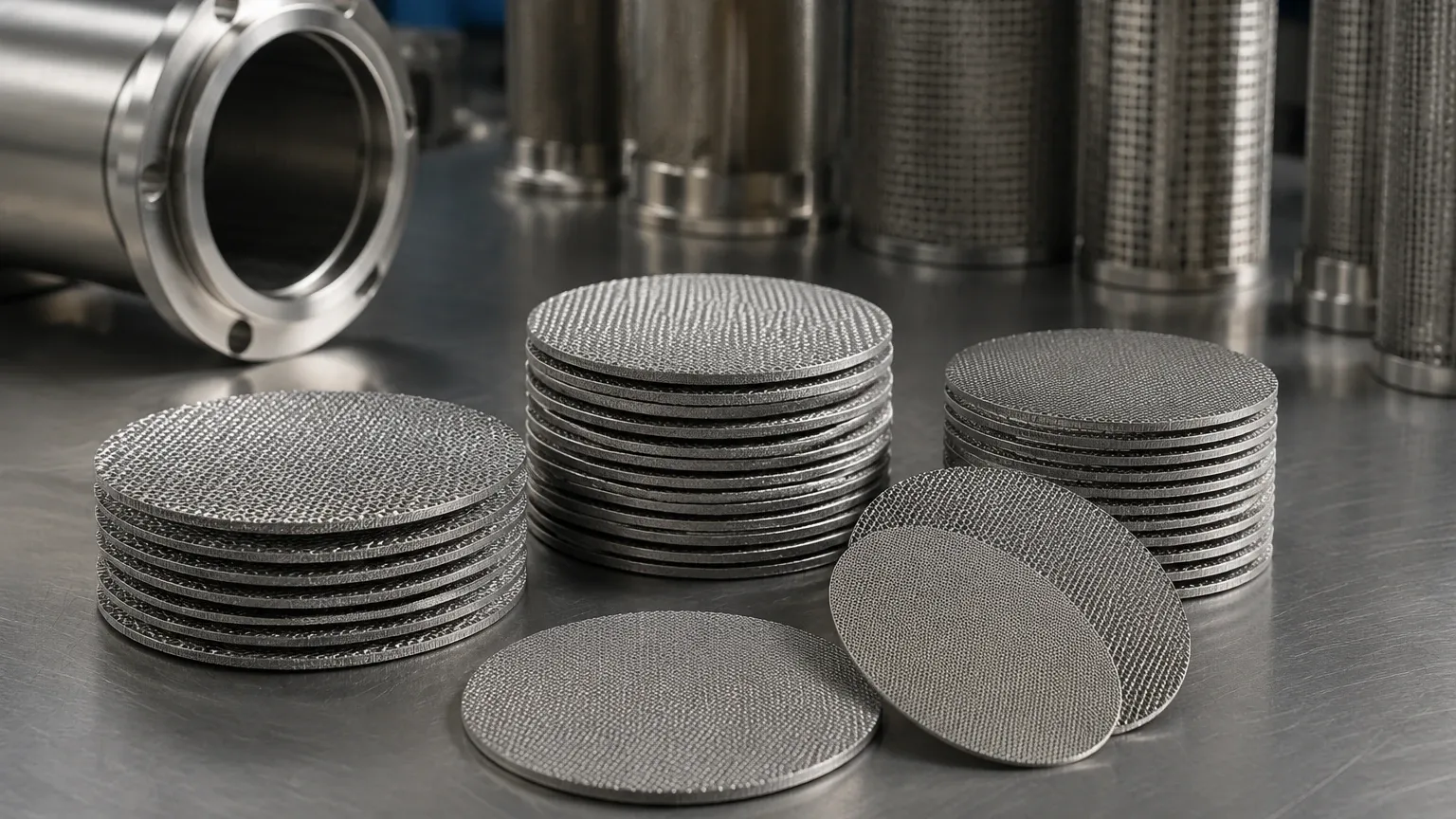
In the landscape of modern manufacturing, the efficiency of fluid and gas processing often hinges on the precision of filtration components. The term "disc filter industrial" refers to a broad category of precision-engineered filtration elements designed to remove contaminants from liquid or gaseous streams under varying conditions of pressure, temperature, and chemical exposure. These components, primarily known as Filter Discs & Packs, are essential in industries ranging from plastic extrusion and chemical processing to pharmaceutical manufacturing and food production.
Selecting the appropriate disc filter requires a deep understanding of material science, fluid dynamics, and the specific mechanical constraints of the filtration system. For engineers and procurement specialists, the goal is to balance filtration accuracy with structural integrity and operational longevity. This article explores the technical specifications, design variations, and application-specific considerations that define high-performance industrial disc filters.
Technical Construction of Industrial Filter Discs
Industrial filter discs are typically manufactured using stainless steel wire mesh, though other alloys like Monel, Hastelloy, or Inconel may be used for highly corrosive or high-temperature environments. Stainless steel (specifically grades 304, 316, and 316L) remains the industry standard due to its excellent mechanical strength and resistance to oxidation.
Wire Mesh Weave Types
The performance of a disc filter is fundamentally determined by the weave of the wire mesh used in its construction. Common weave types include:
* Plain Weave: The most straightforward weave where each warp wire crosses over and under each shute wire. It provides high flow rates but is generally limited to coarser filtration ratings.
* Twill Weave: Each warp wire passes over and under two shute wires. This allows for a heavier wire diameter and higher mesh counts, providing greater strength and finer filtration than plain weave.
* Dutch Weave (Plain and Twill): These weaves utilize a larger diameter warp wire and a smaller diameter shute wire, resulting in a dense, compact mesh. Dutch weaves are preferred for high-pressure applications where fine micron ratings (down to 5-10 microns) are required.
* Five-Heddle Weave: A specialized weave that provides a smooth surface on one side, which is beneficial for filter cake release in certain industrial processes.
Single-Layer vs. Multi-Layer Packs
A single-layer disc is often sufficient for low-pressure applications or as a coarse strainer. However, many industrial processes require multi-layer filter packs. These packs consist of several layers of wire mesh with varying micron ratings. Usually, a fine filtration layer is sandwiched between coarser support layers. This configuration enhances the mechanical strength of the filter, prevents the fine mesh from deforming under pressure, and can provide graduated filtration to increase the dirt-holding capacity.
Engineering Considerations for Disc Filter Selection
When specifying a disc filter industrial component, engineers must evaluate several critical performance metrics to ensure the filter meets the demands of the application without causing system failure or excessive downtime.
Filtration Accuracy and Micron Rating
Filtration accuracy is defined by the size of the particles the mesh can successfully intercept. It is categorized into two types:
* Nominal Rating: An approximate value indicating the ability of the filter to retain the majority of particles of a specific size.
* Absolute Rating: The diameter of the largest hard spherical particle that will pass through the filter under specified test conditions. For critical applications, such as pharmaceutical or high-purity chemical processing, absolute ratings are mandatory to ensure process consistency.
Pressure Drop and Flow Rate
The "clean pressure drop" is the initial resistance to flow across the filter media. As contaminants accumulate, the pressure drop increases. Engineers must ensure that the disc filter provides a sufficient effective filtration area (EFA) to maintain the required flow rate while keeping the initial pressure drop within acceptable limits. High porosity is essential for minimizing energy consumption in pumping systems.
Mechanical Integrity and Rim Bonding
In high-pressure environments, such as polymer melt filtration, the edges of the filter discs are a potential point of failure. To prevent bypass and ensure structural stability, filter packs are often finished with a rim or binding. Common materials for rims include aluminum, stainless steel, or copper. These rims are compressed around the circumference of the mesh layers, providing a secure seal and making the discs easier to handle during installation and replacement.
Key Industrial Applications
The versatility of Filter Discs & Packs allows them to be integrated into diverse industrial machinery. Understanding how they function in specific sectors helps in selecting the right design.
Plastic and Polymer Extrusion
In the plastics industry, disc filters (often referred to as screen packs) are used in the extrusion process to remove un-melted resin, gels, and foreign contaminants. These filters must withstand extreme pressures (often exceeding 3,000 PSI) and temperatures. Multi-layer packs are standard here, as they provide the necessary rigidity to resist "breaching" under the force of the viscous polymer melt.
Chemical and Petrochemical Processing
Chemical plants utilize disc filters for the purification of solvents, catalysts recovery, and the filtration of aggressive acids or bases. Here, the chemical compatibility of the material is the primary concern. 316L stainless steel is frequently specified for its superior resistance to pitting and crevice corrosion in chloride-rich environments.
Pharmaceutical and Biotechnology
In these sectors, filtration is not just about equipment protection but about product safety. Filter discs used in pharmaceutical processes must be easy to clean (often via ultrasonic cleaning or autoclaving) and must not shed fibers or metallic particles into the product stream. Precision-cut, burr-free edges are a critical requirement for these high-purity applications.
Food and Beverage Production
Filter discs are used in the filtration of edible oils, beverages, and syrups. They must comply with food safety standards, ensuring that the materials used are non-toxic and do not impart any flavors or odors to the product. Stainless steel mesh is ideal for these applications because it can be repeatedly sanitized without degrading.
Customization and OEM Capabilities
Standard sizes for disc filters exist, but many industrial systems require custom-engineered solutions. Manufacturers like Kaifil specialize in providing tailored filtration components that meet specific geometric and performance requirements. Customization options typically include:
* Variable Dimensions: Discs can be produced in diameters ranging from a few millimeters to over a meter.
* Shape Variations: While circular discs are most common, rectangular, oval, or ring-shaped filters are frequently required for specialized housing designs.
* Spot Welding: For multi-layer packs, spot welding ensures the layers remain aligned during shipping and installation.
* Sintered Mesh: For the most demanding applications, multiple layers of mesh can be sintered together. Sintering involves heat-treating the mesh layers to fuse the wires at their contact points, creating a porous metal plate that is incredibly strong and cannot be easily deformed.
Maintenance, Cleaning, and Replacement Cycles
The total cost of ownership for a disc filter industrial system is influenced by the frequency of replacement and the ease of maintenance. Unlike disposable polymer filters, stainless steel filter discs are often cleanable and reusable.
Cleaning Methods
Depending on the contaminant, several methods can be used to restore the performance of a filter disc:
* Ultrasonic Cleaning: High-frequency sound waves create cavitation bubbles that dislodge fine particles from deep within the mesh pores.
* Chemical Cleaning: Using specialized solvents or acids to dissolve accumulated organic or inorganic deposits.
* Burn-off (Pyrolysis): For polymer extrusion filters, heating the discs in a controlled environment can carbonize the plastic residue, allowing it to be blown out with compressed air.
Determining Replacement
While cleaning extends the life of the filter, repeated cleaning cycles and mechanical stress will eventually lead to material fatigue. Engineers should monitor the "terminal pressure drop"—the point at which the pressure across the filter increases so rapidly that cleaning is no longer economical or the risk of mesh failure becomes too high. Regular inspection for wire breakage or rim deformation is essential to prevent downstream contamination.
Conclusion: Optimizing Filtration Performance
The selection of a disc filter is a technical decision that impacts the efficiency, safety, and profitability of industrial operations. By focusing on the specific weave types, material grades, and structural configurations, engineering teams can ensure their systems operate at peak performance. Whether it is a single-layer mesh for a simple strainer or a complex, multi-layer sintered pack for high-pressure extrusion, the quality of the Filter Discs & Packs is the foundation of a reliable filtration process.
As industrial requirements become more stringent—with finer micron ratings and harsher operating conditions—the role of specialized manufacturers like Kaifil becomes increasingly vital. By combining advanced manufacturing techniques with deep application knowledge, they provide the precision components necessary to solve the most challenging filtration problems in the modern industrial landscape. When evaluating your next filtration project, confirming the exact micron requirements, chemical environment, and mechanical loads will ensure you select a disc filter that provides the best balance of performance and value.
