Disc Filter Jain
In the landscape of industrial and agricultural water management, the term "disc filter jain" frequently refers to a standard-setting approach to high-volume filtration. Disc filtration technology represents a middle ground between screen filtration and media (sand) filtration, offering the depth-filtration benefits of the latter with the compact footprint and ease of maintenance of the former. For engineers and procurement specialists, understanding the technical nuances of these systems—and how they compare to high-precision alternatives like stainless steel Filter Discs & Packs—is essential for optimizing system longevity and filtration efficiency.
The Engineering Principles of Disc Filtration
At its core, a disc filter operates using a series of stacked, grooved rings. When compressed together, the grooves on the faces of adjacent discs intersect to create a complex network of microscopic passages. This architecture provides a three-dimensional filtration process. Unlike a simple surface screen, which captures particles only on a single plane, disc filters trap debris throughout the depth of the stack.
In the context of a disc filter jain system, the filtration degree is determined by the geometry and size of these grooves. These are typically color-coded to signify specific micron ratings. During the filtration cycle, water flows from the outside of the stack toward the center. The compressed discs act as a physical barrier, while the internal channels catch organic and inorganic matter. When the pressure differential reaches a set threshold, the system initiates a backwash cycle, where the discs decompress and spin, allowing high-velocity water to flush out the trapped contaminants.
Material Selection: Polymer vs. Stainless Steel
While many standard disc filters, including those associated with Jain systems, utilize high-strength polypropylene or reinforced polyamides, industrial applications often require a transition to metal-based filtration components. The choice between polymer discs and stainless steel Filter Discs & Packs depends largely on the chemical composition of the fluid, the operating temperature, and the required precision.
1. Chemical Compatibility
In chemical processing and pharmaceutical manufacturing, fluids may contain aggressive solvents or caustic cleaning agents that can degrade polymers over time. Stainless steel (specifically grades like 304, 316, and 316L) offers superior resistance to corrosion and chemical attack. For engineers managing complex fluid streams, a metal filter pack provides a level of predictability that plastic components cannot match in volatile environments.
2. Thermal Stability
Polymer-based disc filters generally have an upper operating limit of approximately 60°C (140°F). In steam-jacketed processes or high-temperature hydraulic systems, these components risk warping or structural failure. Stainless steel filtration elements maintain their structural integrity at significantly higher temperatures, often exceeding 400°C depending on the assembly method (e.g., sintering vs. welding).
3. Structural Rigidity and Pressure Handling
Industrial systems often face high-pressure surges. While disc filter jain assemblies are robust for irrigation and general water treatment, precision industrial applications often demand the higher burst strength of sintered metal mesh or multi-layer stainless steel packs. These metal components can withstand higher differential pressures without bypassing or deforming.
Technical Specifications of Filter Discs & Packs
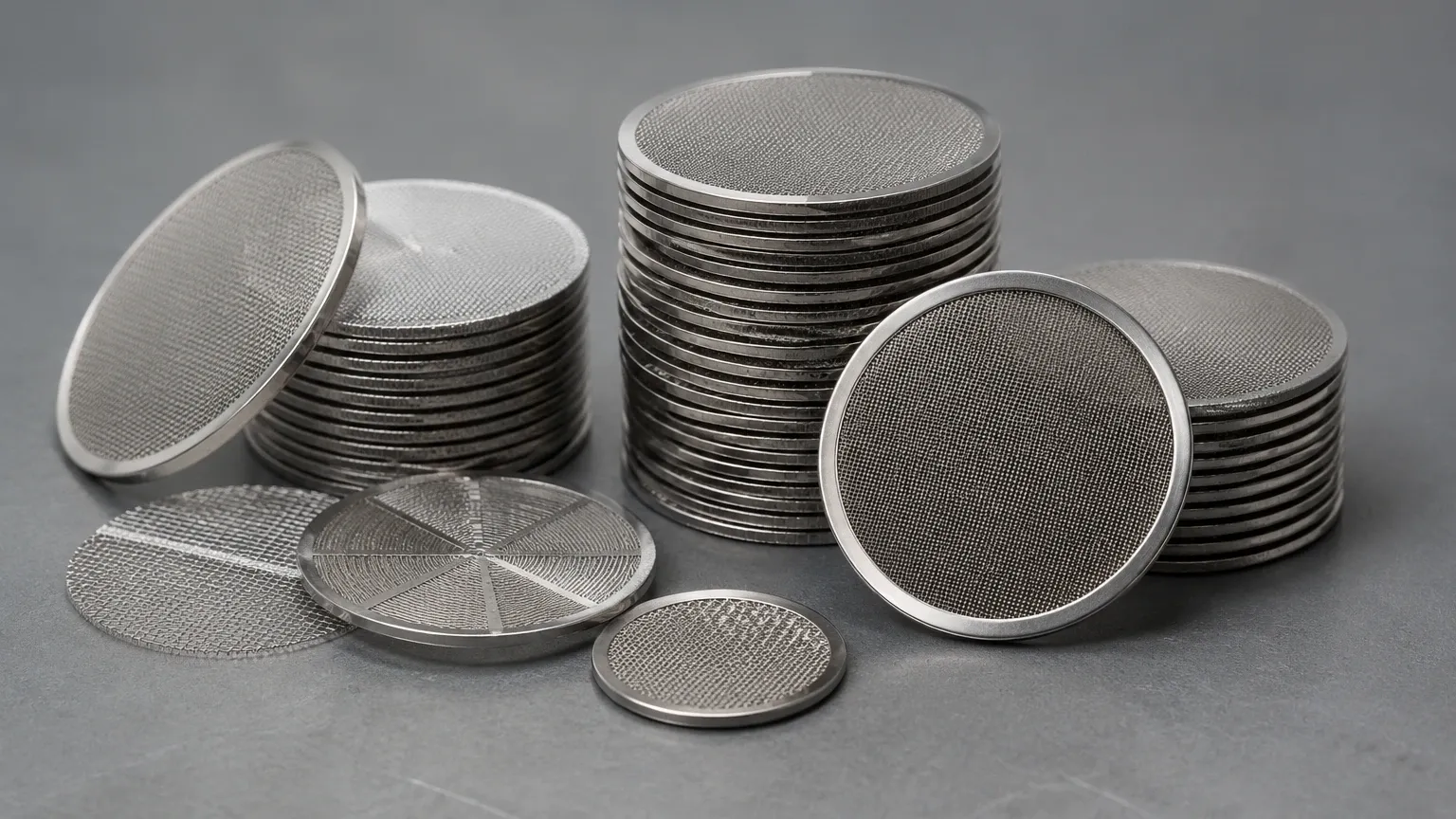
When specifying filtration components for industrial machinery, engineers must move beyond brand names and focus on the technical data. High-performance Filter Discs & Packs are evaluated based on several critical parameters:
* Mesh Count and Wire Diameter: For woven wire mesh discs, the number of wires per linear inch determines the aperture size. Thicker wires increase durability but may decrease the open area, affecting flow rates.
* Sintering Process: Sintered discs involve bonding multiple layers of wire mesh together using heat and pressure without the use of binders. This creates a porous metal plate that is incredibly strong and easy to clean.
* Filtration Rating (Absolute vs. Nominal): It is vital to confirm whether a disc is rated for absolute filtration (where 99.9% of particles above a certain size are captured) or nominal filtration (where a percentage of particles are captured). In precision OEM applications, absolute ratings are usually required.
* Layer Configuration: Multi-layer packs often include a fine filtration layer protected by coarser support layers on both sides. This prevents the fine mesh from tearing under high-pressure flow.
Applications and Industry Use Cases
The transition from standard disc filter jain systems to customized stainless steel solutions is common in several high-stakes industries:
Chemical and Petrochemical Processing
In these sectors, filtration components must handle high-viscosity fluids and aggressive catalysts. Stainless steel filter discs are used to protect downstream equipment from particulate matter that could cause mechanical wear or contaminate the final product. The ability to ultrasonic clean these metal discs extends their service life significantly compared to disposable or plastic alternatives.
Food and Beverage Production
Sanitary standards require materials that do not leach chemicals and can withstand Clean-in-Place (CIP) procedures. Stainless steel is the industry standard here. Whether it is filtering pulp from juices or clarifying oils, precision metal mesh packs ensure that no contaminants enter the food chain, maintaining compliance with FDA and other regulatory bodies.
Hydraulic and Lubrication Systems
High-pressure hydraulic circuits rely on clean oil to prevent valve sticking and pump failure. Sintered metal filter discs are often integrated into manifold blocks or valve assemblies to provide point-of-use protection. Their compact size and high pressure-resistance make them ideal for these space-constrained environments.
Evaluating Total Cost of Ownership (TCO)
When a procurement team evaluates a disc filter jain solution versus a custom stainless steel filter pack, the initial purchase price is only one part of the equation. A comprehensive TCO analysis should include:
1. Replacement Frequency: Polymer discs may need more frequent replacement if the cleaning cycles are aggressive or if the debris is abrasive. Stainless steel components are often a "buy once" solution that can be cleaned and reused for years.
2. Downtime Costs: In a 24/7 manufacturing environment, the time taken to replace a failed filter is often more expensive than the filter itself. Metal filters offer a higher safety margin against catastrophic failure.
3. Filtration Efficiency: A more precise filter pack can reduce the load on downstream purification steps (such as membranes or ion exchange resins), extending the life of those more expensive components.
4. Energy Consumption: A well-engineered filter disc with a high open-area ratio will result in a lower pressure drop. This means the system's pumps do not have to work as hard, leading to measurable energy savings over the life of the installation.
Customization and OEM Integration
One of the primary advantages of working with specialized manufacturers like Kaifil is the ability to customize the filtration component to the specific geometry of the machinery. While a disc filter jain might come in standard sizes for water headers, industrial OEMs often require unique diameters, center hole configurations, and edge treatments (such as aluminum or stainless steel rimming).
Customization allows for:
* Optimized Flow Paths: Designing the disc to fit perfectly within a housing prevents fluid bypass.
* Specific Alloy Selection: Choosing Monel, Inconel, or Hastelloy for environments where even 316L stainless steel might fail.
* Integrated Gaskets: Adding specialized sealing surfaces to the filter pack to simplify installation and ensure a leak-proof fit.
Maintenance and Cleaning Protocols
To maintain the performance of any disc-based filtration system, a rigorous maintenance schedule is required. For standard disc filters, this usually involves automated backwashing. However, for stainless steel Filter Discs & Packs used in heavy industrial applications, more intensive cleaning methods may be employed:
* Ultrasonic Cleaning: Using high-frequency sound waves in a cleaning solvent to dislodge fine particles from deep within the mesh or sintered structure.
* Chemical Cleaning: Using specific acids or alkalis to dissolve organic buildup or mineral scale, followed by thorough neutralization and rinsing.
* Burn-off/Pyrolysis: For filters used in plastic extrusion or polymer processing, heating the disc to high temperatures can burn off residual resins, restoring the original porosity of the metal mesh.
Conclusion for Engineers and Buyers
Selecting the right filtration technology requires a balance between the proven reliability of systems like the disc filter jain and the high-performance capabilities of custom stainless steel solutions. For general water treatment and irrigation, polymer-based discs offer an excellent, cost-effective choice. However, when the application involves extreme temperatures, corrosive chemicals, or the need for absolute precision, investing in high-quality Filter Discs & Packs is the more technically sound and economically viable path.
Before finalizing a purchase, technical teams should confirm the exact micron requirements, the maximum expected differential pressure, and the chemical environment the filter will encounter. By consulting with a manufacturer that understands both the material science and the mechanical requirements of industrial filtration, organizations can ensure they achieve the optimal balance of flow, protection, and durability.