


Disc Filter Là Gì
In the landscape of industrial filtration, the term "disc filter là gì" (what is a disc filter) often arises when engineers and procurement specialists seek precise, durable, and high-performance solutions for separating solids from liquids or gases. While the term can sometimes refer to plastic disc systems used in irrigation, in the context of heavy industry, chemical processing, and precision manufacturing, it primarily refers to stainless steel Filter Discs & Packs. These components are critical for ensuring the purity of fluids in demanding environments where temperature, pressure, and chemical reactivity render standard synthetic filters obsolete.
Understanding the technical specifications, material compositions, and structural variations of these filters is essential for optimizing production efficiency and extending the service life of industrial equipment.
Understanding the Fundamentals of Industrial Filter Discs
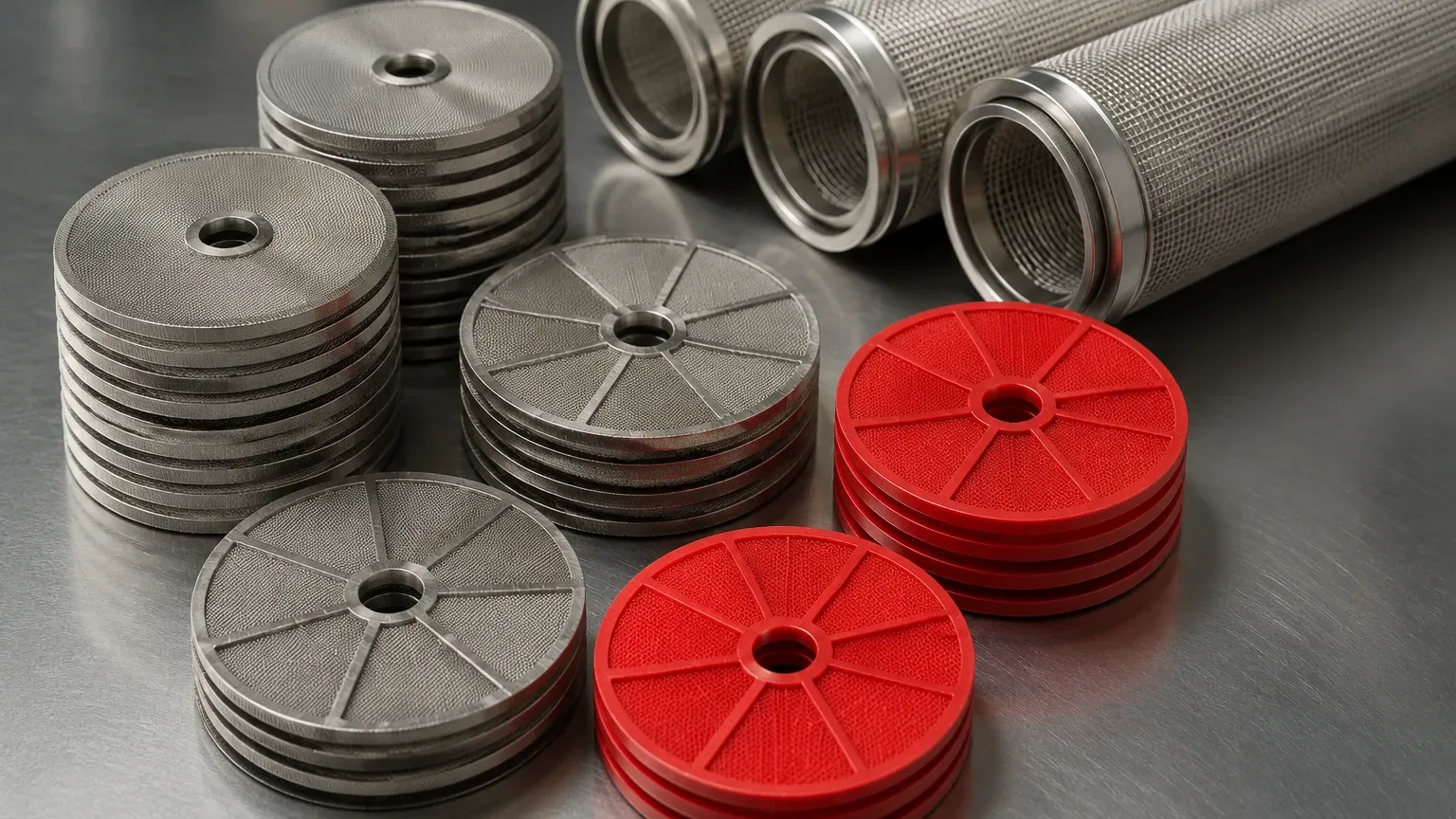
At its core, a disc filter is a circular filtration element designed to be integrated into a housing or a machine assembly. Unlike cylindrical cartridges, these discs provide a flat filtration surface that is often used in applications where space is constrained or where high-pressure stability is required across a specific surface area.
In industrial settings, particularly those served by specialized manufacturers like Kaifil, these discs are typically constructed from stainless steel wire mesh. The term "disc filter là gì" encompasses a wide range of designs, from simple single-layer mesh circles used for basic straining to complex, multi-layered sintered or welded packs designed for sub-micron filtration in polymer extrusion or pharmaceutical manufacturing.
The Role of Stainless Steel in Filtration
Stainless steel is the material of choice for industrial disc filters due to its inherent resistance to corrosion and high temperatures. Common grades include:
- AISI 304: Suitable for general-purpose applications where basic corrosion resistance is required.
- AISI 316L: The preferred choice for chemical processing and marine environments due to its superior resistance to pitting and stress corrosion cracking.
- Specialty Alloys: For extreme environments, materials like Hastelloy, Monel, or Inconel may be utilized to withstand highly acidic or alkaline conditions.
Material Selection and Weave Patterns
The performance of Filter Discs & Packs is largely determined by the weave pattern of the wire mesh. Engineers must select the weave based on the required micron rating, the viscosity of the fluid, and the expected mechanical load.
Plain Weave
This is the most common weave, where each warp wire crosses over and under each weft wire. It provides a simple, square aperture and is ideal for high-flow applications with relatively low pressure. However, it may lack the density required for very fine filtration.
Twill Weave
In a twill weave, each warp and weft wire passes over two and under two successive wires. This allows for a heavier wire diameter to be used for a given mesh count, resulting in greater strength and the ability to achieve finer filtration ratings than plain weave.
Dutch Weave (Plain and Twill)
Dutch weaves utilize a larger diameter warp wire and a smaller diameter weft wire driven closely together. This creates a dense, strong mesh with small, curved openings. Dutch weaves are excellent for high-pressure filtration and are often the primary choice for the "working layer" in multi-layer filter packs because they offer high dirt-holding capacity and precise particle retention.
Structural Variations: Single Layer vs. Multilayer Packs
When answering "disc filter là gì" from an engineering perspective, one must distinguish between the structural configurations available. The choice between a single-layer disc and a multilayer pack depends on the specific demands of the filtration process.
Single-Layer Filter Discs
These are cut from a single sheet of wire mesh. They are cost-effective and easy to clean, making them suitable for applications where the particle load is low or where the filter is used as a secondary safety screen. However, they lack the mechanical depth to handle high differential pressures without deformation.
Multilayer Filter Packs
To enhance performance, multiple layers of mesh are combined. A typical multilayer pack includes:
1. The Filtration Layer: The middle layer(s) with the finest mesh, determining the micron rating.
2. The Support Layer: Coarser mesh layers on either side of the filtration layer that provide mechanical stability and prevent the fine mesh from collapsing under pressure.
3. The Drainage Layer: Often the outermost layers, designed to facilitate the flow of the filtrate away from the filtration zone.
These layers can be held together through various methods, including spot welding or by enclosing the edges in a metal rim (usually aluminum or stainless steel). Rimmed packs are particularly effective in high-pressure systems as the rim provides a superior sealing surface, preventing bypass.
Engineering Performance Metrics: Precision and Durability
When evaluating Filter Discs & Packs, engineers must look beyond the basic dimensions. Several key metrics define the efficiency of a disc filter in an industrial circuit.
Micron Rating: Absolute vs. Nominal
- Nominal Rating: Refers to the ability of the filter to retain a certain percentage (usually 60% to 90%) of particles of a specific size. It is an indication of efficiency rather than a guarantee.
- Absolute Rating: Refers to the diameter of the largest hard spherical particle that will pass through the filter under specified test conditions. For critical applications like pharmaceutical processing, absolute ratings are mandatory.
Differential Pressure (ΔP)
Differential pressure is the difference in pressure between the upstream and downstream sides of the filter. A well-designed disc filter should provide a low initial pressure drop to maximize energy efficiency. As the filter captures contaminants, ΔP increases. Engineers must determine the "terminal pressure drop"—the point at which the filter must be cleaned or replaced to prevent system failure or media migration.
Effective Filtration Area (EFA)
The EFA is the total area of the mesh available for fluid to pass through. In disc filters, maximizing the EFA within a given diameter is crucial for extending the time between maintenance cycles. This is often achieved by optimizing the wire diameter and weave density.
Critical Applications in Industrial Processing
The versatility of stainless steel filter discs makes them indispensable across various sectors. By understanding "disc filter là gì" in these specific contexts, technical teams can better specify their requirements.
Polymer and Plastic Extrusion
In the production of plastic films, fibers, and resins, filter packs (often called screen packs) are used to remove "gels" and un-melted particulates from the polymer melt. These filters must withstand extreme temperatures (up to 300°C+) and pressures exceeding 500 bar. Precision is vital here, as any impurity can cause breakage in thin films or fibers.
Chemical and Petrochemical Processing
Disc filters are used to protect sensitive catalysts and to ensure the purity of chemical intermediates. Their resistance to aggressive solvents and corrosive acids makes them superior to disposable synthetic filters. They are frequently used in the filtration of hydraulic oils and lubricants to prevent wear in high-precision machinery.
Food and Beverage Industry
In food processing, hygiene is paramount. Stainless steel disc filters are used to remove sediments from oils, juices, and syrups. Because they are made of inert materials, they do not impart taste or odor to the product. Furthermore, they are compatible with Clean-in-Place (CIP) systems, allowing for sterilization without disassembly.
Customization and Procurement Considerations for Engineers
Selecting the right filter is not merely about finding a matching diameter. For OEM applications, customization is often required to meet specific flow dynamics and housing constraints. When sourcing Filter Discs & Packs, the following factors should be confirmed with the manufacturer:
1. Mesh Combination: For multilayer packs, the sequence of mesh sizes must be engineered to balance filtration fineness with dirt-holding capacity.
2. Edge Treatment: Should the disc be spot-welded, rimmed, or sintered? Sintered discs offer the highest mechanical strength as the wires are molecularly bonded, but they come at a higher cost.
3. Shape and Dimensions: While circular discs are standard, custom shapes (ovals, rectangles, or kidney shapes) are often required for specialized machinery.
4. Quantity and Consistency: For high-volume industrial use, consistency in mesh tension and pore size distribution is critical to ensure predictable performance across different production batches.
Maintenance and Replacement Cycles
One of the primary advantages of stainless steel disc filters is their cleanability. Unlike depth filters that must be discarded, mesh discs can often be restored through various cleaning methods:
- Ultrasonic Cleaning: Effective for removing fine particulates lodged deep within the mesh pores.
- Chemical Cleaning: Using solvents or acids to dissolve organic or mineral deposits (provided the mesh material is compatible).
- Burn-off/Pyrolysis: Used in the plastics industry to remove residual polymer by heating the filter in a controlled environment.
However, there is a limit to how many times a filter can be cleaned. Over time, repeated cleaning and high-pressure cycles can lead to "media migration" (where wires break or move) or permanent blinding. Monitoring the rate of pressure increase after each cleaning cycle is a reliable way to determine when a disc pack has reached the end of its functional life.
Conclusion: Optimizing Filtration Efficiency
Answering "disc filter là gì" requires a deep dive into the engineering principles of fluid dynamics and material science. For industrial professionals, a disc filter is more than just a mesh circle; it is a precision-engineered component that protects downstream equipment, ensures product quality, and optimizes operational costs. By selecting the appropriate material, weave, and structural configuration—and by partnering with an experienced manufacturer like Kaifil—companies can achieve reliable filtration performance even in the most demanding environments. Whether for a simple hydraulic system or a complex polymer extrusion line, the right filter disc is a fundamental building block of industrial excellence.
