


Disc Filter Netafim
In the landscape of industrial and agricultural water management, disc filtration has established itself as a robust technology for removing suspended solids and organic contaminants. While the disc filter netafim is widely recognized as a benchmark for irrigation and primary water treatment, the broader engineering requirements of industrial processing often necessitate a shift from plastic-based components to high-performance metal filtration media. Understanding the mechanical principles, material limitations, and performance variables of disc filtration is essential for engineers tasked with optimizing system longevity and filtration precision.
Industrial filtration demands go beyond simple debris removal. In sectors such as chemical processing, polymer extrusion, and hydraulic power, the filtration media must withstand extreme temperatures, aggressive chemical solvents, and high differential pressures. This is where the transition from standard irrigation-grade disc filters to precision-engineered Filter Discs & Packs becomes a critical design consideration.
The Engineering Logic of Disc Filtration
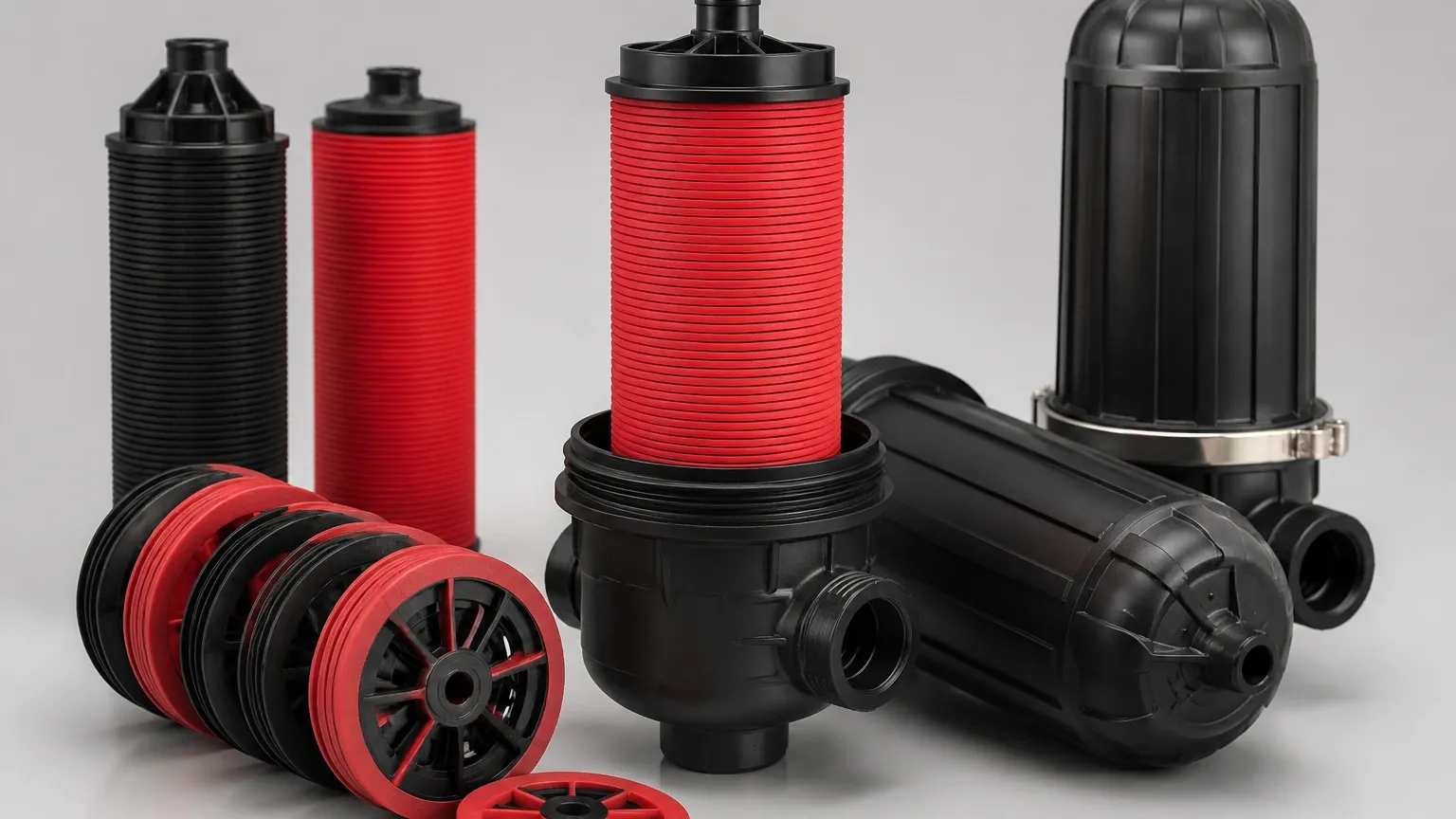
Disc filtration operates on the principle of depth filtration. Unlike surface filters, which trap particles on a single plane, a disc filter utilizes a stack of compressed discs. In a standard disc filter netafim configuration, these discs are typically made of high-quality polypropylene, featuring grooves of a specific micron size etched onto both sides. When stacked together, these grooves intersect, creating a complex, tortuous path for the fluid.
As water or process fluid flows from the outer diameter of the stack toward the inner core, particles are trapped within the intersections of the grooves. This design provides a significantly larger surface area and dirt-holding capacity compared to simple screen filters. For engineers, the primary advantage is the ability to handle varying particle sizes and organic loads without immediate blinding of the filter media.
However, in industrial B2B applications, the "tortuous path" must often be achieved through different means. Metal filter packs utilize multiple layers of stainless steel wire mesh, often sintered together, to provide a similar depth filtration effect but with the added benefits of structural rigidity and thermal resistance. While a plastic disc filter might deform or fail under high-pressure surges, a stainless steel disc pack maintains its pore geometry, ensuring consistent filtration accuracy.
Comparing Plastic and Metal Disc Media
When evaluating filtration solutions, technical teams must distinguish between the application environments suited for plastic disc filters and those requiring metal alternatives.
Thermal and Chemical Resistance
Plastic disc filters, including the disc filter netafim series, are excellent for water-based applications where temperatures remain within ambient ranges (typically below 60°C). They offer inherent resistance to corrosion from fertilizers and common water-treatment chemicals.
In contrast, industrial processes involving hot oils, steam, or concentrated acids require stainless steel (304, 316L) or specialty alloys. Metal Filter Discs & Packs can operate at temperatures exceeding 300°C and maintain their integrity in the presence of volatile organic compounds (VOCs) that would degrade polypropylene or nylon components.
Structural Integrity and Pressure Ratings
Industrial hydraulic systems and polymer melt lines operate at pressures far exceeding the limits of plastic housings. While a disc filter netafim is designed for irrigation pressures (often up to 8-10 bar), industrial stainless steel filter discs are engineered to withstand differential pressures of several hundred bar. The mechanical strength of metal mesh allows for thinner profiles with higher flow rates, which is a critical factor in compact equipment design.
Key Performance Metrics for Filter Selection
To select the correct filtration component, engineers must analyze several technical variables. These metrics apply whether one is specifying a replacement for a disc filter netafim in a water system or designing a new industrial filtration manifold.
1. Micron Retention and Efficiency
Filtration accuracy is defined by the micron rating. In disc filtration, this is determined by the depth and width of the grooves or the weave of the wire mesh. It is important to distinguish between "nominal" and "absolute" ratings. A nominal rating indicates the filter can trap a percentage of particles of a certain size, while an absolute rating guarantees the retention of all particles above that size. Metal sintered discs often provide more reliable absolute ratings for critical pharmaceutical or aerospace applications.
2. Clean Pressure Drop (ΔP)
The initial pressure drop across a clean filter is a function of the fluid viscosity, flow rate, and the open area of the filter media. A well-designed disc stack maximizes the open area while maintaining the required filtration depth. Engineers must ensure that the pump system can handle the increased ΔP as the filter accumulates debris.
3. Dirt Holding Capacity (DHC)
DHC determines the interval between cleaning cycles or filter replacements. The three-dimensional nature of disc filtration provides superior DHC compared to single-layer screens. In heavy-duty industrial environments, using multi-layered metal Filter Discs & Packs allows for longer run times, reducing the total cost of ownership by minimizing downtime.
Maintenance and Cleaning Protocols
One of the primary reasons for the popularity of the disc filter netafim in the field is its ease of cleaning. Many of these units feature backwash capabilities where the disc stack is loosened, and the discs spin freely, allowing trapped debris to be flushed out.
In industrial settings, metal filter discs are often cleaned using ultrasonic baths, chemical cleaning, or burnout ovens (for polymer removal). Unlike plastic discs, which may need to be replaced if they become severely fouled or scaled, stainless steel discs are highly renewable. This sustainability factor is increasingly important for companies looking to reduce their environmental footprint and long-term consumable costs.
Customization and OEM Considerations
For manufacturers of industrial equipment, off-the-shelf solutions like a standard disc filter netafim may not fit the specific footprint or flow requirements of a proprietary machine. Customization becomes a necessity.
When sourcing Filter Discs & Packs, procurement teams should look for manufacturers capable of providing:
* Variable Layering: Combining different mesh counts (e.g., a coarse outer layer for support and a fine inner layer for filtration).
* Edge Treatments: Spot welding, aluminum or stainless steel rims, or specialized gaskets to ensure a bypass-free seal.
* Geometric Variety: While "disc" implies a circle, industrial packs can be manufactured in rectangular, oval, or annular shapes to fit specific housing geometries.
* Material Certification: Ensuring the stainless steel is medical or food-grade (FDA compliant) where necessary.
Common Risks in Disc Filtration Implementation
Failure to account for specific environmental factors can lead to premature filter failure or system damage. Engineers should be wary of the following risks:
* Pressure Surges (Water Hammer): In systems using plastic disc filters, sudden pressure spikes can crack the housing or compress the disc stack beyond its design limits. Metal filters offer higher safety margins in these scenarios.
* Chemical Incompatibility: Even "inert" plastics can swell or become brittle when exposed to certain industrial additives. Always verify the compatibility of the disc material with the entire chemical profile of the process fluid.
* Bypass Leakage: If the disc stack is not properly compressed within the housing, fluid will take the path of least resistance around the media rather than through it. Precision-machined rims on metal packs help mitigate this risk.
Conclusion: Choosing the Right Solution
The disc filter netafim remains an excellent choice for large-scale water filtration and irrigation where cost-effectiveness and ease of field maintenance are paramount. However, for the demanding environments of the chemical, food, and pharmaceutical industries, the structural and thermal advantages of stainless steel Filter Discs & Packs are indispensable.
When specifying filtration components, engineers must look beyond the initial purchase price and consider the total lifecycle cost, including cleaning potential, durability under stress, and the cost of process downtime. By understanding the mechanical nuances of disc filtration and selecting the appropriate material for the application, technical teams can ensure reliable, high-purity output for their critical systems. Whether you are optimizing a water treatment plant or a high-pressure hydraulic circuit, the principles of depth filtration through disc technology provide a proven path to efficiency.
