


Disc Filter Sartorius
In the landscape of precision filtration, the term "disc filter sartorius" often serves as a benchmark for high-quality laboratory and biopharmaceutical separation processes. Engineers and laboratory technicians frequently look to these standards when seeking reliable, repeatable results in sterile filtration, clarifying liquids, or preparing samples. However, as processes scale from the laboratory bench to industrial production, the requirements for filtration components shift toward greater mechanical strength, thermal resistance, and reusability.
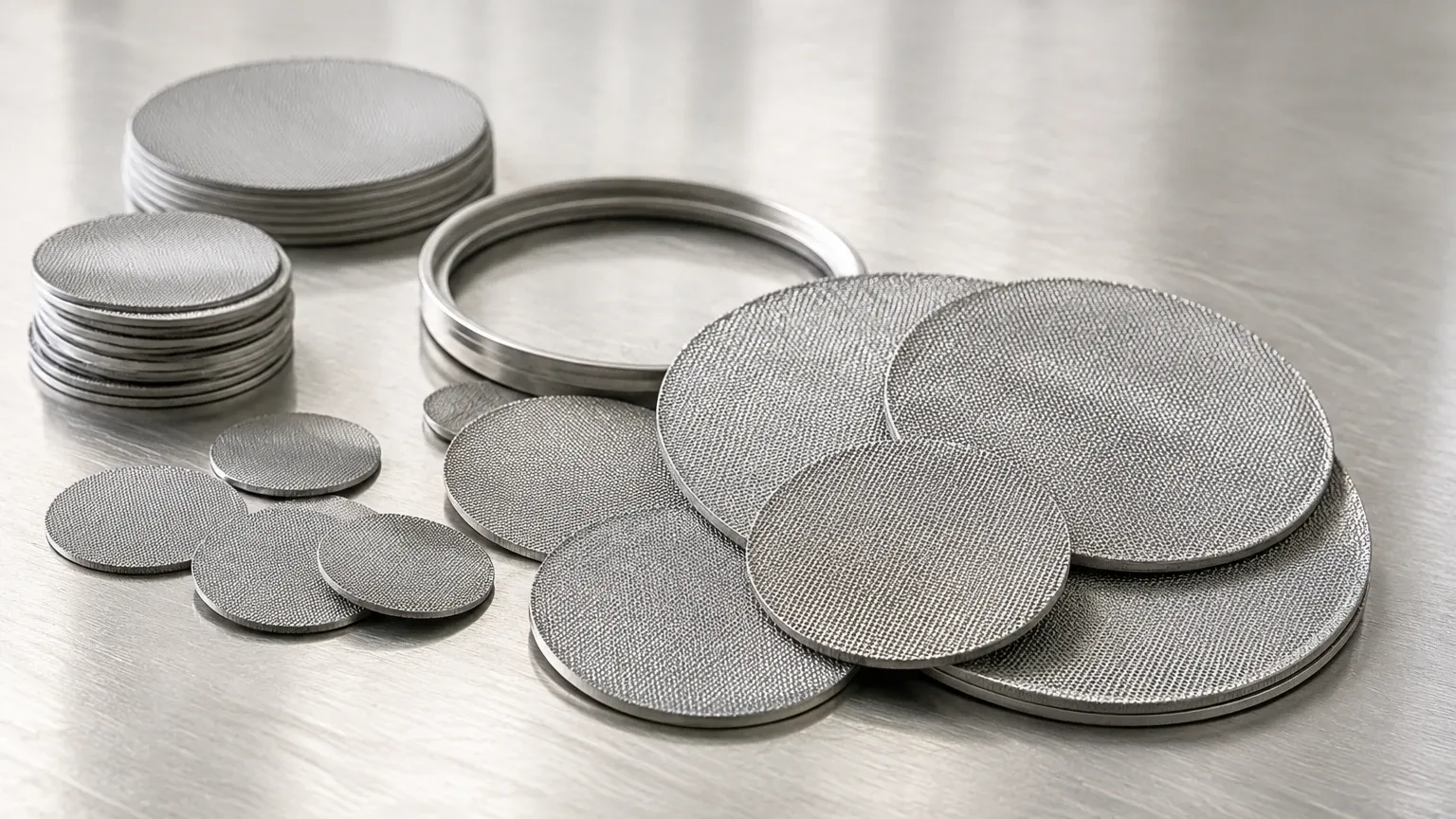
For industrial applications, particularly those involving high pressures, extreme temperatures, or aggressive chemical environments, stainless steel Filter Discs & Packs provide a robust alternative to polymer-based membranes. Understanding the technical nuances of these components—from mesh geometry to material science—is essential for optimizing filtration efficiency and ensuring system longevity.
The Transition from Laboratory to Industrial Filtration
While a disc filter sartorius is synonymous with high-performance membrane filtration in controlled environments, industrial filtration demands a different set of physical properties. Polymer membranes, while excellent for fine particle retention in aqueous solutions, often lack the structural integrity required for heavy-duty industrial cycles.
Stainless steel disc filters bridge this gap by offering precision filtration accuracy comparable to high-end lab filters but with the added benefits of metallic durability. In chemical processing, oil and gas, and large-scale food production, the filtration media must withstand backwashing, high differential pressures, and exposure to solvents that would degrade a standard polymer disc.
Material Selection: Beyond the Basics
The performance of an industrial filter disc begins with the alloy. While 304 stainless steel is suitable for general-purpose applications, 316L stainless steel is the preferred choice for environments where corrosion resistance is paramount. The "L" in 316L denotes low carbon content, which minimizes carbide precipitation during welding, ensuring that the filter remains resistant to intergranular corrosion.
For even more demanding environments, specialty alloys such as Hastelloy or Monel may be utilized. These materials provide the chemical stability required when dealing with highly acidic or alkaline solutions, ensuring that the filter does not introduce contaminants into the process stream through material degradation.
Technical Specifications of Filter Discs & Packs
To achieve the precision expected of a disc filter sartorius in an industrial setting, engineers must evaluate several technical parameters. These specifications dictate how the filter will behave under load and how effectively it will capture target particles.
1. Mesh Weave Types
The geometry of the wire mesh determines both the filtration rating and the flow characteristics. Common weave types include:
* Plain Weave: The most straightforward design where wires cross over and under each other. It offers high flow rates but is generally limited to coarser filtration.
* Twill Weave: Allows for a heavier wire diameter in a given mesh count, providing increased strength for finer filtration tasks.
* Dutch Weave (Plain and Twill): These weaves use different wire diameters in the warp and weft directions. This creates a dense, multi-layered structure that provides excellent surface filtration and high mechanical strength, making it ideal for high-pressure applications.
2. Micron Rating and Filtration Accuracy
Filtration accuracy is typically measured in microns (μm). Industrial filter discs can range from 1 micron to several hundred microns. It is critical to distinguish between nominal and absolute filtration ratings. A nominal rating indicates the ability of the filter to retain a majority of particles of a certain size, while an absolute rating guarantees the retention of all particles above the specified micron size. For critical pharmaceutical or fine chemical applications, absolute ratings are often required to ensure process consistency.
3. Porosity and Flow Rate
High porosity is essential for minimizing pressure drop across the filter. A well-designed filter pack maximizes the open area while maintaining structural integrity. This ensures that the system can maintain high flow rates without requiring excessive energy consumption from pumps.
Engineering Multi-Layer Filter Packs
In many industrial scenarios, a single layer of wire mesh is insufficient. To enhance performance, multiple layers of mesh are combined into "packs." These packs are engineered to provide graduated filtration, where coarser layers act as supports or pre-filters for a finer central filtration layer.
Structural Reinforcement
A typical multi-layer pack might consist of a fine filtration mesh sandwiched between two layers of coarser, stronger mesh. This configuration protects the delicate fine mesh from mechanical damage and prevents it from deforming under high pressure. The layers are often bound together using spot welding or an external rim.
Edge Binding and Sealing
To prevent bypass—where fluid flows around the edges of the filter rather than through it—filter discs are often equipped with edge binding. Materials for binding include stainless steel, aluminum, or copper. The choice of binding material must be compatible with the process fluid and the housing into which the disc is installed. Proper sealing is the only way to ensure that the filtration performance matches the theoretical specifications of the mesh.
Comparison: Reusable Metal vs. Disposable Polymer
When searching for a disc filter sartorius, many users are accustomed to the disposable nature of laboratory membranes. However, in an industrial B2B context, the Total Cost of Ownership (TCO) often favors reusable stainless steel components.
| Feature | Polymer Membrane (Lab Style) | Stainless Steel Filter Disc (Industrial) |
| :— | :— | :— |
| Temperature Limit | Usually < 150°C | Up to 600°C+ (depending on alloy) |
| Pressure Resistance | Low to Moderate | High to Very High |
| Chemical Compatibility | Limited by polymer type | Broad (316L, Hastelloy) |
| Reusability | Disposable | Cleanable and Reusable |
| Initial Cost | Low | Moderate to High |
| Long-term Cost | High (due to replacement) | Low (due to longevity) |
For processes that run 24/7, the downtime required to change disposable filters can be more expensive than the initial investment in a high-quality stainless steel filter pack. Furthermore, stainless steel filters can be cleaned using ultrasonic baths, chemical solvents, or high-pressure steam, allowing them to be returned to service multiple times.
Applications in Demanding Industries
The versatility of precision-engineered filter discs allows them to be deployed across a wide range of sectors where purity is non-negotiable.
Pharmaceutical and Biotechnology
In these industries, the filtration of active pharmaceutical ingredients (APIs) requires media that does not shed fibers and can be easily sterilized. Stainless steel discs are ideal for these applications as they can withstand autoclaving and SIP (Sterilization-in-Place) procedures without losing their structural properties.
Food and Beverage Processing
Filtration in food production often involves viscous liquids like syrups or oils. Metal filter discs provide the necessary strength to handle the high pressures required to push these fluids through fine mesh. Additionally, stainless steel is a food-safe material that complies with international safety standards.
Polymer and Plastic Extrusion
In the production of synthetic fibers and plastics, "screen packs" (which are essentially multi-layer filter discs) are used to remove impurities from the polymer melt. These filters must operate at extremely high temperatures and pressures, conditions that would instantly destroy non-metallic filters.
Selecting the Right Filter: A Guide for Engineers
Before purchasing or specifying a filter disc, engineers should confirm several key factors to ensure the component is fit for purpose. Relying solely on a brand name like "disc filter sartorius" for an industrial application might lead to selecting a product that is over-engineered for lab precision but under-engineered for physical durability.
1. Define the Operating Environment
What is the maximum operating temperature? What chemicals will the filter be exposed to? Is there a risk of galvanic corrosion if the filter disc material differs from the housing material?
2. Determine the Particle Load
If the fluid has a high concentration of solids, a single-layer disc will clog quickly. In such cases, a multi-layer pack with a coarser pre-filter layer is necessary to extend the service life between cleanings.
3. Calculate the Allowable Pressure Drop
Every filter introduces resistance to flow. Engineers must ensure that the pump system can handle the pressure drop (ΔP) across the filter, especially as the filter begins to load with contaminants.
4. Consider the Cleaning Protocol
How will the filter be cleaned? If ultrasonic cleaning is used, the mesh must be robust enough to withstand the cavitation process. If chemical cleaning is used, the mesh and the edge binding must both be resistant to the cleaning agent.
Conclusion
While the disc filter sartorius remains a gold standard for laboratory-scale filtration, industrial operations require the ruggedness and adaptability of stainless steel Filter Discs & Packs. By selecting the appropriate alloy, weave type, and pack configuration, engineers can achieve the high-precision results required for modern manufacturing while ensuring a cost-effective and durable filtration solution. Whether the goal is to protect downstream equipment, ensure product purity, or meet stringent regulatory standards, the technical integrity of the filter disc is the foundation of a successful filtration process.
