


E Filter Replacement
In industrial filtration and polymer processing, maintaining the integrity of the filtration system is paramount to ensuring product quality and equipment longevity. The term "e filter replacement" typically refers to the maintenance and exchange of extruder filters or technical filtration components within a pressurized system. For engineers and facility managers, understanding the technical nuances of this process—from selecting the correct mesh count to identifying the precise moment of failure—is essential for optimizing operational efficiency.
Reliable filtration depends heavily on the quality of the components used. High-performance Filter Discs & Packs are the backbone of many industrial applications, providing the necessary barrier against contaminants while withstanding extreme pressures and temperatures. This guide explores the engineering considerations, performance indicators, and material selections involved in effective filter replacement strategies.
The Engineering Role of Filter Discs & Packs
Filter discs and packs are engineered components designed to remove solid impurities from liquid or gaseous media. In the context of e filter replacement, these components are most commonly found in plastic extrusion, chemical processing, and hydraulic systems. Their primary function is to prevent particulate matter from reaching the final product or damaging downstream equipment such as dies, pumps, and valves.
Multilayer Construction
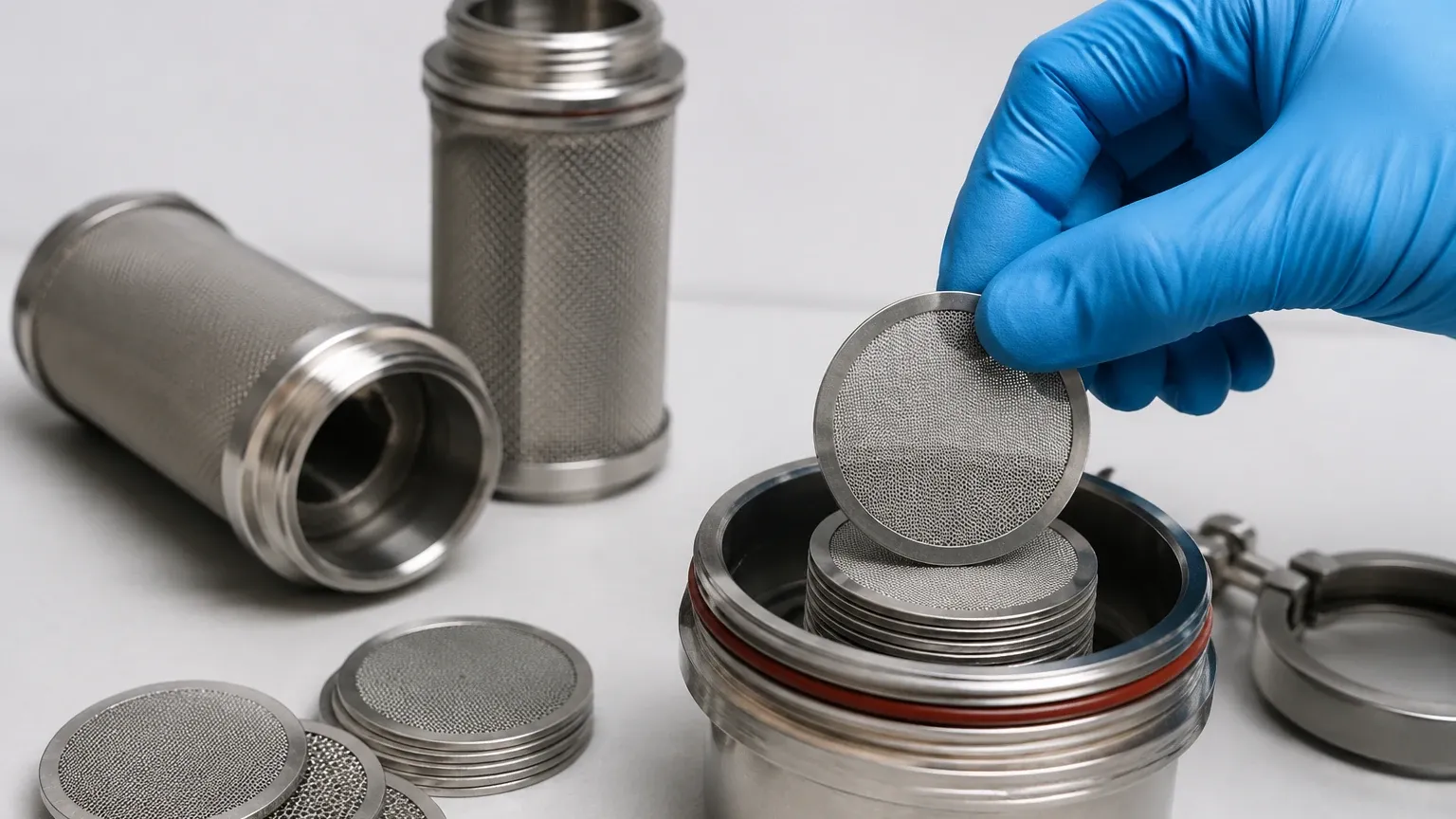
Industrial filter packs are rarely composed of a single layer of wire mesh. Instead, they utilize a multilayer structure to balance filtration accuracy with mechanical strength. A typical configuration includes:
1. The Filtration Layer: The finest mesh layer, which determines the micron rating and captures the target particles.
2. The Support Layer: A coarser mesh that provides structural rigidity to the filtration layer, preventing it from collapsing under high differential pressure.
3. The Drainage Layer: Facilitates the flow of the filtered medium away from the filtration zone, reducing the overall pressure drop across the assembly.
By combining these layers through spot welding or aluminum/stainless steel rimming, manufacturers like Kaifil create a robust unit capable of enduring the rigors of continuous industrial cycles.
Technical Indicators for E Filter Replacement
Determining the optimal interval for e filter replacement is a critical task for maintenance teams. Replacing a filter too early leads to unnecessary downtime and increased consumable costs, while replacing it too late can result in catastrophic equipment failure or off-specification product.
Differential Pressure (ΔP) Monitoring
The most reliable indicator for filter replacement is the pressure drop across the filter media. As contaminants accumulate on the surface and within the pores of the mesh, the resistance to flow increases. In extrusion processes, this is monitored via pressure transducers located before and after the screen pack. When the differential pressure reaches a predetermined threshold—often dictated by the machinery manufacturer or the specific rheology of the material being processed—the filter is considered "blinded" and must be replaced.
Flow Rate Degradation
In systems where pumps operate at a constant speed, a clogged filter will manifest as a decrease in flow rate. This can lead to reduced production throughput and may cause overheating in the pump or motor as it struggles to overcome the increased resistance. Consistent monitoring of output volume is a practical secondary indicator for identifying the need for e filter replacement.
Product Quality and Contaminant Breakthrough
For high-precision applications, such as the production of thin films or fine fibers, even a minor breach in the filter media can result in visible defects. "Fish eyes," streaks, or black specks in the final product are often signs that the filter pack has reached its capacity or that the mesh has suffered mechanical damage. Regular laboratory analysis of the output can help establish a baseline for filter life expectancy.
Material Selection and Compatibility
When sourcing components for e filter replacement, material compatibility is non-negotiable. The chemical environment, operating temperature, and mechanical stress levels all dictate the choice of alloy and weave type.
Stainless Steel Alloys
* Type 304 Stainless Steel: The standard choice for many industrial applications, offering excellent corrosion resistance and mechanical strength at a cost-effective price point.
* Type 316/316L Stainless Steel: Contains molybdenum, which provides superior resistance to chlorides and acidic environments. This is often required in chemical processing and pharmaceutical applications where 304 may succumb to pitting corrosion.
* Specialty Alloys: In extreme cases involving highly corrosive media or temperatures exceeding 800°F, alloys such as Inconel, Monel, or Hastelloy may be required to ensure the filter does not degrade during service.
Weave Patterns and Filtration Characteristics
The geometry of the wire mesh significantly impacts the performance of Filter Discs & Packs.
* Plain Weave: Offers a straightforward aperture and is easy to clean, suitable for general-purpose filtration.
* Dutch Weave: Features a denser arrangement of wires, providing a tortuous path for particles. This weave is preferred for high-pressure applications where fine filtration (down to low micron levels) is required without sacrificing the structural integrity of the mesh.
* Twilled Weave: Allows for the use of heavier wires in a given mesh count, increasing the durability and load-bearing capacity of the filter.
The Impact of Proper Replacement on Operational Costs
Viewing e filter replacement solely as a maintenance expense is a narrow perspective. In reality, a well-executed filtration strategy is a significant driver of total cost of ownership (TCO) reduction.
Energy Efficiency
A clean filter operates with minimal pressure drop, requiring less energy from the drive motors. As the filter becomes clogged, the energy consumption of the system rises. By adhering to a calculated replacement schedule, facilities can maintain optimal energy efficiency and reduce the carbon footprint of their operations.
Equipment Longevity
Contaminants that bypass an old or damaged filter act as abrasives, causing wear on precision-machined parts such as extruder screws, barrels, and gear pumps. The cost of replacing an extruder screw far outweighs the cost of frequent filter replacements. Therefore, utilizing high-quality Filter Discs & Packs serves as an insurance policy for the primary capital equipment.
Minimizing Scrap and Rework
In industries like polymer extrusion, the cost of raw materials is a major operational expense. A failure in the filtration system can result in entire batches of material being downgraded or scrapped. Effective e filter replacement ensures that the product meets quality standards the first time, reducing waste and improving the overall yield of the manufacturing process.
Customization and OEM Considerations
Every industrial system has unique requirements based on the specific media being filtered and the design of the filter housing. Off-the-shelf solutions may not always provide the necessary performance. Customization options for e filter replacement components include:
* Variable Layering: Adjusting the number and sequence of mesh layers to target specific particle size distributions.
* Custom Shapes and Dimensions: Beyond standard circular discs, filters can be manufactured in oval, rectangular, or kidney shapes to fit specialized machinery.
* Edge Treatments: Rimming the edges with soft metals like copper or aluminum can provide a better seal within the filter housing, preventing "bypass" where unfiltered media escapes around the edges of the disc.
Kaifil specializes in these custom configurations, working with engineering teams to develop filtration solutions that are tailored to the specific demands of their process. This collaborative approach ensures that the replacement parts are not just functional, but optimized for the specific application.
Best Practices for Installation and Maintenance
The success of an e filter replacement procedure depends as much on the installation process as it does on the quality of the filter itself. Improper handling can introduce new contaminants or damage the delicate mesh.
1. Cleanliness: Ensure that the filter housing and all surrounding areas are thoroughly cleaned before installing the new pack. Even a small amount of residual debris can compromise the seal or cause premature clogging.
2. Orientation: For multilayer packs, the orientation is critical. Ensure the filtration side is facing the incoming flow as specified by the engineering drawings. Installing a pack backward can lead to the collapse of the filtration layer.
3. Sealing: Verify that the filter is seated correctly within the housing. In high-pressure systems, even a microscopic gap can lead to significant bypass, rendering the filtration process ineffective.
4. Storage: Replacement filters should be stored in a clean, dry environment in their original packaging to prevent oxidation or contamination before use.
Conclusion
E filter replacement is a technical necessity that demands a deep understanding of material science, fluid dynamics, and mechanical engineering. By selecting the appropriate Filter Discs & Packs and monitoring system performance through pressure and flow metrics, industrial operators can achieve a balance between high product quality and low operational costs.
Whether dealing with standard polymer extrusion or complex chemical filtration, the choice of filter media and the rigor of the replacement protocol remain the defining factors in system reliability. As industrial demands for higher purity and greater efficiency continue to evolve, the role of precision-engineered stainless steel filtration components will only become more vital.
