


Effluent Disc Filter
In the landscape of industrial wastewater management and process water recovery, the effluent disc filter serves as a critical final barrier against particulate contamination. As industries face stricter environmental regulations and increasing pressure to recycle process water, the engineering of these filtration components has evolved from simple screening to high-precision separation. For engineers and facility managers, selecting the correct filtration media is not merely a matter of sizing; it involves a complex evaluation of material science, hydraulic dynamics, and long-term mechanical integrity.
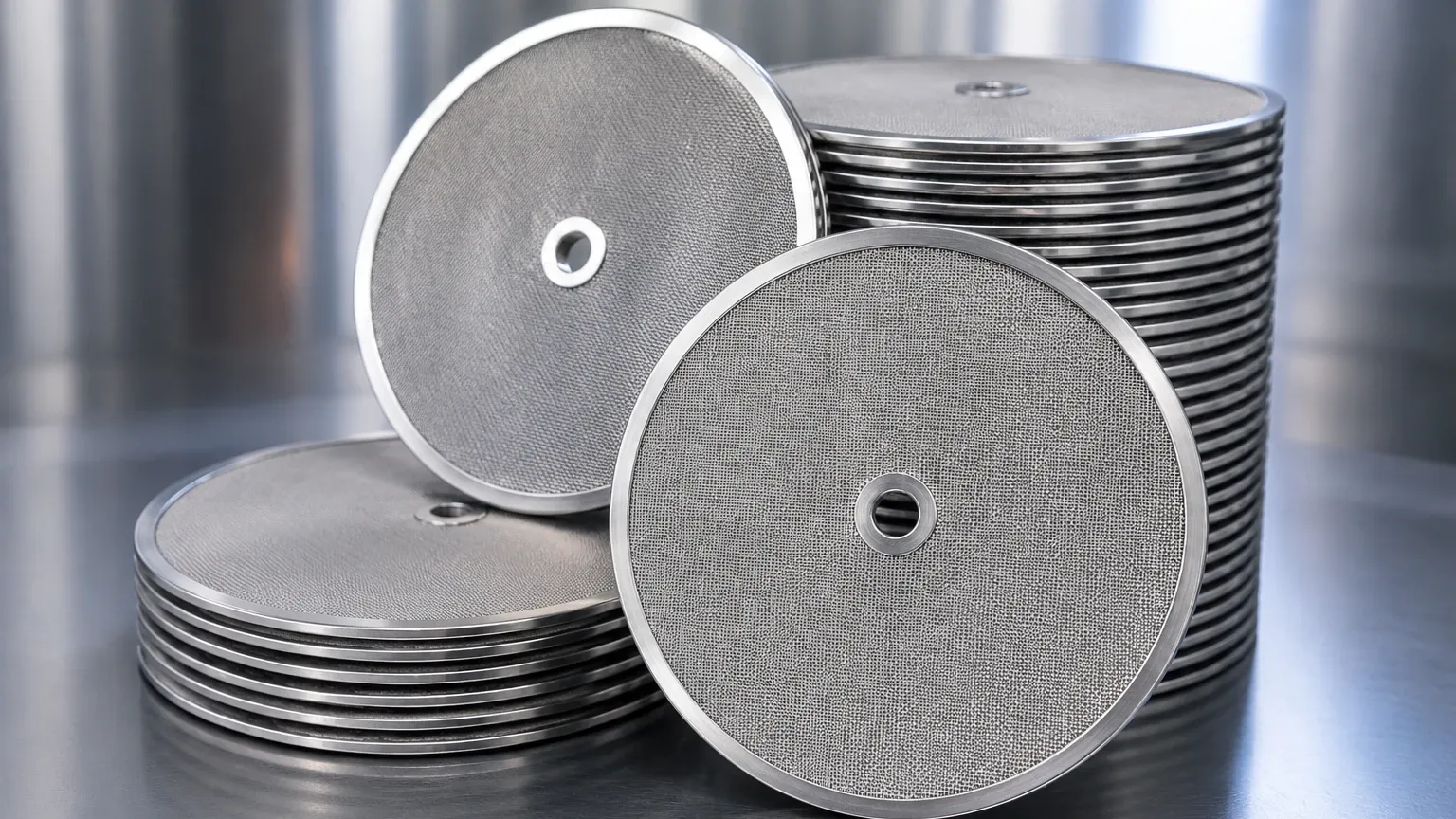
At the core of these systems are specialized Filter Discs & Packs, which provide the necessary surface area and micron-level precision to ensure that effluent meets discharge standards or internal reuse specifications. This guide explores the technical nuances of effluent disc filtration, focusing on the engineering considerations required for demanding industrial environments.
Understanding the Role of Effluent Disc Filters in Industrial Water Treatment
An effluent disc filter is primarily utilized in the tertiary stage of wastewater treatment or as a polishing step in industrial process loops. Its primary function is the removal of Total Suspended Solids (TSS) that have bypassed primary and secondary treatment phases. Unlike sand filters, which require significant footprints and high backwash volumes, disc-based systems offer a compact, modular, and efficient alternative.
In industrial settings—such as chemical processing, food and beverage production, and pharmaceutical manufacturing—the effluent often contains specific challenges, including varying pH levels, high temperatures, and abrasive particles. The efficiency of the filtration process depends heavily on the geometry and material of the filter media. Precision-engineered stainless steel discs are frequently preferred over synthetic alternatives due to their ability to maintain structural integrity under high differential pressures and aggressive chemical cleaning cycles.
Engineering Principles: How Filter Discs & Packs Optimize Effluent Quality
The performance of an effluent disc filter is dictated by the interaction between the fluid and the mesh surface. The filtration mechanism typically involves surface filtration, where particles larger than the mesh opening are trapped on the upstream side. However, in multi-layer configurations, a degree of depth filtration is also achieved, allowing for higher dirt-holding capacity.
Mesh Geometry and Weave Types
When specifying Filter Discs & Packs for effluent applications, engineers must choose between different weave patterns:
- Plain Weave: Offers straightforward flow paths and is easy to clean, suitable for high-flow applications with relatively uniform particle sizes.
- Dutch Weave: Provides a denser structure with higher mechanical strength and finer filtration ratings, ideal for capturing needle-like or irregular particles that might otherwise bypass simpler meshes.
- Twilled Weave: Used for very fine filtration requirements where a thicker wire is needed for durability without sacrificing the micron rating.
Effective Filtration Area (EFA)
The EFA is a critical calculation in disc filter design. By utilizing pleated or multi-layered disc packs, manufacturers can significantly increase the surface area within a fixed housing diameter. This reduces the flux rate (flow per unit area), which in turn lowers the pressure drop and extends the time between cleaning cycles.
Material Selection: Stainless Steel vs. Alternatives for Harsh Effluents
While plastic disc filters are common in municipal irrigation and low-pressure applications, industrial effluent often demands the robustness of metal. Stainless steel is the industry standard for high-performance effluent disc filters for several reasons:
1. Chemical Compatibility: Industrial effluent can be highly acidic or alkaline. Type 304 stainless steel offers excellent resistance to many organic and inorganic chemicals, while Type 316L provides superior protection against pitting and crevice corrosion in high-chloride environments, such as those found in food processing or seawater-related applications.
2. Thermal Stability: Many industrial processes discharge effluent at elevated temperatures. Stainless steel maintains its mechanical properties at temperatures where synthetic polymers would soften, deform, or fail.
3. Mechanical Strength: High-pressure backwashing is often required to dislodge sticky or biological solids. Metal discs can withstand these pressure spikes without the risk of media migration or tearing.
Structural Variations: Multi-layer vs. Single-layer Disc Designs
The construction of the filter disc significantly impacts its service life and filtration efficiency. Depending on the application, engineers may specify different structural configurations:
Single-Layer Discs
These are typically used for coarse filtration or as a pre-filter. They are cost-effective and easy to clean but lack the rigidity required for high-pressure differentials.
Multi-Layer Sintered Discs
In more demanding effluent disc filter systems, multiple layers of wire mesh are sintered together. This process uses heat and pressure to fuse the wires at their contact points without the use of binders. The result is a monolithic structure that combines a fine filtration layer with coarser support and drainage layers. This configuration prevents the mesh from shifting under load and ensures consistent pore size throughout the life of the filter.
Rim and Border Options
To prevent bypass, the edges of the discs must be securely sealed. Common options include:
- Spot Welding: Ideal for multi-layer packs where the layers need to be held together without a heavy rim.
- Aluminum or Stainless Steel Binding: A metal U-channel is crimped around the edge, providing a robust seal and making the disc easier to handle during maintenance.
- Rubber or Synthetic Gaskets: Used when the disc must form a compression seal within the filter housing.
Performance Parameters: Micron Ratings and Flow Dynamics
When evaluating an effluent disc filter, two primary metrics define its success: the micron rating and the pressure drop ($ΔP$).
Nominal vs. Absolute Micron Ratings
- Nominal Rating: Indicates the ability of the filter to retain the majority of particles of a specific size (e.g., 90% of 20-micron particles).
- Absolute Rating: Refers to the diameter of the largest hard spherical particle that will pass through the filter under specified test conditions. For critical effluent polishing, absolute ratings are often required to ensure compliance with strict environmental permits.
Pressure Drop and Flux
The initial pressure drop across a clean effluent disc filter should be minimized to reduce energy consumption. As solids accumulate, the $ΔP$ increases. Engineers must determine the "terminal pressure drop"—the point at which the filter must be cleaned or replaced to prevent damage to the media or a significant reduction in system flow. Proper sizing of Filter Discs & Packs ensures that the flux rate remains within a range that prevents particles from being forced through the mesh pores.
Selection Guide for Engineers: Confirming Specifications Before Procurement
Before selecting a filtration solution, purchasing teams and engineers should confirm several key variables to ensure the effluent disc filter is fit for purpose:
1. Fluid Characteristics: What is the chemical composition, pH, and temperature range of the effluent? Are there oils or greases that might blind the mesh?
2. Particle Profile: What is the concentration of solids (ppm or mg/L)? What is the particle size distribution? This determines the required micron rating and the likely cleaning frequency.
3. Flow Requirements: What are the minimum, average, and peak flow rates? The system must be sized for peak loads to avoid bypass or overflow.
4. Cleaning Mechanism: Will the discs be cleaned via automated backwash, ultrasonic cleaning, or manual replacement? This influences the choice between disposable and cleanable media.
5. Regulatory Standards: Are there specific materials or filtration levels required by local environmental agencies or industry-specific standards (e.g., FDA for food-grade effluent recovery)?
Maintenance, Durability, and Total Cost Considerations
The total cost of ownership (TCO) for an effluent disc filter involves more than the initial purchase price. It includes the cost of energy (pumping against pressure drop), maintenance labor, cleaning chemicals, and the frequency of replacement.
Stainless steel Filter Discs & Packs offer a high degree of cleanability. In many industrial applications, fouled discs can be restored through chemical soaking, high-pressure washing, or ultrasonic baths. This longevity often makes stainless steel a more cost-effective choice over the long term compared to cheaper, disposable synthetic filters that contribute to waste streams and require frequent downtime for change-outs.
Furthermore, the durability of metal mesh reduces the risk of "breakthrough," where a filter failure allows a slug of concentrated contaminants to pass downstream. Such failures can lead to environmental fines, damage to sensitive equipment like Reverse Osmosis (RO) membranes, or the contamination of recycled process water.
Conclusion
The effluent disc filter is a sophisticated tool in the industrial water treatment toolkit. By focusing on the precision engineering of the internal filter media, engineers can achieve reliable, high-performance solids removal even in the most challenging environments. Whether the goal is protecting downstream equipment or meeting stringent discharge limits, the selection of high-quality stainless steel Filter Discs & Packs is fundamental to the operational success and sustainability of industrial filtration systems.
