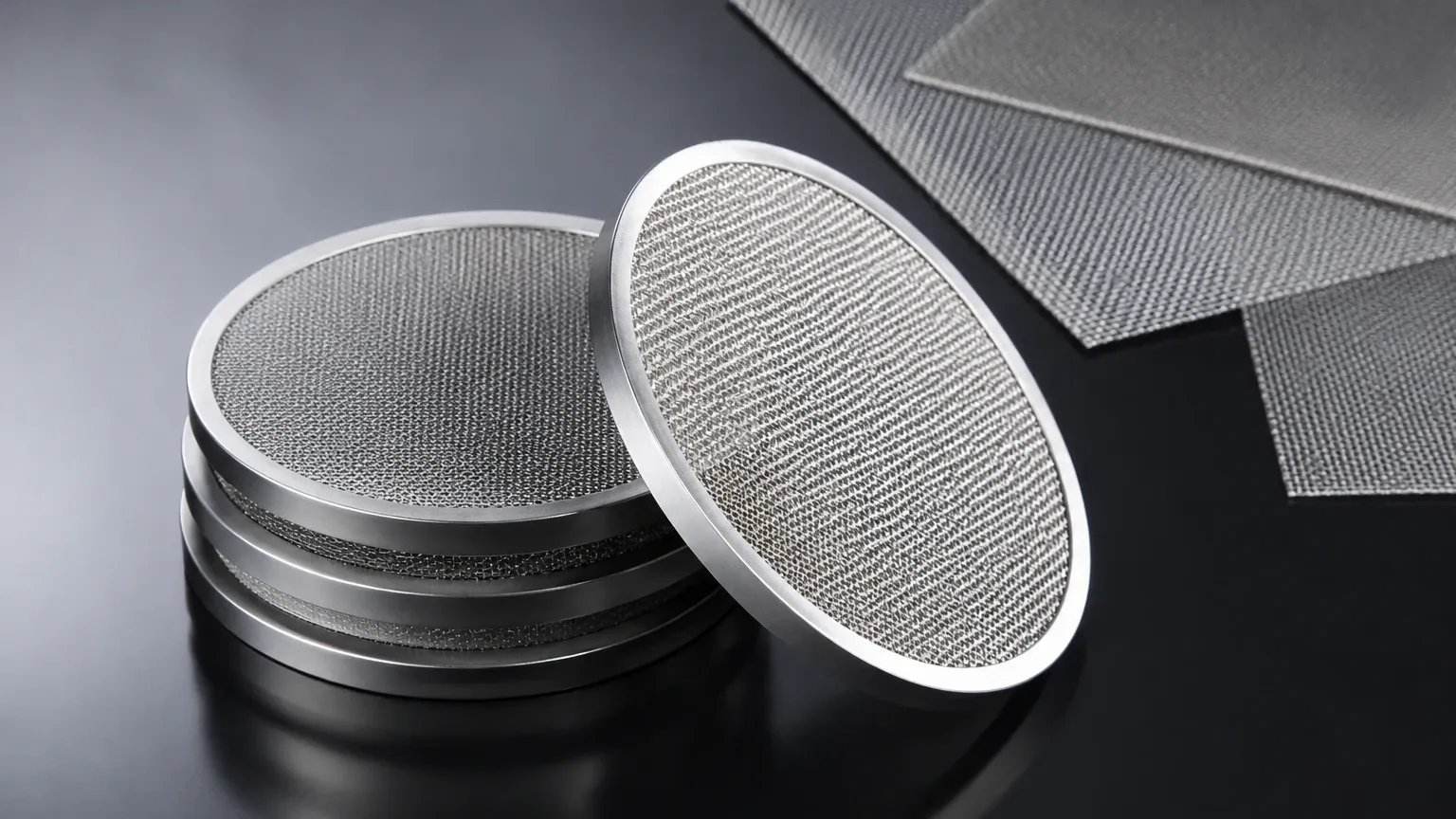
Filter 4 Pack
In the landscape of industrial filtration, precision and durability are the primary drivers of operational efficiency. For engineers and procurement specialists, selecting the right filtration media involves a deep understanding of material science, fluid dynamics, and mechanical design. Among the most versatile components in this field are Filter Discs & Packs, which serve as critical barriers against contaminants in high-pressure and high-temperature environments. Whether utilized in polymer extrusion, chemical processing, or hydraulic systems, the configuration of these components—often referred to in technical specifications as a filter 4 pack when describing a four-layer multi-mesh assembly—determines the success of the entire production cycle.
Understanding the Fundamentals of Filter Discs & Packs
Filter discs are circular or shaped components made from one or more layers of wire mesh. When multiple layers are combined, they are referred to as filter packs. These packs are engineered to provide a graduated filtration effect, where each layer serves a specific purpose, from coarse pre-filtration to fine particle capture and mechanical support.
In many industrial applications, a filter 4 pack configuration is standard. This typically consists of four distinct layers of stainless steel wire mesh, each with a different micron rating. The sequence is designed to optimize the dirt-holding capacity and prevent the finest mesh layer from blinding prematurely. By distributing the particulate load across multiple stages, the assembly maintains a lower differential pressure for a longer duration, extending the service life of the equipment.
Material Science and Engineering Considerations
The performance of any filter disc or pack is fundamentally tied to its material composition. At Kaifil, the emphasis is on high-grade stainless steel, specifically AISI 304, 316, and 316L.
* Stainless Steel 304: Known for its excellent corrosion resistance and mechanical strength, SS 304 is the standard for general industrial applications where extreme chemical exposure is not a primary concern.
* Stainless Steel 316/316L: These alloys contain molybdenum, which significantly enhances resistance to chlorides and acidic environments. For pharmaceutical and chemical processing, 316L is often preferred due to its lower carbon content, which minimizes carbide precipitation during welding processes, ensuring the integrity of the filter pack edges.
Beyond the alloy, the weave type of the mesh is a critical engineering variable. Engineers must choose between plain weave, twill weave, and Dutch weave (including Reverse Dutch Weave). Plain weave offers high flow rates and simple cleaning, while Dutch weaves provide superior strength and the ability to achieve much finer filtration ratings, often down to 2-5 microns.
The Mechanics of the Filter 4 Pack Configuration
When a technical specification calls for a filter 4 pack, it is usually describing a multi-layer sintered or rimmed assembly. The architecture of a four-layer pack is often structured as follows:
1. The Support Layer: A coarse, heavy-duty mesh that provides structural rigidity to the entire pack, ensuring it does not deform under high pressure.
2. The Drainage/Buffer Layer: A medium-mesh layer that facilitates the flow of the filtrate toward the downstream side and protects the fine mesh from mechanical stress.
3. The Filtration Layer: The core of the pack, featuring the specific micron rating required for the process. This is the layer that captures the target particles.
4. The Pre-filtration Layer: A coarser mesh on the upstream side that captures larger debris, preventing the main filtration layer from becoming clogged too quickly.
This tiered approach is essential in industries like polymer melt filtration, where the viscosity of the fluid and the presence of various contaminant sizes would quickly overwhelm a single-layer disc. The filter 4 pack provides a balance between fine filtration and high throughput, making it a staple in high-output manufacturing lines.
Manufacturing Processes: Precision and Integrity
The manufacturing of Filter Discs & Packs involves several precision-focused steps to ensure that the final product meets the rigorous demands of industrial use.
Precision Cutting
Using advanced CNC stamping or laser cutting technology, discs are produced with exacting tolerances. This ensures a perfect fit within the filter housing, preventing "bypass"—a common failure mode where unfiltered fluid escapes around the edges of the disc.
Layer Bonding and Edging
For multi-layer packs, the layers must be securely joined. This is achieved through spot welding or by binding the edges with a metal rim (typically aluminum or stainless steel). Rimmed packs are particularly effective in high-pressure applications because the rim acts as a gasket, providing a superior seal against the housing walls. Sintering is another option, where the layers are bonded at a molecular level through heat and pressure without melting the wires, resulting in a monolithic structure with exceptional mechanical stability.
Performance Evaluation and Selection Criteria
Selecting the appropriate filter disc or pack requires a quantitative analysis of the process requirements. Engineers should evaluate the following criteria before procurement:
* Micron Rating (Absolute vs. Nominal): It is vital to distinguish between nominal ratings (an average pore size) and absolute ratings (the size of the largest particle that can pass through). For critical applications, absolute ratings are mandatory.
* Differential Pressure (ΔP): This is the pressure drop across the filter. A well-designed filter 4 pack should offer a low initial ΔP to maximize the available pressure for the rest of the system.
* Flow Rate and Viscosity: The density and flow speed of the medium will dictate the required surface area and mesh openness. High-viscosity fluids, such as molten plastics, require packs that can withstand significant shear forces.
* Temperature and Chemical Compatibility: The operating environment must not exceed the thermal limits of the metal or the rimming material. Furthermore, the fluid must not react with the alloy, which could lead to leaching or structural failure.
Applications Across Key Industrial Sectors
The versatility of stainless steel filter discs makes them indispensable across various sectors.
* Plastic and Rubber Extrusion: In these processes, filter packs are used to remove "gels" and un-melted particles from the polymer stream. The use of a filter 4 pack is common here to handle the extreme pressures of the extrusion screw.
* Chemical and Petrochemical: Filtration of catalysts and removal of impurities from corrosive fluids require the high-grade resistance of 316L stainless steel packs.
* Food and Beverage: Stainless steel is the material of choice due to its hygienic properties and ease of sterilization. Filter discs are used in the processing of oils, juices, and syrups.
* Hydraulic and Lubrication Systems: Precision metal filters protect sensitive valves and pumps from wear-inducing particles, ensuring the longevity of expensive machinery.
Maintenance, Replacement, and Total Cost of Ownership
One of the primary advantages of stainless steel Filter Discs & Packs is their cleanability. Unlike disposable synthetic filters, metal mesh can often be cleaned using ultrasonic baths, chemical solvents, or burnout ovens (for polymers).
However, the decision to clean versus replace must be based on a cost-benefit analysis. Repeated cleaning can eventually fatigue the wire mesh, leading to pore enlargement or wire breakage. In many high-stakes environments, maintaining a standardized inventory—such as a filter 4 pack kit for each machine—is more cost-effective than risking a mid-cycle failure.
Total Cost of Ownership (TCO) should account for the initial purchase price, the labor costs associated with replacement, the cost of downtime, and the potential yield loss from poor filtration. High-quality manufactured filters from Kaifil reduce TCO by providing predictable performance and longer intervals between maintenance cycles.
Technical Support and Customization
Every industrial process has unique challenges. Standard off-the-shelf solutions may not always provide the optimal balance of flow and filtration. Kaifil specializes in OEM and customized filtration solutions, working directly with engineering teams to develop bespoke filter disc configurations.
Whether you require a specific diameter, a unique edge treatment, or a specialized filter 4 pack layer sequence, technical consultation is a vital step in the procurement process. By analyzing the specific contaminants and fluid properties of your application, manufacturers can recommend mesh combinations that maximize efficiency and protect your downstream equipment.
In conclusion, the selection of filter discs and packs is not merely a purchasing decision but an engineering one. By focusing on material integrity, precise manufacturing, and the strategic layering of mesh—as seen in the robust filter 4 pack configuration—industrial operations can achieve higher purity levels and greater system reliability. For those seeking to optimize their filtration processes, reviewing the available technical options and application support is the first step toward enhanced operational performance.