


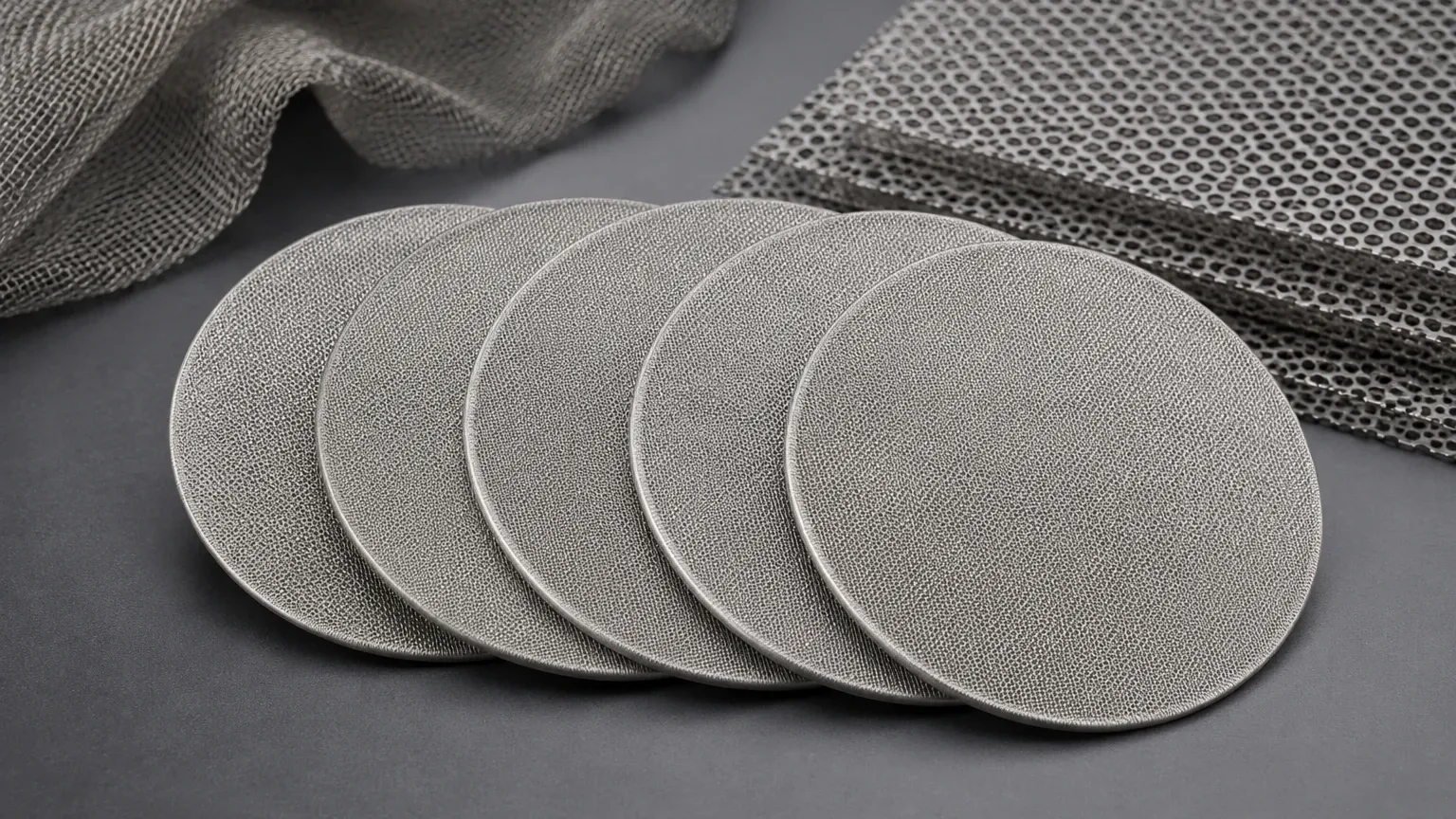
Filter 5 Pack
In industrial filtration, the term "filter 5 pack" frequently appears in two distinct contexts: the specification of multi-layer sintered or spot-welded filter packs consisting of five distinct mesh layers, and the procurement of standardized replacement sets for critical machinery. For engineers and procurement specialists, understanding the technical nuances of these components is essential for maintaining system integrity, optimizing flow rates, and ensuring the longevity of downstream equipment.
Whether utilized in polymer extrusion, chemical processing, or hydraulic systems, Filter Discs & Packs serve as the primary defense against particulate contamination. This article examines the engineering considerations, material science, and selection criteria associated with high-performance filter packs, focusing on how a 5-layer configuration or a 5-pack procurement strategy impacts industrial efficiency.
The Engineering of 5-Layer Filter Packs
A common configuration in high-pressure applications is the 5-layer sintered mesh or spot-welded pack. Unlike single-layer discs, a 5-layer structure is engineered to provide a gradient filtration effect and enhanced mechanical strength.
Structural Composition
In a typical 5-layer design, the layers are arranged strategically to balance filtration precision with structural rigidity:
1. Reinforcing Layer: A coarse mesh that provides foundational strength.
2. Support Layer: A medium mesh that bridges the gap between the coarse reinforcement and the fine filtration media.
3. Filtration Layer: The core functional layer, often a fine Dutch weave or square mesh, which determines the micron rating.
4. Buffer Layer: Protects the fine filtration layer from mechanical stress and turbulence.
5. Outer Reinforcing Layer: Completes the structure, ensuring the pack remains flat and intact under high differential pressure.
Sintering vs. Spot Welding
When selecting a filter 5 pack, engineers must choose between sintered and spot-welded constructions. Sintering fuses the wires at every contact point through a diffusion-bonding process, resulting in a monolithic structure that will not migrate or fray. This is critical in pharmaceutical and food-grade applications where fiber shedding is a prohibited risk. Spot-welded packs, conversely, offer a more cost-effective solution for applications where the structural demands are lower, yet multiple layers are still required to achieve specific flow characteristics.
Material Selection for Industrial Durability
The performance of a filter pack is heavily dependent on the metallurgy of the wire mesh. Kaifil specializes in stainless steel solutions, which are preferred in B2B industrial environments due to their resistance to corrosion, high temperatures, and mechanical wear.
Stainless Steel 304 and 316L
* Type 304: The standard grade for general industrial use. It offers excellent strength and basic corrosion resistance, suitable for water treatment and standard hydraulic fluids.
* Type 316L: The "L" denotes low carbon, which improves weldability and provides superior resistance to pitting and crevice corrosion. This is the industry standard for chemical processing and marine environments where exposure to chlorides or acidic solutions is common.
Specialized Alloys
For extreme environments involving highly corrosive chemicals or temperatures exceeding 500°C, specialized alloys such as Inconel, Monel, or Hastelloy may be integrated into the filter pack. These materials ensure that the filter 5 pack maintains its pore geometry and structural integrity even under chemical attack that would degrade standard stainless steels.
Key Performance Metrics: Micron Rating and Pressure Drop
When specifying Filter Discs & Packs, engineers must evaluate the trade-off between filtration efficiency and system pressure. A "filter 5 pack" configuration is often chosen specifically to manage these variables more effectively than a single-layer disc.
Absolute vs. Nominal Filtration
* Nominal Rating: Refers to the ability of the filter to retain a major percentage (usually 60% to 95%) of particles of a specific size.
* Absolute Rating: Refers to the diameter of the largest hard spherical particle that will pass through the filter under specified test conditions. In 5-layer sintered packs, the absolute rating is highly predictable due to the fixed pore structure.
Managing Differential Pressure (ΔP)
As particles accumulate on the surface of the filter, the differential pressure across the disc increases. A well-designed 5-layer pack utilizes the outer layers to capture larger debris (depth filtration) while the inner layer handles the fine particulates. This distribution prevents the immediate blinding of the fine mesh, extending the service life and reducing the frequency of replacement. Engineers should calculate the maximum allowable ΔP before the filter pack risks deformation or "blow-through."
Customization and Edge Processing
Industrial applications rarely allow for "off-the-shelf" solutions. Customization of dimensions, shapes, and edge treatments is a core requirement for ensuring a leak-free fit within the filter housing.
Edge Framing and Binding
To prevent bypass—where fluid flows around the edges of the filter rather than through it—filter packs are often equipped with rims or frames. Common materials for binding include:
* Aluminum: Lightweight and cost-effective, suitable for many polymer extrusion applications.
* Stainless Steel: Provides the highest level of chemical compatibility and strength.
* Copper/Brass: Often used in specific hydraulic or legacy machinery where soft-metal sealing is required.
Geometry and Precision Cutting
Using advanced CNC or laser cutting technology, filter discs can be produced in various geometries, including circular, oval, rectangular, or ring-shaped. Precision in the outer diameter (OD) is critical; even a millimeter of deviation can lead to improper seating and catastrophic system failure in high-pressure environments.
Operational Considerations and Replacement Cycles
For purchasing departments, the decision to stock a "filter 5 pack" (in the sense of a five-unit quantity) is often driven by maintenance schedules and the total cost of ownership (TCO).
Total Cost of Ownership
While the initial purchase price of a high-quality stainless steel filter pack is higher than disposable synthetic filters, the TCO is often lower. Stainless steel packs are cleanable and reusable. Methods such as ultrasonic cleaning, chemical bath immersion, or backwashing can restore the filter to near-original permeability, significantly reducing the long-term waste and procurement frequency.
Identifying the Need for Replacement
Engineers should establish clear protocols for when a filter pack should be cleaned versus replaced. Indicators include:
* Permanent increase in baseline differential pressure after cleaning.
* Visible deformation or "dishing" of the disc.
* Signs of mechanical abrasion or wire thinning.
* Breakdown of spot welds or sintering bonds.
Application Focus: Polymer Extrusion and Chemical Processing
In the polymer industry, the filter 5 pack is a staple. During the extrusion process, molten plastic is forced through a "breaker plate" supported by a series of filter screens. The 5-layer configuration is ideal here because it can withstand the immense pressures of the extruder while removing gels, un-melted resin, and foreign contaminants that would otherwise cause defects in the final product (such as film breaks or fiber breakage).
In chemical processing, these packs are used for catalyst recovery and solvent purification. The ability to specify 316L stainless steel ensures that the filter does not introduce metallic ions into the chemical stream, maintaining the purity levels required for specialty chemicals and pharmaceuticals.
Conclusion: Selecting the Right Partner
Specifying the correct filter configuration requires a deep understanding of fluid dynamics, material science, and manufacturing tolerances. A filter 5 pack—whether defined by its layered construction or its packaging unit—must meet the rigorous demands of the modern industrial environment.
By focusing on high-grade materials, precision manufacturing, and customized edge treatments, Kaifil provides filtration solutions that protect sensitive equipment and optimize production uptime. For technical teams, confirming the micron rating, pressure limits, and material compatibility before purchase is the most effective way to ensure operational success. When performance is non-negotiable, investing in engineered Filter Discs & Packs is the most reliable path forward.
