


Filter 9
In the landscape of industrial filtration, precision is the primary metric of performance. Whether a process involves chemical processing, pharmaceutical manufacturing, or high-pressure hydraulic systems, the ability to isolate specific particle sizes is critical to equipment longevity and product purity. The designation "filter 9" often refers to specialized filtration levels—typically associated with 9-micron precision or specific 9-mesh coarse configurations—that serve as a benchmark for fine-particle retention in demanding environments.
For engineers and procurement specialists, selecting the correct Filter Discs & Packs involves more than just identifying a micron rating. It requires a comprehensive understanding of material science, fluid dynamics, and the mechanical stresses inherent in industrial cycles. This guide examines the technical parameters of precision filtration components, the engineering logic behind multi-layer structures, and the criteria for selecting high-performance metal filter solutions.
Technical Fundamentals of Filter 9 Specifications
When discussing a filter 9 specification, technical professionals generally focus on the micron rating or the mesh count required for a specific stage of the filtration process. In high-precision applications, a 9-micron absolute rating is frequently utilized to protect sensitive downstream components from microscopic debris that could cause mechanical wear or chemical contamination.
In other contexts, "9" may refer to a specific mesh count used in the initial stages of solid-liquid separation. Regardless of the specific numerical application, the performance of these filters depends on the weave type and the wire diameter. For instance, a plain weave provides a straight-through flow path suitable for high-flow applications, while a Dutch weave offers a more tortuous path, enhancing the retention of finer particles. Understanding these nuances is essential when integrating a filter 9 component into a larger system, as the choice of weave directly impacts the effective filtration area and the initial pressure drop.
The Role of Filter Discs & Packs in Precision Processing
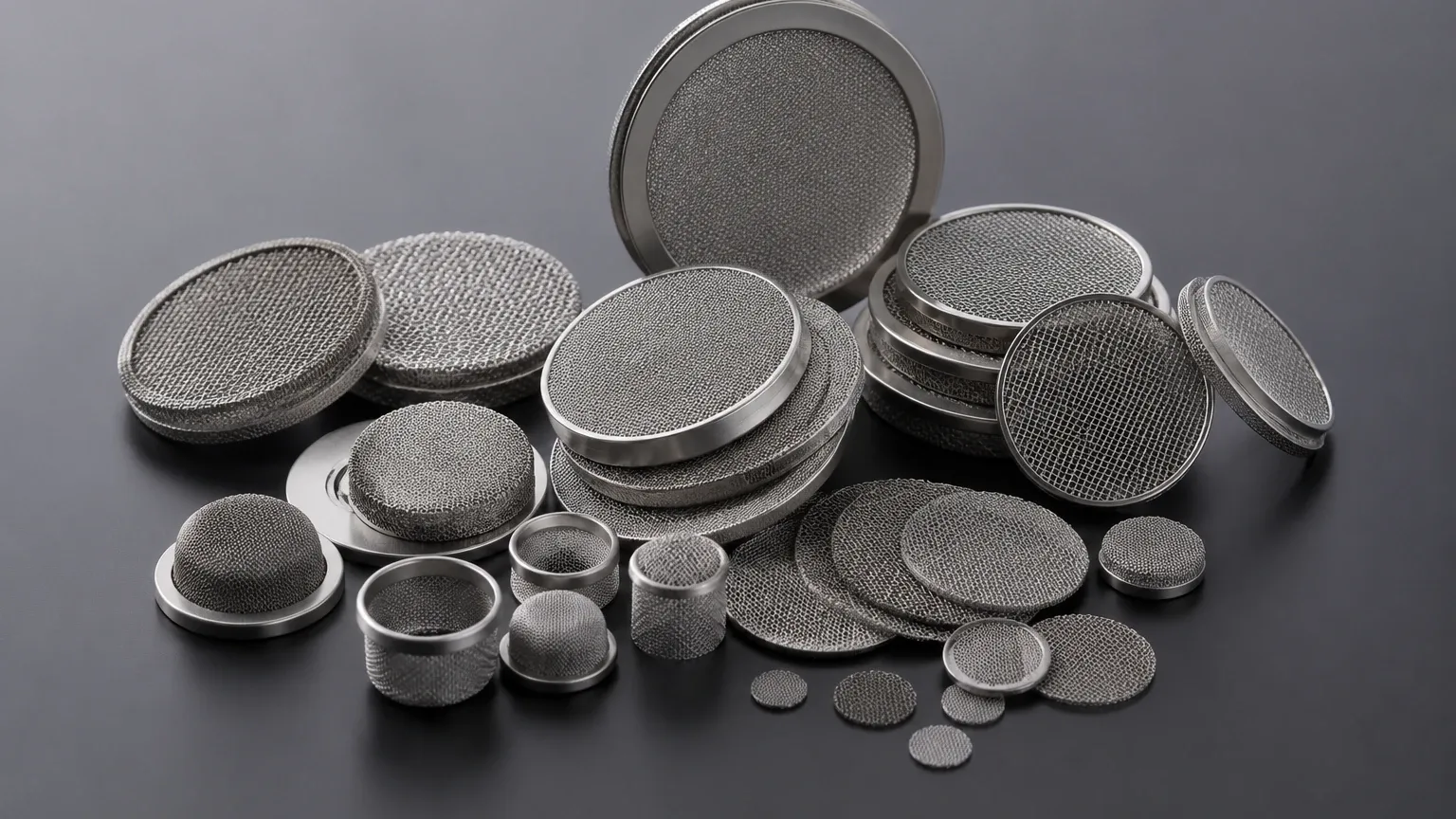
Industrial filtration systems rarely rely on a single layer of mesh. Instead, engineers utilize Filter Discs & Packs to achieve a balance between filtration fineness and structural integrity. These components are often constructed by layering multiple sheets of stainless steel wire cloth, which are then spot-welded or bound with a metal rim.
Multi-Layer Configurations
The primary advantage of a pack over a single disc is the ability to combine different mesh counts. A typical high-performance pack might include:
1. A Surface Layer: A fine mesh (such as a 9-micron rated cloth) that performs the actual separation.
2. Support Layers: Coarser mesh layers that provide mechanical strength to prevent the fine mesh from deforming under high pressure.
3. Drainage Layers: Layers designed to facilitate the flow of the filtrate toward the outlet, reducing the overall resistance of the assembly.
By utilizing these multi-layer configurations, manufacturers can ensure that the filter 9 precision is maintained even in high-viscosity or high-pressure environments, such as polymer melt filtration or oil refining.
Material Engineering: Why Stainless Steel is the Standard
The environment in which a filter 9 component operates dictates the material requirements. In most B2B industrial sectors, stainless steel is the preferred choice due to its mechanical properties and chemical resistance.
Grade 304 vs. Grade 316L
* Grade 304: This is the standard for general industrial use. It offers excellent strength and basic corrosion resistance, making it suitable for water treatment and food and beverage applications where high acidity is not a factor.
* Grade 316L: For more aggressive environments, such as chemical processing or marine applications, 316L is required. The addition of molybdenum provides superior resistance to pitting and crevice corrosion, particularly in chloride-rich environments. The "L" designation (low carbon) is critical if the filter discs are to be welded, as it prevents carbide precipitation and maintains corrosion resistance at the weld points.
Beyond corrosion resistance, stainless steel filters offer thermal stability. Unlike polymer-based filters, metal filter 9 components can operate at temperatures exceeding 400°C, making them indispensable for steam filtration and high-temperature gas cleaning.
Evaluating Filtration Efficiency and Pressure Drop
For an engineer, the two most critical performance metrics are filtration efficiency and the clean pressure drop ($ΔP$). Filtration efficiency defines the percentage of particles of a certain size that the filter 9 media can capture. Absolute ratings imply a 99.9% retention rate, whereas nominal ratings might only guarantee 60% to 90% retention.
Managing the Pressure Drop
The pressure drop is the difference in pressure between the upstream and downstream sides of the filter. A high initial $ΔP$ reduces the energy efficiency of the system and shortens the time between cleaning cycles. Factors that influence $ΔP$ include:
* Fluid Viscosity: Thicker fluids require more pressure to pass through the same mesh size.
* Flow Velocity: Increasing the flow rate exponentially increases the pressure drop.
* Open Area Percentage: The ratio of the area of the holes to the total area of the mesh. High-precision filters often have lower open areas, requiring larger surface areas (via pleating or larger disc diameters) to maintain acceptable flow rates.
When specifying Filter Discs & Packs, it is vital to calculate the expected $ΔP$ to ensure the pump system can handle the resistance as the filter begins to load with contaminants.
Customization Parameters for OEM Filter Components
Standard off-the-shelf filters rarely meet the exact needs of specialized industrial machinery. Customization is often necessary to ensure a perfect fit and optimal performance. When ordering custom filter 9 solutions, several parameters must be confirmed:
1. Geometric Shape: While circular discs are common, many extruders and hydraulic housings require oval, rectangular, or ring-shaped filters.
2. Edge Binding: To prevent fraying and ensure a leak-proof seal, discs can be supplied with aluminum, copper, or stainless steel rims. This is particularly important for high-pressure applications where mesh migration could damage downstream equipment.
3. Sintering: For the most demanding applications, the layers of a filter pack can be sintered together. Sintering involves heating the stack in a vacuum furnace until the wires bond at their contact points. This creates a rigid, porous structure that cannot be deformed and is extremely easy to clean.
4. Spot Welding: For simpler applications, spot welding the layers at strategic points provides enough stability for handling and installation while remaining cost-effective.
Operational Lifecycle and Maintenance of Metal Filters
One of the primary benefits of using stainless steel Filter Discs & Packs is that they are cleanable and reusable, which significantly reduces the total cost of ownership compared to disposable cartridges. However, the cleaning process must be handled with care to avoid damaging the fine mesh of a filter 9 component.
Cleaning Methodologies
* Ultrasonic Cleaning: This is the most effective method for removing fine particles lodged deep within the mesh. High-frequency sound waves create cavitation bubbles that dislodge contaminants without mechanical abrasion.
* Backwashing: In some automated systems, the flow is periodically reversed to flush particles off the surface of the filter.
* Chemical Cleaning: Solvents or caustic solutions can be used to dissolve organic build-up or scale, provided the chemical is compatible with the stainless steel grade.
Replacement Indicators
A filter 9 component should be replaced if the terminal pressure drop is reached even after a thorough cleaning, or if visual inspection reveals any signs of "media migration" (broken wires) or deformation of the disc. Regular inspection cycles are necessary to prevent catastrophic failure, which could allow unfiltered bypass into the system.
Conclusion: Selecting the Right Filtration Partner
Achieving consistent results in industrial filtration requires more than just a part number. It requires a partnership with a manufacturer that understands the interplay between material science and mechanical design. When evaluating a filter 9 solution, engineers should prioritize suppliers who offer transparency in material sourcing, precision in manufacturing (such as laser cutting for clean edges), and the ability to customize configurations to specific process pressures and temperatures.
By focusing on the technical integrity of Filter Discs & Packs, industrial operations can ensure higher product quality, reduced downtime, and a lower environmental footprint through the use of durable, cleanable metal filtration media.
