


Filter Disc Brita
In the realm of fluid management, the term "filter disc" encompasses a wide range of technologies, from the consumer-grade filter disc brita used in domestic water carafes to high-precision industrial components designed for chemical processing and polymer extrusion. While consumer products focus on removing chlorine and sediment for taste, industrial filtration requires a much more rigorous engineering approach. For technical professionals and procurement teams, understanding the transition from simple domestic filtration to heavy-duty Filter Discs & Packs is essential for ensuring system longevity and product purity.
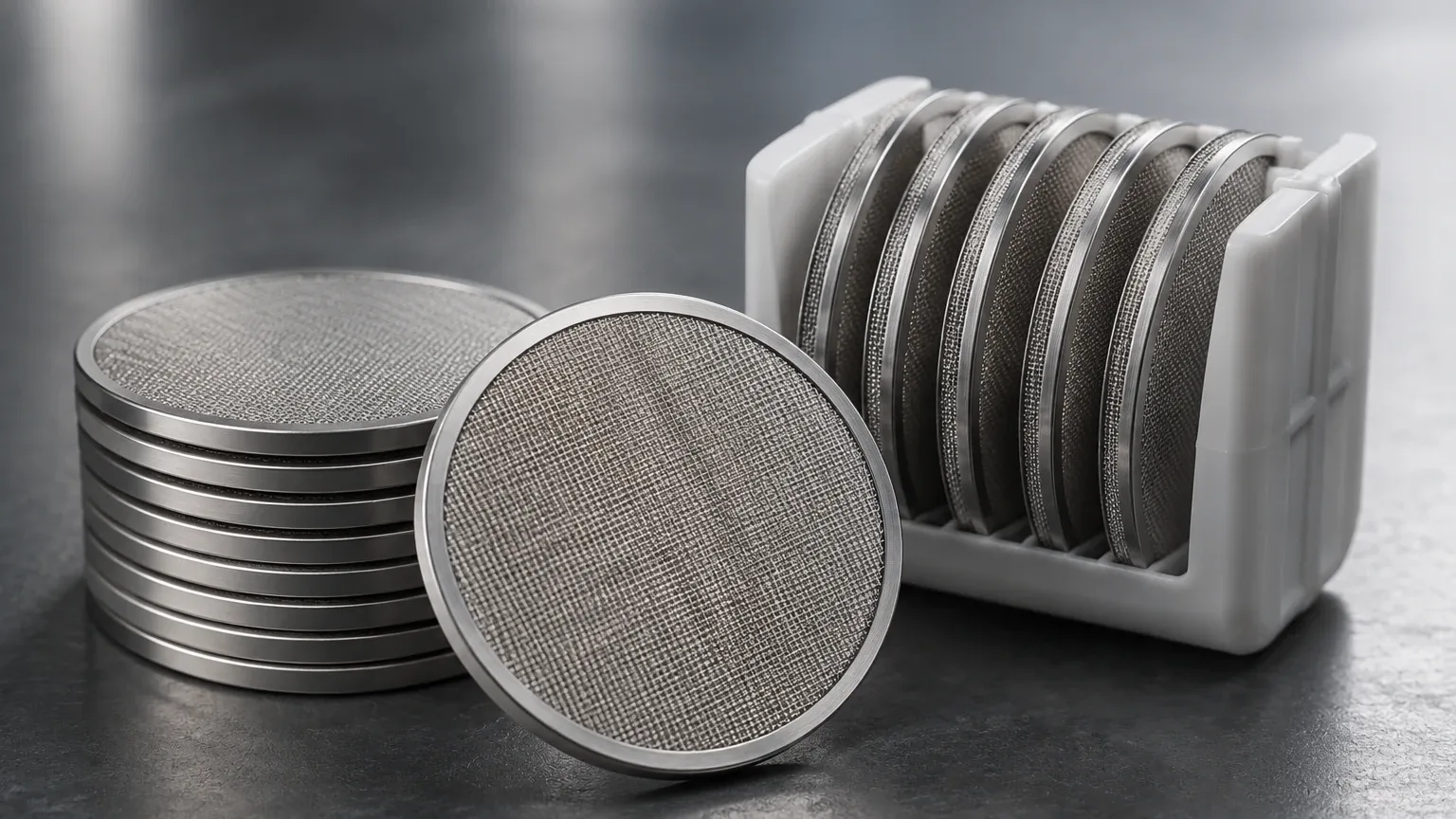
Industrial filtration discs are specialized components engineered to provide precise particle retention under demanding conditions. Unlike the carbon-based or fiber-based discs found in a standard filter disc brita, industrial variants are typically constructed from stainless steel wire mesh, sintered metal, or multi-layered metal laminates. These materials allow for a level of durability and chemical compatibility that consumer plastics and fibers cannot match.
The Evolution of Disc Filtration: From Consumer to Industrial Applications
The concept of a disc-shaped filter is rooted in the need for a compact, high-surface-area solution that can be easily integrated into cylindrical housings or pipe systems. In the consumer sector, the filter disc brita has popularized the use of activated carbon discs for gravity-fed or low-pressure water filtration. These are effective for basic VOC removal and sediment reduction in potable water.
However, in industrial sectors such as pharmaceutical manufacturing, food and beverage processing, and hydraulic systems, the requirements shift dramatically. Engineers must account for variables such as fluid viscosity, operating pressure, temperature fluctuations, and the potential for chemical degradation. In these environments, the simple fiber disc is replaced by robust Filter Discs & Packs capable of withstanding hundreds of bars of pressure and temperatures exceeding 300°C. The transition from consumer-grade to industrial-grade filtration is defined by the move from disposable, low-strength materials to cleanable, high-strength metal alloys.
Material Composition and Structural Integrity
The primary differentiator between a basic filter disc brita and an industrial filter disc is the material of construction. Industrial discs are almost exclusively manufactured from stainless steel (AISI 304, 316, or 316L) or specialized alloys like Hastelloy or Monel for highly corrosive environments.
Stainless Steel Wire Mesh
Stainless steel wire mesh is the foundation of most industrial filter discs. It offers excellent mechanical strength and can be woven into various patterns—such as plain weave, twill weave, or Dutch weave—to achieve specific micron ratings. Unlike the soft media in a filter disc brita, stainless steel mesh maintains its pore structure even under high differential pressure.
Sintered Metal Fiber and Mesh
For more demanding applications, multiple layers of wire mesh are sintered together. Sintering involves heating the metal layers in a vacuum furnace until they bond at their contact points without melting. This creates a monolithic structure that is incredibly strong and resistant to media migration. Sintered Filter Discs & Packs are preferred in applications where high-pressure backwashing is required for cleaning.
Perforated Metal Support
In many disc packs, the fine filtration mesh is supported by a layer of perforated metal. This provides the structural rigidity necessary to prevent the mesh from deforming or collapsing under the weight of the fluid or the buildup of contaminants.
Engineering Specifications for Industrial Filter Discs & Packs
When selecting Filter Discs & Packs for an industrial system, engineers must look beyond the simple "plug-and-play" nature of a consumer filter disc brita. Several technical specifications dictate the performance and suitability of a filter disc for a specific application.
1. Micron Rating (Absolute vs. Nominal): Industrial discs are rated by the size of the particles they can trap. An absolute rating indicates that 99.9% of particles above a certain size will be captured, whereas a nominal rating is an average. High-precision industries like pharmaceuticals typically require absolute-rated discs.
2. Layer Configuration: Disc packs can consist of a single layer of mesh or up to five or more layers. Multi-layer packs often feature a graduation of pore sizes, with coarser layers acting as pre-filters to protect the finer inner layers, thereby extending the service life of the component.
3. Edge Treatment: To prevent fluid bypass, the edges of the disc must be sealed. Common methods include spot welding, aluminum or stainless steel binding (rimming), or even resin bonding. In high-purity applications, welded edges are preferred to avoid the introduction of adhesives or dissimilar metals.
4. Flow Rate and Pressure Drop: Every filter introduces a resistance to flow. Engineers must calculate the initial pressure drop (clean ΔP) to ensure the pump system can maintain the required flow rate as the disc begins to load with contaminants.
Filtration Efficiency and Micron Ratings in Precision Environments
In consumer products like the filter disc brita, the micron rating is often not explicitly stated because the primary goal is sensory improvement (taste and odor). In contrast, industrial filtration is a science of precision. A filter disc used in a hydraulic system might need to capture 10-micron particles to protect sensitive valves, while a disc in a polymer melt application might need to filter down to 2 microns to ensure the quality of the final plastic film.
Industrial Filter Discs & Packs are available in ratings ranging from 1 micron up to several hundred microns. The choice of micron rating is a balance between filtration efficiency and the frequency of replacement or cleaning. A finer mesh will provide cleaner output but will clog faster, leading to higher maintenance costs and downtime. Engineers often use a "staged" approach, where a series of disc packs with decreasing micron ratings are used to optimize the filtration process.
Customization and OEM Integration for Specialized Systems
One of the most significant advantages of industrial filtration components over standardized consumer items like the filter disc brita is the ability to customize every aspect of the design. Manufacturers like Kaifil specialize in providing OEM solutions tailored to specific machinery and process requirements.
Customization options include:
* Custom Geometry: While circular discs are standard, filters can be manufactured in oval, rectangular, or complex polygonal shapes to fit unique housing designs.
* Variable Layering: Engineers can specify the exact mesh counts and wire diameters for each layer in a sintered pack to achieve a specific flow-to-filtration ratio.
* Specialized Coatings: For applications involving extremely abrasive materials or reactive chemicals, discs can be coated with PTFE or other protective layers to enhance durability.
* Mounting Features: Discs can be designed with central holes, threaded hubs, or specialized gaskets to ensure a leak-proof fit within the existing hardware.
For purchasing teams, working with a manufacturer that offers comprehensive customization ensures that the Filter Discs & Packs will integrate seamlessly into their production lines without the need for costly equipment modifications.
Maintenance, Cleaning, and Lifecycle Management
A critical difference between the disposable filter disc brita and industrial metal discs is the lifecycle. Consumer discs are designed to be thrown away after a set volume of water has passed through them. Industrial stainless steel discs, however, are an investment designed for long-term use.
Cleaning Methods
Industrial discs can be cleaned and reused multiple times. Common cleaning techniques include:
* Ultrasonic Cleaning: Using high-frequency sound waves in a solvent bath to dislodge fine particles trapped within the mesh pores.
* Backwashing: Reversing the flow of fluid through the filter to push contaminants out of the mesh.
* Chemical Cleaning: Using acids or alkalis to dissolve organic or inorganic buildup, provided the disc material is compatible with the cleaning agents.
* Burn-off (Pyrolysis): For polymer filtration, discs are often heated in specialized ovens to burn off residual plastic, leaving the metal mesh clean and ready for reuse.
Replacement Cycles
Despite their cleanability, all filter discs eventually reach the end of their service life. This occurs when the structural integrity of the mesh is compromised or when the "permanent" pressure drop (the ΔP after cleaning) becomes too high for efficient operation. Monitoring the pressure differential across the Filter Discs & Packs is the standard method for determining when a disc needs to be pulled for cleaning or replaced entirely.
Conclusion: Making Informed Procurement Decisions
Whether an organization is looking for a specialized alternative to a filter disc brita for a niche laboratory application or requires thousands of high-pressure Filter Discs & Packs for an industrial manufacturing plant, the selection process must be guided by technical data.
Engineers should prioritize material quality, micron precision, and structural design to ensure that their filtration systems operate at peak efficiency. By moving away from generic solutions and toward engineered stainless steel components, businesses can achieve better product purity, lower total cost of ownership, and significantly reduced downtime. When evaluating suppliers, confirm their ability to provide material certifications, pressure test data, and customized engineering support to ensure the selected filtration solution meets the specific rigors of your industrial environment.
