


Filter Disc Holder
In industrial filtration systems, the efficiency of the filtration process is not solely dependent on the quality of the media but also on the mechanical integrity of the assembly that secures it. A filter disc holder serves as the critical interface between the fluid stream and the filtration media, ensuring that the Filter Discs & Packs are positioned correctly, sealed against bypass, and supported against the mechanical stresses of high-pressure differentials. For engineers and procurement specialists in sectors such as chemical processing, pharmaceuticals, and hydraulics, understanding the technical nuances of holder design is essential for optimizing system performance and longevity.
Understanding the Function of a Filter Disc Holder
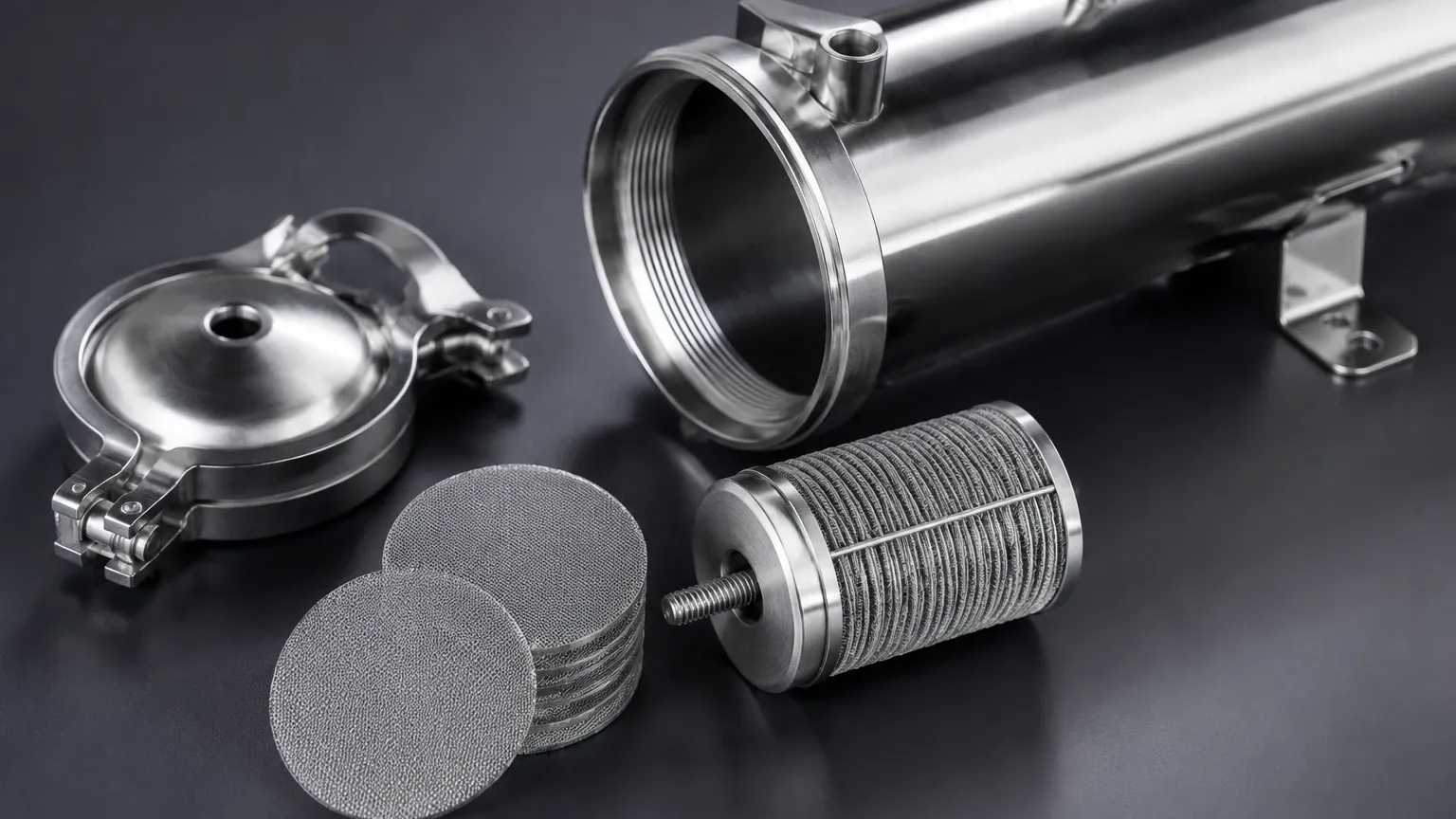
A filter disc holder is a precision-engineered component designed to house one or more layers of wire mesh or sintered metal discs. Its primary function is to provide a stable environment for the filtration media. Without a robust holder, even the highest quality filter discs can fail due to mechanical deformation or fluid bypass.
In most industrial applications, the holder must perform three primary tasks:
1. Compression and Sealing: It must apply uniform pressure to the edges of the filter disc to prevent "unfiltered bypass," where the fluid flows around the media rather than through it.
2. Structural Support: Under high flow rates or high-viscosity conditions, the pressure drop across the filter can be significant. The holder must support the disc to prevent it from collapsing or tearing.
3. Flow Distribution: A well-designed holder ensures that the incoming fluid is distributed evenly across the surface area of the disc, preventing localized clogging and extending the service life of the media.
Technical Specifications and Material Selection
Material selection is the most critical factor when specifying a filter disc holder, as it must withstand both the chemical nature of the filtrate and the physical demands of the operating environment. As a specialist in stainless steel filtration, Kaifil emphasizes the use of high-grade alloys to ensure durability.
Stainless Steel Grades
* AISI 304: Suitable for general industrial applications where basic corrosion resistance is required. It is commonly used in water treatment and hydraulic systems.
* AISI 316L: The preferred choice for pharmaceutical, food and beverage, and aggressive chemical applications. The low carbon content and the addition of molybdenum provide superior resistance to pitting and crevice corrosion, especially in chloride-rich environments.
* Specialty Alloys: For extreme conditions involving high temperatures or highly acidic fluids, holders may be fabricated from Monel, Inconel, or Hastelloy.
Surface Finish
In sanitary applications, the internal surface finish of the filter disc holder is paramount. A high degree of polishing (often measured in Ra, or Roughness Average) is required to prevent bacterial growth and ensure that the component can be effectively cleaned using CIP (Clean-in-Place) or SIP (Steam-in-Place) protocols.
Sealing Mechanisms and Leak Prevention
The point of contact between the filter disc holder and the filter media is the most common failure point in filtration systems. Engineers must choose a sealing method that aligns with the operating temperature and chemical compatibility of the process.
Mechanical Clamping
Many industrial holders use a threaded or bolted clamping mechanism. This provides a high degree of force to compress the edges of the Filter Discs & Packs, creating a metal-to-metal seal or compressing a gasket. The torque applied during installation must be precise; insufficient torque leads to bypass, while excessive torque can deform the mesh or damage the holder threads.
Elastomeric Gaskets and O-Rings
To achieve a hermetic seal, many holders incorporate O-rings or gaskets. Common materials include:
* Viton (FKM): Excellent for high temperatures and chemical resistance.
* EPDM: Preferred for water and steam applications.
* PTFE (Teflon): Used for nearly universal chemical compatibility, though it lacks the elasticity of other elastomers and requires specific holder designs to ensure a seal.
Engineering Considerations for High-Pressure Applications
In hydraulic systems and polymer filtration, filter disc holders are often subjected to extreme pressures. The engineering team must account for several variables to prevent catastrophic failure.
Pressure Drop (ΔP) Management
The holder must be designed to minimize the "clean pressure drop." If the internal geometry of the holder is too restrictive, it adds unnecessary resistance to the system, increasing energy costs and reducing the effective life of the filter. Computational Fluid Dynamics (CFD) is often used in the design phase to optimize the flow path within the holder.
Fatigue and Stress Distribution
Repeated pressure cycling can lead to metal fatigue. A high-quality filter disc holder features reinforced wall thicknesses and radiused corners to distribute stress evenly. For high-pressure packs, the holder may include a perforated support plate or a coarse "backup" mesh to provide additional rigidity to the finer filtration layers.
Customization and OEM Integration
Standardized filter holders often fail to meet the specific spatial or performance requirements of specialized machinery. Customization is a core capability at Kaifil, allowing for the development of holders that integrate seamlessly into existing production lines.
Dimensional Tailoring
Whether the application requires a miniature holder for precision laboratory equipment or a large-scale housing for industrial chemical processing, dimensions can be customized. This includes the inlet/outlet port sizes, mounting brackets, and the internal depth required to accommodate multi-layered filter packs.
Multi-Stage Filtration
In some processes, a single disc is insufficient. Holders can be designed to stack multiple discs with varying micron ratings. This "gradient filtration" approach allows the holder to capture larger particles in the upper layers and finer particles in the lower layers, significantly increasing the dirt-holding capacity of the assembly.
Maintenance, Replacement Cycles, and Total Cost of Ownership
From a purchasing perspective, the initial cost of a filter disc holder is only one component of the Total Cost of Ownership (TCO). Operational efficiency and ease of maintenance are often more significant factors over the long term.
Ease of Access
In high-volume production, downtime for filter changes is costly. Holders designed with quick-release clamps or swing-bolt closures allow operators to replace Filter Discs & Packs in minutes rather than hours. This is particularly important in industries like food and beverage, where frequent cleaning is mandatory.
Durability vs. Replaceability
While some holders are designed as disposable plastic components, industrial-grade stainless steel holders are built for decades of service. The ability to refurbish a holder—replacing only the seals and the filter media—provides a much higher return on investment than cheaper, less durable alternatives.
Determining Replacement Cycles
The replacement cycle for the discs within the holder is typically determined by the pressure differential. When the ΔP reaches a pre-determined threshold, the discs must be cleaned or replaced. A high-quality holder will have integrated ports for pressure gauges or sensors to allow for real-time monitoring of filter health.
Common Risks and How to Mitigate Them
Engineers should be aware of several common risks associated with filter disc holders:
* Bypass due to improper seating: Ensure the holder is designed with a guide or centering mechanism to keep the disc aligned during assembly.
* Corrosion at weld points: In fabricated holders, welds must be passivated to restore the protective oxide layer of the stainless steel.
* Material Incompatibility: Always verify that the gasket material is compatible with the cleaning agents used in the system, not just the process fluid.
By focusing on precision manufacturing and material integrity, Kaifil provides filtration solutions that meet the rigorous demands of modern industry. Whether you are designing a new system or optimizing an existing process, selecting the right filter disc holder is a fundamental step in ensuring reliable, high-performance filtration.
