


Filter Discs Grade 389
In the landscape of industrial filtration, precision and material integrity are the primary drivers of process efficiency. Among the various specifications encountered by engineers and procurement specialists, the term "Grade 389" often arises in the context of quantitative analysis and high-purity filtration. While traditionally associated with high-quality filter papers used in laboratory settings, the performance requirements of Grade 389—specifically its particle retention and flow characteristics—have established a benchmark for industrial-scale filtration components.
For demanding industrial environments, such as chemical processing, polymer extrusion, and pharmaceutical manufacturing, standard paper-based media often fall short due to limitations in pressure resistance, thermal stability, and chemical compatibility. This is where stainless steel Filter Discs & Packs provide a robust alternative, offering the same precision as filter discs grade 389 while delivering the mechanical strength required for heavy-duty applications.
Understanding the Technical Specifications of Grade 389
Grade 389 is technically classified as a medium-fast filtration grade. In the world of quantitative filter media, it is recognized for its ability to retain medium-fine precipitates. Typically, this grade offers a particle retention range of approximately 8 to 12 microns. This specific micron rating makes it a versatile choice for applications that require a balance between high flow rates and effective particle capture.
Key technical attributes of the Grade 389 standard include:
* Filtration Speed: It is designed for rapid filtration of coarse and medium-fine precipitates.
* Purity: As a quantitative grade, it is often acid-washed to ensure extremely low ash content, preventing contamination of the filtrate.
* Surface Texture: Usually features a smooth surface to facilitate the recovery of precipitates.
In an industrial B2B context, when an engineer specifies a requirement for filter discs grade 389, they are typically looking for a filtration efficiency that aligns with these parameters. However, if the process involves high temperatures, corrosive fluids, or high differential pressures, a direct transition to stainless steel wire mesh equivalents is necessary to ensure system uptime and product purity.
Material Comparison: Paper vs. Stainless Steel Filter Discs
While paper-based Grade 389 discs are excellent for single-use laboratory analysis, industrial processes demand materials that can withstand rigorous operating conditions. Stainless steel, particularly grades 304, 316, and 316L, has become the industry standard for replacing or augmenting traditional filter media.
Thermal and Chemical Resistance
Paper filters are generally limited to temperatures below 120°C and are susceptible to degradation when exposed to strong acids or alkalis. In contrast, stainless steel Filter Discs & Packs can operate at temperatures exceeding 400°C (and even higher with specialized alloys like Inconel). This thermal stability is critical in applications like hot melt filtration or high-temperature gas processing.
Mechanical Strength and Pressure Handling
Industrial filtration often involves high-pressure pumps and significant differential pressures across the filter media. Paper discs are prone to "bursting" or tearing under these conditions. Stainless steel wire mesh, especially when constructed in multi-layer sintered or pleated formats, provides the structural integrity needed to maintain filtration accuracy even under several hundred bars of pressure.
Reusability and Sustainability
One of the most significant advantages of metal filter discs over paper Grade 389 is cleanability. Stainless steel filters can be cleaned via ultrasonic baths, backwashing, or chemical cleaning, allowing for multiple reuse cycles. This reduces the total cost of ownership (TCO) and minimizes the environmental impact associated with disposable filter waste.
Engineering Considerations for Industrial Filter Discs & Packs
When designing or selecting Filter Discs & Packs to meet the performance of filter discs grade 389, several engineering factors must be evaluated to ensure the component performs reliably within the larger system.
Layering and Support
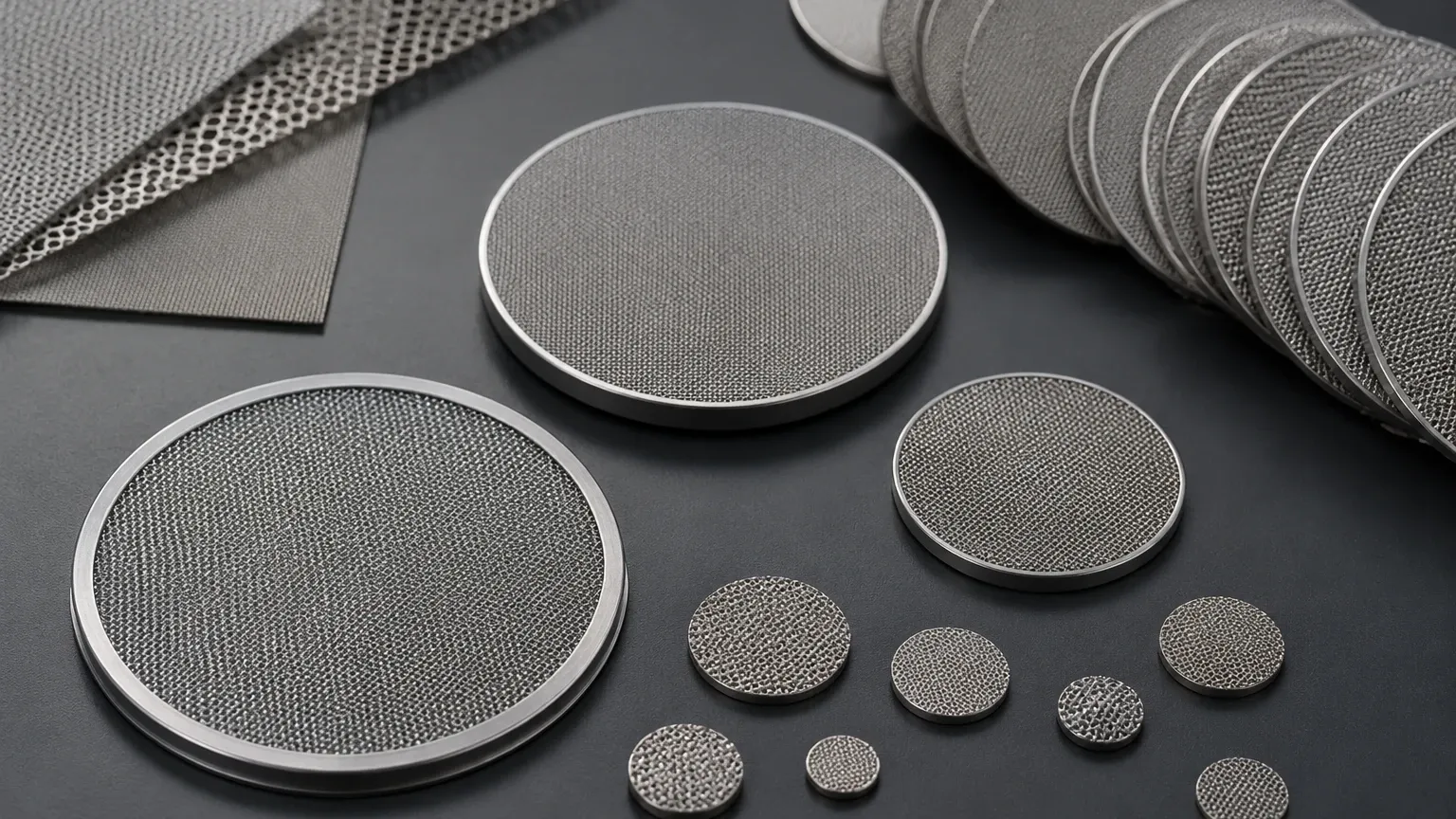
Industrial filter discs are rarely used as a single thin layer of mesh. To achieve the 8-12 micron precision of Grade 389 while maintaining strength, manufacturers like Kaifil utilize multi-layer constructions. A typical "pack" might include:
1. Filtration Layer: A fine stainless steel wire mesh (e.g., Dutch weave) that defines the micron rating.
2. Support Layer: A coarser mesh that provides mechanical backing to the fine filtration layer, preventing it from deforming under pressure.
3. Drainage/Protection Layer: Additional layers that facilitate the flow of the filtrate and protect the core media from mechanical damage during installation.
Edge Treatment and Sealing
To prevent bypass—where unfiltered fluid escapes around the edges of the disc—proper edge treatment is essential. Options include:
* Spot Welding: Joining multiple layers at specific points to maintain alignment.
* Aluminum or Stainless Steel Rims: Encasing the edges in a metal frame to provide a compression seal within the filter housing.
* Sintered Edges: Using heat and pressure to fuse the mesh layers into a solid peripheral ring.
Mesh Weave Types
The choice of weave impacts both the retention and the flow rate. For those seeking the characteristics of filter discs grade 389, a Plain Dutch Weave (PDW) or Twilled Dutch Weave (TDW) is often recommended. These weaves offer a dense structure that provides precise surface filtration and high mechanical strength.
Applications and Industry Use Cases
The transition from laboratory-grade 389 standards to industrial metal filtration is common across several high-stakes industries.
Chemical and Petrochemical Processing
In the production of specialty chemicals, catalysts must often be recovered from the process stream. Stainless steel filter discs provide the chemical resistance needed to handle aggressive solvents while maintaining the 10-micron retention level required to capture valuable catalyst particles.
Plastic and Polymer Extrusion
In the extrusion of synthetic fibers and plastics, "screen packs" are used to remove impurities from the molten polymer. These packs must withstand extreme heat and pressure. Engineers often specify mesh counts that correlate to the retention levels of filter discs grade 389 to ensure the final product is free of microscopic defects.
Pharmaceutical and Biotechnology
For the filtration of active pharmaceutical ingredients (APIs), purity is paramount. Stainless steel 316L filter discs are preferred because they do not shed fibers (a common risk with paper or felt media) and can be sterilized using steam-in-place (SIP) or autoclave methods.
Food and Beverage
In the filtration of edible oils, syrups, and beverages, metal filter packs are used for polishing stages. The ability to meet FDA compliance for food contact surfaces makes stainless steel the ideal material for replacing disposable media in high-volume production lines.
Selecting the Right Filter Disc for Your Process
Choosing the correct filtration component involves more than just matching a micron rating. To successfully implement a solution that mirrors the performance of filter discs grade 389, engineers should confirm the following data points with their manufacturer:
1. Fluid Viscosity: Higher viscosity fluids require a larger surface area or a coarser support mesh to prevent excessive pressure drop.
2. Operating Temperature: Ensure the alloy and any sealing materials (like gaskets or rims) are rated for the maximum process temperature.
3. Flow Velocity: High velocity can cause erosion of the filter media over time. Selecting the right wire diameter and weave density is crucial for longevity.
4. Contaminant Loading: If the fluid contains a high concentration of solids, a depth-filtration pack (multiple layers of varying mesh sizes) may be more effective than a single-layer disc to prevent rapid blinding.
Maintenance and Longevity of Metal Filter Packs
The primary reason B2B buyers move toward stainless steel Filter Discs & Packs is the extended service life. However, achieving this longevity requires a structured maintenance approach.
Unlike paper-based filter discs grade 389, which are discarded once the pressure drop reaches a certain threshold, metal discs can be restored. Monitoring the differential pressure (ΔP) is the most effective way to determine when a cleaning cycle is needed. If the ΔP remains high after cleaning, it may indicate "permanent blinding," where particles are wedged deep within the mesh pores. In such cases, specialized cleaning like vacuum pyrolysis (for polymer removal) or ultrasonic cleaning with specific surfactants may be required.
By selecting high-quality materials and precise manufacturing techniques, industrial operations can achieve the meticulous filtration standards of Grade 389 while benefiting from the durability and cost-efficiency of stainless steel.
For engineers looking to optimize their filtration systems, Kaifil offers customized solutions tailored to specific micron requirements and environmental challenges. Whether you need single-layer discs or complex multi-layer packs, the focus remains on delivering reliable, high-performance filtration that protects your equipment and ensures the purity of your final product.
