


Filter Discs Grade 393
In high-precision industrial filtration, the selection of specific mesh grades is a critical engineering decision that directly impacts product purity, equipment longevity, and process efficiency. Filter discs grade 393 represent a specific category of fine-wire mesh components often utilized in demanding environments such as polymer melt filtration, synthetic fiber production, and specialized chemical processing. These discs are engineered to provide a precise balance between particle retention and flow permeability, ensuring that contaminants are removed without causing excessive pressure drops that could compromise the system.
For engineers and procurement professionals, understanding the technical nuances of filter discs grade 393 is essential for optimizing filtration systems. This guide explores the engineering specifications, material considerations, and performance evaluation criteria necessary for selecting and implementing these components in industrial applications.
Technical Specifications of Grade 393 Filter Discs
The designation "Grade 393" typically refers to a specific wire mesh configuration characterized by its mesh count, wire diameter, and resulting micron rating. In the context of stainless steel filtration, these parameters are strictly controlled to ensure consistency across production batches.
Mesh Count and Weave Type
Grade 393 components are usually constructed using a plain or twilled weave, depending on the required mechanical strength and filtration fineness. A higher mesh count indicates a denser weave, which provides finer filtration but may increase the resistance to flow. Engineers must evaluate the trade-off between the absolute micron rating (the size of the smallest particle the mesh will reliably trap) and the open area percentage, which dictates the throughput capacity of the disc.
Wire Diameter and Structural Integrity
The diameter of the wire used in grade 393 mesh is a fundamental factor in the disc's ability to withstand high differential pressures. In applications like plastic extrusion, where the medium is highly viscous and processed under significant pressure, the wire must possess high tensile strength to prevent "blinding" or physical deformation of the mesh pores. Stainless steel 304 and 316L are the industry standards for these wires due to their excellent mechanical properties and resistance to thermal expansion.
Engineering Considerations for High-Pressure Applications
When integrating Filter Discs & Packs into a hydraulic or extrusion system, the mechanical stress on the filter medium is a primary concern. Filter discs grade 393 are often subjected to fluctuating pressures and high temperatures, necessitating a robust design that goes beyond simple mesh selection.
Differential Pressure (ΔP) Management
Every filter medium introduces a pressure drop. For grade 393 discs, calculating the initial clean pressure drop is vital for sizing pumps and ensuring that the system operates within its design limits. As the disc captures contaminants, the ΔP will increase. Engineers must define the "terminal pressure drop"—the point at which the disc must be cleaned or replaced to prevent bypass or structural failure.
Support and Reinforcement
In many industrial settings, a single layer of grade 393 mesh lacks the structural rigidity to withstand the force of the process flow. To address this, the mesh is often incorporated into multi-layer packs. These packs may include a coarse support mesh (drainage layer) and a perforated metal plate to provide the necessary backing. This configuration ensures that the fine filtration layer remains flat and functional even under extreme loads.
Material Selection and Chemical Compatibility
The performance of filter discs grade 393 is heavily influenced by the alloy used in their construction. While stainless steel is the most common material, the specific grade must be matched to the chemical environment of the application.
* Stainless Steel 304: Suitable for general industrial applications where corrosion risk is moderate. It offers good strength and cost-effectiveness for water treatment and basic chemical processing.
* Stainless Steel 316L: The preferred choice for pharmaceutical, food and beverage, and aggressive chemical environments. The addition of molybdenum provides superior resistance to pitting and crevice corrosion, especially in chloride-rich environments.
* High-Nickel Alloys: For extreme temperatures or highly acidic/alkaline processes, alloys like Hastelloy or Inconel may be required. These materials maintain their integrity where standard stainless steels would succumb to rapid degradation.
Before finalizing a specification, engineers should conduct compatibility testing to ensure the filter medium will not leach contaminants into the process stream or suffer from premature embrittlement.
Performance Evaluation and Micron Rating Accuracy
One of the most common challenges in purchasing industrial filters is the discrepancy between nominal and absolute micron ratings. For filter discs grade 393, precision is paramount.
Absolute vs. Nominal Filtration
A nominal rating is an empirical value indicating the ability of the filter to retain a majority of particles of a specific size. However, for critical applications, an absolute rating is required. This is determined through rigorous testing, such as the bubble point test or multi-pass testing, to identify the largest glass bead or particle that can pass through the mesh. When specifying grade 393, professionals should request certified test reports to verify that the discs meet the required filtration efficiency (Beta ratio).
Pore Size Distribution
Consistency in pore size across the entire surface of the disc is essential. Inconsistent weaving can lead to "hot spots" where flow is concentrated, leading to uneven cake buildup and premature clogging. High-quality manufacturing processes, such as those employed by Kaifil, utilize advanced tensioning and weaving technologies to ensure uniform pore distribution across every disc produced.
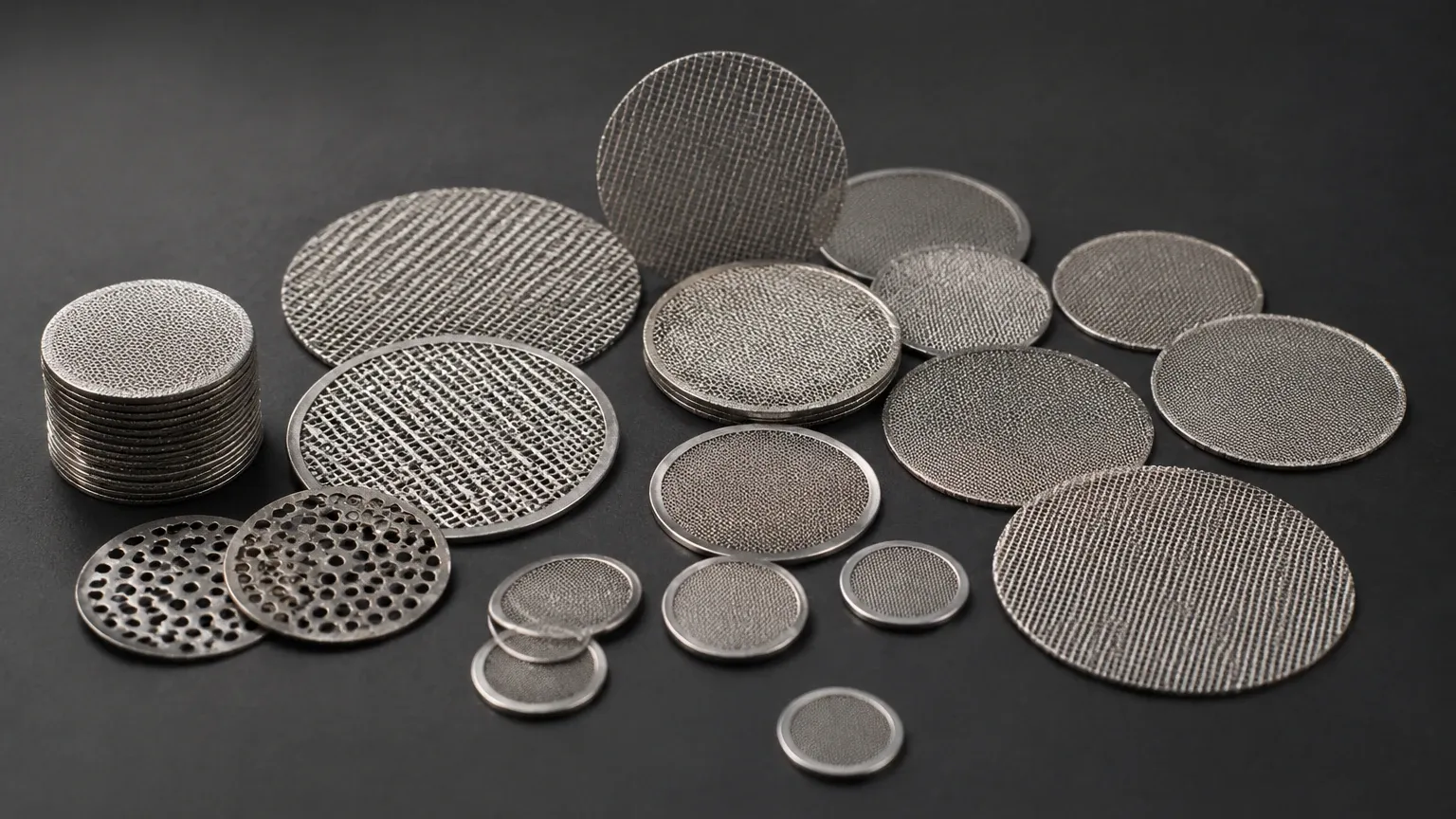
Customization and Multi-Layer Filter Pack Configurations
Rarely is a filter disc used in isolation. Most industrial processes require Filter Discs & Packs that are customized to fit specific housing geometries and performance requirements.
Rim and Border Options
To prevent fraying and ensure a leak-proof seal within the filter housing, grade 393 discs are often finished with a metal rim. These rims can be made from aluminum, stainless steel, or copper, and are crimped or spot-welded around the circumference of the mesh. The choice of rim material must consider the thermal expansion coefficients of the housing to maintain a tight seal during temperature cycling.
Layer Sequencing
A typical filter pack might consist of a sequence such as:
1. Coarse Mesh (Inlet): Protects the fine layer from large debris.
2. Grade 393 Mesh (Filtration): The primary layer for target particle retention.
3. Support Mesh (Outlet): Provides structural backing to prevent the fine mesh from collapsing.
By customizing the number and sequence of layers, engineers can optimize the dirt-holding capacity and extend the service life of the filter assembly.
Maintenance, Cleaning, and Total Cost of Ownership
In B2B procurement, the initial purchase price of a filter disc is only one component of the total cost of ownership (TCO). For grade 393 discs, the ability to clean and reuse the component can significantly reduce long-term operational expenses.
Cleaning Methodologies
Stainless steel mesh is inherently cleanable. Depending on the contaminant, methods such as ultrasonic cleaning, chemical baths, or high-temperature burnout (for polymers) can be used to restore the disc's permeability. However, repeated cleaning cycles can eventually fatigue the wire. It is important to establish a monitoring protocol to track the "recovered" pressure drop after each cleaning. When the recovered ΔP remains significantly higher than the original clean ΔP, the disc has reached the end of its functional life.
Replacement Cycles and Downtime
Engineers must balance the cost of more frequent filter changes against the risk of product contamination. Using high-quality grade 393 discs with superior dirt-holding capacity can extend the intervals between maintenance shutdowns, directly improving the bottom line of the manufacturing facility.
Selecting a Manufacturing Partner for Precision Filtration
Choosing a supplier for filter discs grade 393 requires an evaluation of their manufacturing capabilities and quality control standards. A reliable partner should offer:
* Material Traceability: Documentation verifying the alloy composition of the wire mesh.
* Customization Expertise: The ability to produce discs in non-standard diameters, shapes, and multi-layer configurations.
* Technical Support: Engineering guidance on selecting the correct mesh grade for specific flow rates and viscosity profiles.
* Quality Assurance: Rigorous inspection processes to ensure the integrity of welds, rims, and mesh uniformity.
As a professional manufacturer, Kaifil specializes in providing these customized solutions, ensuring that every filter component meets the exacting standards required by modern industrial applications. By focusing on durability and precise filtration performance, Kaifil helps technical teams achieve optimized results in their most demanding environments.
Conclusion
Filter discs grade 393 are essential components for industries requiring high-precision filtration under challenging conditions. By carefully considering mesh specifications, material compatibility, and structural design, engineers can ensure their systems operate at peak efficiency. Whether used as single discs or as part of complex multi-layer packs, the quality of these components is a determining factor in the success of the overall filtration process. For those seeking reliable, high-performance filtration solutions, reviewing the available Filter Discs & Packs and consulting with technical experts is the first step toward optimizing industrial output.
