


Filter Element vs Filter Cartridge
In the field of industrial filtration, technical nomenclature often creates confusion for procurement teams and design engineers alike. Two terms frequently used interchangeably are "filter element" and "filter cartridge." While they both serve the fundamental purpose of removing contaminants from a fluid or gas stream, they represent different engineering approaches to system design, maintenance, and structural integrity.
Understanding the distinction between a filter element vs filter cartridge is critical when specifying components for high-pressure hydraulic systems, chemical processing lines, or food and beverage production. Choosing the wrong format can lead to premature failure, bypass leakage, or unnecessary operational costs. This guide examines the technical definitions, structural differences, and application-specific considerations for these essential filtration components.
Defining the Filter Element
A filter element is the functional core of a filtration system. It is the specific component that performs the actual separation of solids from liquids or gases. In industrial settings, the element is often a standalone piece of media—such as a sintered metal sheet, a woven wire mesh screen, or a multi-layered composite—that is integrated into a larger mechanical assembly.
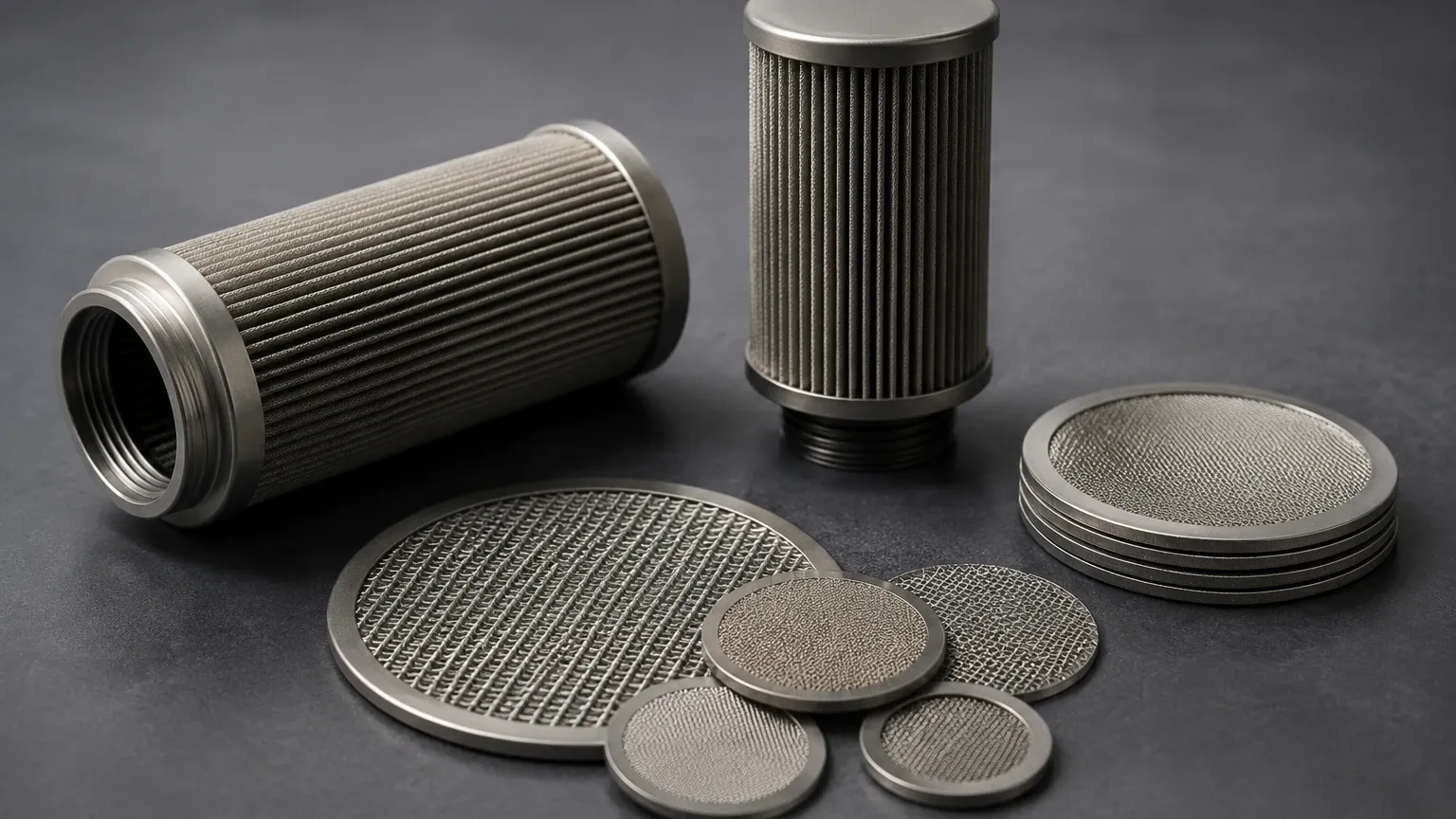
From an engineering perspective, the filter element is defined by its media characteristics: pore size, permeability, and dirt-holding capacity. Because elements are often designed to be part of a permanent or semi-permanent assembly, they may lack the self-contained structural housing found in cartridges. For example, in polymer extrusion or specialized chemical reactors, Filter Discs & Packs are utilized as the primary filtration elements. These discs are often stacked or placed directly into a breaker plate, where the surrounding machinery provides the necessary structural support and sealing surfaces.
Filter elements made from stainless steel (such as 304 or 316L) are favored for their ability to withstand extreme temperatures and corrosive environments. They are frequently designed to be cleanable and reusable, utilizing ultrasonic cleaning or backwashing to restore flow rates, which distinguishes them from many disposable synthetic elements.
Defining the Filter Cartridge
A filter cartridge is a modular, self-contained filtration unit designed for easy installation and replacement within a dedicated filter housing. A cartridge typically consists of several integrated parts: the filter media (the element), an inner support core, an outer cage or wrap, and end caps equipped with seals (such as O-rings or gaskets).
The primary advantage of the cartridge format is its "plug-and-play" nature. Standardized dimensions (e.g., 10-inch, 20-inch, or 30-inch lengths) and end-cap configurations (e.g., Code 7, DOE, or SOE) allow cartridges to be swapped out quickly during maintenance intervals without requiring specialized tools or complex disassembly of the filtration vessel.
In the context of stainless steel filtration, a cartridge is essentially a reinforced, housed filter element. While a simple mesh element might collapse under high differential pressure, a stainless steel filter cartridge utilizes a perforated inner core to provide the necessary hoop strength to resist pressure spikes. This makes cartridges ideal for high-flow applications where the filtration unit must maintain its shape and sealing integrity under varying load conditions.
Technical Comparison: Filter Element vs Filter Cartridge
When evaluating a filter element vs filter cartridge, engineers must look beyond the basic definition and analyze the mechanical and operational differences that impact system performance.
1. Structural Integrity and Pressure Resistance
Filter elements, particularly thin-film or single-layer mesh types, often rely on the housing or a support plate for their mechanical strength. In contrast, a filter cartridge is engineered to be self-supporting. The inclusion of a center core and end caps allows the cartridge to handle higher differential pressures ($ΔP$) before deformation occurs. If an application involves high-viscosity fluids or frequent pressure surges, a cartridge or a heavily reinforced element is required.
2. Sealing Mechanisms
One of the most significant differences lies in how the unit prevents "bypass"—the process where unfiltered fluid escapes around the media. Filter cartridges use standardized seals, such as Viton or EPDM O-rings, to create a positive mechanical seal against the housing. Filter elements, especially those used in disc or pack formats, often rely on metal-to-metal compression or specialized rimming (such as aluminum or stainless steel borders) to ensure a tight fit within the machinery.
3. Maintenance and Replacement Cycles
Cartridges are designed for rapid replacement. When the terminal pressure drop is reached, the housing is opened, the spent cartridge is removed, and a new one is inserted. Filter elements, depending on their design, may require more intensive labor to replace or clean. However, stainless steel elements often offer a lower total cost of ownership in the long term because they can be cleaned and returned to service multiple times, whereas many cartridge types are treated as consumables.
4. Filtration Surface Area
Cartridges often utilize pleated media to maximize the surface area within a compact cylindrical volume. This reduces the flux (flow per unit area), which can extend the service life and improve filtration efficiency. Standalone filter elements, such as flat discs, have a fixed surface area determined by their diameter. To achieve similar surface areas with discs, engineers must use multi-layered Filter Discs & Packs or stack multiple elements in parallel.
Engineering Considerations for Selection
Choosing between a filter element and a filter cartridge requires a detailed analysis of the process conditions. Engineers should confirm the following parameters before finalizing a specification:
* Fluid Compatibility: Stainless steel is the gold standard for compatibility with aggressive solvents, high temperatures, and food-grade requirements. Ensure the grade (304, 316, or 316L) matches the chemical profile of the process fluid.
* Micron Rating (Absolute vs. Nominal): Determine whether the process requires an absolute rating (where 99.9% of particles above a certain size are removed) or a nominal rating. This choice will dictate the density of the wire mesh or the thickness of the sintered metal used in the element or cartridge.
* Operating Temperature and Pressure: Standard synthetic cartridges often fail at temperatures exceeding 100°C or under high-pressure differentials. Stainless steel components can operate at temperatures up to 500°C and withstand significantly higher pressures, provided the structural support (core and cage) is appropriately engineered.
* Viscosity of the Medium: High-viscosity fluids, such as polymers or heavy oils, create higher pressure drops. Pleated cartridges are often preferred here to increase surface area, though specialized reinforced filter packs are used in extrusion to handle the extreme pressures involved.
The Role of Customization in Industrial Filtration
In many B2B industrial applications, off-the-shelf solutions are insufficient. Customization is often necessary to bridge the gap between a standard filter element and a specialized filter cartridge. For instance, an OEM might require a filter element with specific dimensions to fit into a proprietary machine, or a cartridge with a unique end-cap configuration to retro-fit an aging filtration system.
Manufacturers like Kaifil specialize in this crossover, providing custom-engineered stainless steel solutions. Whether the requirement is for precision-cut Filter Discs & Packs for the plastics industry or high-performance pleated cartridges for pharmaceutical processing, the focus remains on material quality and manufacturing precision. Customization allows for the optimization of the mesh weave (such as plain, twill, or dutch weave) to balance flow rate with filtration accuracy.
Managing Total Cost of Ownership (TCO)
When comparing a filter element vs filter cartridge, the initial purchase price is only one factor. Technical professionals must consider the Total Cost of Ownership, which includes:
1. Labor Costs: How long does it take to change the filter? Cartridges usually win here due to their modular design.
2. Cleaning vs. Disposal: Can the element be cleaned? Stainless steel elements have a higher upfront cost but can last for years, whereas disposable cartridges create a recurring expense and waste stream.
3. Downtime: If a filter fails or clogs prematurely, the cost of lost production far outweighs the cost of the filter itself. Selecting a robust stainless steel cartridge with a high dirt-holding capacity can significantly extend the time between maintenance shutdowns.
4. Energy Consumption: A filter that creates a high pressure drop requires more pump energy. Optimizing the element design to maximize permeability while maintaining filtration efficiency is key to reducing operational energy costs.
Conclusion
The choice between a filter element vs filter cartridge ultimately depends on the specific architecture of the filtration system and the operational goals of the facility. A filter element is the fundamental media component, often used in specialized or integrated machinery where space and material durability are paramount. A filter cartridge is the modular evolution of the element, designed for ease of use, standardized sealing, and structural resilience in pressurized housings.
For industries dealing with high temperatures, corrosive chemicals, or high-pressure environments, stainless steel remains the material of choice for both formats. By understanding the structural and functional nuances of these components, engineers can select the most efficient, durable, and cost-effective filtration solution for their specific application. Whether you are integrating Filter Discs & Packs into a production line or specifying heavy-duty cartridges for a hydraulic system, the priority should always be on precise engineering and high-quality material selection.
