


Filter Pack Sand
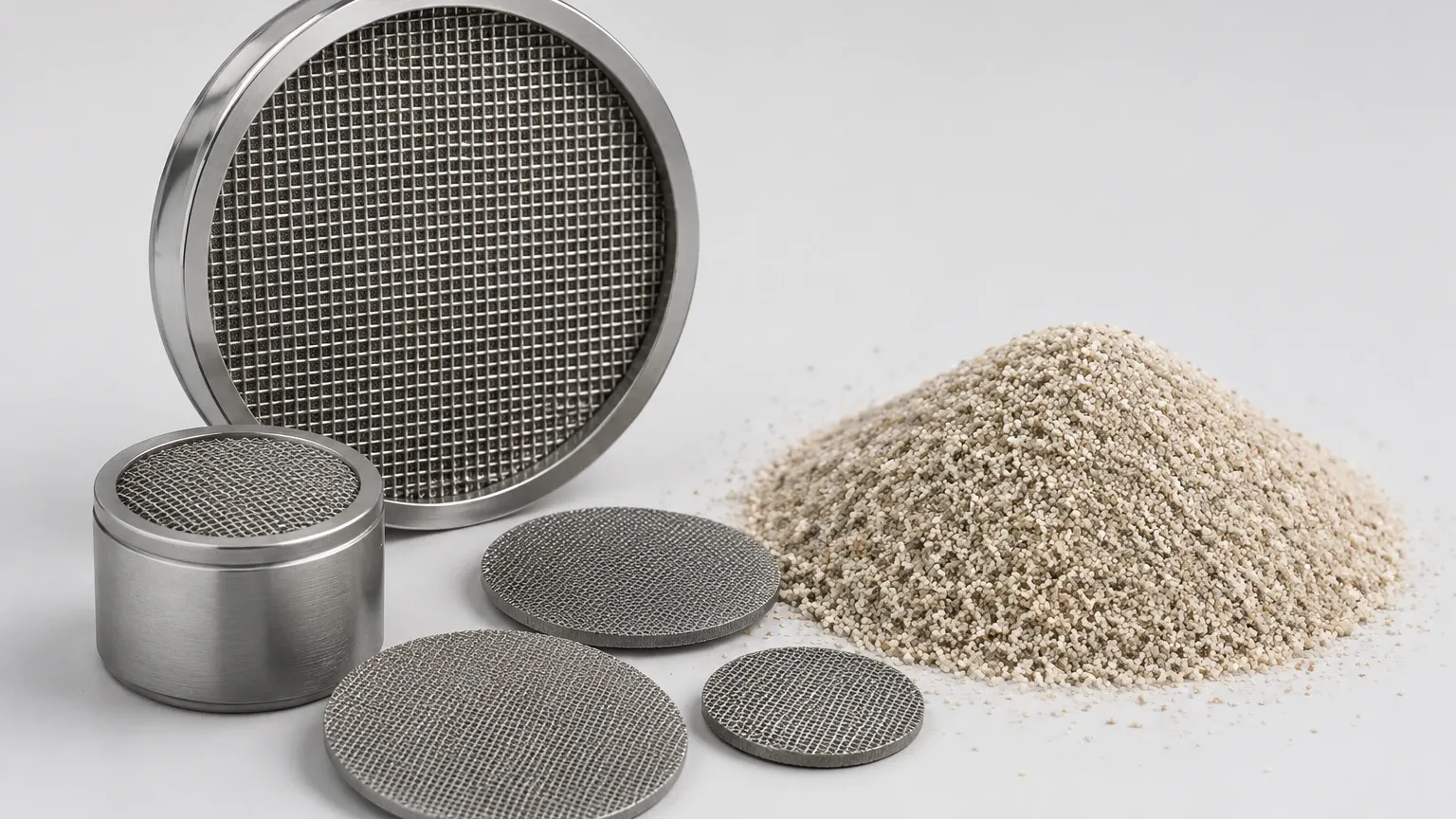
In industrial filtration and subsurface fluid extraction, the efficiency of a system is rarely dependent on a single component. Instead, it is the result of a carefully engineered synergy between mechanical barriers and granular media. Filter pack sand, a high-purity, graded silica material, serves as a critical primary or secondary filtration layer in applications ranging from water well completion to industrial chemical processing. When integrated with high-precision mechanical components like Filter Discs & Packs, filter pack sand ensures that fine particulates are sequestered before they can reach the internal machinery or the final product stream.
For engineers and procurement specialists, understanding the technical specifications of filter pack sand—and how it interacts with stainless steel wire mesh assemblies—is essential for optimizing flow rates, preventing sediment "pumping," and extending the service life of the entire filtration system.
The Role of Filter Pack Sand in Industrial Filtration
Filter pack sand is not merely "fill material." In an industrial context, it is a precisely engineered medium designed to create a permeable envelope around a screen or intake. Its primary function is to increase the effective hydraulic conductivity of the zone surrounding the filter while simultaneously acting as a depth-filtration barrier.
In water treatment and well applications, the sand pack is placed in the annular space between the borehole and the well screen. In industrial process vessels, it may be used as a pre-filter layer supported by stainless steel filter discs. The mechanism of filtration here is two-fold:
1. Mechanical Bridging: The sand grains are sized to prevent the migration of formation fines (silt, clay, or process debris) into the system. The fines bridge across the pore spaces between the sand grains.
2. Hydraulic Stabilization: By providing a high-permeability zone, the filter pack reduces the velocity of the fluid entering the screen. Lower velocities minimize the potential for erosion of the mechanical screen and reduce the likelihood of drawing in smaller particles that would otherwise remain stationary.
Engineering Specifications: Grain Size and Uniformity
The performance of filter pack sand is dictated by its physical properties, specifically grain size distribution and the uniformity coefficient. Engineers must specify these parameters based on a sieve analysis of the material being filtered.
Grain Size Distribution (D-Values)
In filtration engineering, "D-values" represent the percentage of the material that passes through a specific sieve size. For example, the D10 value is the grain size at which 10% of the sand is finer and 90% is coarser. The D10 is often referred to as the "effective size."
Uniformity Coefficient (UC)
The Uniformity Coefficient is a dimensionless ratio calculated as D60 divided by D10 (UC = D60/D10). A low UC indicates that the sand grains are nearly the same size, which maximizes porosity and permeability. For high-performance industrial applications, a UC of less than 2.5 is typically required. If the UC is too high, smaller grains fill the voids between larger grains, significantly reducing the flow capacity and increasing the pressure drop across the filter pack.
Sphericity and Roundness
Unlike common construction sand, filter pack sand must be well-rounded and spherical. Angular grains are prone to compaction and "nesting," which reduces the available pore space. Spherical grains ensure a predictable and consistent void ratio, which is critical for calculating hydraulic conductivity and ensuring that the Filter Discs & Packs supporting the media are not subjected to uneven pressure distributions.
Integration with Mechanical Filter Discs & Packs
While the filter pack sand handles the bulk of the particulate load, the mechanical integrity of the system relies on the hardware that contains or supports the media. Stainless steel filter discs and multi-layered screen packs are frequently used in tandem with granular media to provide a final stage of precision filtration.
Support and Retention
In vertical pressure filters or deep-bed filtration vessels, the sand media must be supported by a rigid structure that allows fluid passage while preventing the sand itself from escaping. Stainless steel mesh packs are ideal for this role because they offer high mechanical strength and can be manufactured with aperture sizes slightly smaller than the D10 of the filter pack sand. This ensures that the sand remains in place even under high-pressure backwashing cycles.
Polymer and Chemical Processing
In the plastics and polymer industry, the term "filter pack" often refers to a combination of stainless steel wire mesh and a layer of fine sand or metallic grit. This hybrid approach is used to filter impurities from molten polymers. The sand layer provides depth filtration to capture gel particles, while the Filter Discs & Packs provide the precise micron-rated cutoff and structural support necessary to withstand the high extrusion pressures.
Material Selection and Chemical Compatibility
Not all sand is suitable for industrial filtration. The chemical environment of the application dictates the required mineralogy of the filter pack.
* Silica Content: For most industrial applications, a silica (SiO2) content of 98% or higher is required. High purity ensures that the media is chemically inert and will not leach minerals into the process stream.
* Acid Solubility: In applications where the filter may be cleaned with acidic solutions (such as well rehabilitation or chemical vessel maintenance), the sand must have low acid solubility. High levels of calcium carbonate or other acid-soluble minerals will cause the filter pack to dissolve or collapse during cleaning, leading to catastrophic system failure.
* Hardness: On the Mohs scale, industrial silica sand typically rates around 7. This hardness is necessary to prevent the grains from crushing under the weight of the overburden or the force of high-pressure fluid flow.
Selection Criteria for Demanding Applications
When selecting filter pack sand and the accompanying mechanical filtration components, engineers should follow a structured evaluation process:
1. Analyze the Particulate Load: Perform a particle size distribution (PSD) analysis of the influent. The filter pack sand should be sized so that its pore throats are small enough to trigger bridging of the target particles.
2. Determine the Required Flow Rate: Calculate the total surface area required to maintain a low approach velocity. This will influence both the volume of sand needed and the diameter of the supporting filter discs.
3. Evaluate Thermal and Chemical Stress: If the process involves high temperatures or aggressive solvents, stainless steel 316L or specialty alloys should be used for the Filter Discs & Packs to ensure they do not corrode or lose structural integrity.
4. Consider the Cleaning Cycle: Will the system be backwashed? If so, the filter pack must be designed to expand (fluidize) during backwash to release captured debris without losing the media itself.
Common Risks and Failure Modes
Failure to properly specify or install filter pack sand can lead to several common industrial problems:
Sand Pumping
If the mechanical screen or the supporting mesh pack has apertures larger than the sand grains, the sand will be drawn into the system. This "sand pumping" is highly abrasive and can quickly destroy pumps, valves, and downstream instrumentation.
Migration of Fines
If the filter pack sand is too coarse or has a high uniformity coefficient, fine sediments from the formation or process will pass through the pack. This leads to turbidity in the output and can clog the precision Filter Discs & Packs located downstream, resulting in frequent and costly maintenance shutdowns.
Biofouling and Mineral Scaling
In water-based applications, the large surface area of the sand grains can provide a substrate for biofilm growth or mineral precipitation (such as iron or manganese scaling). Engineers must ensure that the system design allows for effective chemical treatment or physical agitation to clear these obstructions without damaging the stainless steel components.
Technical Considerations for Purchasing Teams
When sourcing filtration components, it is vital to confirm that the supplier can provide documented verification of material properties. For filter pack sand, this includes sieve analysis reports and mineral purity certifications. For the mechanical hardware, such as stainless steel mesh and filter packs, purchasing teams should verify:
* Micron Rating Accuracy: Ensure the mesh opening is compatible with the specified sand size.
* Alloy Grade: Confirm the use of 304, 316, or 316L stainless steel based on the chemical environment.
* Manufacturing Standards: Look for precision-cut edges and robust welding or binding in multi-layer packs to prevent bypass or structural failure under pressure.
Conclusion
Filter pack sand remains a cornerstone of industrial filtration due to its cost-effectiveness and reliable depth-filtration capabilities. However, its success is entirely dependent on precise engineering—matching the sand’s grain size to the process requirements and supporting it with high-quality mechanical barriers. By integrating professional-grade Filter Discs & Packs into the system design, industrial operators can achieve a filtration solution that balances high permeability with rigorous particulate control, ensuring long-term operational efficiency and product purity.
