


Filter Pack Tea
In the industrial food and beverage sector, the production and preparation of tea products—ranging from commercial brewing systems to the manufacturing of individual filter pack tea—require high-precision filtration components. For engineers and procurement specialists, selecting the right filtration media is not merely a matter of particulate removal; it is about ensuring flavor consistency, maintaining high flow rates, and adhering to stringent food safety regulations.
Industrial Filter Discs & Packs serve as the backbone of these processes. Whether used in large-scale extraction tanks or integrated into high-speed packaging machinery, these stainless steel components provide the structural integrity and filtration accuracy necessary for demanding production environments. This guide explores the technical considerations, material requirements, and engineering specifications essential for optimizing tea filtration and packaging operations.
The Role of Precision Filtration in Tea Processing
The production of filter pack tea involves several stages where filtration is critical. At the primary processing level, tea leaves are graded and cleaned. However, the secondary processing—where tea is prepared for commercial use—is where precision metal filters become indispensable.
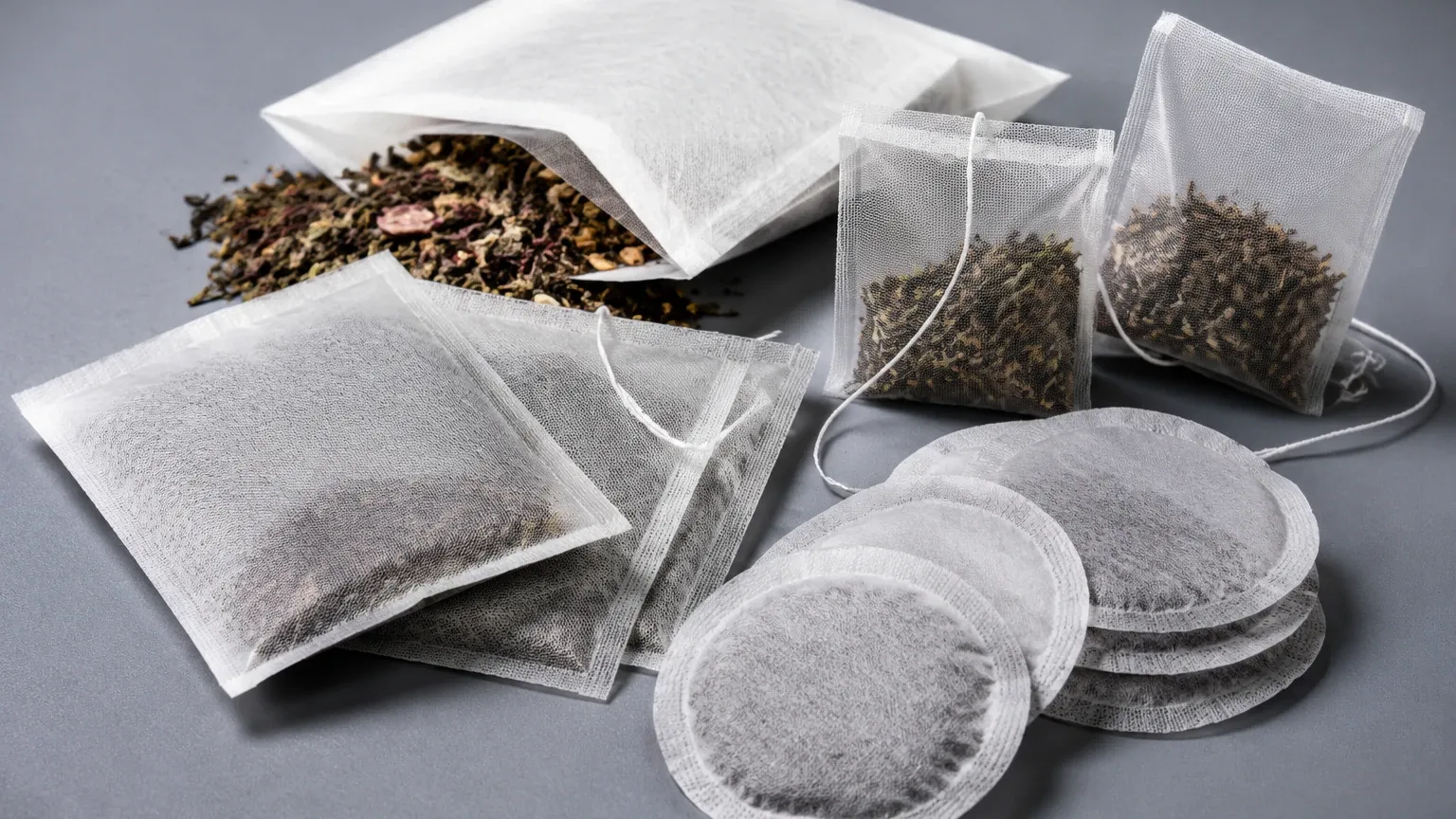
In commercial brewing equipment, such as those found in the hospitality and food service industries, tea is often brewed in large batches. The "filter pack" refers to the pre-measured tea enclosed in a porous material. Behind the scenes, the machinery that doses, fills, and seals these packs relies on stainless steel filter discs to manage dust (fannings) and ensure that only the desired liquid extract passes through to the next stage.
For industrial extraction, where liquid tea concentrates are produced, the filtration requirements are even more rigorous. Fine particulates must be removed to prevent cloudiness in the final product, a phenomenon often referred to as "tea cream." High-performance filter packs made of multi-layer wire mesh are used to achieve the necessary clarity without sacrificing the throughput required for continuous production lines.
Technical Specifications for Filter Discs & Packs
When specifying Filter Discs & Packs for tea-related applications, engineers must evaluate several technical parameters to ensure the component can withstand the thermal and mechanical stresses of the process.
Mesh Weave and Micron Ratings
The choice of weave type—plain, twill, or Dutch weave—directly impacts the filtration accuracy and flow resistance. For tea fannings and dust, a fine Dutch weave is often preferred due to its superior strength and precise pore size. Micron ratings typically range from 20 to 200 microns, depending on whether the goal is coarse separation or fine polishing of a liquid extract.
Multi-Layer vs. Single-Layer Construction
Single-layer filter discs are cost-effective for simple straining tasks. However, in high-pressure brewing or extraction systems, multi-layer packs are the industry standard. These packs often consist of a fine filtration layer sandwiched between coarser support layers. This construction prevents the fine mesh from deforming under pressure and extends the service life of the component.
Sintering and Welding Techniques
For applications involving filter pack tea production, the integrity of the filter edge is paramount. Sintered filter discs, where multiple layers of mesh are fused together using heat and pressure, offer the highest level of durability. Alternatively, spot-welded or rimmed packs (using a stainless steel or aluminum border) ensure that no loose wires can contaminate the product stream, a critical requirement for food-grade compliance.
Material Integrity and Food Safety Standards
The chemical composition of tea is complex, containing polyphenols, tannins, and essential oils that can be mildly acidic. Furthermore, tea processing often involves high temperatures, particularly during extraction and sterilization. Consequently, material selection is a primary engineering consideration.
Stainless Steel 304 vs. 316L
While Stainless Steel 304 is suitable for many food-grade applications, Stainless Steel 316L is often recommended for tea processing due to its enhanced corrosion resistance. The addition of molybdenum in 316L provides better protection against the organic acids found in tea, especially at elevated temperatures. This prevents metallic leaching and ensures the sensory profile of the tea remains untainted.
Cleanability and Hygiene
Stainless steel filters are preferred over synthetic alternatives because they are compatible with Clean-in-Place (CIP) protocols. They can withstand caustic cleaning agents and high-pressure steam sterilization without degrading. This is essential for preventing microbial growth and ensuring that the equipment meets FDA and international food safety standards.
Customization for OEM Tea Packaging Machinery
No two tea production lines are identical. The machinery used to manufacture filter pack tea often requires bespoke filtration components designed to fit specific housing geometries or to handle unique flow patterns. Customization options for Filter Discs & Packs include:
* Geometric Variety: While circular discs are standard, custom shapes such as ovals, rectangles, or ring-shaped packs can be engineered to fit specialized dosing heads or extraction chambers.
* Rimming and Edging: To facilitate easy installation and replacement, filter packs can be finished with various edging materials. Metal-bound edges provide a rigid seal, preventing bypass—a common issue where unfiltered liquid or dust escapes around the sides of the filter.
* Layer Configuration: Engineers can specify the exact sequence of mesh layers to balance filtration efficiency with pressure drop. For instance, a five-layer sintered structure might be used for heavy-duty extraction, whereas a three-layer spot-welded pack might suffice for a commercial brewer.
Overcoming Common Challenges in Tea Filtration
In the context of filter pack tea production, several operational challenges can arise if the filtration system is poorly specified.
Managing Pressure Drop
A high pressure drop across a filter disc can lead to reduced flow rates and increased energy consumption. This is often caused by selecting a micron rating that is too fine for the application or by insufficient surface area. By using pleated filter packs or optimizing the mesh weave, engineers can maximize the effective filtration area, thereby reducing the pressure drop while maintaining high retention efficiency.
Preventing Blinding and Clogging
Tea solids, particularly fine dust, can become trapped within the mesh pores, a phenomenon known as blinding. Stainless steel wire mesh is inherently more resistant to blinding than fabric filters because the smooth surface of the wires allows for easier release of particles during backwashing or cleaning cycles. For particularly sticky or fine residues, ultrasonic cleaning can be employed to restore the filter to its original performance levels.
Ensuring Mechanical Durability
In high-speed packaging lines, filter components are subjected to repetitive mechanical stress. If a filter pack fails, it can lead to significant downtime and potential product recalls. Specifying reinforced packs with robust support meshes ensures that the component can withstand thousands of cycles without fatigue or structural failure.
Total Cost of Ownership and Selection Advice
When evaluating Filter Discs & Packs for the production of filter pack tea, it is important to look beyond the initial purchase price. The total cost of ownership (TCO) is influenced by the filter’s lifespan, the frequency of replacement, and the ease of cleaning.
1. Evaluate the Lifecycle: A high-quality sintered stainless steel disc may have a higher upfront cost than a single-layer mesh, but its ability to be cleaned and reused hundreds of times makes it more cost-effective over the long term.
2. Verify Compatibility: Ensure that the filter media is compatible with both the product (tea) and the cleaning chemicals used in the facility.
3. Confirm Tolerances: For OEM applications, confirm that the manufacturer can meet tight dimensional tolerances. Even a millimeter of deviation can lead to bypass or installation difficulties in precision machinery.
4. Request Technical Documentation: Reliable suppliers should provide material certifications (e.g., MTRs) and technical data sheets specifying mesh counts, wire diameters, and micron ratings.
Conclusion
Achieving the perfect cup of filter pack tea on an industrial scale requires a sophisticated approach to filtration. By focusing on the engineering details of stainless steel Filter Discs & Packs, manufacturers can ensure product clarity, protect their machinery, and maintain the highest standards of food safety. Whether you are designing a new extraction system or optimizing an existing packaging line, selecting the appropriate mesh configuration and material grade is the key to operational efficiency and product excellence.
