


Filter Packs for Coffee
In the industrial food and beverage sector, the efficiency of extraction processes and the clarity of the final product depend heavily on the precision of the filtration components used. For large-scale coffee processing, commercial brewing equipment, and industrial extraction systems, the choice of filtration media is a critical engineering decision. While consumer-grade products often rely on disposable paper, industrial applications demand the durability and consistency of metal Filter Discs & Packs. These components are engineered to withstand high pressures, maintain precise micron ratings, and ensure food-grade compliance over thousands of cycles.
As a professional manufacturer of custom stainless steel filtration solutions, Kaifil provides high-performance components designed for demanding industrial environments. Understanding the technical nuances of filter packs for coffee is essential for engineers and procurement teams looking to optimize extraction yields and minimize downtime in commercial coffee production.
Industrial Filtration in the Coffee Industry
Industrial coffee filtration is distinct from domestic brewing due to the scale of operation and the mechanical stresses involved. In commercial settings, filtration is required at various stages, including cold brew extraction, espresso machine group heads, and large-scale soluble (instant) coffee production. Each of these applications requires a specific approach to particle retention and fluid dynamics.
Metal filter packs are typically utilized in high-volume environments where disposable filters would be cost-prohibitive or mechanically insufficient. These packs often consist of multiple layers of stainless steel wire mesh, which are sintered or rimmed together to provide a robust, leak-proof filtration unit. The primary goal is to achieve a specific balance between Total Dissolved Solids (TDS) and sediment control, ensuring that the essential oils—which contribute to flavor and mouthfeel—pass through while fine particulates are retained.
Engineering Requirements for Coffee Filter Discs & Packs
When specifying Filter Discs & Packs for coffee applications, several engineering parameters must be evaluated to ensure the component performs reliably within the system's design limits.
Micron Rating and Mesh Selection
Coffee grounds vary significantly in particle size depending on the brewing method. Espresso requires a fine grind (typically 200–400 microns), while cold brew utilizes a much coarser grind. The filtration media must have a pore size that prevents "fines" from entering the final beverage without causing excessive backpressure.
Kaifil utilizes various wire mesh weaves to achieve these results:
- Plain Weave: Suitable for general filtration where high flow rates are required.
- Dutch Weave: Offers a denser structure and higher strength, ideal for high-pressure extraction where fine sediment control is paramount.
- Twill Weave: Provides a heavier mesh for applications requiring greater mechanical durability.
Mechanical Strength and Pressure Resistance
In industrial extraction, filters are often subjected to significant hydraulic pressure. For example, in commercial espresso brewing, the filter must withstand 9 bars of pressure or more without deforming. If a filter pack flexes or loses its shape, it can lead to "channeling," where the fluid bypasses the coffee bed, resulting in uneven extraction and a poor-quality product. Multi-layer sintered mesh packs are often preferred in these scenarios because the sintering process bonds the wire intersections, creating a rigid structure that maintains its integrity under load.
Material Selection and Food-Grade Compliance
Material integrity is non-negotiable in food and beverage processing. The materials used in filter packs for coffee must be corrosion-resistant, non-reactive, and capable of withstanding rigorous cleaning protocols.
Stainless Steel 304 vs. 316
- Stainless Steel 304: The standard grade for most food applications. It offers excellent corrosion resistance and is cost-effective for general brewing and extraction equipment.
- Stainless Steel 316: Contains molybdenum, which provides superior resistance to chlorides and organic acids. In high-temperature coffee extraction or environments where aggressive cleaning chemicals are used, SS316 is often specified to prevent pitting and extend the service life of the filter.
Regulatory Standards
All metal filtration components used in coffee processing must adhere to international food safety standards, such as FDA (U.S. Food and Drug Administration) or EC 1935/2004 (European Union) regulations. This ensures that the metal does not leach harmful substances into the beverage and that the manufacturing process—including the use of lubricants or welding flux—is strictly controlled.
Performance Advantages of Stainless Steel Filter Packs
Transitioning from disposable or low-quality filtration media to engineered stainless steel Filter Discs & Packs offers several operational advantages for industrial coffee producers.
Consistency of Extraction
One of the primary challenges in large-scale coffee production is maintaining a consistent flavor profile. Stainless steel mesh provides a fixed pore size that does not change during the brewing cycle. Unlike paper filters, which can swell when wet or vary in density between batches, metal filter packs deliver predictable flow rates and sediment retention, ensuring that every liter of coffee meets the established quality standards.
Preservation of Essential Oils
Paper filters are highly absorbent and often trap the natural oils (lipids) found in coffee. In many industrial and specialty coffee applications, these oils are desirable as they carry the aromatic compounds and provide the "body" of the beverage. Stainless steel mesh allows these oils to pass through while only stopping the solid particles, resulting in a richer, more complex flavor profile that is often preferred in the commercial market.
Environmental and Economic Sustainability
While the initial investment in stainless steel filter packs for coffee is higher than disposable alternatives, the total cost of ownership is significantly lower over the long term. A well-maintained metal filter can last for years, eliminating the waste stream associated with paper or plastic filters and reducing the frequency of procurement cycles. This aligns with the sustainability goals of many modern food processing facilities.
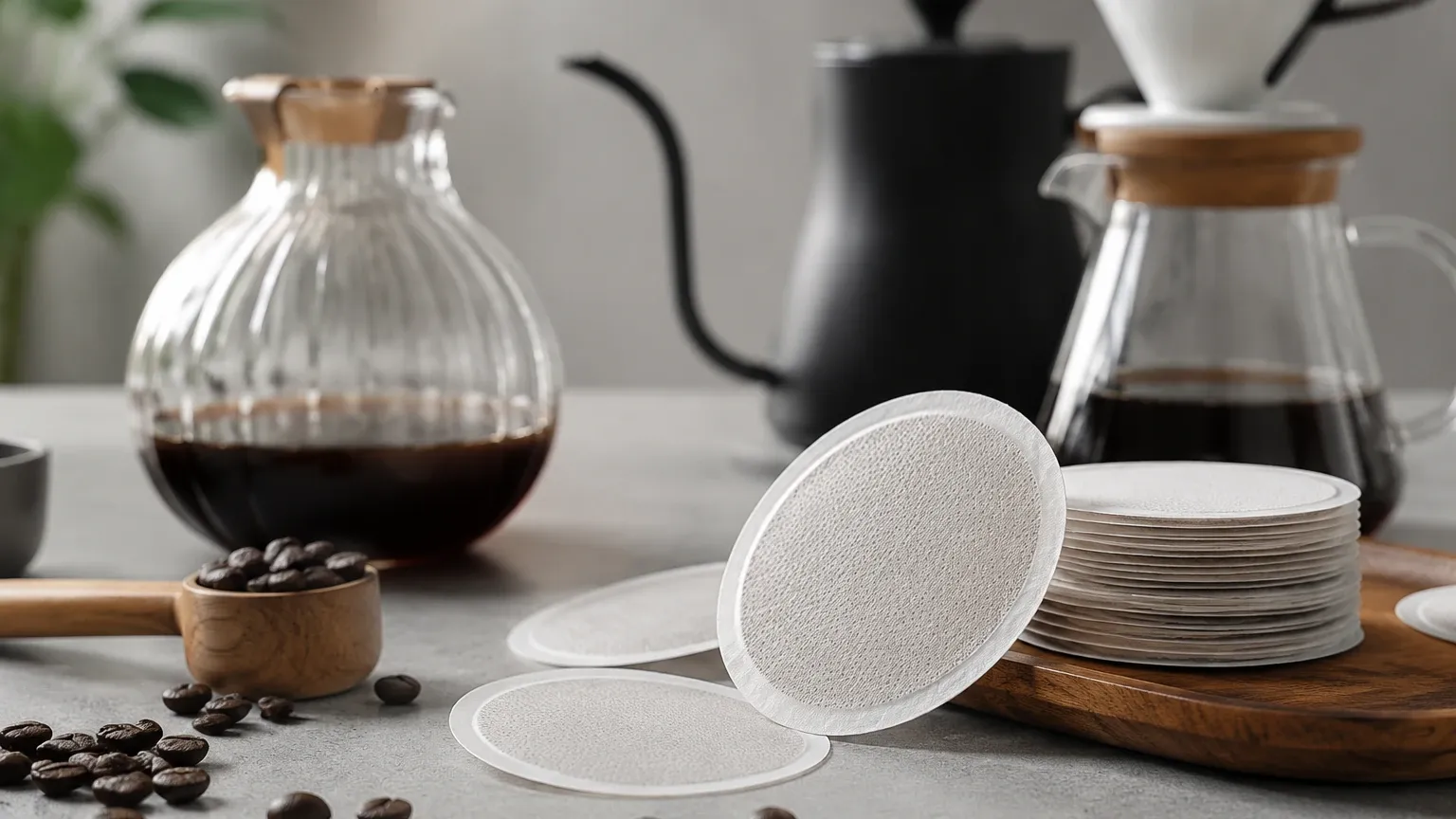
Customization and OEM Solutions for Equipment Manufacturers
No two industrial brewing systems are identical. Variations in vessel geometry, flow direction, and pressure requirements necessitate customized filtration solutions. Kaifil specializes in the design and manufacture of bespoke filter components that integrate seamlessly into existing or new equipment designs.
Structural Configurations
Filter packs can be customized in several ways to meet specific mechanical requirements:
- Single-Layer Discs: Best for low-pressure applications where simplicity and ease of cleaning are prioritized.
- Multi-Layer Packs: Combining different mesh counts to provide both fine filtration and structural support.
- Rimming and Edging: To ensure a perfect seal within the filter housing, discs can be finished with stainless steel, aluminum, or copper rims. This prevents bypass and protects the edges of the mesh from fraying.
- Spot Welding and Sintering: Different bonding techniques are used based on the required rigidity and the operating temperature of the system.
Engineering Support
For OEM partners, working with a specialist like Kaifil allows for technical collaboration during the prototyping phase. Engineers can specify exact diameters, thicknesses, and micron ratings to optimize the performance of their brewing hardware. This level of customization ensures that the filtration component is not a bottleneck in the system but a high-performance part of the extraction process.
Maintenance and Longevity of Industrial Coffee Filters
To maintain the performance of filter packs for coffee, a consistent maintenance and cleaning regimen is required. Coffee contains oils and fine particulates that can eventually clog (blind) the mesh if not properly managed.
Cleaning Protocols
- Backwashing: Reversing the flow of water through the filter can dislodge many surface particulates.
- Ultrasonic Cleaning: For deep cleaning, ultrasonic baths are highly effective at removing trapped oils and micro-sediment from within the mesh layers without damaging the wire structure.
- Chemical Cleaning: Food-safe caustic or acidic cleaners may be used to dissolve organic buildup, provided the filter material (e.g., SS316) is compatible with the cleaning agents.
Monitoring Performance
Industrial operators should monitor the pressure drop across the filter pack. A gradual increase in pressure at a constant flow rate typically indicates that the filter is becoming blinded and requires cleaning. By establishing a preventative maintenance schedule based on these observations, facilities can avoid unexpected downtime and ensure continuous production.
Conclusion: Selecting the Right Filter Pack
Choosing the correct Filter Discs & Packs for coffee applications involves a detailed assessment of the brewing method, pressure requirements, and desired beverage characteristics. For engineers and purchasing managers, the focus should remain on material quality, precision of the mesh weave, and the ability of the manufacturer to provide customized solutions that fit the specific mechanical constraints of their equipment.
By opting for high-quality stainless steel filtration components, industrial coffee processors can achieve greater consistency, lower operational costs, and superior product quality. For those developing new extraction technologies or looking to upgrade existing systems, partnering with a manufacturer that understands the complexities of industrial filtration is the most effective path to optimized performance.
For more information on technical specifications and custom design options, Review product options and application support to find the ideal filtration solution for your industrial coffee processing needs.
