


Filtering Discs
In the landscape of industrial filtration, filtering discs represent a fundamental component used to ensure fluid purity, protect downstream equipment, and maintain the integrity of chemical processes. These precision-engineered components, often referred to as Filter Discs & Packs, are utilized across a spectrum of demanding industries, from polymer extrusion and chemical processing to pharmaceutical manufacturing and hydraulic systems. Understanding the technical nuances of these discs—ranging from material selection and weave types to structural design—is essential for engineers and procurement teams tasked with optimizing filtration performance and minimizing operational downtime.
Technical Overview of Filtering Discs
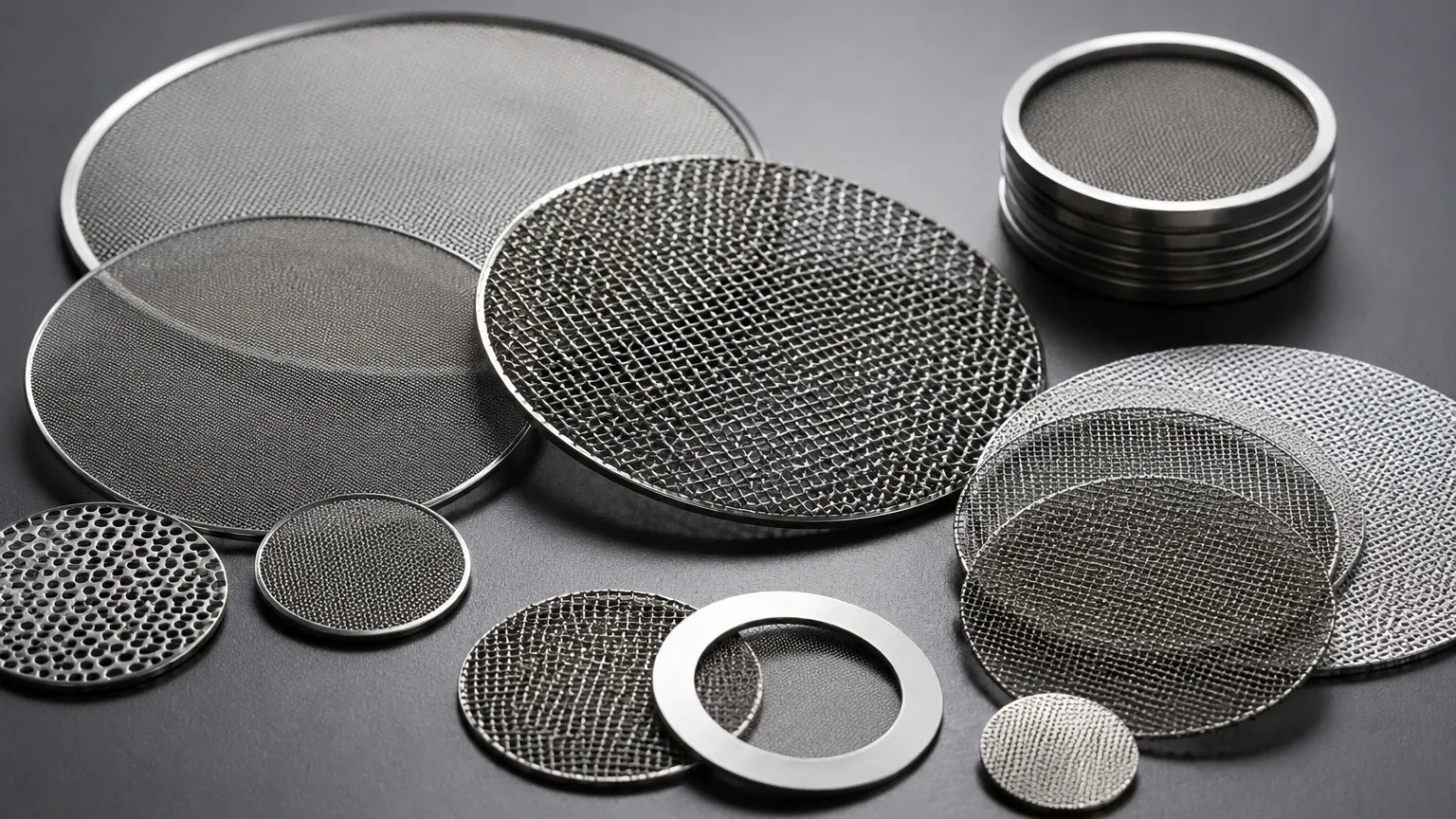
Filtering discs are flat, circular, or shaped filtration elements typically manufactured from metal wire mesh, sintered metal fibers, or sintered wire cloth. Unlike cylindrical cartridges, discs are designed for applications where space is constrained or where the filtration process requires a specific surface area configuration, such as in plate-and-frame filters or extruder screen changers.
The primary function of these discs is to remove solid contaminants from liquid or gaseous streams. The efficiency of this process is governed by the pore size of the media, the structural integrity of the disc under pressure, and the chemical compatibility of the material with the process fluid. For industrial applications, stainless steel is the predominant material due to its exceptional thermal stability and resistance to corrosion.
Material Selection and Engineering Considerations
The performance of filtering discs is heavily dependent on the alloy and the construction of the filtration media. Selecting the right material involves balancing mechanical strength, corrosion resistance, and cost.
Stainless Steel Alloys
Stainless steel 304 and 316L are the industry standards. SS 304 offers excellent general-purpose corrosion resistance and is suitable for most food and beverage or light industrial applications. However, in environments involving high chloride concentrations or acidic conditions, SS 316L is preferred due to its molybdenum content, which enhances resistance to pitting and crevice corrosion. For extreme environments, specialized alloys like Hastelloy or Monel may be utilized to withstand aggressive chemical reactions.
Wire Mesh Weave Types
The geometry of the wire mesh determines the filtration characteristics of the disc. Common weaves include:
* Plain Weave: The most straightforward construction where each warp wire crosses over and under each weft wire. It offers high flow rates and is ideal for coarse filtration.
* Dutch Weave: This weave utilizes a larger diameter warp wire and a smaller diameter weft wire, resulting in a dense, strong mesh with very fine pore openings. It is the preferred choice for high-pressure applications requiring precise micron ratings.
* Twill Weave: Each warp and weft wire passes over two and under two successive wires, allowing for a heavier wire diameter and increased durability for a given mesh count.
Structural Design: Single-Layer vs. Multi-Layer Packs
Filtering discs are rarely used as single, unsupported layers in high-pressure industrial environments. Instead, they are often engineered as multi-layer filter packs to enhance both filtration efficiency and mechanical longevity.
Single-Layer Discs
Single-layer filtering discs are typically used in low-pressure applications or as pre-filters. They are cost-effective and easy to clean but may lack the structural rigidity required to withstand significant differential pressure without deforming.
Multi-Layer Filter Packs
In more demanding applications, such as polymer melt filtration, multiple layers of mesh are combined. A typical multi-layer pack consists of:
1. Filtration Layer: The central layer (or layers) with the specific micron rating required for the process.
2. Support Layers: Coarser mesh layers placed on either side of the filtration layer to provide structural support and prevent the fine mesh from collapsing under pressure.
3. Drainage Layers: These ensure that the fluid is distributed evenly across the entire surface area of the disc, preventing localized clogging and extending the service life.
These layers can be held together through spot welding or by enclosing the edges in a metal rim (edging). Edging, often made from aluminum, stainless steel, or copper, is critical for ensuring a leak-proof seal within the filter housing and preventing "bypass," where unfiltered fluid escapes around the edges of the disc.
Manufacturing Precision and Customization
As a specialized manufacturer, Kaifil emphasizes the importance of precision in the production of filtering discs. The manufacturing process involves several critical steps that define the quality of the final product:
* Precision Cutting: Discs must be cut to exact tolerances to fit perfectly within industrial housings. Methods such as laser cutting or high-speed stamping are used to ensure clean edges and dimensional accuracy.
* Sintering Technology: For applications requiring extreme durability, sintered wire mesh discs are used. Sintering involves bonding multiple layers of mesh together using heat and pressure without the use of binders. This creates a monolithic structure that is highly resistant to media migration and can withstand intense backwashing cycles.
* Custom Geometric Shapes: While circular discs are most common, industrial processes often require oval, rectangular, or ring-shaped filters. Customization allows these components to be integrated into specialized machinery, such as twin-screw extruders or customized chemical reactors.
Key Performance Metrics for Engineers
When evaluating Filter Discs & Packs, engineers must focus on several key performance indicators (KPIs) to ensure the selected component meets the application's requirements.
Micron Rating (Absolute vs. Nominal)
It is vital to distinguish between nominal and absolute micron ratings. A nominal rating refers to the ability of the filter to retain a major percentage of particles of a certain size, while an absolute rating indicates the diameter of the largest spherical particle that can pass through the filter. For critical pharmaceutical or fine chemical applications, absolute ratings are usually required to guarantee purity.
Differential Pressure (Delta P)
The pressure drop across the filtering disc is a critical factor in system design. High initial differential pressure can indicate that the mesh is too fine for the required flow rate, leading to premature clogging and increased energy consumption by pumps or extruders.
Dirt Holding Capacity
This metric defines the amount of contaminant the disc can retain before the differential pressure reaches a critical limit. Multi-layer packs generally offer higher dirt-holding capacities than single-layer discs because they provide a degree of depth filtration, allowing particles to be trapped throughout the thickness of the media rather than just on the surface.
Industrial Applications and Use Cases
Filtering discs are indispensable in sectors where fluid purity and equipment protection are paramount.
Polymer and Plastic Extrusion
In the production of plastics, filtering discs (often called extruder screens) are used to remove un-melted resin, contaminants, or degraded polymer from the melt. This prevents defects in the final product, such as film breakage or surface imperfections in molded parts. Because of the high pressures involved, these are almost always multi-layer spot-welded packs.
Chemical and Petrochemical Processing
Stainless steel filtering discs are used to filter catalysts, remove particulates from fuel streams, and protect sensitive instrumentation. Their ability to withstand high temperatures and corrosive chemicals makes them superior to synthetic fiber filters in these environments.
Pharmaceutical and Biotechnology
In these industries, the focus is on sterility and cleanability. Sintered filtering discs are often used because they do not shed fibers (media migration) and can be subjected to rigorous sterilization processes, including autoclaving and CIP (Clean-in-Place) procedures.
Food and Beverage
From filtering cooking oils to clarifying syrups, filtering discs made from food-grade stainless steel ensure that consumer products meet safety standards. The ease of cleaning and the durability of metal mesh make it a sustainable choice compared to disposable paper or plastic filters.
Maintenance, Cleaning, and Replacement Cycles
The total cost of ownership (TCO) for filtering discs is influenced by their longevity and cleanability. Unlike disposable cartridges, high-quality stainless steel discs can often be cleaned and reused multiple times.
Cleaning Methods
* Ultrasonic Cleaning: Uses high-frequency sound waves to create cavitation bubbles that dislodge fine particles from deep within the mesh.
* Chemical Cleaning: Involves soaking the discs in solvents or acids (compatible with the disc material) to dissolve organic or inorganic deposits.
* Burn-off/Pyrolysis: Used primarily in the plastics industry to remove hardened polymer residues by heating the discs in a controlled environment.
Determining Replacement
While cleaning extends the life of the disc, repeated use can eventually lead to work hardening of the wire or permanent deformation of the mesh pores. Engineers should monitor the "clean" differential pressure after each cleaning cycle. If the baseline pressure drop begins to rise significantly, it indicates that the media is becoming permanently fouled and the disc should be replaced to maintain process efficiency.
Selecting the Right Partner for Filtration Solutions
Choosing the correct filtering discs requires more than just picking a micron rating from a catalog. It requires a deep understanding of the fluid dynamics, chemical interactions, and mechanical stresses present in the specific industrial application. Working with a manufacturer like Kaifil provides access to technical expertise in material science and precision fabrication.
When requesting a quote or designing a custom filtration solution, engineers should be prepared to provide the following information:
* The nature of the fluid (viscosity, temperature, pH level).
* The required flow rate and maximum allowable pressure drop.
* The specific contaminants being targeted and the desired micron rating.
* The dimensions and housing requirements for the disc or pack.
By focusing on these factual engineering boundaries, procurement teams can ensure they receive filtration components that provide reliable performance, high durability, and the best possible return on investment. For those looking to optimize their current systems or develop new filtration protocols, exploring the full range of Filter Discs & Packs is the first step toward achieving superior industrial filtration outcomes.
