


Filters 5 Micron
In industrial filtration, the 5-micron threshold represents a critical boundary between coarse particulate removal and precision clarification. For engineers and technical procurement teams, specifying filters 5 micron in rating requires a deep understanding of material science, fluid dynamics, and mechanical durability. Whether used in hydraulic systems, polymer extrusion, or pharmaceutical processing, a 5-micron filter must balance high capture efficiency with acceptable pressure drop and service life.
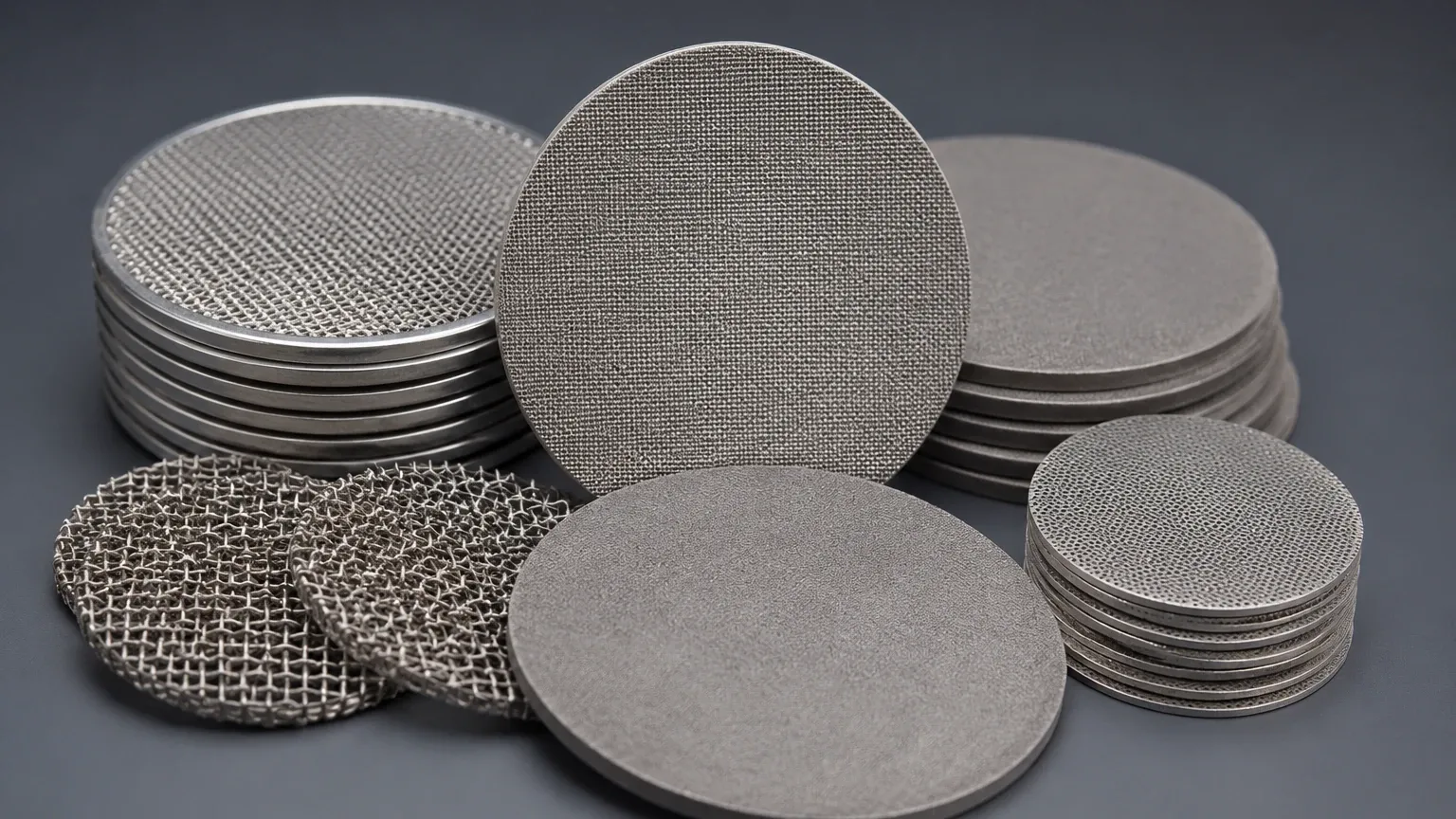
At this level of precision, the choice of filtration media becomes paramount. While polymer-based filters are common in low-temperature, disposable applications, stainless steel Filter Discs & Packs are the industry standard for demanding environments where temperature, pressure, and chemical compatibility are non-negotiable factors.
The Engineering Significance of 5-Micron Filtration
A micron (micrometer) is one-millionth of a meter. To put 5 microns into perspective, a human red blood cell is approximately 5 to 8 microns in diameter. Particles of this size are invisible to the naked eye but can cause catastrophic failure in precision machinery. In hydraulic systems, for instance, 5-micron particles can lodge themselves in the tight clearances of servo-valves, leading to stiction or accelerated abrasive wear.
Achieving reliable 5-micron filtration involves more than just a fine mesh. It requires a stable pore structure that does not migrate or deform under pressure. In high-viscosity applications, such as polymer melt filtration, the media must withstand thousands of pounds of differential pressure while maintaining its 5-micron rating. This is why stainless steel wire mesh—specifically in Dutch weave or sintered formats—is preferred over simpler woven structures.
Absolute vs. Nominal: Defining Performance for Filters 5 Micron
One of the most common points of confusion when sourcing filters 5 micron in specification is the distinction between "nominal" and "absolute" ratings. This distinction is vital for ensuring the integrity of the downstream process.
Nominal Filtration Rating
An 5-micron nominal rating typically indicates that the filter can retain a majority (often 60% to 90%) of particles at that size. Nominal filters are often depth-type media where the pore size is inconsistent. While cost-effective, they allow a percentage of "oversize" particles to pass through, which may be unacceptable for high-precision applications.
Absolute Filtration Rating
An absolute rating implies a 99.9% (Beta 1000) efficiency at the specified micron size. For stainless steel wire mesh, the absolute rating is determined by the largest physical opening in the weave. In critical industries like aerospace or pharmaceuticals, an absolute 5-micron filter ensures that no particle larger than the rating can pass through the media, providing a hard barrier for contaminants.
Material and Structural Options for Filter Discs & Packs
When designing or replacing filtration components, engineers must select a structure that supports the 5-micron requirement while fitting the physical constraints of the equipment. Filter Discs & Packs are often the preferred geometry for these applications due to their versatility and ease of installation.
Woven Wire Mesh
To reach 5 microns, standard square weaves are insufficient. Instead, manufacturers utilize specialized weaves such as Plain Dutch Weave (PDW) or Twilled Dutch Weave (TDW). These weaves feature a high density of "shute" wires driven tightly against each other, creating a tortuous path for the fluid and providing fine filtration levels. Twilled Dutch Weave is particularly effective for 5-micron applications as it allows for a heavier wire diameter, increasing the mechanical strength of the disc.
Sintered Metal Mesh
For applications involving extreme pressure or frequent cleaning, sintered mesh is the superior choice. Sintering involves bonding multiple layers of wire mesh together using heat and pressure without the use of binders. A typical 5-layer sintered structure might include a 5-micron filtration layer protected by finer buffer layers and supported by coarse, heavy-duty mesh layers. This creates a monolithic component that is virtually immune to wire migration or pore size changes.
Multi-Layer Packs
In many extrusion processes, a single disc is not enough. Multi-layer packs are engineered by stacking different mesh counts. A common configuration includes a coarse breaker plate screen, followed by a 5-micron filtration layer, and topped with a medium-mesh drainage layer. These layers can be spot-welded together or bound with an aluminum or stainless steel rim to prevent bypass and simplify handling.
Key Performance Metrics: Pressure Drop and Dirt Holding Capacity
When specifying filters 5 micron in rating, two mathematical variables dominate the engineering discussion: Clean Pressure Drop ($ΔP$) and Dirt Holding Capacity (DHC).
Managing Pressure Drop
As the micron rating decreases, the resistance to flow naturally increases. A 5-micron filter has significantly more surface area obstruction than a 20-micron filter. Engineers must calculate the flux—the flow rate per unit of surface area—to ensure the system pump can handle the initial resistance. If the $ΔP$ is too high at the start, the functional life of the filter will be unacceptably short.
Optimizing Dirt Holding Capacity
Dirt holding capacity refers to the amount of contaminant a filter can trap before the pressure drop reaches a terminal limit. In 5-micron applications, the filter can blind (clog) quickly if the fluid has a high concentration of larger solids. To optimize DHC, it is common practice to use "staged filtration," where a 20-micron or 40-micron pre-filter removes the bulk of the debris, allowing the 5-micron filter to focus on the fine particulates.
Industrial Applications for Precision 5-Micron Filtration
The requirement for 5-micron precision spans several high-stakes industries, each with unique environmental challenges.
* Polymer and Plastic Extrusion: In the production of fine films or high-quality fibers, even tiny impurities can cause "nibs" or line breaks. Stainless steel filter discs at the 5-micron level ensure the purity of the melt before it enters the die.
* Hydraulic and Lubrication Systems: High-pressure hydraulic circuits in aerospace and heavy industry use 5-micron filtration to protect sensitive valves and actuators from silt-sized particles that cause internal leakage and erosion.
* Chemical Processing: When filtering aggressive solvents or catalysts, stainless steel 316L 5-micron filters provide the necessary corrosion resistance while maintaining precise separation in volatile environments.
* Food and Beverage: 5-micron filtration is often used for the clarification of oils, syrups, and spirits, where removing fine suspended solids is essential for product clarity and shelf stability.
Selection Criteria for Engineers and Purchasing Teams
Before finalizing a purchase order for 5-micron filtration components, technical teams should confirm several operational parameters to ensure the product is fit for purpose.
1. Material Grade: Is SS304 sufficient, or does the environment require the superior molybdenum-enhanced corrosion resistance of SS316L? For highly acidic or saline environments, specialized alloys like Hastelloy may be necessary.
2. Temperature Limits: Unlike polymer filters, stainless steel can operate at temperatures exceeding 500°C. However, the sealing or framing material (such as aluminum or copper rims) must be rated for the same temperature.
3. Mechanical Integrity: Will the filter be subjected to back-pulsing or high-pressure spikes? If so, a sintered structure or a reinforced pack is required to prevent the mesh from collapsing.
4. Housing Compatibility: Ensure that the tolerances of the filter discs match the housing. Even a 0.5mm gap around the edge of a 5-micron disc can lead to significant fluid bypass, rendering the filtration ineffective.
Maintenance, Cleaning, and Total Cost of Ownership
One of the primary advantages of investing in stainless steel filters 5 micron in rating is their cleanability. While the initial capital expenditure is higher than disposable media, the total cost of ownership (TCO) is often lower due to the extended service life.
Cleaning Methods
Stainless steel filter packs can be cleaned using several industrial methods:
* Ultrasonic Cleaning: High-frequency sound waves create cavitation bubbles that dislodge fine particles trapped deep within the mesh pores.
* Chemical Cleaning: Using specialized solvents or acids to dissolve organic or inorganic buildup without damaging the stainless steel substrate.
* Burn-off/Pyrolysis: For polymer applications, the filters are heated in a vacuum oven to carbonize the plastic, which is then removed via ultrasonic cleaning.
Determining Replacement Cycles
Despite their durability, metal filters eventually reach a point of "permanent fouling," where the baseline pressure drop after cleaning is significantly higher than the original state. Monitoring the rate of pressure increase over several cleaning cycles allows maintenance teams to predict failure and order replacements before an unplanned shutdown occurs.
In conclusion, selecting the right 5-micron filtration solution is a balance of precision, durability, and cost. By utilizing high-quality stainless steel Filter Discs & Packs, industrial operations can achieve the rigorous cleanliness standards required for modern manufacturing while benefiting from the longevity and reliability of engineered metal media. For any precision application, confirming the absolute rating, material compatibility, and structural reinforcement is the key to optimized filtration performance.
