


How to Make Filter Paper Discs
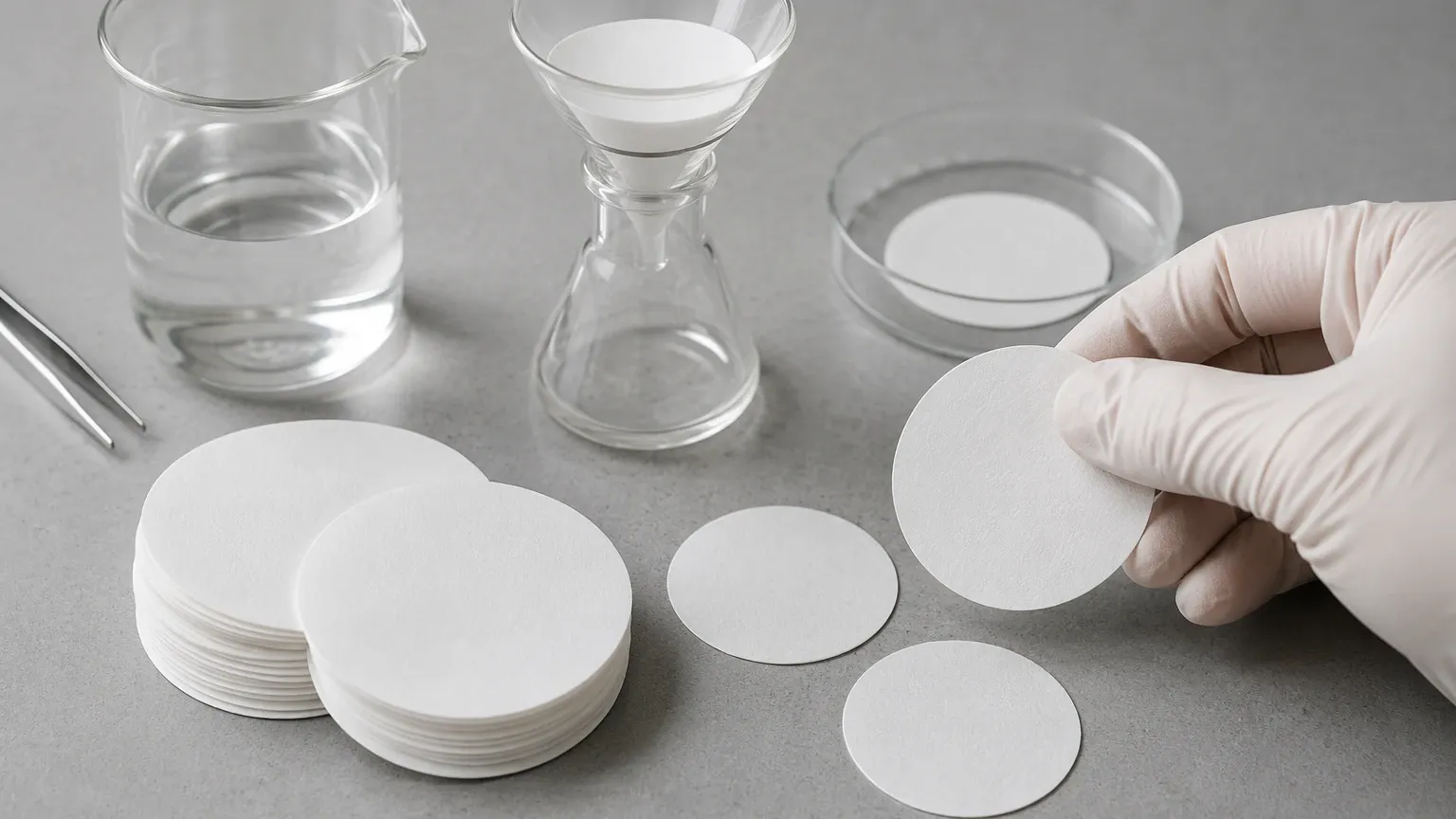
In laboratory environments and small-scale industrial prototyping, the need for specific filtration diameters often arises. While standard sizes are readily available, understanding how to make filter paper discs manually or through semi-automated processes is a fundamental skill for technicians and engineers. However, as applications scale from the benchtop to the production line, the requirements for durability, precision, and chemical resistance often necessitate a transition from paper to more robust materials like stainless steel.
This guide explores the technical methods for producing filter paper discs, the engineering considerations involved in material selection, and why industrial operations typically rely on professionally manufactured Filter Discs & Packs to ensure process integrity.
Understanding the Basics of Filter Disc Fabrication
Before beginning the fabrication process, it is essential to understand the material properties of the filter media. Filter paper is typically composed of cellulose fibers, glass fibers, or synthetic polymers. Each material has a specific "basis weight," thickness, and pore size distribution that dictates its performance.
When determining how to make filter paper discs, the primary objective is to achieve a clean, circular cut that matches the diameter of the filter holder or Buchner funnel. Any irregularities in the circumference can lead to "bypass," where the fluid or gas follows the path of least resistance around the edge of the filter rather than passing through the media. This compromise in the seal renders the filtration process ineffective.
Material Selection Criteria
1. Pore Size (Micron Rating): The nominal or absolute micron rating must match the particle size intended for retention.
2. Chemical Compatibility: The paper must be resistant to the solvents or acids being filtered. For example, quantitative ashless filter paper is often used for analytical chemistry where the filter will be ignited.
3. Flow Rate: The permeability of the paper affects the throughput of the system. Thicker papers may offer higher retention but lower flow rates.
Step-by-Step Guide: How to Make Filter Paper Discs
For low-volume requirements or custom diameters not found in standard catalogs, the following methods are commonly employed in technical settings.
Method 1: Manual Cutting (Prototyping)
This method is suitable for single-use tests where precision is secondary to immediate availability.
* Tools Required: A sharp compass with a blade attachment or a high-quality stencil, a self-healing cutting mat, and a precision hobby knife.
* The Process: Secure the filter sheet to the mat. Using the compass, rotate the blade steadily through the media. It is critical to apply uniform pressure to prevent the fibers from tearing or fraying at the edges.
* Validation: Inspect the edge under low magnification to ensure there are no loose fibers that could migrate into the filtrate.
Method 2: Die Punching (Small Batch Production)
When a project requires dozens of discs, manual cutting becomes inefficient and inconsistent.
* Tools Required: A hollow punch (arch punch) of the exact required diameter and a weighted mallet or a small arbor press.
* The Process: Stack several sheets of filter paper (typically 3 to 5, depending on thickness). Place the hollow punch vertically on the stack and apply a sharp, singular force. The use of an arbor press provides more consistent perpendicular pressure than a mallet, resulting in cleaner edges.
* Consideration: Ensure the cutting surface is soft enough to protect the punch edge (such as high-density polyethylene) but firm enough to allow a clean shear.
Engineering Considerations for Filter Disc Performance
While the physical act of cutting a disc is straightforward, the engineering performance of that disc depends on several variables that go beyond shape. Engineers must evaluate how the fabrication process affects the integrity of the media.
Edge Integrity and Sealing
In a pressurized or vacuum filtration system, the seal at the edge of the disc is the most common point of failure. If the disc is cut slightly too small, the bypass is immediate. If it is too large, the paper may crinkle or fold when inserted into the housing, creating channels for unfiltered fluid. Professionally manufactured Filter Discs & Packs often feature bound edges or precise tolerances that eliminate these risks.
Fiber Migration
Manual cutting of cellulose or glass fiber paper can release loose fibers at the cut site. In pharmaceutical or food and beverage applications, this "media migration" is a significant contamination risk. Industrial-grade discs are often treated or die-cut using specialized equipment that cauterizes or compresses the edges to prevent fiber release.
Pressure Differential (Delta P)
As the filter disc collects solids, the pressure drop across the media increases. Paper discs have a relatively low burst strength. If the pressure exceeds the structural limits of the paper, the disc will rupture. This is a primary reason why industrial applications involving high-viscosity fluids or high-pressure pumps transition to metal mesh discs.
Moving Beyond Paper: The Transition to Metal Filter Discs
While knowing how to make filter paper discs is useful for lab-scale work, paper has inherent limitations in industrial B2B environments. When a process involves high temperatures, corrosive chemicals, or the need for a reusable component, stainless steel becomes the material of choice.
Advantages of Stainless Steel Filter Discs
* Durability: Unlike paper, which is disposable, stainless steel discs can be cleaned (via ultrasonic baths or back-flushing) and reused multiple times, reducing the total cost of ownership.
* Structural Integrity: Metal discs can withstand significantly higher differential pressures without deforming or tearing.
* Temperature Resistance: Stainless steel maintains its filtration accuracy at temperatures that would char or melt paper and synthetic polymers.
* Precision Manufacturing: Industrial metal discs are produced using CNC laser cutting or precision stamping, ensuring tolerances within microns.
Multi-Layer Filter Packs
In many industrial applications, a single layer of media is insufficient. Engineers often specify "packs" which consist of multiple layers of wire mesh. These layers may include a fine filtration layer protected by coarser support layers on either side. This "sandwich" construction provides both high filtration accuracy and the mechanical strength required for high-pressure hydraulic or extrusion processes.
Industrial Manufacturing Processes for Filter Discs
When scaling up from handmade paper discs to industrial-grade components, manufacturers like Kaifil utilize advanced technologies to ensure consistency and performance. The transition from "how to make" to "how to manufacture" involves several sophisticated steps.
Precision Stamping and Die Cutting
For high-volume production of Filter Discs & Packs, automated stamping presses are used. These machines use hardened tool-steel dies to punch out discs from rolls of stainless steel wire mesh or sintered felt. This ensures that every disc is identical, which is critical for automated assembly lines where the filters are integrated into larger housings.
Laser and Ultrasonic Cutting
For complex shapes or materials that are prone to fraying, laser cutting provides a non-contact method that seals the edges of synthetic or metallic media. Ultrasonic cutting is also used for multi-layer packs, as the high-frequency vibrations effectively weld the edges of the layers together during the cutting process, creating a monolithic component that is easy to handle and install.
Edge Binding and Framing
To further enhance the sealing capabilities and structural rigidity, many industrial filter discs are finished with a metal rim or "binding." This frame, often made of aluminum or stainless steel, protects the edges of the mesh and provides a flat surface for gaskets to seat against. This is a level of sophistication that cannot be achieved with simple paper discs.
Selecting the Right Filter Disc for Your Application
When an engineering team is deciding between making their own discs or sourcing professional components, several factors must be confirmed to ensure the success of the filtration system.
1. Operating Environment
Confirm the maximum operating temperature and the chemical composition of the fluid. If the environment is highly alkaline or acidic, or if the temperature exceeds 100°C, paper discs are likely to fail. Stainless steel 304 or 316L is typically recommended for these demanding conditions.
2. Required Filtration Accuracy
Determine the smallest particle size that must be removed. While paper discs are excellent for general laboratory use, they often have a broad pore size distribution. Sintered metal fiber or multi-layer wire mesh provides a much tighter pore size distribution, ensuring more reliable particle retention.
3. Flow and Pressure Requirements
Calculate the expected flow rate and the maximum allowable pressure drop. If the system requires high throughput with minimal resistance, a pleated metal disc or a multi-layer pack may be necessary to increase the effective filtration area without increasing the footprint of the filter housing.
4. Customization and OEM Requirements
In many B2B scenarios, the filter disc must fit into a proprietary piece of equipment. Sourcing from a manufacturer that offers custom sizing, material selection, and edge finishing is more efficient than attempting to adapt off-the-shelf paper products. Custom Filter Discs & Packs can be engineered to meet the exact specifications of the machinery, ensuring optimal performance and longevity.
Conclusion: The Path from Prototyping to Production
Understanding how to make filter paper discs is a valuable starting point for any filtration-related project. It allows for rapid testing and proof-of-concept work at a low cost. However, the limitations of paper—fragility, low pressure tolerance, and limited chemical resistance—eventually require a shift toward industrial-grade solutions.
For engineers and purchasing professionals, the goal is to move from manual fabrication to a reliable supply chain of high-performance components. By selecting professionally manufactured stainless steel filter discs, companies can ensure their processes remain efficient, their products remain pure, and their equipment is protected from the risks of media failure and bypass. Whether you are filtering hydraulic fluids, processing chemicals, or refining food products, the precision of the filter disc is the silent guardian of your operational integrity.
