


How to Pack a Canister Filter
In industrial filtration, the efficiency of a system is rarely determined solely by the pump's power or the housing's volume. Instead, the performance of a canister filter—whether used in hydraulic systems, chemical processing, or water treatment—is dictated by its internal architecture. Understanding how to pack a canister filter correctly is a fundamental engineering requirement to ensure uniform flow distribution, prevent media migration, and maintain the integrity of the filtration process under high-pressure conditions.
For engineers and procurement teams, the choice of internal components, particularly the use of high-quality Filter Discs & Packs, is critical. This guide provides a technical overview of the packing process, the engineering considerations involved, and the common pitfalls to avoid when configuring industrial canister filtration units.
The Engineering Principles of Canister Packing
Before addressing the physical steps of how to pack a canister filter, it is essential to understand the fluid dynamics at play. A canister filter operates as a pressurized vessel where fluid is forced through various layers of media. If the packing is uneven or the media is poorly supported, several failure modes can occur:
1. Channeling: This happens when the fluid finds a path of least resistance, bypassing the bulk of the filtration media. This leads to poor filtration efficiency and premature localized clogging.
2. Media Migration: In systems using loose or granular media, high flow rates can push small particles of the media downstream, potentially damaging sensitive equipment like valves or high-pressure pumps.
3. Compaction and Pressure Drop: Over-packing or using the wrong support structures can lead to excessive compaction. This increases the differential pressure ($ΔP$) across the filter, reducing the system's overall flow rate and increasing energy consumption.
To mitigate these risks, industrial canisters utilize a combination of support grids, mesh layers, and precision-engineered Filter Discs & Packs to create a stable, high-performance filtration bed.
Material Selection and Compatibility
When determining how to pack a canister filter for industrial use, material selection is the first technical hurdle. The environment—temperature, pH levels, and chemical composition—dictates whether 304 stainless steel, 316L stainless steel, or specialized alloys are required.
* 304 Stainless Steel: Suitable for general industrial applications where corrosion resistance is required but chemical exposure is moderate.
* 316L Stainless Steel: The preferred choice for pharmaceutical, food and beverage, and marine applications due to its superior resistance to chlorides and organic acids. It also offers better weldability and resistance to intergranular corrosion.
* Multi-layer Mesh: For high-pressure applications, single-layer mesh is often insufficient. Sintered wire mesh or multi-layer filter packs provide the mechanical strength necessary to resist deformation under high flux rates.
Step-by-Step Guide: How to Pack a Canister Filter
Packing a canister filter in a B2B or industrial context requires a methodical approach. The following steps outline the standard procedure for a vertical flow canister system.
1. Preparation and Inspection
Begin by thoroughly cleaning the internal housing. Any residual particulates from previous cycles can contaminate the new media or interfere with the seals. Inspect the O-rings and gaskets for signs of wear, brittleness, or compression set. In high-pressure industrial systems, even a minor seal failure can lead to significant bypass.
2. Installing the Base Support
The foundation of the filter bed is the most critical layer. You must install a rigid support structure at the bottom of the canister. This is typically a heavy-duty stainless steel perforated plate or a reinforced mesh disc. The purpose of this layer is to support the weight of the media and the force of the fluid flow without sagging.
3. Implementing Filter Discs & Packs for Media Retention
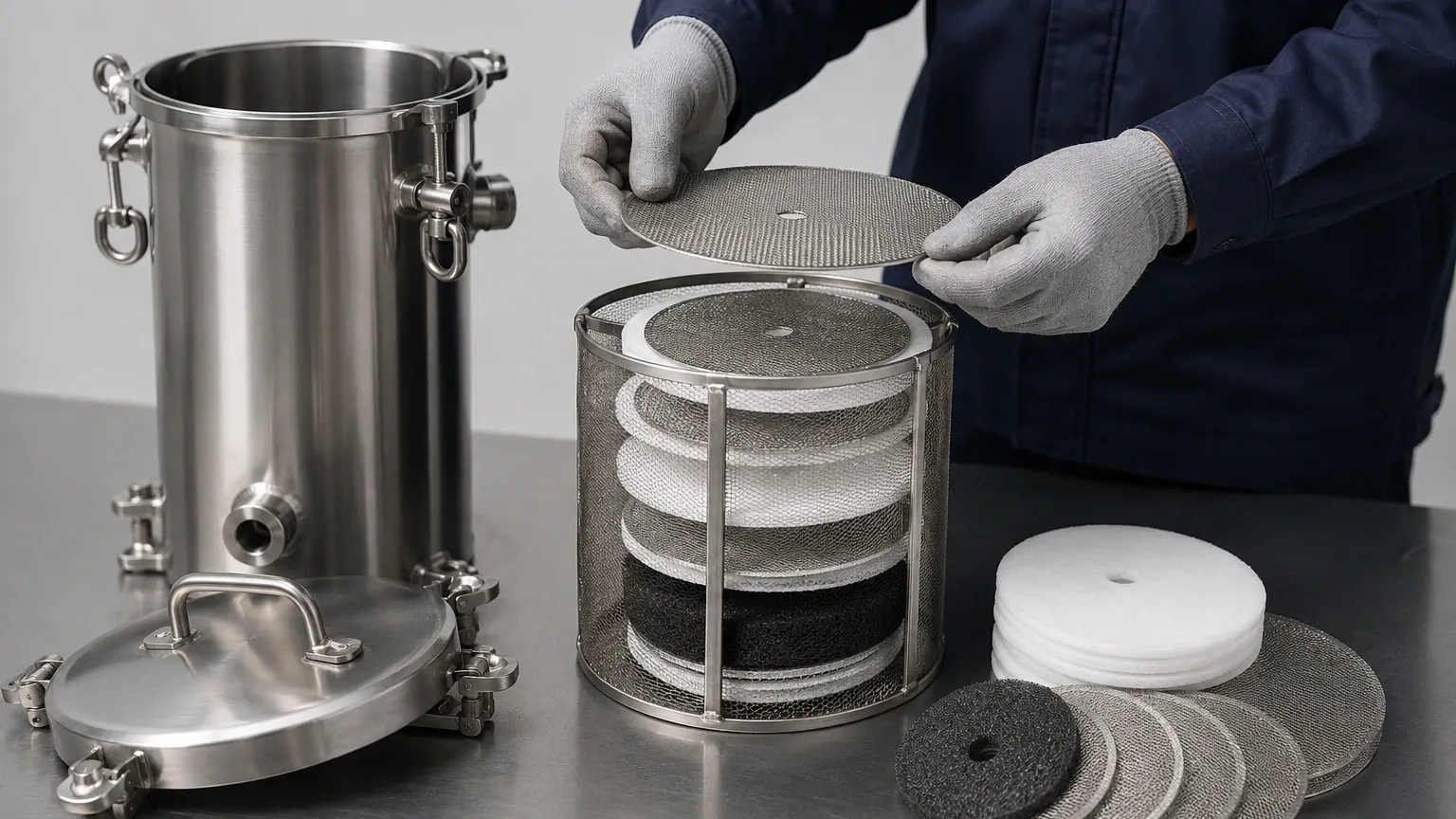
If your canister uses granular media (such as activated carbon, resin, or sand), you must place a fine-mesh filter disc over the base support. These Filter Discs & Packs act as a barrier to prevent media migration. The micron rating of the mesh must be smaller than the smallest particle size of the media to ensure total retention while maintaining a high open area for flow.
4. Layering the Media
In many industrial applications, a multi-stage filtration approach is used within a single canister. This is known as depth filtration.
* Coarse Layer: The first layer the fluid hits (depending on flow direction) should be the coarsest. This traps larger particulates and prevents the finer layers from clogging too quickly.
* Fine Layer: Subsequent layers should have progressively smaller pore sizes.
* Specialized Media: If the process requires chemical adsorption or ion exchange, these media layers are placed according to the manufacturer's residence time requirements.
When packing these layers, ensure they are leveled. Uneven layers lead to the aforementioned channeling effect.
5. Top-Layer Stabilization
Once the media is packed, a top-level filter disc or pack should be installed. This serves two purposes: it distributes the incoming fluid evenly across the entire surface area of the media (flow distribution) and prevents the media from shifting or "boiling" when the system is pressurized or during backwash cycles.
6. Tensioning and Sealing
Many industrial canisters include a mechanical tensioning device, such as a spring-loaded plate or a threaded compression nut. This ensures that the Filter Discs & Packs and the media remain tightly seated despite vibrations or pressure fluctuations. Tighten these components to the manufacturer's specified torque to avoid crushing the media while ensuring no gaps exist between the filter pack and the canister wall.
The Role of Filter Discs & Packs in Performance Optimization
In precision filtration, the quality of the Filter Discs & Packs used can significantly impact the total cost of ownership (TCO). While polymer-based filters may have a lower initial purchase price, stainless steel mesh discs offer several engineering advantages:
* Cleanability: Stainless steel packs can be ultrasonically cleaned or backwashed, extending their service life significantly compared to disposable elements.
* Thermal Stability: In chemical processing or polymer melt filtration, temperatures can exceed the melting point of plastics. Metal filter packs maintain their structural integrity and micron rating at extreme temperatures.
* Pressure Resistance: High-viscosity fluids require high differential pressures to move through the filter. Stainless steel wire mesh is engineered to withstand these stresses without pore size distortion.
When sourcing Filter Discs & Packs, engineers should confirm the weave type. Plain weave is standard for general filtration, while Dutch weave (Plain or Twill) provides higher strength and finer filtration ratings for critical applications.
Common Risks and How to Avoid Them
Knowing how to pack a canister filter also involves recognizing what *not* to do. Technical failures often stem from minor oversights during the packing process.
Bypassing the Seals
If the filter disc is not perfectly sized to the canister's internal diameter, fluid will bypass the filter at the edges. This is a common issue when using non-standard or off-the-shelf components in custom housings. Custom-fabricated Filter Discs & Packs ensure a precision fit, often incorporating a rim or specialized edging (such as aluminum or stainless steel binding) to create a positive seal against the housing wall.
Air Entrapment
When a canister is first packed and brought online, air can become trapped within the media layers. This reduces the effective filtration area and can cause pressure spikes. Always include a venting step during the initial filling process to ensure the canister is fully flooded.
Over-Compaction
In an attempt to maximize filtration, some operators over-pack the canister. This leads to a rapid increase in $ΔP$. Engineers should calculate the optimal bed depth based on the fluid's viscosity and the desired flow rate. Using rigid internal spacers or support packs can help maintain the correct media density.
Maintenance and Replacement Cycles
Repacking a canister filter is not just a matter of routine; it should be data-driven. Monitoring the differential pressure is the most effective way to determine when the internal packs need cleaning or replacement.
1. Baseline Pressure: Record the $ΔP$ when the filter is freshly packed.
2. Terminal Pressure: Establish a maximum allowable pressure drop based on the pump's curve and the structural limits of the Filter Discs & Packs.
3. Inspection: Upon opening the canister for maintenance, inspect the discs for signs of "blinding" (permanent clogging) or mechanical fatigue. If the mesh shows signs of fraying or permanent deformation, the entire pack should be replaced to prevent downstream contamination.
Conclusion for Engineering and Purchasing Teams
Learning how to pack a canister filter correctly is essential for maintaining process integrity and protecting downstream equipment. By focusing on precision-engineered components, such as high-quality stainless steel Filter Discs & Packs, industrial facilities can achieve more consistent results, reduce downtime, and lower long-term maintenance costs.
Before initiating a repacking project or designing a new filtration system, technical professionals should confirm the following:
* The chemical compatibility of the mesh material (304 vs 316L).
* The required micron rating relative to the media particle size.
* The mechanical strength required to handle the system's maximum differential pressure.
* The exact dimensions needed to ensure a zero-bypass fit within the canister housing.
By adhering to these technical standards and utilizing robust metal filtration solutions, engineers can ensure their canister filters operate at peak efficiency throughout their service life.
