


How to Use Folgers Filter Packs in Pot
In both commercial kitchens and industrial processing environments, the efficiency of a filtration system often depends on the ease of use and the consistency of the media employed. For those utilizing pre-measured coffee solutions in a standard brewing environment, understanding how to use Folgers filter packs in pot systems is the first step toward achieving a repeatable, high-quality result. While these packs are designed for simplicity, the underlying principles of flow rate, saturation, and containment are identical to those found in high-precision industrial Filter Discs & Packs.
This guide provides a detailed technical overview of using pre-packaged filtration media in a pot-based system, while exploring the engineering considerations that bridge the gap between consumer-level brewing and professional industrial filtration solutions.
Practical Steps for Brewing with Filter Packs
Using a filter pack in a coffee pot or commercial brewer is designed to eliminate the variables associated with loose grounds, such as measuring errors and uneven distribution. To ensure the best extraction, follow these technical steps:
1. Equipment Preparation: Ensure the brew basket is clean and free of residual oils or old grounds. In any filtration process, cross-contamination or restricted flow from previous cycles can compromise the integrity of the current batch.
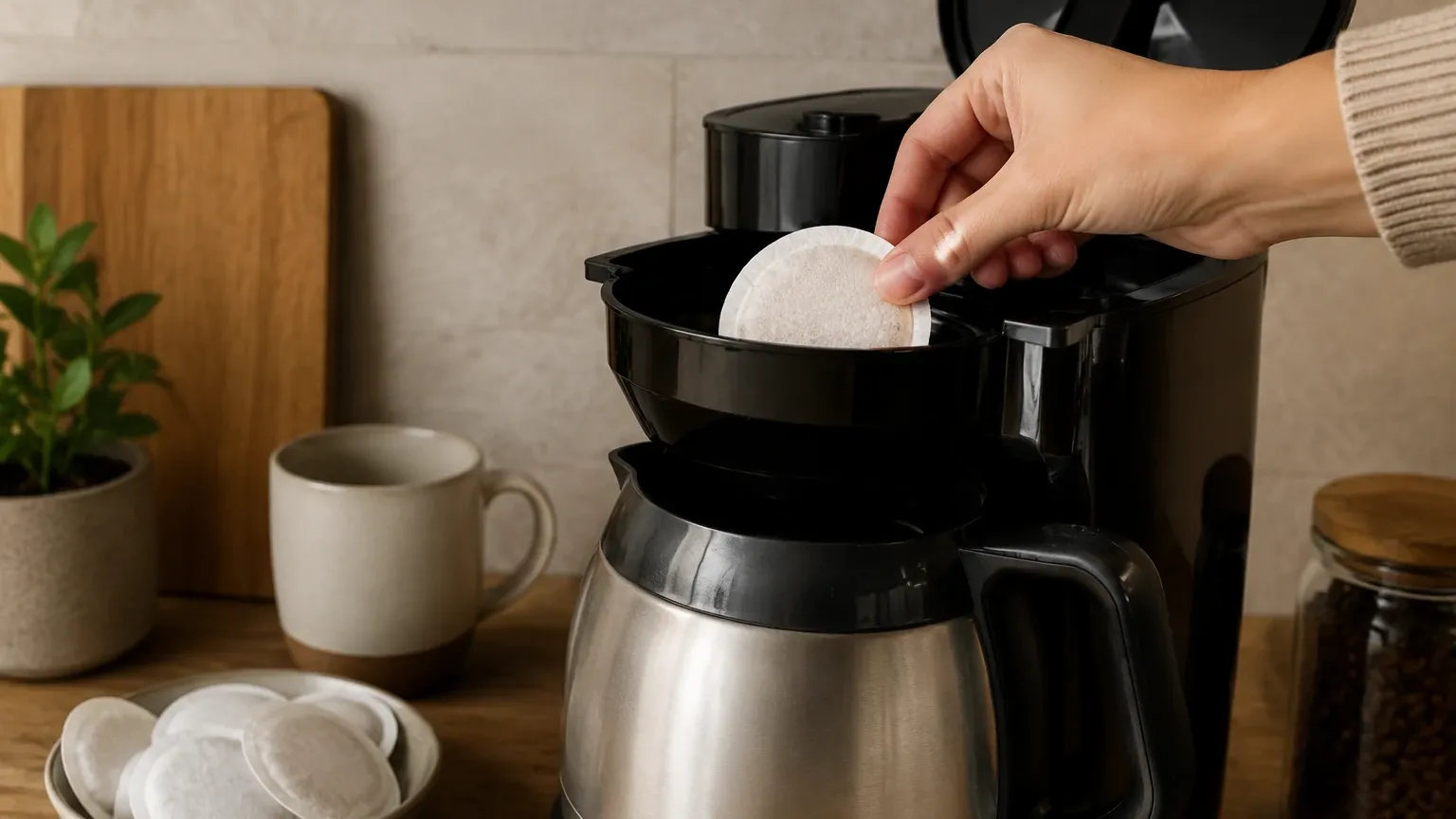
2. Pack Placement: Place one Folgers filter pack flat in the bottom of the filter basket. For larger pots (typically 10-12 cups), a single pack is usually sufficient, though industrial-sized carafes may require two. It is critical that the pack sits level to prevent "channeling," where water finds the path of least resistance and bypasses the media.
3. Water Ratio and Temperature: Use approximately 64 ounces (1.9 liters) of cold, filtered water for a standard pot. The ideal brewing temperature for extraction is between 195°F and 205°F (90°C to 96°C). If the water is too cool, the extraction will be under-developed; if it is too hot, it can damage the filter paper and lead to over-extraction.
4. The Brewing Cycle: Start the machine and allow the water to saturate the pack evenly. The paper housing of the pack acts as a semi-permeable membrane, regulating the flow of water through the grounds while retaining fine particulates.
5. Post-Brewing Disposal: Once the cycle is complete, remove the pack immediately. Leaving the wet pack in the basket can lead to "dripping," where bitter compounds continue to leach into the pot, and it can also create a vacuum seal that makes the basket difficult to clean.
The Engineering of Contained Filtration Media
The convenience of a filter pack lies in its "contained" nature. In engineering terms, this is a pre-assembled filtration unit where the housing (the paper) and the solute (the grounds) are integrated. This concept is widely used in industrial sectors where precision and speed are paramount.
Flow Rate and Porosity
The paper used in filter packs is engineered with a specific porosity to allow water to pass at a controlled velocity. If the paper is too dense, the pot will overflow; if it is too porous, the water will pass through too quickly, resulting in weak coffee. This balance of flux and retention is exactly what engineers calculate when designing industrial Filter Discs & Packs for chemical or hydraulic applications.
Structural Integrity
Unlike loose filters, a pack must maintain its shape under the weight of saturated grounds and the pressure of incoming water. This requires high wet-strength properties in the filter media. In industrial environments, this structural integrity is achieved through sintering multiple layers of stainless steel wire mesh to create a rigid, high-performance filter disc.
Industrial Parallels: Filter Discs & Packs in Manufacturing
While a coffee filter pack is a disposable, cellulose-based product, the industrial equivalent often involves permanent or semi-permanent metal components. Manufacturers like Kaifil specialize in creating stainless steel filter discs that perform the same fundamental task—separating solids from liquids—but under much more demanding conditions.
Multi-Layer Sintered Discs
In industrial processing, such as polymer filtration or oil refining, a single layer of mesh is often insufficient. Engineers use multi-layer sintered filter packs. These consist of several layers of wire mesh (ranging from coarse support layers to fine filtration layers) that are bonded together through heat and pressure. This creates a robust disc that can withstand high differential pressures without deforming.
Material Selection: SS304 vs. SS316L
Just as food-grade paper is required for coffee, industrial filters must be compatible with the fluid they process. Stainless steel 304 is common for general applications, but SS316L is preferred in pharmaceutical and chemical industries due to its superior corrosion resistance. For engineers looking at Filter Discs & Packs, selecting the right alloy is critical for the total lifespan of the component.
Key Evaluation Criteria for Industrial Filtration
When moving from simple consumer brewing to industrial liquid-solid separation, purchasing teams and engineers must evaluate several technical factors to ensure system efficiency.
Micron Rating and Retention Efficiency
The "micron rating" defines the size of the particles the filter can trap. A coffee filter typically traps particles down to 10-20 microns. In contrast, industrial metal filter discs can be engineered to trap sub-micron particles or large debris, depending on the mesh weave (e.g., plain weave, twilled weave, or Dutch weave).
Pressure Drop (Delta P)
A common issue when learning how to use Folgers filter packs in pot systems is the occasional overflow. This is caused by a high "pressure drop"—where the water cannot pass through the filter as fast as it is being delivered. In industrial systems, monitoring the pressure drop across Filter Discs & Packs is essential for determining when a filter is clogged and needs cleaning or replacement.
Dirt Holding Capacity
This refers to the amount of contaminant a filter can hold before the pressure drop becomes unacceptable. Industrial packs are often designed with pleated layers or specific depth-loading characteristics to maximize this capacity, reducing the frequency of maintenance shutdowns.
Customization and OEM Solutions in Filtration
One of the primary advantages of working with a professional manufacturer like Kaifil is the ability to customize the filtration component to the specific geometry of the machinery. While coffee packs come in standard sizes, industrial applications often require bespoke shapes.
* Geometric Variety: Filter discs can be produced as circles, rings, squares, or complex multi-layer packs with bound edges (aluminum, stainless steel, or copper rims).
* Layer Configuration: Depending on the viscosity of the fluid and the required purity, a pack might consist of 2 to 7 layers of mesh.
* Spot Welding and Edging: To prevent fraying and ensure a tight seal within the filter housing, industrial discs are often spot-welded or encased in a metal binding. This ensures that no "bypass" occurs—the industrial equivalent of coffee grounds leaking into the pot.
Maintenance and Total Cost of Ownership
In a B2B context, the choice between disposable and reusable filtration media is a matter of calculating the Total Cost of Ownership (TCO).
1. Disposable Media (Paper Packs): Low upfront cost, high recurring cost, and significant waste generation. Ideal for low-pressure, food-service applications where hygiene and convenience are the priority.
2. Reusable Media (Stainless Steel Discs): Higher initial investment but extremely long service life. These can be cleaned via ultrasonic baths or back-flushing, making them more cost-effective for continuous industrial production lines.
For engineers managing large-scale operations, transitioning to high-quality Filter Discs & Packs ensures that the filtration process is not a bottleneck. Whether you are optimizing a simple brewing process or a complex chemical refinery, the principles of selecting the right media, ensuring proper containment, and monitoring flow remains the same.
Conclusion: Confirming Your Requirements
Understanding how to use Folgers filter packs in pot systems highlights the importance of standardized, contained filtration. However, for industrial professionals, the requirements are far more stringent. Before selecting a filtration solution, engineers should confirm:
* The precise micron rating required for the process fluid.
* The maximum operating temperature and pressure.
* Chemical compatibility of the filter media and the rim material.
* The desired cleaning interval and maintenance protocol.
By focusing on these technical parameters, purchasing teams can secure filtration components that provide reliable, long-term performance in even the most demanding environments.
