


Is a 5 Micron Filter Good
In industrial filtration, the question of whether a specific micron rating is "good" cannot be answered with a simple yes or no. The effectiveness of a 5-micron filter depends entirely on the specific requirements of the application, the nature of the fluid being processed, and the downstream equipment that needs protection. For many precision industrial processes, a 5-micron rating represents a critical threshold between coarse pre-filtration and ultra-fine polishing.
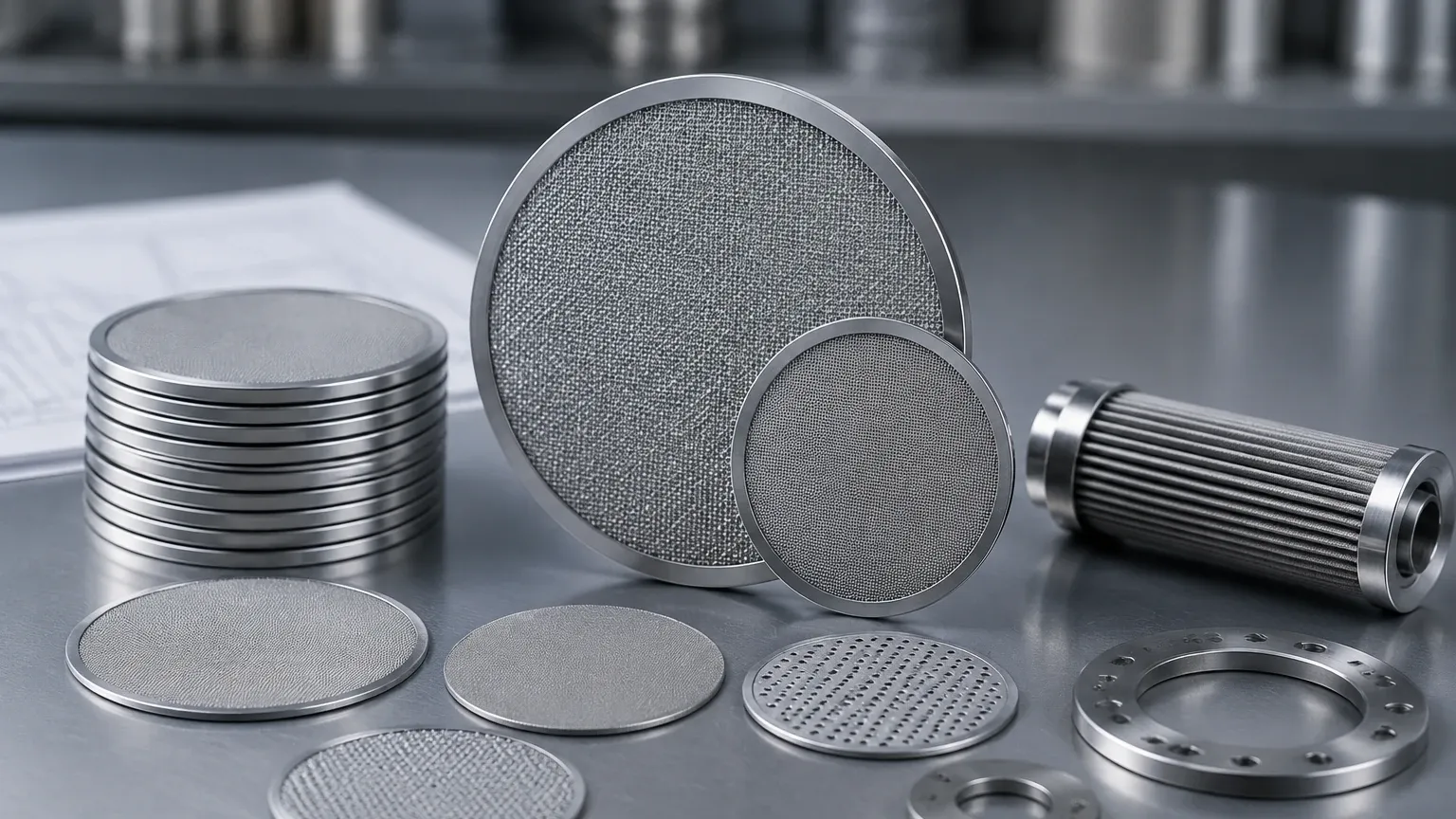
When evaluating Filter Discs & Packs for a system, engineers must look beyond the numerical value and consider the physics of particle capture, the structural integrity of the filter media, and the operational trade-offs associated with finer filtration levels.
Defining the 5-Micron Filtration Level
To understand if a 5-micron filter is appropriate, one must first visualize the scale. A micron (micrometer) is one-millionth of a meter. For context, the average human hair is approximately 70 microns in diameter, and the lower limit of human visibility is roughly 40 microns. A 5-micron particle is significantly smaller than what can be seen with the naked eye, falling into the category of fine silt or large bacteria.
In industrial environments, 5-micron filtration is often categorized as "fine" filtration. It is commonly used to remove microscopic debris that could cause abrasive wear in hydraulic components, plug precision nozzles, or contaminate pharmaceutical and food-grade products. However, the term "5 micron" is not a standardized performance guarantee across all manufacturers. Its effectiveness is dictated by whether the rating is nominal or absolute.
Nominal vs. Absolute: The Engineering Distinction
One of the most common pitfalls in filter selection is failing to distinguish between nominal and absolute micron ratings. This distinction is vital when determining if a 5-micron filter is "good" for a specific safety-critical application.
Nominal Ratings
A nominal rating is an arbitrary value assigned by a manufacturer based on a weight percentage of particles retained. For example, a 5-micron nominal filter might be designed to capture 60% to 80% of particles that are 5 microns or larger. Because nominal filters allow a percentage of target-sized particles to pass through, they are generally used for non-critical applications or as pre-filters to extend the life of more expensive downstream components.
Absolute Ratings
An absolute rating refers to the diameter of the largest hard spherical particle that will pass through the filter under specified test conditions. A 5-micron absolute filter, often constructed from multi-layered sintered wire mesh, is engineered to have a capture efficiency of 99.9% or higher at that specific size. In industries where fluid purity is paramount—such as aerospace hydraulics or high-purity chemical processing—only an absolute rating provides the necessary reliability.
Industrial Applications for 5-Micron Filter Discs & Packs
5-micron filtration is a standard requirement across several high-stakes industries. In these contexts, a 5-micron filter is considered "good" because it strikes a balance between high clarity and manageable flow resistance.
* Hydraulic and Lubrication Systems: High-pressure hydraulic systems utilize sensitive servo-valves with extremely tight tolerances. Particles larger than 5 microns can cause "stiction" or abrasive erosion, leading to system failure. Here, 5-micron filter packs are essential for maintaining ISO 4406 cleanliness codes.
* Polymer and Fiber Production: During the extrusion of synthetic fibers or thin plastic films, even minute contaminants can cause breaks in the filament or visual defects in the film. Sintered 5-micron filter discs are used in melt filtration to ensure the homogeneity of the polymer.
* Pharmaceutical and Chemical Processing: When processing active pharmaceutical ingredients (APIs) or fine chemicals, 5-micron filtration is often used to remove catalysts or precipitated impurities before the final sterilization or bottling stages.
* Food and Beverage: For clarification of oils, syrups, or spirits, a 5-micron stainless steel mesh provides sufficient clarity while allowing the liquid to retain its essential sensory characteristics (flavor and aroma) that might be stripped by sub-micron filtration.
Evaluating Flow Rates and Pressure Drop
A primary engineering consideration when moving to a 5-micron filter is the resulting pressure drop ($\\Delta P$). As the pore size of the filter media decreases, the resistance to fluid flow increases. This relationship is governed by the permeability of the media and the viscosity of the fluid.
If a system is designed for a 20-micron filter and is retrofitted with a 5-micron filter without adjusting the pump capacity or the surface area of the filter, the initial pressure drop will be significantly higher. This can lead to:
1. Reduced Flow Rates: The system may not deliver the required volume of fluid per minute.
2. Shortened Service Life: Finer filters reach their terminal pressure drop (the point where they are considered "clogged") much faster than coarser filters because they capture a larger volume of the total particle distribution.
3. Media Migration or Bypass: If the pressure differential becomes too high, the filter media may deform, or the bypass valve may open, allowing unfiltered fluid to circulate.
To mitigate these issues, engineers often specify multi-layered Filter Discs & Packs that utilize a graded pore structure—placing a coarser mesh upstream to act as a depth filter, which protects the 5-micron precision layer.
Material Integrity and Chemical Compatibility
Is a 5-micron filter "good" if it cannot withstand the operating environment? Filtration performance is inseparable from material science. In many B2B industrial settings, filters are exposed to caustic chemicals, high temperatures, and high-pressure pulses.
Stainless steel (typically 304 or 316L) is the preferred material for 5-micron industrial filters for several reasons:
* Thermal Stability: Unlike polymer-based filters, stainless steel mesh can operate at temperatures exceeding 500°C (depending on the alloy and atmosphere).
* Chemical Resistance: 316L stainless steel offers excellent resistance to corrosion from organic chemicals and many acids, making it suitable for aggressive chemical processing.
* Cleanability: One of the greatest advantages of metal 5-micron filters is that they are often cleanable. Through ultrasonic cleaning, backflushing, or chemical baths, the filter can be restored to near-original performance, significantly reducing the total cost of ownership compared to disposable cartridges.
Engineering Evaluation: Is it "Good" for Your Specific System?
Before deciding that a 5-micron filter is the correct choice, technical professionals should confirm several variables with their filtration partner:
1. Particle Size Distribution (PSD): Analyze the contaminants in the fluid. If 90% of the particles are 2 microns, a 5-micron filter will not provide adequate protection. Conversely, if most particles are 50 microns, a 5-micron filter is overkill and will clog unnecessarily fast.
2. Viscosity and Temperature: High-viscosity fluids (like heavy oils) require more pressure to push through a 5-micron mesh. Temperature changes can alter viscosity, impacting the filtration efficiency and the structural load on the filter disc.
3. Target Cleanliness Level: Determine the required ISO or NAS cleanliness class for the downstream components. If the goal is to protect a standard centrifugal pump, 5 microns might be unnecessarily fine. If the goal is to protect a high-speed turbine bearing, it might be exactly what is required.
4. Housing and Seal Design: A 5-micron filter is only as good as its seal. Any bypass around the edges of a filter pack will render the 5-micron rating irrelevant, as the fluid will follow the path of least resistance.
Conclusion
A 5-micron filter is an excellent choice for applications requiring high-precision fluid clarity, protection of sensitive hydraulic components, and high-quality industrial outputs. However, its success depends on choosing the right media structure—such as sintered mesh or multi-layered packs—and ensuring that the system's pump and housing can handle the increased pressure drop.
For engineers and purchasing teams, the focus should remain on the balance between filtration efficiency and operational longevity. By selecting high-quality Filter Discs & Packs tailored to the specific chemical and thermal demands of the environment, facilities can achieve reliable performance that minimizes downtime and protects expensive downstream assets.
