


Is It Ok to Have Two Filters in One Tank
In the realm of industrial fluid processing, the configuration of filtration systems is a critical factor in determining the efficiency, longevity, and purity of the output. When engineers and plant managers evaluate system performance, a frequent question arises: is it ok to have two filters in one tank? From a technical and manufacturing perspective, the answer is not only a definitive "yes," but in many high-stakes industrial applications, employing multiple filtration stages or redundant units is a standard best practice for ensuring operational continuity and meeting stringent cleanliness standards.
Whether you are managing a hydraulic reservoir, a chemical processing vessel, or a large-scale water treatment tank, integrating multiple filtration components—such as specialized Filter Discs & Packs—can significantly optimize your process. This article explores the engineering logic, benefits, and technical considerations of using dual or multiple filters within a single industrial tank environment.
The Engineering Logic Behind Dual Filtration Systems
The decision to install two filters in one tank usually stems from one of three primary engineering objectives: redundancy, flow capacity enhancement, or multi-stage progressive filtration. Understanding these objectives is the first step in determining if this configuration is right for your specific application.
1. Redundancy and Duty-Standby Cycles
In critical systems where downtime is financially catastrophic, such as in pharmaceutical manufacturing or continuous chemical synthesis, having two filters allows for a "duty and standby" configuration. If one filter reaches its terminal pressure drop (clogs), the system can switch to the second filter without stopping the flow. This ensures that the process remains online while maintenance teams clean or replace the spent media.
2. Increasing Effective Filtration Area (EFA)
Every filter media has a maximum flux rate—the amount of fluid that can pass through a given area per unit of time. By placing two filters in parallel within a single tank, you effectively double the surface area. This reduces the velocity of the fluid passing through the mesh, which lowers the initial pressure drop and significantly extends the service life of the Filter Discs & Packs by allowing for more gradual particulate loading.
3. Progressive Contaminant Removal
In many raw material processing tanks, the contaminant load consists of a wide range of particle sizes. Using two filters in series (one coarse, one fine) within the same housing or tank allows the first filter to act as a "pre-filter," protecting the more expensive, high-precision secondary filter from premature blinding. This progressive approach is often the most cost-effective way to achieve high-purity results.
Is It Ok to Have Two Filters in One Tank? Evaluating the Risks
While dual filtration offers numerous advantages, it is not a "plug-and-play" solution. Engineers must account for several variables to ensure the two filters do not negatively impact the system's hydraulics.
Pressure Drop (Delta P) Considerations
Adding a second filter in series will inherently increase the total pressure drop across the tank. If the pump system is not rated for this additional resistance, flow rates will decrease, potentially leading to pump cavitation or system failure. Conversely, placing filters in parallel reduces the pressure drop, but requires careful manifold design to ensure equal flow distribution.
Flow Distribution and Turbulence
When two filters are placed in close proximity within a tank, they can interfere with the fluid dynamics. If the intake or discharge is not properly baffled, one filter may receive a higher concentration of contaminants or a higher flow velocity than the other. This leads to uneven wear and inefficient use of the filtration media.
Space and Maintenance Access
Industrial tanks are often crowded with heaters, agitators, and sensors. Adding a second filter assembly must not impede the ability of technicians to perform routine inspections. If the filters are difficult to access, they are likely to be neglected, leading to bypass or structural failure of the mesh elements.
The Role of Filter Discs & Packs in Multi-Stage Tank Systems
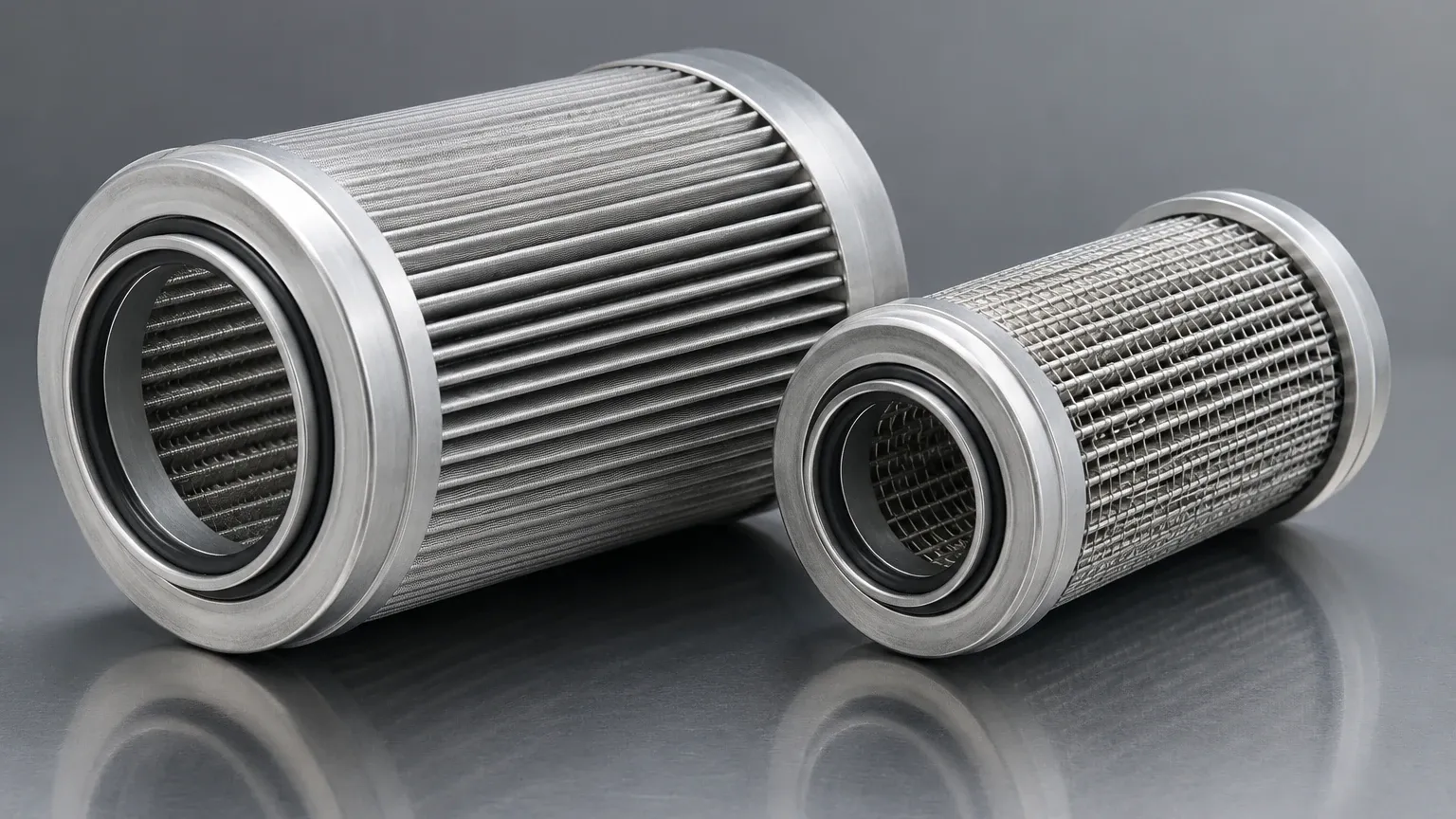
For many precision applications, the choice of filter component is just as important as the system configuration. Filter Discs & Packs are frequently utilized in dual-filter tank setups because of their versatility and compact design. These components consist of multiple layers of stainless steel wire mesh, which can be customized to provide specific filtration characteristics.
Custom Layering for Dual-Filter Efficiency
In a dual-filter tank, the first stage might utilize a robust, coarse mesh pack to capture large debris, while the second stage employs a fine, sintered mesh disc for sub-micron polishing. Because these packs can be engineered with varying layers (e.g., support mesh, drainage mesh, and filtration mesh), they provide the structural integrity required to withstand the differential pressures often found in high-flow tanks.
Material Compatibility
When using two filters in one tank, it is vital that both components are made from materials compatible with the process fluid and each other. Kaifil specializes in 304 and 316L stainless steel, which prevents galvanic corrosion—a common risk when mixing different metals in a conductive fluid. Stainless steel also ensures that the filters can be cleaned and reused, supporting the sustainability of the operation.
Technical Criteria for Selecting Dual Tank Filters
To successfully implement a two-filter system, engineering teams should evaluate the following criteria during the design phase:
1. Micron Rating Alignment: If the filters are in series, the micron rating of the first should be roughly 3 to 5 times larger than the second to balance the dirt-holding load.
2. Structural Strength: In tanks with high agitation or pulsating flow, filters must be reinforced. Sintered Filter Discs & Packs are preferred here as the diffusion bonding process prevents wire migration and ensures the layers do not separate under stress.
3. Seal Integrity: If the filters are not perfectly sealed within their housings inside the tank, fluid will take the path of least resistance (bypass), rendering the second filter useless.
4. Cleaning Cycles: Engineers should determine if the filters will be cleaned via backwashing or ultrasonic baths. The filter design must accommodate the chosen cleaning method without degrading the mesh.
Common Applications for Dual Filtration in One Tank
Several industries have perfected the use of multiple filters within a single vessel to achieve high-performance results:
* Hydraulic Reservoirs: Large hydraulic tanks often use a suction strainer (coarse) and a return-line filter (fine) to protect sensitive valves and pumps from wear particles.
* Chemical Reactors: In batch processing, dual filters ensure that catalysts are recovered efficiently while preventing fine particulates from contaminating the final product.
* Food and Beverage: Tanks used for syrup or oil filtration often utilize parallel filter packs to maintain high throughput during peak production hours.
* Water Treatment: Multi-stage filtration within a single contact tank can remove both sand/grit and finer organic suspended solids, reducing the footprint of the treatment plant.
Cost-Benefit Analysis: One Large Filter vs. Two Smaller Filters
One might ask why not simply use one very large filter instead of two. While a single large filter simplifies the piping, two smaller filters often provide better "Total Cost of Ownership" (TCO).
Smaller, standardized Filter Discs & Packs are generally easier to manufacture and stock than massive, custom-sized elements. Furthermore, the ability to clean or replace one unit while the other continues to operate reduces the cost of lost production. In many cases, the redundancy offered by two filters is an insurance policy against unforeseen contamination spikes that would instantly blind a single-filter system.
Conclusion: Strategic Implementation for Maximum Reliability
So, is it ok to have two filters in one tank? Not only is it acceptable, but it is often the superior engineering choice for demanding industrial environments. By strategically deploying multiple filtration stages, operators can achieve higher purity levels, protect downstream equipment, and ensure that maintenance does not dictate the production schedule.
Success depends on selecting high-quality components that are designed for the rigors of industrial use. Whether you require parallel flow for high volume or series filtration for precision polishing, utilizing custom-engineered Filter Discs & Packs ensures that your dual-filter system performs to its theoretical potential.
When designing your next filtration upgrade, consider the fluid dynamics, the particulate profile, and the structural requirements of your tank. By partnering with a manufacturer like Kaifil, you can develop a customized filtration solution that leverages the power of dual-stage technology to optimize your industrial process.
