


K Series Filters
In the landscape of industrial filtration, precision and structural integrity are the primary drivers of operational efficiency. K series filters represent a specialized category of filtration components designed to meet the rigorous demands of high-pressure and high-temperature environments. These components, often integrated into broader Filter Discs & Packs systems, are essential in industries ranging from polymer extrusion and chemical processing to hydraulic fluid management and pharmaceutical manufacturing.
For engineers and procurement professionals, selecting the correct filtration media involves more than just identifying a micron rating. It requires a deep understanding of material science, fluid dynamics, and the mechanical stresses inherent in industrial processes. K series filters are engineered to provide a balance between high flow rates and precise particle retention, ensuring that downstream equipment is protected and product purity is maintained.
Technical Specifications and Material Composition
The performance of k series filters is fundamentally tied to the materials used in their construction. In most industrial applications, stainless steel is the material of choice due to its exceptional resistance to corrosion, thermal stability, and mechanical strength.
Grade 304 vs. Grade 316L Stainless Steel
Most k series filters are manufactured using either AISI 304 or AISI 316L stainless steel wire mesh.
* Type 304: This is the standard industrial grade, providing excellent strength and basic corrosion resistance. It is suitable for applications involving water filtration, food processing, and less aggressive chemical environments.
* Type 316L: The "L" stands for low carbon, which improves weldability and resistance to intergranular corrosion. Grade 316L contains molybdenum, making it significantly more resistant to chlorides and acidic environments. This is the preferred choice for pharmaceutical and marine applications where chemical compatibility is a critical concern.
Weave Types and Filtration Characteristics
The efficiency of k series filters is also determined by the weave pattern of the wire mesh. Common patterns include:
1. Plain Weave: The most common and straightforward weave, where each warp wire crosses over and under each weft wire. It offers a high percentage of open area and is ideal for high-flow, low-pressure applications.
2. Twill Weave: In this pattern, wires are woven over two and under two, allowing for a heavier wire diameter in a given mesh count. This increases the mechanical strength of the filter disc.
3. Dutch Weave (Plain and Twill): These weaves use a larger diameter warp wire and a smaller diameter weft wire. This creates a dense, tortuous path for the fluid, providing superior filtration accuracy and the ability to withstand high differential pressures without deforming.
The Role of Filter Discs & Packs in K Series Systems
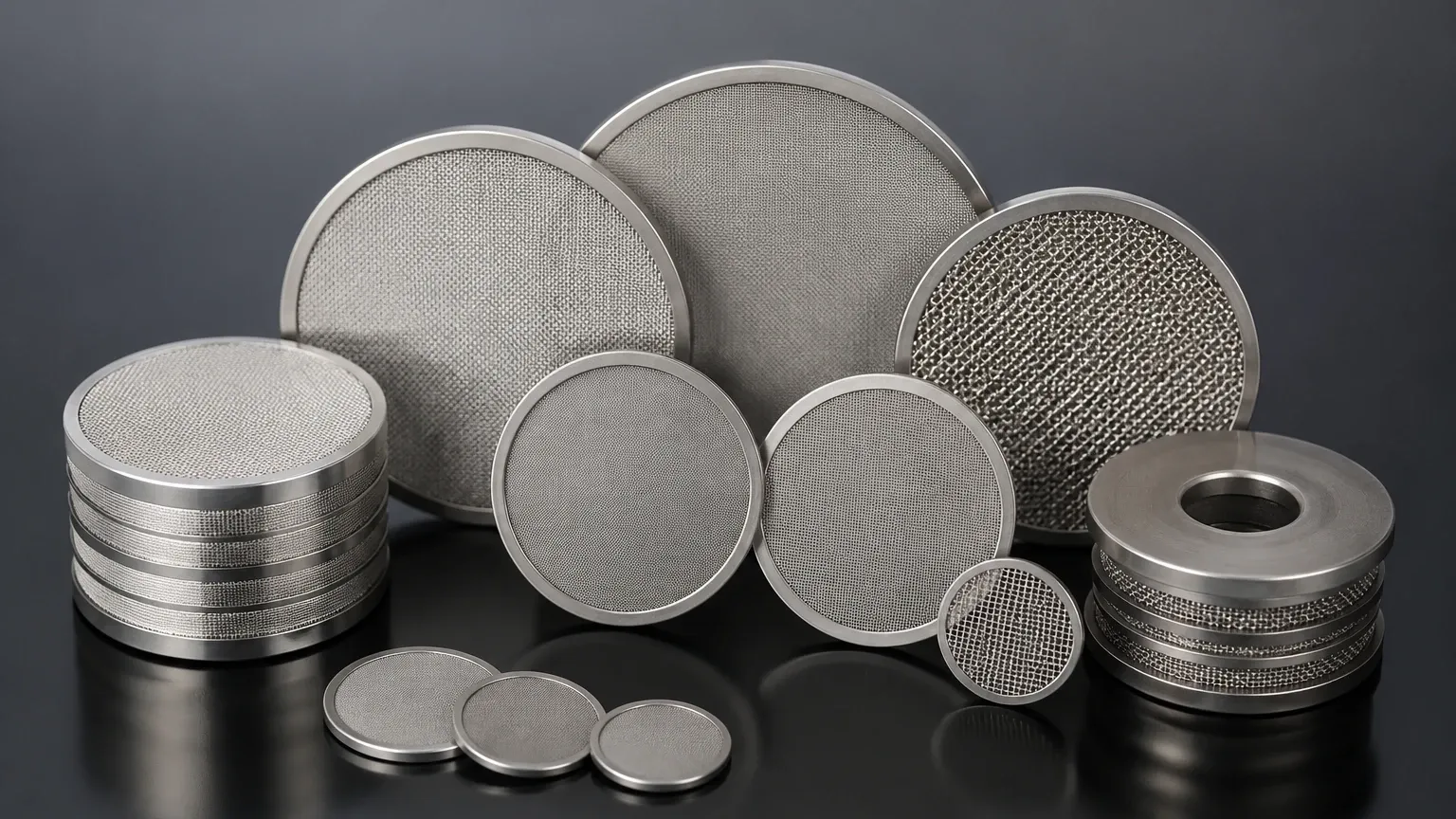
K series filters are rarely used as standalone single-layer components in demanding industrial settings. Instead, they are often configured as multi-layer Filter Discs & Packs to enhance performance and longevity.
Multi-Layer Configuration
A typical filter pack might consist of several layers of varying mesh counts. The outermost layers usually consist of a coarse mesh that acts as a support structure and a pre-filter for larger contaminants. The inner layers contain the fine mesh responsible for the target micron rating. This graduated density approach prevents the fine mesh from blinding prematurely, thereby extending the service life of the filter and reducing the frequency of replacement cycles.
Binding and Rimming Options
To ensure the integrity of k series filters within a housing, the edges of the discs or packs must be properly finished. Common methods include:
* Spot Welding: Multiple layers are welded at specific points to maintain alignment.
* Aluminum or Stainless Steel Rimming: The edges are enclosed in a metal U-channel. This provides a clean edge that prevents bypass and adds significant rigidity to the assembly, which is crucial in high-pressure extrusion processes.
* Sintering: In high-performance applications, the layers of mesh are diffusion-bonded (sintered) together. This creates a monolithic structure that cannot migrate or delaminate, even under extreme mechanical stress.
Engineering Considerations for Selection
When specifying k series filters for a new or existing system, engineers must evaluate several critical factors to ensure the component meets the application's technical requirements.
Micron Rating: Absolute vs. Nominal
Understanding the difference between absolute and nominal filtration is vital.
* Nominal Rating: Refers to the ability of the filter to retain a certain percentage (usually 60% to 90%) of particles of a specific size. This is often used for general-purpose filtration.
* Absolute Rating: Refers to the diameter of the largest hard spherical particle that will pass through the filter under specified test conditions. For critical pharmaceutical or chemical processes, an absolute rating is typically required to guarantee product purity.
Pressure Drop (Delta P)
The pressure drop across a filter is the difference in pressure between the upstream and downstream sides. A high initial pressure drop indicates that the filter may be too restrictive for the pump's capacity or that the mesh count is unnecessarily fine. Engineers must calculate the expected Delta P based on fluid viscosity, flow rate, and the open area of the k series filters to optimize energy consumption and pump life.
Chemical and Thermal Compatibility
In industries such as polymer processing, k series filters must operate at temperatures exceeding 300°C. Similarly, in chemical refining, they may be exposed to highly caustic or acidic fluids. Confirming the metallurgical properties of the filter media ensures that the component will not undergo stress corrosion cracking or thermal degradation during its service life.
Applications Across Key Industries
The versatility of k series filters makes them a staple in various high-stakes industrial sectors.
Polymer and Plastic Extrusion
In the production of plastic films, fibers, and resins, molten polymer is forced through a series of filter packs to remove gels and un-melted particulates. The k series filters used here must withstand immense pressure while maintaining precise filtration to prevent defects in the final product.
Hydraulic and Lubrication Systems
Precision hydraulic systems rely on clean oil to prevent wear on valves and actuators. K series filters are used as high-pressure line filters to capture metallic shavings and environmental contaminants that could lead to catastrophic system failure.
Pharmaceutical and Food Processing
In these sectors, the primary concern is hygiene and the prevention of batch contamination. Stainless steel k series filters are preferred because they are easy to clean, can be sterilized (SIP/CIP), and do not shed fibers into the process stream, unlike fabric or paper filters.
Maintenance, Cleaning, and Total Cost of Ownership
While the initial purchase price of stainless steel k series filters is higher than disposable alternatives, the Total Cost of Ownership (TCO) is often lower due to their durability and cleanability.
Cleaning Methods
Unlike disposable filters, metal k series filters can often be refurbished. Common cleaning techniques include:
* Ultrasonic Cleaning: High-frequency sound waves create cavitation bubbles that dislodge particles from deep within the mesh.
* Burn-off (Pyrolysis): For polymer applications, filters are heated in a controlled environment to carbonize organic contaminants, which are then removed through ultrasonic cleaning or high-pressure washing.
* Chemical Cleaning: Using specific solvents or acids to dissolve accumulated debris without damaging the stainless steel substrate.
Replacement Cycles
Determining the optimal replacement cycle is essential for maintaining process efficiency. Most systems utilize pressure sensors to monitor Delta P. Once the pressure drop reaches a predetermined threshold, the filters are either cleaned or replaced. Regular inspection for signs of mesh deformation or "media migration" is necessary to ensure the filtration integrity remains intact.
Conclusion: Selecting a Reliable Partner
For technical professionals, the procurement of k series filters is a decision that impacts the reliability of the entire production line. Working with a manufacturer that understands the nuances of wire mesh geometry, material grades, and customization options is critical.
When evaluating suppliers for Filter Discs & Packs, it is important to confirm their ability to provide documented material certifications, precise micron testing, and the engineering support necessary to tailor filtration solutions to specific industrial challenges. By focusing on factual performance data and mechanical specifications, engineers can ensure that their choice of k series filters provides the durability and precision required for demanding modern manufacturing environments.
