


K Filters
In industrial filtration, the demand for precision, durability, and chemical resistance has led to the development of specialized components designed to withstand extreme operational environments. Among these, k filters represent a category of high-performance filtration elements often utilized in applications where standard synthetic media fail. These filters, typically constructed from high-grade stainless steel wire mesh, provide the mechanical integrity required for high-pressure and high-temperature processes found in chemical processing, polymer extrusion, and hydraulic systems.
Selecting the appropriate filtration solution requires a deep understanding of fluid dynamics, material compatibility, and the structural design of the filter media. For engineers and procurement specialists, the focus is not merely on the initial cost but on the total cost of ownership, which includes filtration efficiency, cleaning cycles, and the lifespan of the component. This guide examines the technical aspects of k filters and their integration into broader filtration systems.
Technical Specifications and Material Engineering
The performance of k filters is fundamentally tied to the quality of the raw materials and the precision of the weaving process. Most industrial-grade k filters are manufactured using AISI 304 or 316L stainless steel. The choice between these materials often depends on the corrosive nature of the fluid being processed. While 304 stainless steel offers excellent strength and basic corrosion resistance, 316L includes molybdenum, providing superior resistance to chlorides and acidic environments, which is critical in pharmaceutical and marine applications.
The wire mesh used in these filters is woven into various patterns, each offering distinct advantages:
* Plain Weave: The most common weave, offering a simple over-and-under pattern that provides a high open area and low pressure drop.
* Dutch Weave: This utilizes thicker warp wires and finer shute wires, resulting in a dense, strong mesh capable of very fine filtration ratings.
* Twill Weave: Allows for the use of heavier wires in a given mesh count, increasing the mechanical strength and durability of the filter.
Beyond the weave type, the mechanical stability of k filters is often enhanced through sintering. Sintering involves bonding multiple layers of wire mesh using heat and pressure in a vacuum furnace. This process creates a porous metal structure that retains the filtration accuracy of the finest mesh layer while gaining the structural support of coarser base layers.
The Role of Filter Discs & Packs in Industrial Systems
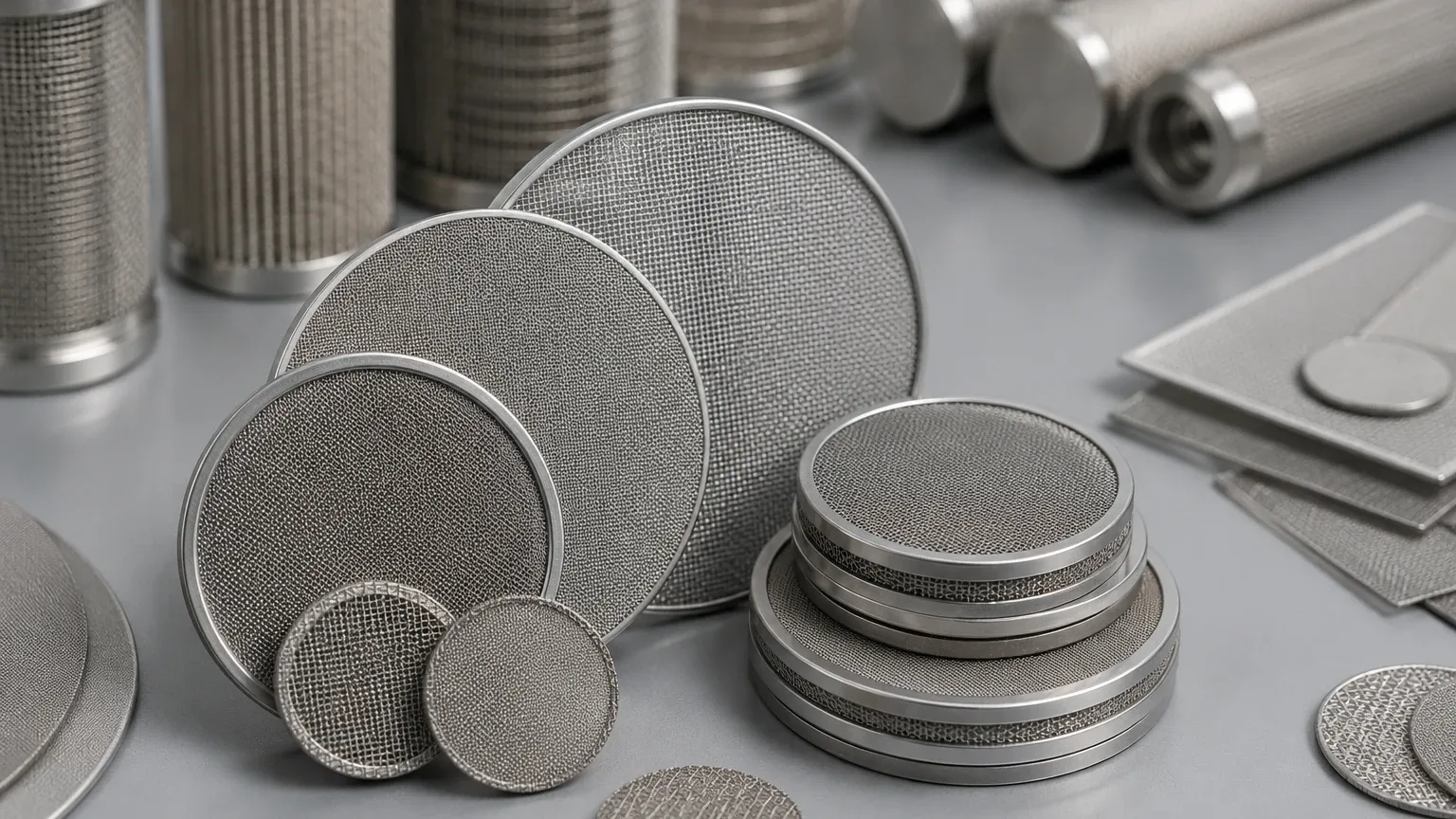
In many high-output industrial processes, individual filter elements are combined into more complex assemblies. Filter Discs & Packs are essential components in machinery such as plastic extruders, fiber spinning equipment, and oil refining units. These packs often consist of multiple layers of k filters, arranged in a specific sequence to provide graduated filtration.
A typical filter pack might include a coarse breaker plate mesh, followed by several layers of increasing fineness, and finally a support mesh. This multi-layer configuration ensures that larger particles are trapped by the outer layers, preventing the premature clogging of the fine inner layers. This depth-loading capability significantly extends the operational cycle of the filter, reducing downtime for replacement or cleaning.
For engineers, the design of these packs must account for the "K-factor" or permeability of the media. This factor determines the relationship between the fluid flow rate and the pressure drop across the filter. A well-designed pack optimizes this ratio, ensuring that the system maintains high throughput without exceeding the mechanical pressure limits of the filter housing or the pump capacity.
Understanding Permeability and Pressure Drop
One of the primary engineering challenges in filtration is managing the pressure drop (ΔP). As k filters capture contaminants, the effective open area of the mesh decreases, leading to an increase in pressure. If the pressure drop becomes too high, it can lead to several issues:
1. Media Deformation: Excessive pressure can cause the wire mesh to stretch or tear, leading to bypass and downstream contamination.
2. Pump Strain: Higher resistance requires more energy from the pump, increasing operational costs and wear on mechanical components.
3. Product Degradation: In temperature-sensitive applications, such as polymer melt filtration, a high pressure drop can cause localized heating, potentially damaging the product.
To mitigate these risks, k filters are engineered with precise pore size distributions. By calculating the expected contaminant load and fluid viscosity, engineers can select a mesh count that provides the necessary micron rating while maintaining an acceptable initial pressure drop. In high-viscosity applications, pleated k filters are often preferred, as the pleating significantly increases the surface area within the same footprint, thereby lowering the flux (flow per unit area) and the associated pressure drop.
Customization and Manufacturing Precision
No two industrial processes are identical, which makes customization a vital aspect of k filters procurement. Manufacturers like Kaifil specialize in tailoring filtration components to meet specific technical requirements. Customization options typically include:
* Layer Configuration: Determining the exact sequence of mesh layers in a sintered pack to balance filtration fineness with structural rigidity.
* Edge Treatment: Filter discs can be supplied with various edge finishes, including spot-welded edges, aluminum or stainless steel rims, or specialized gaskets. These treatments prevent fraying and ensure a leak-proof seal within the filter holder.
* Geometric Variety: While circular discs are standard, k filters can be manufactured in oval, rectangular, or complex custom shapes to fit proprietary equipment designs.
* Micron Ratings: Precision manufacturing allows for absolute filtration ratings ranging from 1 micron to several hundred microns, ensuring that even the smallest harmful particulates are removed from the process stream.
When specifying custom k filters, engineers must provide details regarding the operating temperature, the chemical composition of the fluid, the maximum allowable pressure drop, and the required flow rate. This data allows the manufacturer to recommend the optimal material and structure to ensure long-term performance.
Quality Control and Performance Evaluation
To ensure that k filters meet the rigorous standards of industries like aerospace or pharmaceuticals, stringent quality control measures are implemented during production. Common evaluation methods include:
* Bubble Point Testing: This test measures the pressure required to force air through a liquid-saturated filter. It is a non-destructive way to determine the maximum pore size and ensure the integrity of the mesh and welds.
* Air Permeability Testing: This evaluates the flow resistance of the filter media, ensuring consistency across different production batches.
* Material Certification: Verification of the chemical composition of the stainless steel (e.g., via XRF analysis) ensures that the filters will not succumb to corrosion in the intended environment.
For the end-user, performance evaluation continues during the operational phase. Monitoring the rate of pressure increase over time provides valuable data on the contaminant profile of the process. If k filters are clogging faster than anticipated, it may indicate a change in raw material quality or the need for a pre-filtration stage.
Maintenance and Cleaning of Stainless Steel Filters
One of the significant advantages of stainless steel k filters over disposable synthetic filters is their cleanability. In many B2B environments, the ability to regenerate filter elements provides substantial cost savings and reduces environmental impact. Cleaning methods for k filters include:
* Ultrasonic Cleaning: High-frequency sound waves create cavitation bubbles that dislodge particles from deep within the mesh pores.
* Chemical Cleaning: Soaking filters in specialized solvents or acids can dissolve organic or inorganic deposits without damaging the stainless steel structure.
* Burn-off (Pyrolysis): For filters used in polymer or resin applications, controlled heating in a vacuum oven can carbonize the contaminants, which are then removed through ultrasonic cleaning or high-pressure air.
* Backwashing: In some automated systems, a momentary reversal of flow can dislodge the filter cake, extending the time between manual cleanings.
However, it is important to note that repeated cleaning can eventually affect the structural integrity of the mesh. Engineers should establish a maximum number of cleaning cycles based on the criticality of the application and periodic integrity testing.
Selection Criteria for Engineers and Purchasing Teams
When integrating k filters into a new or existing system, purchasing teams should collaborate closely with engineering to confirm several key factors before procurement:
1. Compatibility: Ensure the alloy and gasket materials are compatible with the process fluid at the maximum operating temperature.
2. Filtration Rating: Distinguish between nominal and absolute ratings. An absolute rating ensures that 99.9% of particles above a certain size are captured, which is necessary for high-precision tasks.
3. Mechanical Strength: Confirm that the filter can withstand the maximum differential pressure expected during a "dirty" state before the system is shut down for cleaning.
4. Supplier Expertise: Partner with a manufacturer that understands the nuances of wire mesh filtration. A supplier like Kaifil provides not just the component, but the engineering support needed to optimize the filtration process.
By focusing on these technical parameters, organizations can ensure that their k filters provide reliable, efficient, and cost-effective performance in even the most demanding industrial applications. The transition to high-quality stainless steel Filter Discs & Packs is often a strategic move toward higher process stability and lower long-term operational costs.
